
Echoes: Ari Aster's Movies Aren't Horror Anymore -- They're Something Stranger

Hereditary (2018) came as a shockingly pleasant surprise when it first hit the big screen.
Ari Aster was up to something that no one could have imagined before. Audiences weren't aware that monsters could be much more than Freddy Krueger invading our dreams or virus-mutated zombies, something that could stay with them even after stepping out of the theater.
Aster likes to distance himself from the traditional horror pack and focus on scares that are embedded within inescapable grief, dysfunctional family dynamics, and inherited trauma. The famous dinner table fight in Hereditary is a true depiction of trauma where Annie (Toni Collette) explodes at her son, Peter (Alex Wolff), after the death of his sister. When she screams, "Don't you swear at me, you little shit!" you don't see any monster haunting you here. You see anger, frustration, and deep misery, all the elements of real-life horrors that are often more disturbing than actual horror movies.
Along the same lines came Beau is Afraid (2023), whose title suggests that the protagonist, played by Joaquin Phoenix, is the personification of anxiety and guilt. He is constantly haunted by his mother's voice. She does not stop to linger here and there, as the story openly declares that Beau is a victim of toxic parenting and gaslighting. The emotional manipulation serves as the root cause of his distorted relationship with his mother, making it a gonzo odyssey of realistic horrors planted in people's minds.
Aster knows that people are drawn to watching horror movies and has carefully adorned his films with modern 'elevated' horror, moving away from his staple but remarkable Hereditary and Midsommar (2019). Why? Because he knows the subconscious mind needs thrill and an escape from reality, and rightfully, he thought of inducing a psychological response from his movies.
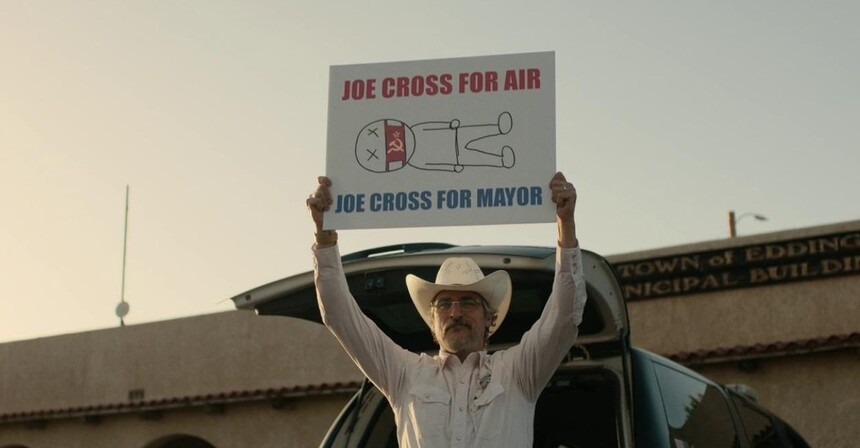
This is where movies like Beau Is Afraid and Eddington step in. Keeping demons and devils under the blankets this time, Aster wanted to go big and address expansive, real-life tragedies that can completely unravel a person. These films sift through paranoia and the characters' mistrust of their surroundings, leading to a sense of unreality.
Aster wants us to realize our demons within. His focus has shifted to the human condition, the broken relationships, the fear of society, the power abuse in the world we live in, and the feeling of being lost in the pervasive world of the internet, particularly after COVID-19; all are part of Aster's message in his recent films.
One thing is for sure: Eddington did not require horrific imagery to prove that existential dread is one elephant in the room that defines an unignorable human experience involving high emotional stakes. People feel powerful while throwing any post of their liking on social media, deeming it their freedom of speech, but it is the very powerlessness amidst political polarization that highlights our inner fears and triggers anxiety.
It is our false reality that we 'share' the same thoughts and then discuss them in online groups and platforms, but in reality, people are divided by the digital echo chambers. We have become used to seeing the world through our digital lens that consists of strange, individualized windows. Curiosity insinuates finding the true meaning of things that have now become a point of concern.
Aster has utilized the very essence of human minds -- seeking excitement in the unknown and activating the sensation of what interests them. Eddington is a dark political satire, a mirror of today's society's panic and fright, infixed in the psychological fragmentation that precisely defines Aster's "something stranger" body of work now. Aster continuously uses horror to get at something else, but with the recent abandoning of genre boundaries, it seems he is a little bit everywhere.
Misinformation, tragedies, and emotional instabilities are the authentic view of Aster's 'stranger' work. Real life is uncontrolled and unpredictable; the real world has had us covering our eyes more often, and this is exactly what Aster wants us to open our eyes to.
Echoes is an opinion column on film and television from the perspective of a writer based in Pakistan.

More about Echoes
- Echoes: HANGING BY A WIRE, Pakistan's First Academy Award Documentary Entry, Was Shot Entirely on a Phone
- Echoes: Pakistan Wants A Film Industry. Does It Have the Crew to Build One?
- Echoes: The Changing Art of Pakistani Film Posters
- Echoes: Pakistan Has An Indie Film Movement. Why Aren't We Talking About It?
- Echoes: 10 Pakistani Performances That Deserved Far More Attention

More about Eddington
More about Beau Is Afraid
More about Hereditary
- Now Streaming: Ari Aster's HEREDITARY, MIDSOMMAR, BEAU IS AFRAID
- Now on Blu-ray: FIRST REFORMED and HEREDITARY, Two Of The Year's Best From A24
- Neuchatel International Fantastic Film Festival Announces Full Lineup For 2018
- Have Your Say: Why Do You Watch Horror?
- Review: HEREDITARY, The Haunted House That We Call Home


