
Echoes: Claymation vs CGI: The Battle Between Handmade Charm and Digital Perfection

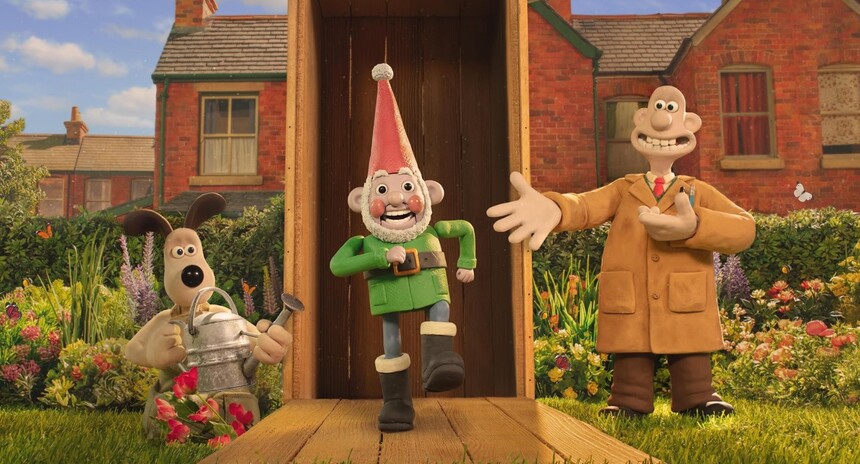
In the world of AI today, there is no doubt that claymation is considered an awe-inspiring niche of animation, even if not a mass market, unlike mainstream cartoons. It is surely time-consuming and expensive to produce, as every second of a shot requires dozens of hand movements and adjustments for a frame.
Studios like Aardman have come up with the magnificent Wallace and Gromit vibe, despite not being a dominant kids' medium; I'll explain why. Anime, some of which has been increasingly AI-generated, has a wide audience, but claymation is equally revered and respected. It is an arduous, handcrafted art that has a strong nostalgic factor. Claymation still gets awards, and movies still earn 100% critics' scores on Rotten Tomatoes.
The Wall Street Journal narrated the studio's story of how the clay almost disappeared while making Wallace and Gromit. They use a certain type of clay that can be used and bent for months without wearing off. It does not crack under studio lights and is flexible enough to be used in any shape they like. Reshaping it several times for a shot obviously wears the clay off and requires extra work for the clay artists to keep it in shape.
One special thing about claymation is that it always has that 'human touch.' It shows up in the way that human brains work day and night to bring in these movements of hands, scratching heads, or patting someone on the back. Tiny fingerprints remain on the surfaces, and characters subtly change shape between the frames, even if we consciously don't think about it. Of course, during this process, movements aren't mathematically smooth. These imperfections make it more human-like, which contributes to claymation's success, even in times of AI and CGI animation that are perfectly clean and flawless.
It is undeniable that many kids today have shifted to watching anime and reading manga, which is booming exponentially. Gen Z kids are attracted more towards their ongoing storylines instead of episodic cartoons or sequels of standalone films. Their stories have more emotional and "serious" themes. They do not offer the traditional fun and engaging content, just like Shaun the Sheep Movie (2015) or Chicken Run (2000).
The most common reason could be that anime treats younger audiences more like adults, and they like that. Having said that, only age-appropriate content should be made be made reaily available for young ones, as exposure to violent, graphic, or unsettling material at a younger age has a long-lasting effect on children.
Anime has become popular and resonates more with teens due to its complex themes, touching on identity, mortality, friendship, and moral ambiguity. These elements are closer to what teenagers are going through during their growing-up years. They know heroes make mistakes, and good guys don't always win.
Whichever the target audience, AI is completely transforming the filmmaking process, it still requires human creativity and prompts from 'real' minds to create a unique visual world worth treasuring, however. Some examples of AI-animated films of 2025 include Kitsune by Henry Daubrez, Pi in the Sky by Petra Molnar, One Last Wish by Edmond Yag, which also won Best Narrative Film at Project Odyssey's AI filmmaking competition, and The Thin Man The Gun and The Hotpot by Jim HuiHui. .
Though claymation is time-intensive, laborious, and requires a huge budget, there is still a huge audience that has a love for actual craft. The skill and talent required to make small adjustments and those frame-by-frame decisions are the true soul of claymation that breathes life into the work.
It does not imply that the use of CGI, which makes animation fast and more scalable, lacks artistry. Digital animation and CGI require their own form of mastery. It includes careful planning on rigging, lighting, physics simulation, and an understanding of movements within virtual space, differing from hand movements in physical spaces in claymation. The difference comes in the expression of skill.
Having said that, we are stepping into an era where claymation and AI fusion is happening. The time-intensive craft is metamorphosing into a hybrid art that merges tactile aesthetics with digital efficiency. These hybrid pipelines allow the creators to bring physical stop-motion puppets to life with digital AI and clean-up rigs, along with infusing smoothness for the in-betweening.
Though the approach is not fully mainstream at the moment, but only emerging, the digital enhancement of stop-motion does exist. Kubo and the Two Strings (2016) by Laika is one of the prime examples; it's a film that successfully used physical puppets and sets but relied heavily on CGI for complex elements like water, magic effects, and facial expressions.
In this light, what once appeared as two opposing poles, claymation and CGI, are now gradually dissolving into collaboration. There is no longer a war between the two that warrants the word 'versus'; rather, the future of animation lies in harmonizing them. The warmth of human touch and the precision of digital tools together create a form of perfection that encourages coexistence instead of casting them as adversaries.
Perhaps it is time for a handshake between the two.
Echoes is an opinion column on film and television from the perspective of a writer based in Pakistan.

More about Echoes
- Echoes: HANGING BY A WIRE, Pakistan's First Academy Award Documentary Entry, Was Shot Entirely on a Phone
- Echoes: Pakistan Wants A Film Industry. Does It Have the Crew to Build One?
- Echoes: The Changing Art of Pakistani Film Posters
- Echoes: Pakistan Has An Indie Film Movement. Why Aren't We Talking About It?
- Echoes: 10 Pakistani Performances That Deserved Far More Attention


