
Morbido 2026: Alumni Returns, Sitges Winners, and Uncut Cult Classics Stack the Lineup

Our amiges y familia at Morbido have revealed the lineup for this year's festival. Typically a highlight of our year - until frickin' life got in the way! - we would always be down in CDMX every Halloween season to hang out with our friends and guest filmmakers in attendance. We miss it dearly but will not miss out the opportunity to promote the festival and its always amazing programming.
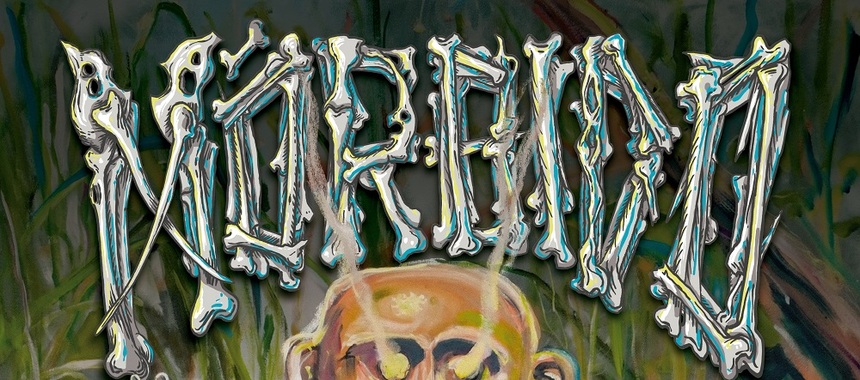
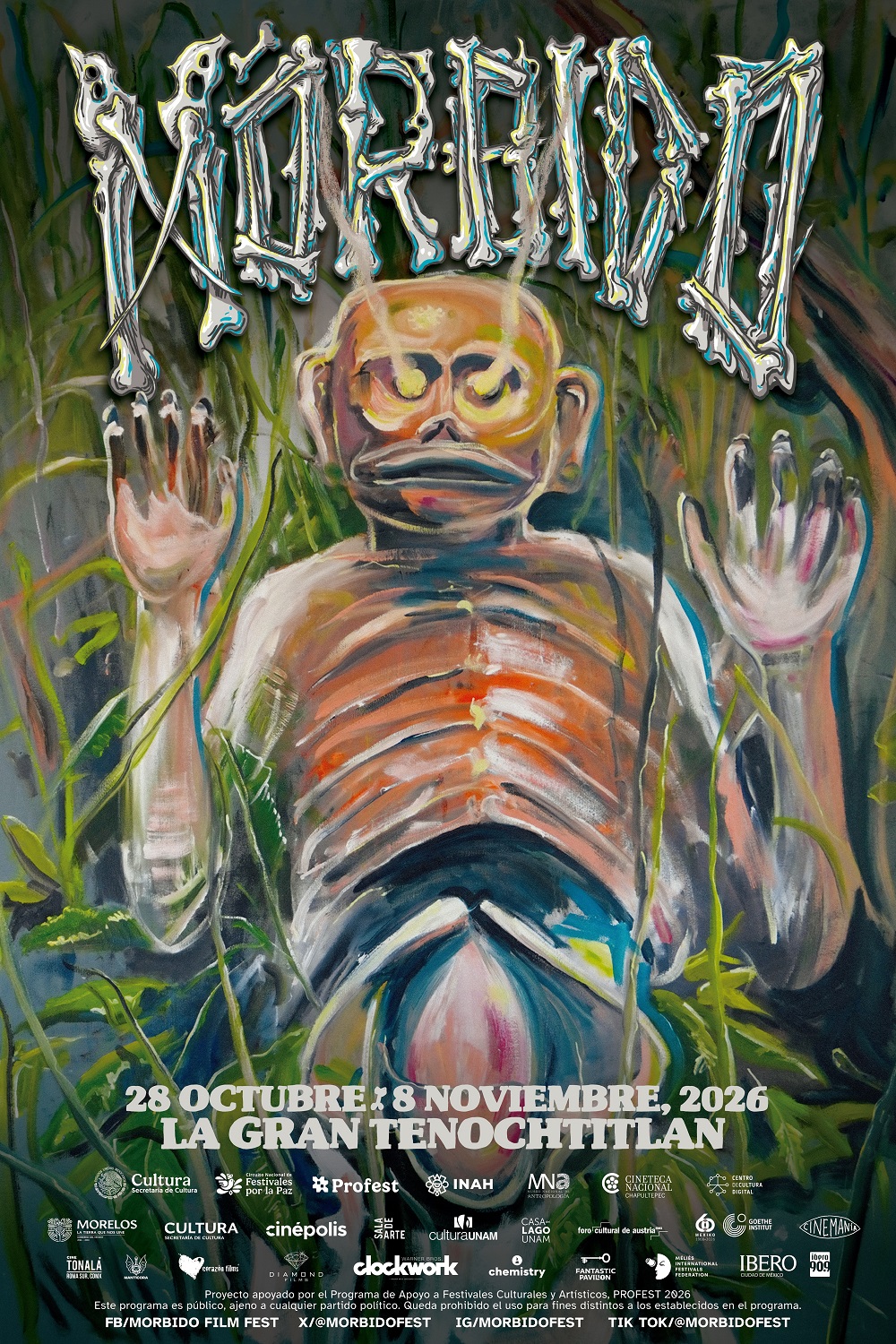
The festival artwork has always been a highlight each year - we have some from our visits framed and up on our walls. This year’s official poster centers around Mictlantecuhtli, the Aztec god of death. Because the festival aligns with Day of the Dead, Mórbido brought in Mexico City artist Marcos Castro to design it. Castro is said to be a big deal in the art world—he’s a two-time FONCA grantee and a member of the Sistema Nacional de Creadores de Arte, known for solo exhibitions and group shows from CDMX to Miami. His art sets the tone for the festival, especially since the underworld god is also a character in Mauricio Chernovetzky's featured film, Sacrificios.
When it comes to festival alumni Adrián and Alex are basically part of the Mórbido family at this point. Adrián García Bogliano has been a festival staple for years, even helping shape their TV network, so it’s great to have him back pulling double duty with Hablando con extraños and La Mancha. Meanwhile, Alex Kahuam is bringing back his single-take thriller Failure! for a Q&A and his other film The Remedy. It's always cool seeing the festival continue to back its alumni.
The global section this year features titles from festivals like Cannes, Berlin, and Toronto. Four standouts are coming fresh off wins at the Sitges Film Festival: Ghost in the Cell, Gummy, Dernsie, and Familia teme enfrentar una nueva noche de terror. The lineup ranges from international names, like Takashi Miike’s premiere of Bad Lieutenant: Tokyo, to folk horror pieces like Cyprus’s Motherwitch and Kazakhstan’s Ürei. It’s a mix that shows how much genre cinema is growing.
The Latin American section delivers regional horror with projects from Argentina and Brazil. The lineup includes Cristian Ponce's Familia teme enfrentar una nueva noche de terror, an Argentine supernatural thriller coming off a winning run at Sitges. Joining it is La Mancha, an amusement park curse co-directed by Adrián García Bogliano and Ramiro García Bogliano, alongside Brazil's Privadas de Suas Vidas (Bowels of Hell), a horror-comedy by Gustavo Vinagre and Gurcius Gewdner about a gender reveal party that turns into a bathroom nightmare.
And finally, Mórbido Classics is also hosting a screening of the uncut 4K restoration of Ken Russell's 1971 film The Devils, giving fans a chance to see the film back on the big screen.
The complete announcement and lineup follow.
Mórbido Film Fest celebrates a new edition with a major Official Selection of 40 films from 20 countries, plus 81 short films selected from 344 submissions to the open call, coming from 20 countries. As every year, this year’s selection brings together titles that have played at the world’s greatest international festivals, including Cannes, Berlin, Rotterdam, Locarno, Toronto and SXSW. It also includes 4 winning titles from the most recent edition of the Sitges Film Festival: “Ghost in the Cell,” “Gummy,” “Dernsie” and “Familia teme enfrentar una nueva noche de terror.”This year, the festival will host a series of special screenings celebrating the best of genre cinema. It will open at the Cineteca Chapultepec with “Hablando con extraños” (“Talking to a Stranger”), by Adrián García Bogliano. “Sacrificios,” by Mauricio Chernovetzky, will have its national premiere at the Auditorio Jaime Torres Bodet of the Museo Nacional de Antropología. In collaboration with the Universidad Iberoamericana, the festival will present “Failure!” together with a conversation with its director, Alex Kahuam (“The Remedy”). In addition, in partnership with the Goethe Institut Mexiko, and to celebrate its 25th anniversary, “Das Experiment” (2001), by Oliver Hirschbiegel, will be screened.Among the highlights of this year’s program are the uncut 4K restoration of “The Devils” (1971), by Ken Russell, in Mórbido Classics, and the premiere of “Bad Lieutenant: Tokyo,” by Takashi Miike, in the Global Section.The complete announcement and lineup follow.Mexican cinema will have a prominent place this year, with 11 titles in the Official Selection: “Hablando con extraños” (“Talking to a Stranger”), “El Diablo Sabe tu nombre,” “Sacrificios,” “El Infinito” and “Roto” (both works in progress), “Quince” (“Fifteen”), “Grandes Hits,” “Mi amigo el Sol,” “Un disfraz para Nicolás,” “Un reino para todos nosotros” and “Roy del Espacio.”The Mórbido Film Fest 2026 program comprises 81 short films and 40 feature films, 11 of them Mexican, from 20 countries in total, including 3 documentaries and 3 classics that return to the big screen this edition.The official poster of this edition revolves around Mictlantecuhtli, the Aztec god of death and lord of Mictlán, the underworld in Mexica and Nahua mythology. For Mexicans, death is a close presence, experienced as an everyday reality, celebrated, and woven into the country’s culture, festivities and daily life. Mórbido is always held during Day of the Dead, so this year the festival pays tribute to death and its god through the work of Mexican artist Marcos Castro, creator of the official 2026 poster.Marcos Castro (Mexico City, 1981) holds a degree in Visual Arts from the Escuela Nacional de Pintura, Escultura y Grabado “La Esmeralda.” He has presented solo exhibitions such as So it will be the past (Dot Fifty One Gallery, Miami, 2020) and Mañana, cenizas (Machete Galería, Mexico City, 2019), and has taken part in group shows at venues such as the Witte de With Center for Contemporary Art (Rotterdam) and the Museo de Arte Moderno de la Ciudad de México. He is a member of the Sistema Nacional de Creadores de Arte and a two-time FONCA grantee.The theme is no coincidence: this year’s Official Selection includes “Sacrificios,” by Mauricio Chernovetzky, a film in which Mictlantecuhtli is a central character, which will have its national premiere at the Auditorio Jaime Torres Bodet of the Museo Nacional de Antropología e Historia, one of the new venues of Mórbido 2026.Mórbido Film Fest will take place at 14 venues: Cinépolis Diana, Cinemanía, Centro de Cultura Digital, Casa del Lago UNAM, Jardín Borda, Museo Morelense de Arte Contemporáneo, three municipalities in Morelos, Cineteca Chapultepec, Cine Tonalá, Museo Nacional de Antropología, Goethe Institut Mexiko and Universidad Iberoamericana.In partnership with the Secretaría de Cultura del Estado de Morelos, and as part of the Festival Miquixtli, Mórbido will hold screenings at the Foro del Lago of the Jardín Borda and at the Museo Morelense de Arte Contemporáneo Juan Soriano, as well as itinerant screenings with the Carreta Cine Móvil, from October 29 to 31 and on November 1. Casa del Lago UNAM will host activities for children, with screenings and a storytelling session, on the weekend of November 7 and 8.MÓRBIDO FILM FEST 2026: OFFICIAL SELECTIONMEXICAN CINEMA“Hablando con extraños” (“Talking to a Stranger”) (Mexico; dir. Adrián García Bogliano)After losing her son in a fire, Patricia begins to be stalked by a demon that takes the form of the boy. A story of grief, guilt and fear.“El Diablo Sabe tu nombre” (“El Diablo Adentro”) (Mexico; dir. Andrés Beltrán)A year after a fire at a religious hospice claimed the lives of twelve children, Mariel and Tino, a pair of documentary filmmakers, investigate the case of Gisela, the young volunteer who caused the tragedy and whom everyone believed dead.“Sacrificios” (Mexico; dir. Mauricio Chernovetzky)After the death of his son, Juan, consumed by guilt, goes out to sea and finds Andrés alive. Hidden away with him on an island, he discovers that the boy has returned with an insatiable hunger. Mexica mythology and magical realism.“El Infinito” (Mexico; dir. Fabián Archondo) (Work in progress)Anais is devastated by her father’s death and rushes toward self-destruction, until her older sister checks her into an exclusive desert retreat that promises a total transformation.“Roto” (Mexico; dir. Paco Álvarez) (Work in progress)A year after a devastating accident, Ana Vega is kidnapped and locked in a basement by a mysterious captor, where she meets Otto, a man emotionally trapped between childhood and adulthood.“Quince” (“Fifteen”) (Mexico, Argentina; dir. Jack Zagha, Yossy Zagha)Ligia and Mayte, two misfits from Mexico City, dream of a quinceañera party that will earn them respect. When Ligia’s boyfriend is attacked by a creature in the sewer, the mutation passes to the baby she is expecting. A creature-feature horror comedy.“Grandes Hits” (Mexico; dir. Mario Dávila)A retired hitman, a hermit with lycanthropy and a gigolo torn between love and survival cross paths in a violent, stylized world, with nods to Mexican cult cinema.“Mi amigo el Sol” (Mexico; dir. Alejandra Pérez González)Xóchitl, a young muralist, meets various Mexica deities on a personal journey with her father, Diego. Animated fantasy about pre-Hispanic mythology and family bonds.“Un disfraz para Nicolás” (Mexico; dir. Eduardo Rivero) (aniMa)Nicolás, a boy with Down syndrome, uses magical costumes to rescue his cousin from her nightmares. Mexican animation.“Un reino para todos nosotros” (Mexico, Colombia; dir. Miguel Ángel Uriegas) (aniMa)Fran and Serendín, two very different siblings, relate in opposite ways to a mysterious walled kingdom whose promise of a better life may also be a form of control.“Roy del Espacio” (Mexico; dir. Héctor López Carmona, Rafael Ángel Gil, Ulises Pérez Aguirre) (aniMa / Mórbido Classics, 1983)Roy, together with Dr. Faz and psychologist Elena, travels to another planet to confront an emperor who plans to conquer Earth. Robots, space battles and romance in this restored gem of Mexican animation.LATIN AMERICAN SECTION“Familia teme enfrentar una nueva noche de terror” (Argentina; dir. Cristian Ponce)A family is terrorized every night by an invisible presence. Filmed as a late-night TV broadcast, the line between the viewer and the haunted house blurs.“La Mancha” (Argentina, Mexico; dir. Adrián García Bogliano, Ramiro García Bogliano)A group of children and teenagers is trapped in a curse inside an amusement park that connects them to a parallel world. No adult characters; filmed at the República de los Niños, La Plata.“Privadas de Suas Vidas” (“Bowels of Hell”) (Brazil; dir. Gustavo Vinagre, Gurcius Gewdner)Malu, an event planner who avoids sitting on toilets, prepares an influencer’s gender reveal party in her building while the condominium’s bathrooms begin to turn deadly. A horror comedy.GLOBAL SECTION“Motherwitch” (Cyprus, North Macedonia, United States; dir. Minos Papas)Cyprus, 1882. Eleni, a painter, tries to revive her dead children with black magic and instead summons the Kalikantzari, spirits of Cypriot folklore.“Ferine” (Italy; dir. Andrea Corsini)Irene, an art collector, has just adopted a baby through surrogacy when a tragedy pushes her toward primal, violent impulses.“Gummy” (Spain; dir. Javi Prada)A horror thriller that reverses the roles of victim and predator: what happens when a predator picks the wrong victim?“Sender” (United States; dir. Russell Goldman)A woman begins receiving packages containing disturbingly personal objects and sinks into paranoia as she tries to find out who is sending them.“Bad Lieutenant: Tokyo” (United States, United Kingdom, Japan, France; dir. Takashi Miike)A Tokyo police officer and compulsive gambler is dragged into a tangled investigation when an enigmatic FBI agent arrives in Japan after the disappearance of a politician’s daughter.“Ürei” (Kazakhstan; dir. Yerkezhan Baizhan)Kalima, 14, is sent to live with her grandmother in a remote village. The grandmother’s affection turns obsessive and the house becomes a place of mounting terror.“The Remedy” (United States; dir. Alex Kahuam)Jason cares for his sick mother while nightmares of a monster invade his waking hours. When he tries an ancient remedy to save her, something unnatural seems to have been unleashed in the house.“The Ones Who Grieve” (France; dir. Quarxx)Rural France, late 19th century. The “Black Veil” turns the sick into monsters hungry for human flesh. Jacob is a “masker” who seals the eyes and mouths of the infected.“Los que vienen” (Spain; dir. Víctor Català)Rural Galicia, 1976. A family dinner is interrupted by calls from a neighbor who claims strangers are stalking him at night. A supernatural fog surrounds the house.“Saliglia” (Serbia; dir. Petar Ristovski)After an apocalyptic event, seven strangers wake with no memory in a realm where time has stopped working, while the guilt they carry rises to the surface.“Failure!” (United States; dir. Alex Kahuam)James, a businessman and devoted father, has one hour to settle a bank debt or lose his company. Shot in a single take.“Chronovisor” (United States; dir. Jack Auen, Kevin Walker)An academic researching historical theories of memory becomes obsessed with the Chronovisor, a hidden device said to show scenes from any era.“Upiro” (Spain; dir. Óscar Martín)In 1755, Ana is sent to an isolated convent and finds several novices consumed by a strange blood disease, inspired by one of the earliest records of vampirism on the Iberian Peninsula.“Ghost in the Cell” (Indonesia; dir. Joko Anwar)In one of Indonesia’s most dangerous prisons, an invisible force begins killing inmates and displaying their bodies. Rival gangs and privileged prisoners must join forces to discover its origin.“I Love Paris” (Australia, France; dir. Nicky Murphy)A mockumentary about vampires who move through Paris’s nightlife and music industry, amid the pressures of social media and fame.“Sicko” (Kazakhstan; dir. Aitore Zholdaskali)Drowning in debt, Azamat and Tancho claim that she has terminal cancer and launch an online fundraiser. The campaign goes viral and begins to warp their lives.“Infirmary” (United States; dir. Nicholas Pineda)A young security guard works his first night shift at the Wilshire Infirmary, an abandoned psychiatric hospital. Told through recovered footage from his body camera.“Victorian Psycho” (United Kingdom, Ireland; dir. Zachary Wigon)1858. Winifred Notty arrives as a governess at Ensor House, a Gothic mansion, to educate the family’s children while concealing her psychopathic urges.“The Blood Countess” (Germany, Austria, Luxembourg; dir. Ulrike Ottinger)The vampire countess Erzsébet Báthory awakens in present-day Vienna and, with her maid and her nephew, searches for a magic book capable of ending the vampires’ immortality.“Bloody Tennis” (Germany; dir. Nikias Chryssos)Sophie enters an elite tennis academy in southern Europe where rivalry turns sinister. Amid hallucinations, leeches and dark humor.“Our Effed Up World” (Australia; dir. Alice Maio Mackay)Sheri is grieving her grandmother when an entity crashes into the forest. She and her friends are the only ones capable of stopping its intergalactic hunger. Punk sci-fi horror.MORBIDOCS SECTION“Dernsie: The Amazing Life Of Bruce Dern” (United States; dir. Mike Mendez)Bruce Dern recounts more than 65 years in Hollywood: from television villain in the sixties to working with Kazan, Hitchcock and John Wayne, to late recognition with “Nebraska.”“Zé do Caixão” (Brazil; dir. Diego de Walpurgis)A documentary tracing more than five decades of encounters between José Mojica Marins and the Sitges Film Festival, which first screened his work in 1972, and how Zé do Caixão brought Brazilian horror to the world.“Guía Paranormal de la Costa Brava” (Spain; dir. Ferran Romeu)Writer Mariana Enríquez travels the Costa Brava to compile a paranormal guide, amid ghost stories, myths and superstitions.MÓRBIDO CLASSICS“The Devils: 4K Uncut” (United Kingdom; 1971; dir. Ken Russell)Loudun, France, 17th century. Father Grandier, a libertine priest who opposes Cardinal Richelieu, is accused of witchcraft by a nun obsessed with him, in a trial of mass hysteria. Uncut 4K restoration, world premiere at Cannes 2026.“Das Experiment” (Germany; 2001; dir. Oliver Hirschbiegel)Twenty men agree to take part in an experiment simulating a prison, divided into guards and inmates. What begins as an academic exercise quickly degenerates into abuse and violence. Presented in collaboration with the Goethe Institut Mexiko.“Roy del Espacio” (Mexico; 1983; dir. Héctor López Carmona, Rafael Ángel Gil, Ulises Pérez Aguirre) See the entry under Mexican Cinema.As a special event, Mórbido presents “Silent Monsters,” part of the Cinema Recomposed program, presented by Tim League and Golden Hornet, in partnership with the American Genre Film Archive (AGFA), the world’s largest archive dedicated to genre cinema. Seven young composers between the ages of 17 and 24 created new scores for seven classic silent horror shorts made between 1908 and 1930, including “Frankenstein” (1910), “Dr. Jekyll and Mr. Hyde” (1912), “Häxan” (1922) and “Hell’s Bells” (1929), under the mentorship of leading composers such as Mark Orton, David Wingo, Brian Reitzell and Nicoletta Nomicou. The screening will take place on November 8 at Cinépolis Diana.The closing of Mórbido Film Fest 2026 will be a Mexican film: “Grandes Hits,” by Mario Dávila, which will screen in two back-to-back screenings on Sunday, November 8 at Cine Tonalá, with the participation of the film’s cast and crew.Mórbido Film Fest thanks the support of the Dirección de Circuitos y Festivales de la Secretaría de Cultura, the Programa de Apoyo a Festivales Culturales y Artísticos (PROFEST), the Secretaría de Cultura del Estado de Morelos, the Instituto Nacional de Antropología e Historia, the Museo Nacional de Antropología, Cineteca Nacional Chapultepec, Centro de Cultura Digital, Casa del Lago UNAM, Universidad Iberoamericana, Foro Cultural de Austria, Goethe Institut Mexiko, Cinépolis and Sala de Arte, Cinemanía, Cine Tonalá, Mantícora Distribución, Corazón Films, Diamond Films, Chemistry, Fantastic Pavilion and Ibero 909.This year, Mórbido recognizes the constant outreach and communication work carried out by content creators and, for that reason, invites for the first time in its history a young jury of content creators to take part in the short film section. The jury, made up of Andy Baos (@andybaos), Camila Ixchel (@camilaixchel1), Natalia Ortega (@crimequeenoficial) and Velko (@Velkoback), will select one short from the Global section and one short from the Latin American section as the content creators’ winning shorts.Together, the four creators have more than 7.5 million followers across Instagram, TikTok and YouTube which, added to the 6.5 million of the Mórbido community, give this edition a total reach of more than 14 million followers.


Do you feel this content is inappropriate or infringes upon your rights? Click here to report it, or see our DMCA policy.
More about Ghost in the Cell (2026)

More about Bloody Tennis
More about Ferine (2026)
- MOTELX 2026: DRAG Yourself to Lisbon This September, Full Programme For 20th Edition Announced
- Fantasia 2026 Review: FERINE, A Stunning Feature Debut From Andrea Corsini
- Fantasia 2026: FERINE, Check Out The Teaser Trailer And International Poster
- Check Out FERINE's Meaty Teaser Poster, New Italian Genre Picture to Premiere at Fantasia


