
Echoes: Selling a Movie That Doesn't Exist Yet

After writer/director James Gunn and producer Peter Safran were appointed as the new co-heads of DC Studios in November 2022, plans for the studio's rebooted slate began to take shape, with details about upcoming projects gradually emerging. In 2023, it was announced that Andy Muschietti, known for directing the It films and series, would helm The Brave and the Bold.
It's 2026 now, and the film still hasn't entered the production phase yet, though The Hollywood Reporter confirmed this past January that Muschietti was still attached to the project, with Christina Hodson (The Flash) tapped to write. Even so, the film has the power to influence people with its waiting time, as DC fans cannot hold their excitement. It will be the first DC film that will focus on a father-and-son dynamic, which is enough to whip up immense fan anticipation.
The above scenario is explained to demonstrate how films are sold that don't even exist yet. It is made possible with the marketing team's "psychology of waiting." It becomes a natural human desire to wait for their favorite DC world hero, the actor playing the role, and the possible story that has never been shown on the big screen to build stronger engagement.
Most of us are clued up on the music that plays while we're on hold during a customer service call; it's meant to make the wait feel more manageable. What affects us isn't just the actual length of time, but how that time is experienced. In a cinematic context, it's not the duration itself that heightens tension or anticipation; rather, it's the experience of waiting that engages the audience's emotions throughout the process.
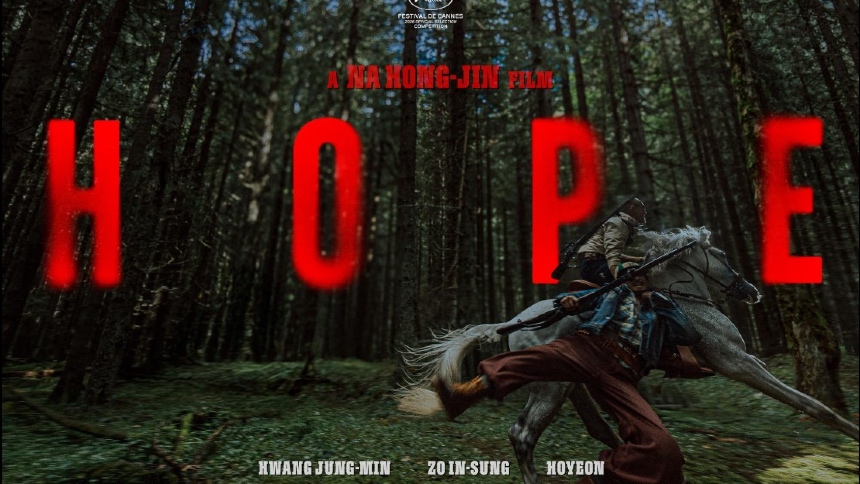
Let's examine another example. Neon acquired rights to The Wailing director Na Hong-Jin's next sci-fi psychological thriller, Hope, as per Deadline. Even before premiering at the upcoming Cannes Film Festival, scheduled to take place in May 2026, Neon's sixth film in a pre-festival buying spree has already activated our brain's dopamine, which is responsible for driving engagement.
Honestly, The Wailing director's name is enough to get me emotionally invested and beef up the overall experience of the final product, even before its official release date has been announced. It thus signifies that Neon has impressively turbocharged the curiosity and fired us up to pay attention. We will already try to keep track of the news around Hope whenever new updates come, implying that the act of waiting jazzed up the perceived value of what's being offered.
Anticipation marketing has already kicked off for this year's Cannes Film Festival, which is considered a high-prestige film market, where global and/or territorial rights are sold to distributors for critically-acclaimed independent films. Now, before even the final release date announcement, Hope will get exclusive previews, interviews, first-look images, poster releases, and teaser trailer tactics, all part of the promotional campaign.
For Na Hong-jin's fans like me, the excitement would only intensify, as the countdown had already begun. It has created a sense of privilege and deepened engagement, with the ticking clock reinforcing that something big is on the horizon. After its premiere at Cannes, there will be massive buzz since the cast manifests a collaboration between top Korean talent (Hwang Jung-min and Zo In-sung) and Hollywood stars (Michael Fassbender and Alicia Vikander).
Likewise, more fan theories and speculations have been going around for the next James Bond film, provisionally known as Bond 26. The identity of the new James Bond hasn't been announced for the project, and the absence of official news is being used to fuel online engagement. Following Amazon's acquisition of MGM in March 2022, efforts to build anticipation around a younger James Bond have steadily gained momentum. Despite the inflating buildup, however, production has yet to begin, even as rumors about the next, younger Bond continue to circulate.
It's been four years since the acquisition, but the anticipation still remains tight for the new Bond actor after Daniel Craig. Though it is very well-known that James Bond will be played by a British actor, finalizing a young Bond has kept fans busy predicting who the next one would be. The director and the writer have been announced, but the casting of the new 007 remains the biggest mystery, magnifying the audience's interest.
Much of the success of this strategy depends upon understanding audience behavior and their demographics. Ne Zha 2 remains the highest-grossing film of 2025, based on world box office results from Box Office Mojo. Children and parents actively seek such movies that make their collective cinema-going experience worthwhile. The theatrical release of such projects is aimed at school vacations and holidays, way before their trailers are released.
Industry developments around specific release windows, such as the release of a climate-themed film on Earth Day, may gain traction. Similarly, horror films are a great way to pull an audience during the Halloween season, along with romantic comedies for Valentine's Day. Studios already tap into the collective mood of their potential viewers by aligning film release dates accordingly.
In overcrowded systems of today, timing is not a strategy but a weapon. Saturated film festivals, contenders for awards seasons, and fragmented windows for particular seasons are all the factors that determine whether a film breaks through or disappears.
Social media has both added to the hype and compressed the attention cycles. The discussion in social media groups creates a cultural event in its own right. Big moments are discussed fervently, boosting the hype and generating a broader noise.
What do I mean by hype and anticipation? Not meaning to digress from the underlying concept here, but the human psychology of modern generations works differently today. I also want to highlight how the excitement of waiting forms impossible expectations of the movie that is not here yet. Do audiences tend to delude themselves more? Na Hong-jin and The Wailing make me treat Hope like it's already top-tier, although it's kind of unfair. Does it become more difficult for the film to meet these expectations?
What if those expectations are not met? It certainly risks the box office or streaming success of the flick, hurting the name of the director as well as the distributor. Here, the release date timings and film festival entries do not work, then.
Long before the film has taken the shape of a single frame, the anticipation caused by Na Hong-jin's previous work of thematic density, tonal control, and narrative ambition has already started translating into Hope. At this stage, anticipation has become a form of cognitive authorship and is mutating into something more unstable, posing a cultural weight on the director's shoulders.
The entire discussion leads to one central ideology: films are no longer sold as finished products; they are sold as experiences that begin long before even the production starts. Whether it is the Cannes Film Festival, where Neon will flaunt its carefully selected films, or DC Studios orchestrating its projects with precision, or the mystifying events of James Bond, the strategy remains the same.
By announcing projects years ahead, the studios activate the psychology of waiting, turning time into a form of engagement. Even the absence of information serves as a tool of discussion and emotional investment.
In this way, the film that does not even exist in its tangible form stays alive in the minds of audiences. The release date is a mere deadline to make the final experience feel more rewarding.
Echoes is an opinion column on film and television from the perspective of a writer based in Pakistan.
More about Echoes
- Echoes: HANGING BY A WIRE, Pakistan's First Academy Award Documentary Entry, Was Shot Entirely on a Phone
- Echoes: Pakistan Wants A Film Industry. Does It Have the Crew to Build One?
- Echoes: The Changing Art of Pakistani Film Posters
- Echoes: Pakistan Has An Indie Film Movement. Why Aren't We Talking About It?
- Echoes: 10 Pakistani Performances That Deserved Far More Attention

More about Hope (2026)
- Now Playing: HOPE Rises, BLACK ZOMBIE Illuminates, ON A STRING Amuses
- HOPE Review: Pure Entertainment, Yet Little Beyond That
- Opening This Week: HOPE, THE UPRISING, PRACTICAL MAGIC 2
- HOPE: Wanna See Na Hong-jin's Sci-fi Action Thriller Two Days Early?
- MOTELX 2026: DRAG Yourself to Lisbon This September, Full Programme For 20th Edition Announced


