A Pale View of Hills - Ishikawa *Center Piece, featuring Cut Above Award recipient Hirose Suzu
Niki (Aiko Camilla), a half-Japanese journalist in England, is visiting her mom (Yoshida Yoh) in the countryside. Mom is selling the house that Niki and her sister Keiko grew up in. It's the 80s and everything 'Oriental' is in vogue; she is asked to write about her family origins in Nagasaki. So starts A Pale View of Hills, an understated, complex, handsome adaptation of famed English author Ishiguro Kazuo (Howard's End, Never Let Me Go)'s debut novel.
Mostly told in flashback, the story centers around Niki's mother Etsuko (Hirose Suzu) in Nagasaki in post-war Japan. The year is 1952.
As the country quickly recovered from the atomic bomb devastation and war defeat, the trauma and guilt are deeply felt in everyone. As a young woman expecting a child, Etsuko befriends Sachiko (Nikaido Fumi), a flamboyant woman with her daughter Mariko, yearning to move to America with her GI boyfriend. Mariko, who witnessed the aftermath of the atomic bomb blast and is deeply traumatized, has severe behavioral issues.
The film addresses generational conflicts, survivor's guilt, and deep-seeded traumas through an unreliable narrator. As with many of Ishiguro's books, the emotional revelation in A Pale View comes slowly and subtly, like ripples in a pond. Through her mother's story, Niki is able to understand her sister's suicide and women's choices in the modern world.
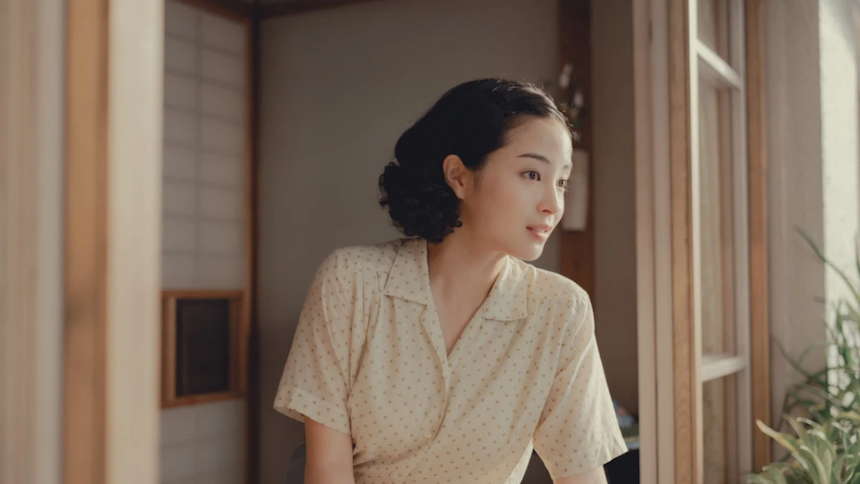
Hirose, donning a bobbed curly hairstyle, has a striking resemblance here to Hara Setsuko, a darling of classic Japanese cinema, who starred in countless Ozu films.
Burn - Nagahisa
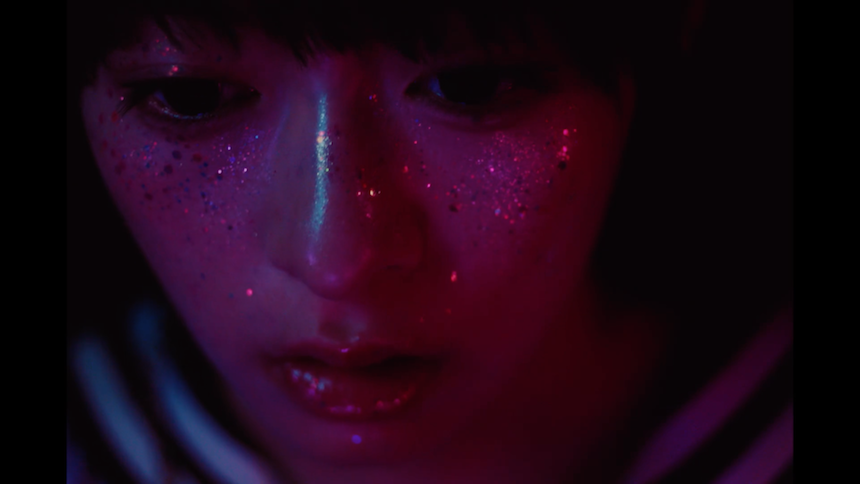
With expressionistic visuals that combine lo-fi aesthetics and 3D animations, Burn tells the story about Ju-Ju, a teen runaway from a religious zealot household where she and her little sister get regular whipping from her parents. Ju-Ju joins a colorful misfits group, headed by seemingly benevolent leader Kami, in the famous Toyoko Square in Kabukicho, Shinjuku.
She befriends Mitsuba, a girl with a limp from a childhood accident, who uses her disability to lure men in for money. Soon Ju-Ju learns the ropes in prostitution from Mitsuba, in the hopes of earning enough money to save her sister from parental abuse. But she slowly learns that her new-found family is not all unicorns and rainbows. She learns that the world is a sinister and endless destructive cycle that she can't escape from. Ju-Ju has only one option -- burn it all down.
Burn features perhaps the most sinister foreshadowing in the presence of a pink dildo in the first half, later used as a murder weapon. Saccharine, yet sad, Nagahisa burrows into the narcissistic and fatalistic journey of an outcast teenage girl.
Gosh!! - Odagiri
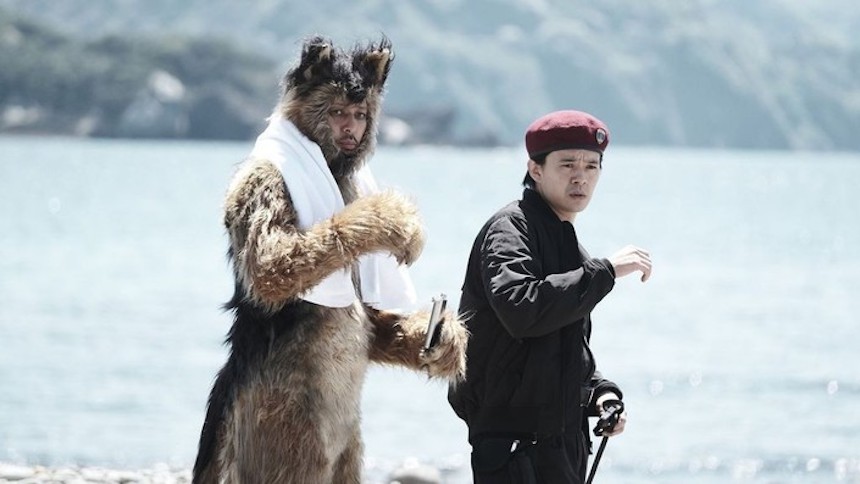
Odagiri Joe's freewheeling comedy is packed with familiar faces in Japanese cinema. Among them is Odagiri himself as a K-9 unit police dog who seems to be appearing as a middle-aged womanizer in a dog suit to his human partner.
There's a Bollywood style song and dance number, an elite K-9 handler police woman who faints like a goat when startled, surreal tacoyaki (fried octopus ball) festival, crooked red doors in the middle of the sea that transports you to another dimension, an old white haired ‘super volunteer’ who meddles in missing persons cases, gangsters in a swinging jazz club, and a little old man fairy.
Actor/Director Odagiri shows his penchant for slapstick physical comedy here. Playful but directionless, Gosh!! plays out like a loosely connected string of comedy skits that doesn't really land hearty laughs.
Our Little Sister - Koreeda *Featuring Cut Above Award recipient Hirose Suzu
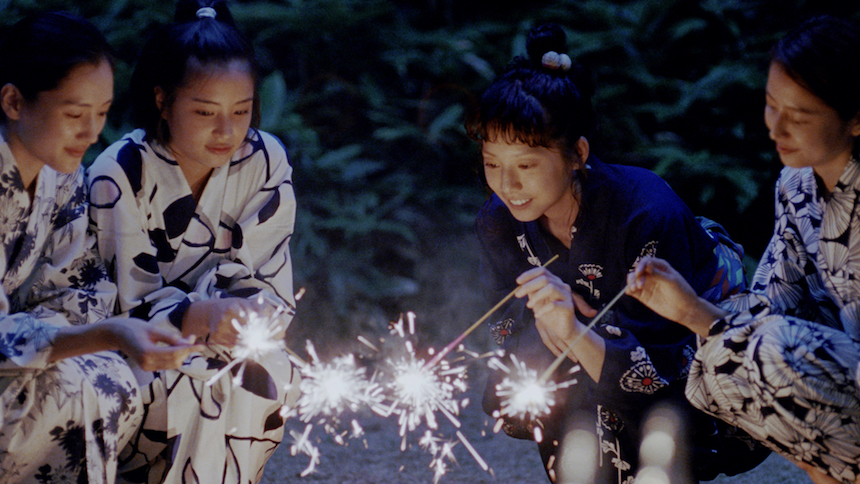
The movie starts. The three Koda sisters gather in a mountain town for their dad's funeral. They hadn't seen him in more than 15 years.
He had an affair with another woman and their mother ran away long ago. It was the job of the eldest child, Sachi (Haruka Ayase), to take charge of their old-style home in picturesque seaside Kamakura and raise her siblings. They find out they have a wide-eyed, 15-year-old step-sister, Suzu (Suzu Hirose) who'd been taking care of their father on his deathbed. She doesn't get along with her stepmother (he was married three times).
Sachi decides to invite Suzu to live with them. Suzu accepts the offer and they say their goodbyes at the train station until their next encounter. The little girl runs after the departing train ... waving madly at the step-sisters, total strangers she just met ... like a puppy dog in a shelter who just got some attention...
I break down. It's only been twenty minutes into the movie and I am sobbing like a little girl. Fucking Koreeda. He got me real good. Our Little Sister is such an old fashioned movie -- a small town where everybody knows each other, sibling rivalry, life's little complications, family traditions. ... But it's done in such a gentle, loving way, you can't deny its honest-to-god innate goodness in ordinary people who Koreeda is portraying. It's an achingly beautiful movie.
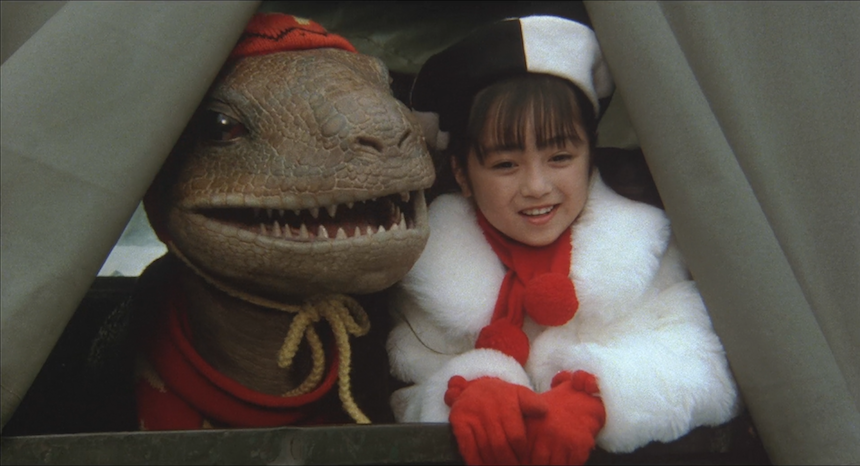
Rex: A Dinosaur's Story - Kadokawa
Seldom seen outside Japan, this Jurassic Park meets E.T. story was a massive hit domestically, until it was pulled out of theaters amid a scandal involving its director, Kadokawa Haruki, and his cocaine smuggling business. It was released in 1993, just a few months after Spielberg's Jurassic Park debuted.
This children's film tells an unlikely friendship of a baby T. Rex and a young girl named Chie (Adachi Yumi). Akira, a paleontologist father of Chie, discovers a frozen dinosaur egg inside a crystal pyramide, after following a Jomon period pictograph into an ice cave, with the help of an Ainu (indigenous people in northern Japan) in Hokkaido.
Chie is reunited with her emotionally distant mother, who happens to be an embryologist in New York, when she flies over to help in hatching the egg. She abandoned Chie due to her career, just like dinosaurs abandoning their offsprings after they are born.
Chie becomes the baby dinosaur's surrogate mother after the egg hatches (wink-wink, nudge-nudge). But the sinister corporation is trying to capitalize on the discovery by putting Chie and Rex in commercials and selling merchandise, against their will. Rex is mistreated and caged like a circus animal. So it is up to Chie and the local munchkins to break Rex out, with snowmobiles and air balloons!
Created by the special effects legend Carlo Rambaldi (King Kong, Alien, Possession, E.T.), Rex is a wide-eyed adorable lizard-puppy, a live-action pokemon character with wagging tales, rather than a killing machine with razor sharp teeth. Jolly fun!