
Playback: Kelly Reichardt's Small Gestures, from RIVER OF GRASS to THE MASTERMIND

Kelly Reichardt has spent her life chronicling the unhurried, uncertain rhythms of American life.
Reichardt's films linger on people who live just outside the margins -- drifters, workers, artists -- capturing the fragile connections that hold them together. From the lost runaways of River of Grass (1994) to the dreaming travelers of First Cow (2019), Reichardt challenges the myths of self-reliance that shape the American landscape, revealing a country sustained by small acts of care and endurance.
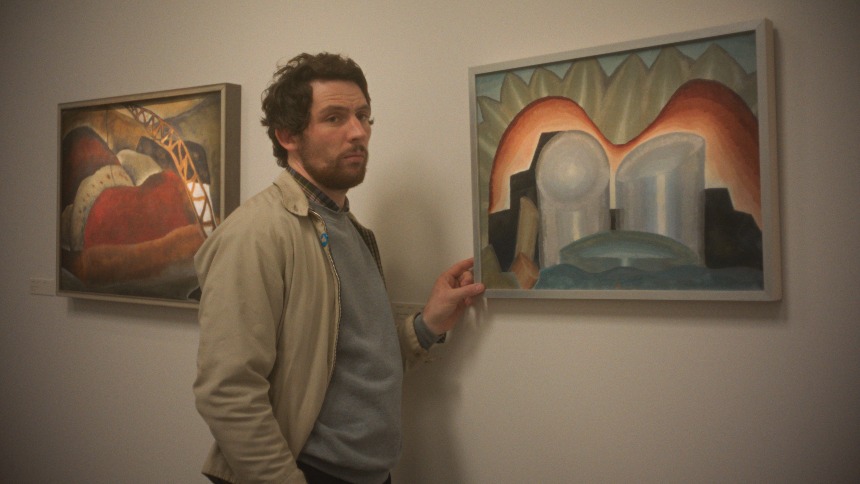
Late last week, Reichardt's latest film, The Mastermind (2025), hit theaters across the United States. This heist movie follows James Blaine Mooney (Josh O'Connor), a seemingly ordinary suburban father leading a secret life as an art thief. Inspired by the famous 1972 robbery of Massachusset's Worcester Art Museum, Reichardt stages a museum heist gone-wrong. In reality, James is no mastermind, only a man who likes to imagine himself as one. But after stealing four Arthur Dove paintings with a less-than-capable crew, his illusion of control begins to unravel. Reichardt approaches a typically adrenaline-filled genre with a careful hand, taking a close look at the flawed person at its center.
Reichardt, born in 1964, grew up in Miami-Dade County, where both of her parents worked in law enforcement: a detail that surfaces in her debut feature, River of Grass, whose protagonist is the daughter of a police officer. Drawn early to photography, Reichardt later pursued it formally in her MFA studies at the School of the Museum of Fine Arts in Boston. Early in her career, she worked in props and set dressing on Poison (1991), the debut feature by her close friend Todd Haynes.
River of Grass marked her as a filmmaker to watch. It was nominated for the Grand Jury Prize at the Sundance Film Festival and three Independent Spirit Awards. But, for one reason or another, Reichardt struggled to get another made. "It had a lot to do with being a woman," she said in an interview with Gagosian Quarterly. "So, I just said, 'Fuck you!' and did Super 8 shorts instead." Two shorts during this time -- Then a Year (2001) and Travis (2004) -- were subtle (but damning) criticism against the Bush administration.
It wasn't until 2006 that Reichardt completed her sophomore feature, Old Joy. From here on out, she's navigated the quiet corners of American life, with the exception of her frenzied 2013 crime thriller Night Moves. Still, the bulk of her films earned a reputation for their melancholic and measured qualities. To be clear, it doesn't do them justice to call them slow, because Reichardt approaches these stories with so much care, all the audience needs to do is let the stories wash over them.
"I'm not out to make films that are slow, really. It's just that, when I go to the movies and I sit through the previews, I literally feel assaulted," Reichardt said in a 2017 interview, perhaps the clearest explanation of why she is more interested in the small gestures of everyday life.
For this edition of Playback, I'm rolling back the tape on Reichardt incisive, people-focused filmography.
River of Grass (1994)
A would-be outlaw couple drifts through Florida suburbia in River of Grass (1994), chasing freedom they never quite find. The story starts with Cozy (Lisa Donaldson), a disquieted housewife living with her police officer father in and around Miami-Dade county. One day, she drifts into the company of Lee Ray Harold (Larry Fessenden), a layabout who somehow stumles upon a gun. After nearly running over Cozy while firing the gun haphazardly, the two share a drink at a bar. There, the gun goes off and, convinced they killed a man, they go on the lam.
River of Grass traces this wayward love story -- two strays placing themselves on the margins of society. Stirring buzz at Sundance and the Independent Spirit Awards, the film laid a thematic foundation for the director. Here, Reichardt tethers a loose story to ideas of escapism and Americana myths. It is a study of the forlorn, delicately showing us how the small discontents of daily life accrue until it sparks internal mayham. It's a purposefully aimless debut, one the director described as "a road movie without the road, a love story without the love, and a crime story without the crime."
Wendy and Lucy (2008)
Stranded in a small Oregon town, a woman's search for her lost dog becomes a personal reckoning, fueled by personal survival. Wendy and Lucy (2008) follows Wendy Carrol, played magnificently by Michelle Williams, and her dog, Lucy, who earned the film a Palm Dog Award at Cannes. Traveling to Alaska in hopes of finding work, Wendy suddenly breaks down in Oregon without the money to fix her car. Struggling to take care of herself and her dog, she is arrested for stealing dog food, which is taken away from Lucy. One of Reichardt's saddest films, it stands as one of her clearest critiques of the once-possible American dream, the belief that, by some means, one could climb out of a hole. Can we now?
Wendy and Lucy transforms Reichardt's interest in loneliness and isolation into a manifesto. The film strips away narrative excess to expose the bare mechanics of survival, following Wendy's quiet struggle with poverty and displacement. Through its long silences and unadorned realism, Wendy and Lucy insists that solitude under capitalism is simultaneously emotional and systemic. We see how poverty is imposed and imprisoning, relegated to the margins of American society.
Meek's Cutoff (2010)
Lost on the Oregon Trail, a group of settlers discover that trust, not terrain, may be their greatest obstacle. Meek's Cutoff (2010) is loosely inspired by a famed story from the Oregon Trail where an arrogant frontier guide led a wagon train to their demise in the high desert.
Bruce Greenwood plays the dodgy Stephen Meek, who feigns extensive knowledge of the region as he leads the hopeful group as they push West. Once again, Reichardt uproots the conventions of whatever genre she works within. Taking on the fast-paced, heroic legacy of the Western, she instead takes a listless vantage point, where the unhurried plot gradually unravels into chaos as the journey goes from two weeks to five.
A noteworthy narrative decision is how she shifts the Western perspective to the women -- played by Michelle Williams, Zoe Kazan, and Shirley Henderson -- and Native American, a Cayuse man played by Rod Rondeaux. Ultimately, as the men's quarrels erode any hope of prosperity, the film renders the frontier's austerity as a stark commentary on the futility of ambition.
First Cow (2019)
For First Cow (2019), Reichardt returns to 1800s Oregon. Based on Jonathan Raymond's novel The Half-Life, the film places us again in the American frontier, where two outsiders find friendship -- and fleeting prosperity -- by stealing milk from the rich.
The traveling cook, Cookie (John Magaro), and a Chinese immigrant, King Lu (Orion Lee), form a tentative friendship, and scheme to bake and sell cakes using milk stolen from the first cow of wealthy nobleman Chief Factor (Toby Jones). The two intend to save money so that they might open a hotel in San Franscisco. Once again, Reichardt presents an incisive exploration of the desperation brought upon by capitalism, particularly in the American frontier. The unlikely pair sell these baked goods back to Chief, stirring an obvious circular anxiety, a cutting allegory for today's predatory capitalism.
Perhaps the defining work of Reichardt's career to date, it marries historical ambition with intimacy. Revisiting familiar terrain, Reichardt truly knows this world now. While focused closely on the two men, she manages to paint a fuller picture, particularly through Lily Gladstone, who plays Chief's Native American wife. It gathers all of her familiar themes -- friendship, labor, survival, and the frontier -- into something lushly composed and self-assured. These contradictions within the pursuit of prosperity are distilled, yet again, into something unsparing and unmistakably Reichardt.
The Mastermind (2025)
A suburban dreamer turns to art theft in search of purpose, only to find his rebellion smaller than he imagined in Reichardt's latest film, The Mastermind (2025).
In 1970s Massachussets, James Blaine Mooney (O'Connor) lives a quiet life with his wife, Terri (Alana Haim), and their two sons, Carl (Sterling Thompson) and Tommy (Jasper Thompson). Reichardt introduces us to this suburban family as they visit a museum; however, James slips to the side to steal a small item from a glass case under their noses. He's sizing up the place.
The title of Reichardt's new film is purposefully misleading, almost sarcastic. As James sketches out his scheme to steal four Arthur Dove paintings with his friends Guy (Eli Gelb) and Larry (Cole Doman), we realized he must think of himself as a mastermind. From the start, he carries a misguided confidence, ensuring his friends the theft will go smoothly -- no matter what. In short, he's arrogant.
This arrogance is commonplace across the heist genre. Think the unraveling of Dog Day Afternoon (1975) or Reservoir Dogs (1992). That explosive breakdown, however, lies outside Reichardt's interest. Instead, the director focuses on how James' life falls apart due to his hubris. He is so confident in himself, he doesn't bother considering contingencies. One of his friends chickens out, so he replaces him with the more hot-headed Ronnie (Javion Allen). And that's that. It's not hard to see how James might be caught, even with his judge father (Bill Camp), who expresses subtle disappointment towards James throughout. James is perhaps most motivated by a childish rebelliousness.
Don't expect the adrenaline evoked by the word heist. Admittedly, its difficult to shake that expectation, particularly during the first half of the film. The film resists attachment to James, a wannabe thief who lies to everyone and carries himself with disdain to everything. O'Connor somehow channels some empathy into this character, but at every turn, you feel disappointment. Still, in line with all of Reichardt's films, it delicately constructs the humanity around the lonely or listless, even when these feelings are imaginary or self-contained.
Yet again, Reichardt resists spoon-feeding her audience, finding meaning in the smallest gestures that define James. We are steeped in his definitively American discontent. The silences, often filled by Rob Mazurek's fantastic jazz score, show a dejected portrait of suburban life. Even when it might lose its grip on the audience, it delivers one of her most tragically inevitable endings -- and that's saying a lot.

More about The Mastermind

More about Playback
- Playback: Sam Raimi, Seesaw Inclinations, from THE EVIL DEAD to SEND HELP
- Playback: Nia DaCosta, Life on the Edge, from LITTLE WOODS to 28 YEARS LATER: THE BONE TEMPLE
- Playback: Rian Johnson, Twists and Turns, from BRICK to WAKE UP DEAD MAN
- THE SECRET AGENT Review: Much Smarter Than It Pretends To Be
- Playback: Kleber Mendonça Filho, Civic Tremors, from NEIGHBORING SOUNDS to THE SECRET AGENT


