
Echoes: Why Are Pakistani Women Still Called 'Bold' for Telling Ordinary Stories?

Pakistan is indeed a conservative society, and anyone wearing sleeveless clothing would be considered shameless or "bold."
The irony is that any woman telling her story is also considered bold, because in a society like this, it is the norm to suppress this gender and romanticize the years of long compromises and suffering underneath that a woman has to go through in the name of "honor."
The same stories have been told in Pakistani dramas that are a reflection of our society. Silence has always been a cultural benchmark, and rigid media archetypes have thrived on such tropes for quite a long time. Recently, the trend has changed, as everyday stories of suffering, as well as resilience, are coming out as a breath of fresh air.
The stories show everyday choices of these women around work, marriage, health, family, and public opinion wrapped in self-expression, turning into a debate about boundaries. The shifting cultural norms have now started highlighting how normal everyday conversations are now intersecting with storytelling elements that inundate institutional gaps and public scrutiny, intensifying with social media these days.
Zindagi Gulzar Hai (2012) became an international favorite, which manifested exceptional female independence, before and after marriage. The lead female, Kashaf (played by Sanam Saeed), had long endured gender discrimination, class disparity, and educational and financial struggles. Abandoned by a father who prioritized having a son, Kashaf and her sisters were raised by their working mother, who refused to compromise their education.
The drama also shows how a woman is expected to conform to the norms of marriage by complying with everything the in-laws say and, at the same time, completely dismantling them. The writer ensured that the drama did not entirely break the gender norms and that the pursuit of higher education and a career should be celebrated when it comes to women, rather than deeming it a burden. It is not necessary for Pakistani television to accept female independence only when it remains compatible with conventional marital expectations.
I would certainly call the next two examples "bold" for exposing bitter realities of life that no one dared talk about before. Udaari (2016) was issued a show-cause notice to HUM TV by PEMRA over objectionable content, which, in return, gained positive public support for the story. It talked about child sexual abuse, victim-blaming, social stigma, economic empowerment, and access to justice.
The drama explored the recovery of the victims and the struggle for accountability, which is the strongest example of Pakistani TV yet of how a responsible addressing of a social issue could bring contradiction between regulatory intervention and public appreciation. Women who were suffering suddenly, and most certainly, became a matter of controversy, which was only a retelling of a recurring confrontation with the ugly reality we live in.
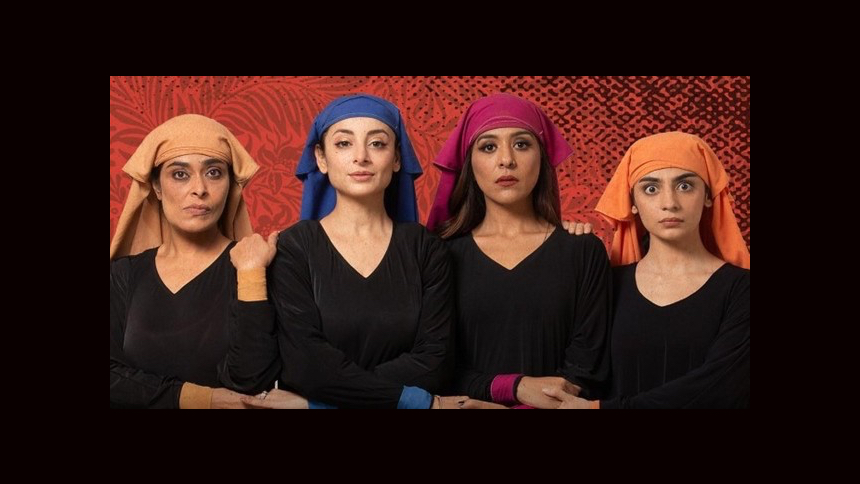
Churails (2020) -- pictured at top -- is one of my top favorites, as the empowered women were questioned to be "morally perfect." Asim Abbasi's web series deserves a standing ovation; it follows women from different socioeconomic backgrounds who established a detective agency. It explores domestic abuse, infidelity, patriarchal hypocrisy, female solidarity, and women's anger. The performances were bold, of women who were flawed, confrontational, and unapologetic.
Despite criticism from audiences and industry professionals, the series made waves as the argument of basic rights and creative freedom was taken to the next level. Why must female characters be morally impeccable, and why should her anger be threatening when these traits are present in males too and are openly considered okay? Aren't females expected to "feel" or "express" the same way as men do? The series also presented a perfect opportunity to turn to international streaming platforms to achieve greater creative independence.
2023 gave two special dramas that gift-wrapped progressive storytelling around basic, constitutional, and religious rights for women. Kuch Ankahi explores women's inheritance rights, workplace harassment, financial independence, marriage pressure, and body shaming through an everyday family setting, brought to life by a stellar cast in what can only be described as the pinnacle of art. Women's inheritance rights are neither a revolutionary Western concept nor a modern feminist intervention. They have legal and religious recognition in Pakistan, shown beautifully in a Pakistani drama that otherwise could have been considered bold.
The same year, Sar-e-Rah took this conversation beyond the household and onto the streets. What would you say about a woman's right to occupy public spaces? Revolutionary?
Because Sar-e-Rah gave us a female taxi driver, entering a world of professions that was traditionally dominated by men. Saba Qamar's Rania had to step into the shoes of her father after he fell ill, encountering passengers' stories filled with gender discrimination, infertility, economic vulnerability, and gender identity.
The drama simply showed how a woman is trying to earn her living, and her act of driving a taxi in Pakistani conservative society became an act of resistance because of the gendered expectations. An ordinary woman's survival became a bold or extraordinary achievement.
Echoes is an opinion column on film and television from the perspective of a writer based in Pakistan.

More about Echoes
- Echoes: HUMSAFAR Reimagined. What If Khirad Had Chosen Herself Instead of Ashar?
- Echoes: Pakistani Dramas Are Finally Moving Beyond Repetitive Storylines
- Echoes: 7 Pakistani Folk Tales That Could Become Incredible Fantasy Movies
- Echoes: What Does a 13-Minute Oscar-Qualifying Short Film Mean for Pakistan's Short Film Industry?
- Echoes: HANGING BY A WIRE, Pakistan's First Academy Award Documentary Entry, Was Shot Entirely on a Phone


