
Echoes: HUMSAFAR Reimagined. What If Khirad Had Chosen Herself Instead of Ashar?

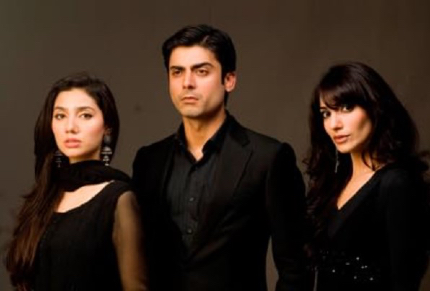
Humsafar (2011) is one of the most culturally influential Pakistani dramas, not only famous domestically but internationally as well.
Starring Fawad Khan and Mahira Khan, the story revolves around a married couple who despise each other due to different perspectives but have to reconcile because of their daughter while facing several hurdles.
Humsafar gave us the reconciliation we all wanted back in 2011. What if Khirad's happily ever after didn't involve fixing the marriage that broke her? Khirad's dignity and refusal to seek forgiveness are an open declaration of her strength as a woman. She had rebuilt her life without her husband after he left him over a petty misunderstanding. She showed that she could survive without him, which is a great opportunity for her to carry the story forward. The story could've shown her side of the struggles and kept her under the spotlight.
Had her daughter not been diagnosed with a life-threatening illness, the treatment for which Khirad could not afford on her teacher's salary, her circumstances might have been entirely different. A good mother is, of course, expected to prioritize family unity over personal happiness. Khirad's motherhood influenced her final decision more than the romantic love for her estranged spouse.
The deeply rooted cultural assumption that a mother has to stay with the father for the well-being of their child, that a successful marriage is a benchmark of a woman's success, even if the relationship is toxic, and the perception of separation or divorce as a failure rather than a potentially healthier choice are all factors causing hindrance in the way of a woman's independence that Pakistani dramas often portray.
Evidence from producers, writers, and audience research, especially responses on social media, is needed to determine whether Pakistani dramatists purposefully avoid depicting healthy co-parenting out of concern for public backlash. Dramas may just be reflecting societal reality, but viewers frequently believe that they are endorsing particular beliefs.
A Pakistani actress previously talked about how her efforts to alter the perception of divorce were thwarted because the scriptwriter was afraid of the public's reaction, as per Desi Blitz. Reconciliation is a more commercially appealing result because viewers, regardless of their generation, tend to become emotionally invested in the lead couple's relationship. It is frequently said that maintaining a marriage is preferable to regaining one's independence.
The cultural importance of marriage and family preservation via women's sacrifice is the highlight of any story in Pakistani television. Female patience, sacrifice, and forgiveness are frequently presented as moral virtues but have hardly been seen in a male protagonist.
Why is a woman's healing often associated with the restoration of her marriage? Why can't she survive on her own, and how would things have changed if Khirad had not contacted Ashar for her daughter's treatment in order to get financial help from her rightful father?
A reimagined Humsafar could have given Ashar his redemption arc without compromising Khirad's journey toward independence. Khirad might have chosen not to give their marriage another shot. She could have acknowledged his remorse but continued with her teaching career and built a financially independent life. Ashar could have stepped up as their daughter's father without pressuring Khirad to return. Both find closure, just not in each other's arms.
The alternate ending does not necessarily suggest a punishment for Ashar, but it would be a simple message for the women that they have the right to exist independently and are not responsible for his redemption. And honestly, this ending would now be more acceptable for modern audiences, as social media has changed perceptions.
Taking a real-life example of Shehroz Sabzwari and Syra Yousaf, the couple got separated but still have a cordial relationship, focusing on co-parenting their daughter. Sabzwari's second wife, Sadaf Kanwal, is often seen happily posing with their daughter, along with her own.
Younger audiences are having online discussions about personal boundaries, accountability, and self-respect, despite Pakistani television continuing to rely heavily on marriage-centric storytelling. It could be a cultural effect as well, but the alternate ending to Humsafar could challenge the conventional definition of a woman's happiness in the modern world.
Echoes is an opinion column on film and television from the perspective of a writer based in Pakistan.

More about Echoes
- Echoes: Pakistani Dramas Are Finally Moving Beyond Repetitive Storylines
- Echoes: 7 Pakistani Folk Tales That Could Become Incredible Fantasy Movies
- Echoes: What Does a 13-Minute Oscar-Qualifying Short Film Mean for Pakistan's Short Film Industry?
- Echoes: HANGING BY A WIRE, Pakistan's First Academy Award Documentary Entry, Was Shot Entirely on a Phone
- Echoes: Pakistan Wants A Film Industry. Does It Have the Crew to Build One?


