MONSTERS OF GOD Review: Reptiles, Zoos, Acrimony, Drugs, Guns, and Money
Eric Goode's fascinating documentary series digs deeply into the reptile trade, legal and otherwise.

"Sssssss." -- Sssssss, 1973.
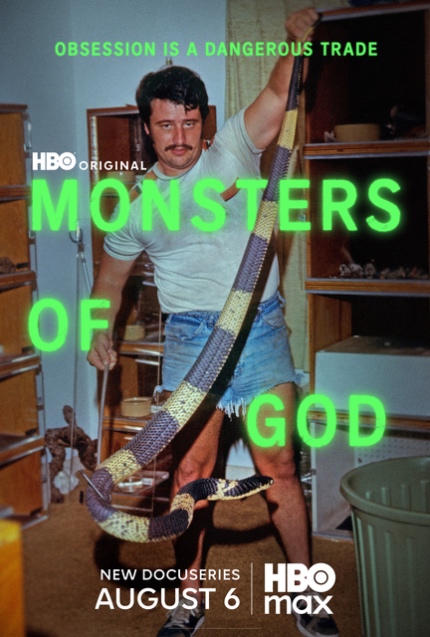
Monsters of God
The first episode of the five-episode series debuts Thursday, August 6, at 21:00 EST/PST, on HBO and will be available to stream on HBO Max. Subsequent episodes will debut every Thursday at the same time. I've seen all five episodes.
'Reptile people' are not like me and you. Unless you have no hesitation about handling a deadly snake or a giant lizard or picking up a dead animal from the road to feed your alligator.
Quickly absorbing, the new documentary series by director Eric Goode (Tiger King, Chimp Crazy) plunges deeply into the world of so-called 'reptile people.'
Right up front, Goode admits that he has a personal connection to the issue. He began buying reptiles when he was a boy, and admits to purchasing reptiles from "shady" dealers in the past. In that sense, he is part of the problem.
Yet it also gave him access to the dealers, and an abiding sense of right and wrong when it comes to the reptiles themselves, and their ultimate fate, all because of the thriving trade that developed around them. Where did it begin? As Goode says in his opening narration, it "largely started with two men," and so the first episode revolves around those two men, who were pioneering for what they did in their respective eras.
Like director Goode, Tommy Crutchfield became captivated by snakes in his youth, tracing it to the moment he overturned a rock and saw a snake. When he turned 16, he began hunting snakes to sell them to a local 'Snake-a-Torium' attraction in Florida. Soon enough, he fell for the attraction's cashier, Linda, and they eventually married.
Increasingly obsessed by slithering creatures, Crutchfield became aware in 1970 of a price list put out by a dealer in Philadelphia, Pennsylvania, advertising rare reptiles. His obsession deepened, and he decided that he would enter the reptile dealing trade.
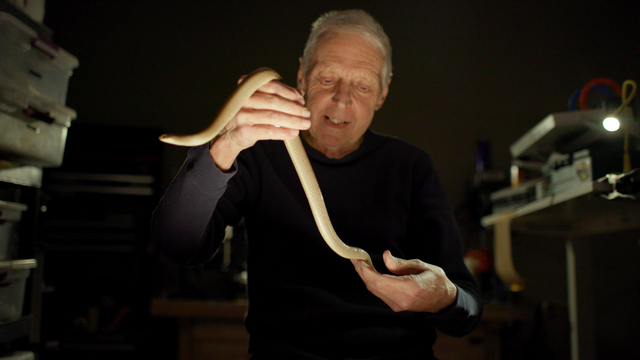
Hank Molt is the Philadelphia dealer who created the price list. By his own accounting, he was intent on creating a mysterious persona. In his youth, like Goode and Crutchfield, he was entranced by reptiles. After graduating from college, though, he took a job as a salesman for Kraft Foods, which he hated.
To feed his reptile fascination, he started buying snakes, obtained locally. Then, at night, he'd type and mail letters to people around the world, seeking to buy unusual or rare reptiles, eventually accumulating a sufficient number to quit his job and buy a pet store in Pennsylvania.
Quickly replacing all the dogs, cats, birds, and fish with all manner of reptiles, he sent out his first price list in 1966. As it happened, he started at the precise moment that zoos nationwide had cottoned to the idea of starting their own reptile collections, and so Hank's sales list was an immediate sensation.
Flush with his financial success, and responding to an increased demand from American zoo curators, Hank began traveling the world in search of exotic reptiles. Wildlife regulations were few and far between in the late 60s, allowing him great leeway in importing animals from wherever he had taken them. In 1973, however, the Environmental Species Act was passed in the U.S., increasing legal awareness of the smuggling business in which Hank and others were involved.
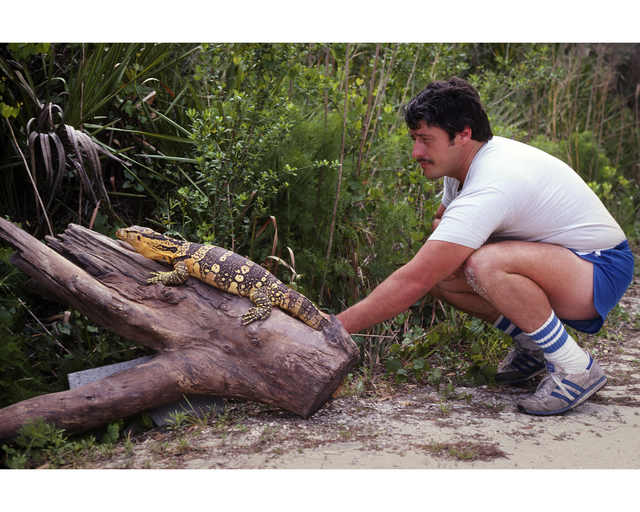
Circling back to Tommy Crutchfield, we learn that his reptile love led him to become involved as a trainer for wild animal shows, similar to the 'Snake-a-Torium' attraction. After Tommy started his own trading business, he purchased reptiles from Hank Molt, and admired Hank's spirit of adventure and world travels.
In time, Tommy did some traveling, acquiring more and more creatures, and became increasingly active in the selling and trading business. Frankly inspired by Hank, Tommy created his own price list.
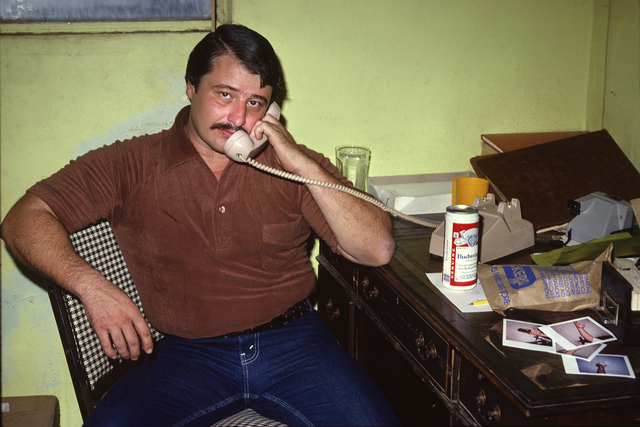
From there, the episode traces each of them during their pioneering days in the reptile trading business. As rival dealers, they were never truly friendly. Indeed, whatever adventurous spirit they may have once shared has long curdled into disparaging hatred.
The episode provides context for their evolving relationship, filling in the blanks with testimony from other 'reptile dealers,' interviews with U.S. Fish and Wildlife Service agents and specialists, as well as historical photos and news footage.
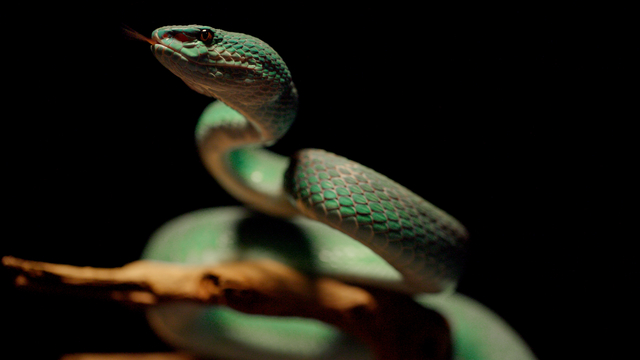
It concludes with dangling threads suggesting where it will go next in its exploration of these 'monsters of God,' which are glossily photographed and clearly identified as though they were supermodels, which I guess they are, in the context of the 'reptile people' and the world they inhabit.
Future episodes introduce dealers who dominated the trade in the 1980s and 90s, stretching from the U.S. to Germany to Madagascar to Malaysia to Belize and beyond. Balancing out the seemingly empathetic portrayal of the dealers, filmmaker Goode also features an abundance of law enforcement personnel, who were often outmanned and outequipped by the dealers, yet never relented in their pursuit of the illegal smugglers and dealers.
Deftly weaving a consistently intriguing narrative, director Eric Goode examines this decades-long, bizarre and disturbing tale with a frank empathy, not for the crimes committed, but for the confounding yet deep-rooted love and appreciation that the 'reptile people' invariably have for the animals they have exploited.
Even the most notorious criminals can have a soft spot for their favorite reptiles.
Now Streaming celebrates independent and international genre films and television shows that are newly available on legal streaming services.