
THE SAMURAI AND THE PRISONER Interview: Kiyoshi Kurosawa on the Adaptation Between Fiction and Reality

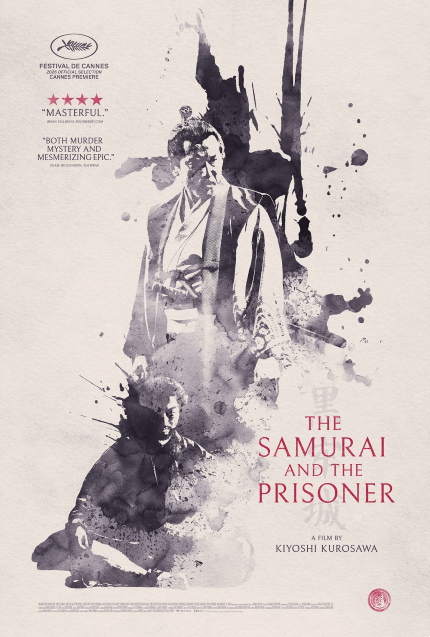
Japanese filmmaker Kiyoshi Kurosawa, known for his contributions to psychological horror, steps into the historical genre again after 2020’s Wife of a Spy.
Based on the novel of the same name by Honobu Yonezawa, the 147-minute film unfolds with a series of mysteries that Araki Murashige encounters during the siege of Arioka Castle. In each of the four chapters, from internal schemes to external chaos, the confused warlord Murashige quests for illumination from his captive, Kuroda Kanbei, a faithful servant to Oda Nobunaga.
The whole story, filled with suspense and mystery, gradually develops into a pulp whodunit and psychological quiz, transforming the barricaded fortress into a baffling space full of twists. But Kurosawa seems never really interested in the real history itself; instead, he explores the possibility between fiction and reality, aiming to anchor the complexity of the protagonist drowned in historical disputes.
On the occasion of the film's theatrical release, I spoke with the director about adapting Kokurojo and how he manages to translate sophisticated historical figures into relatable cinematic characters in his latest work.
ScreenAnarchy: What first drew you to this novel, and what made you decide it was a story you wanted to adapt for the screen? Looking back on the process, what proved to be the greatest challenge in translating it into a film?
Kiyoshi Kurosawa: Before I read the original work, I was already interested in Murashige Araki. Even before I read the novel, I had been attracted to such a historical figure who is regarded as a weakling, a coward, and a traitor — mainly because he fled the castle, leaving behind his retainers and his family.
I always thought that if a historical figure is regarded with such harsh words, it must mean that they are the people who veered away from traditional or stereotypical values of the time, and the mystery of why he fled the castle intrigued me greatly.
This novel, in a very detailed fashion, albeit fictionalised, depicts the events leading up to his fleeing the castle as well as the changes in his psyche. So that is what drew me to the story.
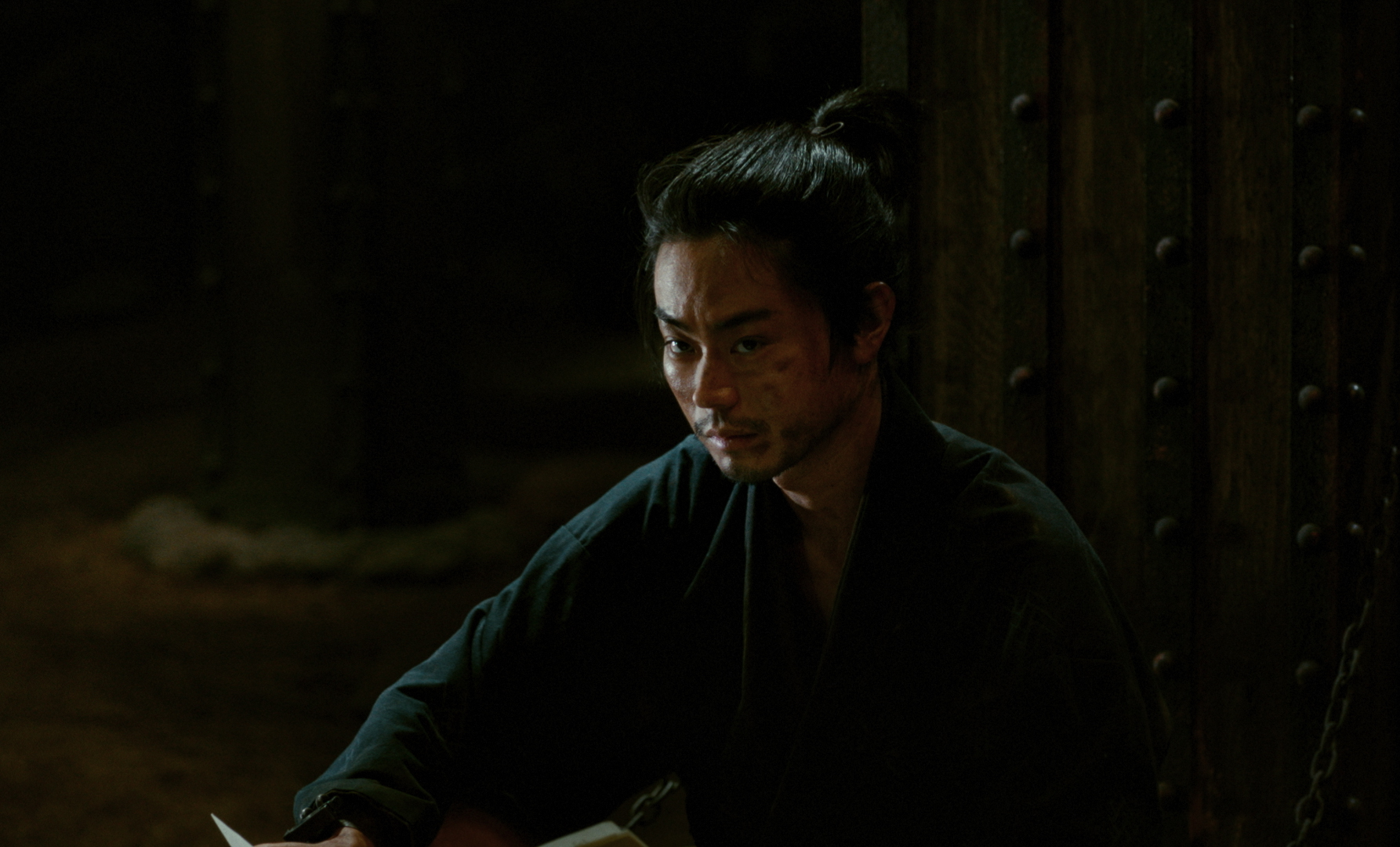
This film marks your return to the period genre following WIFE OF A SPY. The two films also seem to engage with history in very different ways: THE SAMURAI AND THE PRISONER is tasked with bringing real historical figures from a relatively undocumented period back to life, using fiction to fill the gaps left by history.
By contrast, WIFE OF A SPY follows fictional characters whose lives are gradually consumed by the individual liberty of historical forces. It almost feels like it transforms them into ghosts. How did these different relationships between fiction and history shape your creative approach during those early stages of development and production?
As you said, the films are completely two different stories; both are a challenge for me in dealing with actual historical events or figures.
I am interested in how I might pay respect to or honour the events that actually happened. Of course, I must fictionalise elements that I don’t know. However, I must also explore and pursue the possibilities within fiction in the film.
As far as things that actually happened and things that we do know and are historically recorded, I need to remain faithful to the actual events and the truths of the situation. That is a rule that I kept to as I was making these films.
Let me give you a concrete example. At the end of Kokutojo, Murashige Araki leaves the castle with his family and subordinates — that is a historical fact. But as to why he left the castle, it remains a mystery.
There are various hints we can gleam from the novel or even history, but there are possibilities that I line up. I want to make sure I wasn’t choosing the conclusion that makes the most sense, or the one that is most easily understandable, partially in order to preserve the mystery as it were. I certainly can’t know for sure about the real history, but we can line up possibilities within fiction.
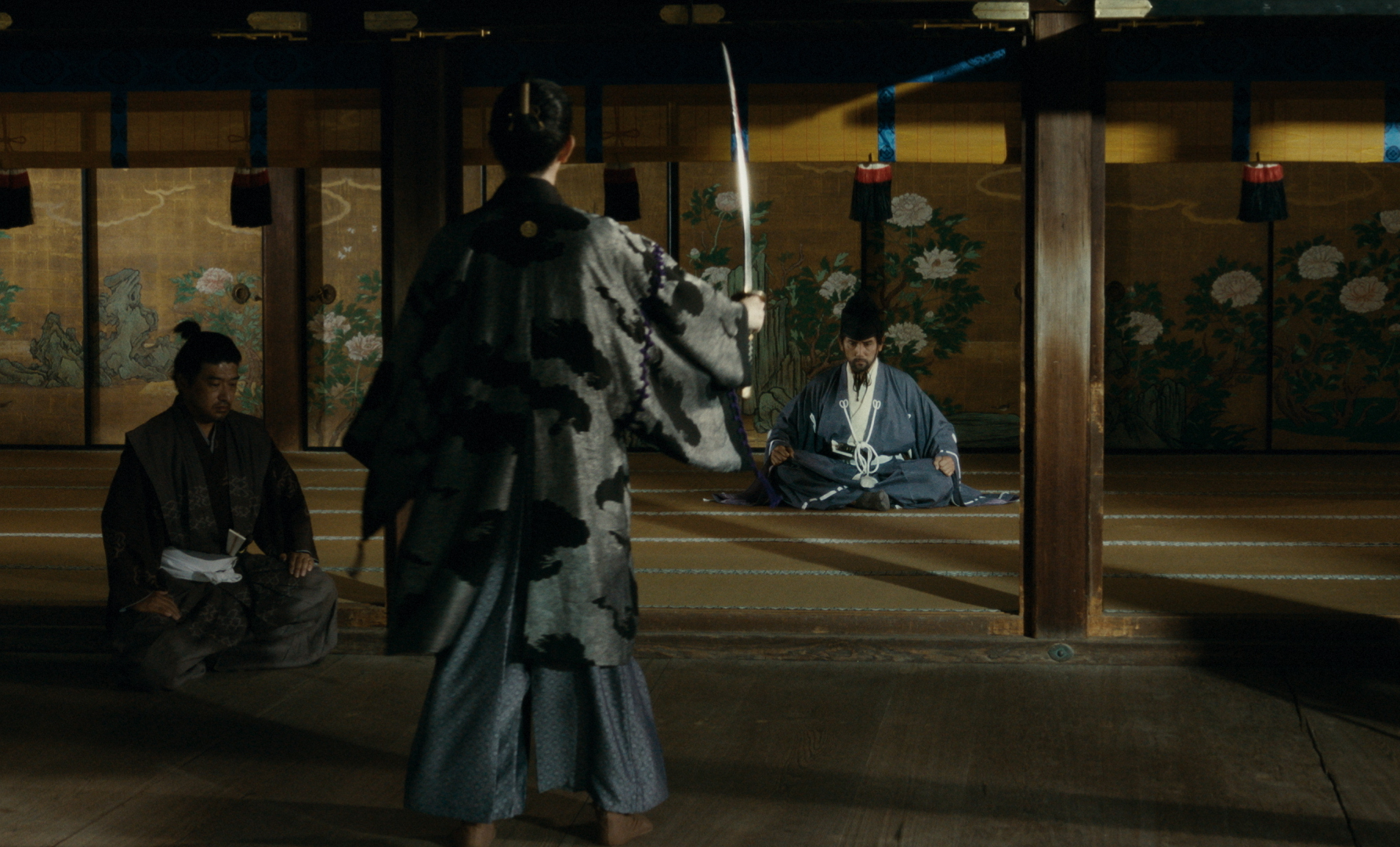
The space and choreography are very important in many of your films. Although much of the film unfolds within the confined space of the castle itself, it never loses its sense of mystery or suspense. How did you work with your production team to transform the castle into such a rich dramatic and psychological space?
Well, this is actually quite a complicated process.
In my previous films, setting against present-day Tokyo, even if you are filming in a confined space, when you open up a window, what you will be confronted with is the reality of modern Tokyo.
So there’s always this reality that actually exists beyond. I find that in films that are set in the present day, if we are filming in a confined space, I try to include things that might hint towards a reality because it’s existing on the same timeline.
For The Samurai and the Prisoner, with it being set in the 16th century, no reality exists beyond the frame. However, Japanese structures and architecture are constructed in a way that there’re a lot of depths.
For instance, if you look beyond a room, there might be a garden, a door, and layers of sliding shoji screens that convey a sense of depth.
For me, it was a challenge of trying to, as much as possible, express that depth through camerawork. Perhaps beyond that very last plane, there isn’t the reality of 16th-century Japan, but I really wanted to test the limits as far as how deep we could show the environment, and that was a collaboration between myself, the art department, and the DP.
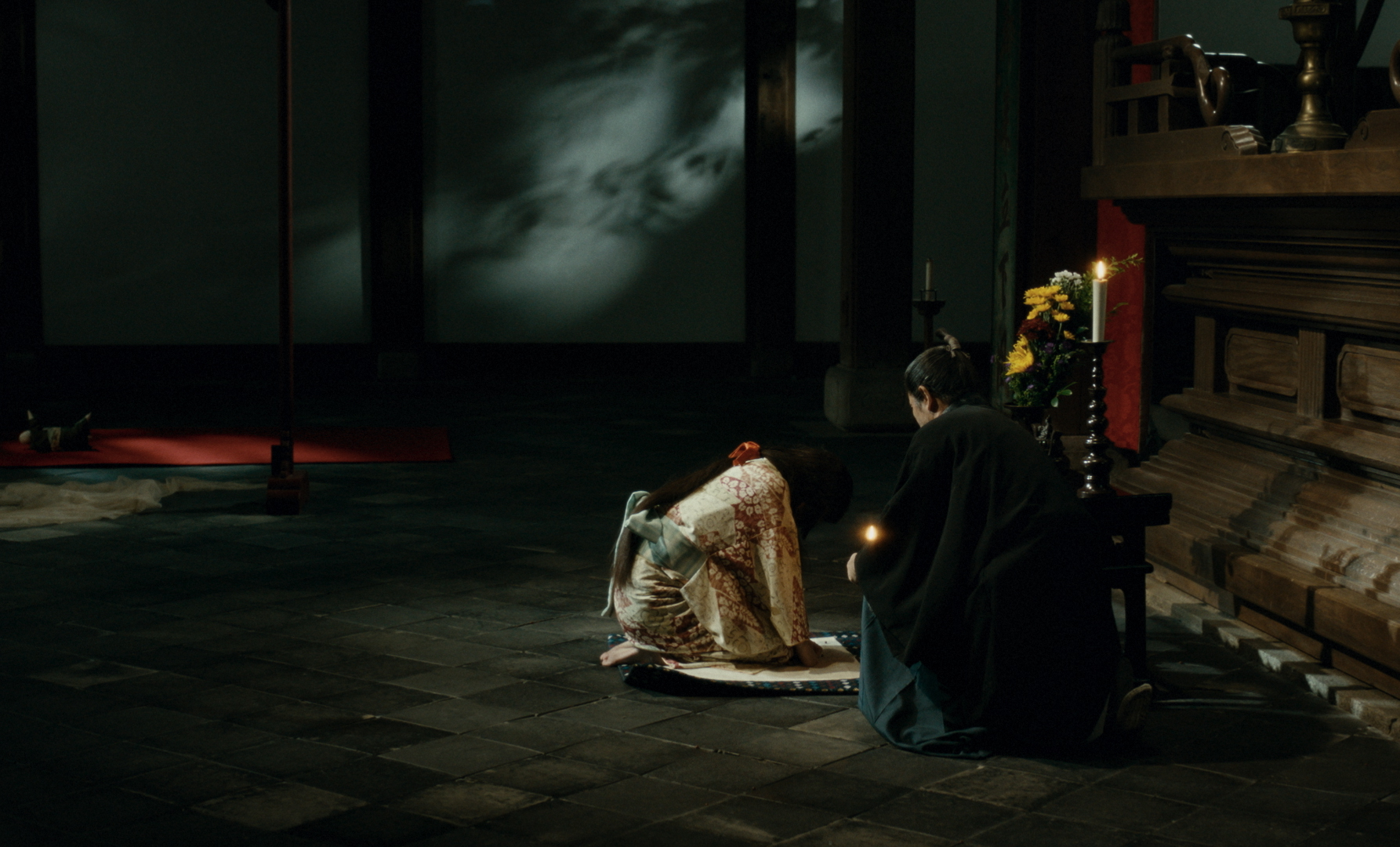
The film seems to question, or even challenge, the traditional ideals of the samurai code. Throughout the story, we encounter a series of opposing belief systems — violence versus compassion, the universal versus the divine, Buddhism versus Christianity — which all seem to coexist within the narrative. How do you interpret these ideological conflicts, and how did you seek to express them cinematically rather than simply through dialogue?
The Samurai and the Prisoner depicts what happens within a castle in which many different value systems and ideologies exist in one place, reflecting the period of Sengoku, the Warring States period, where there wasn’t one single ideology that unified all of the states.
It was actually a time of many different kinds of perspectives and ideologies. Even thinking about samurai customs, this idea of Bushido wasn’t something established until later on when society stabilised much more in the Edo period.
There might be an existing kind of way of the samurai, but there were no defined principles as in Bushido. So, it was a time of great disorder, which also means that there were many possible paths for Murashige to take, who was in a position of trying to figure it out for himself.
As the film is set in a world where there are no singular principles, that is the basis for how I present it with conflicting perspectives and ideologies.

Do you feel this content is inappropriate or infringes upon your rights? Click here to report it, or see our DMCA policy.
More about The Samurai And The Prisoner (2026)
- THE SAMURAI AND THE PRISONER Review: Historical Murder-Mystery, Full of Modern-Day Questions
- Now Playing: I WANT YOUR SEX, THE SAMURAI AND THE PRINCESS, SPIDER-MAN: BRAND NEW DAY
- Opening This Week: SPIDER-MAN: BRAND NEW DAY, I WANT YOUR SEX, THE SAMURAI AND THE PRISONER
- Fantasia 2026: Final Wave Announced, HER PRIVATE HELL & FREAKS PART II to Bookend 30th Edition
- THE SAMURAI AND THE PRISONER: Official Trailer & Poster For Kiyoshi Kurosawa's Period Murder Mystery


