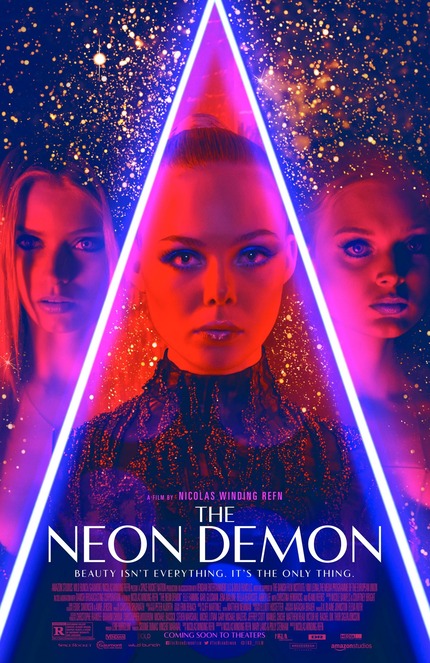
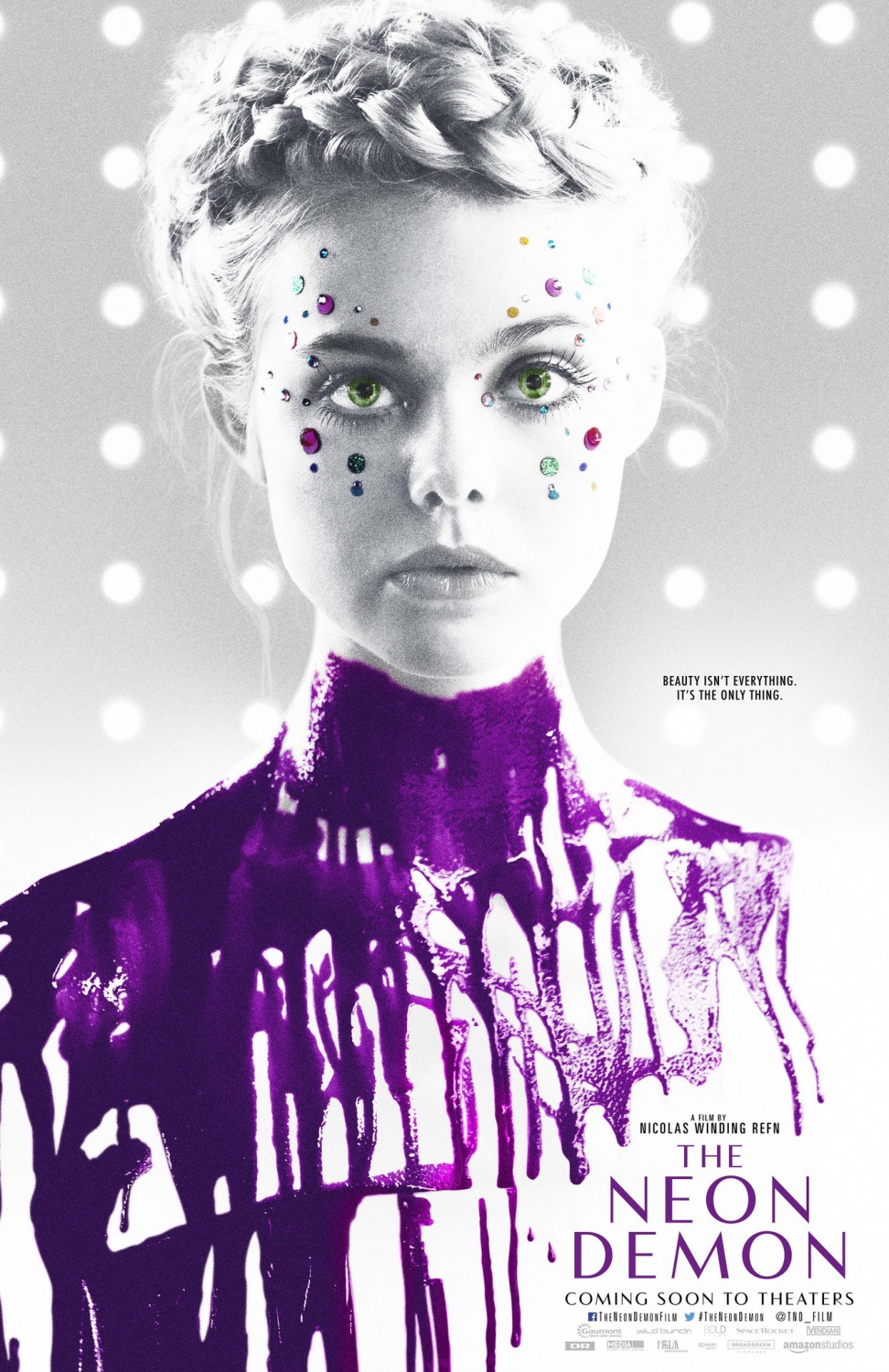
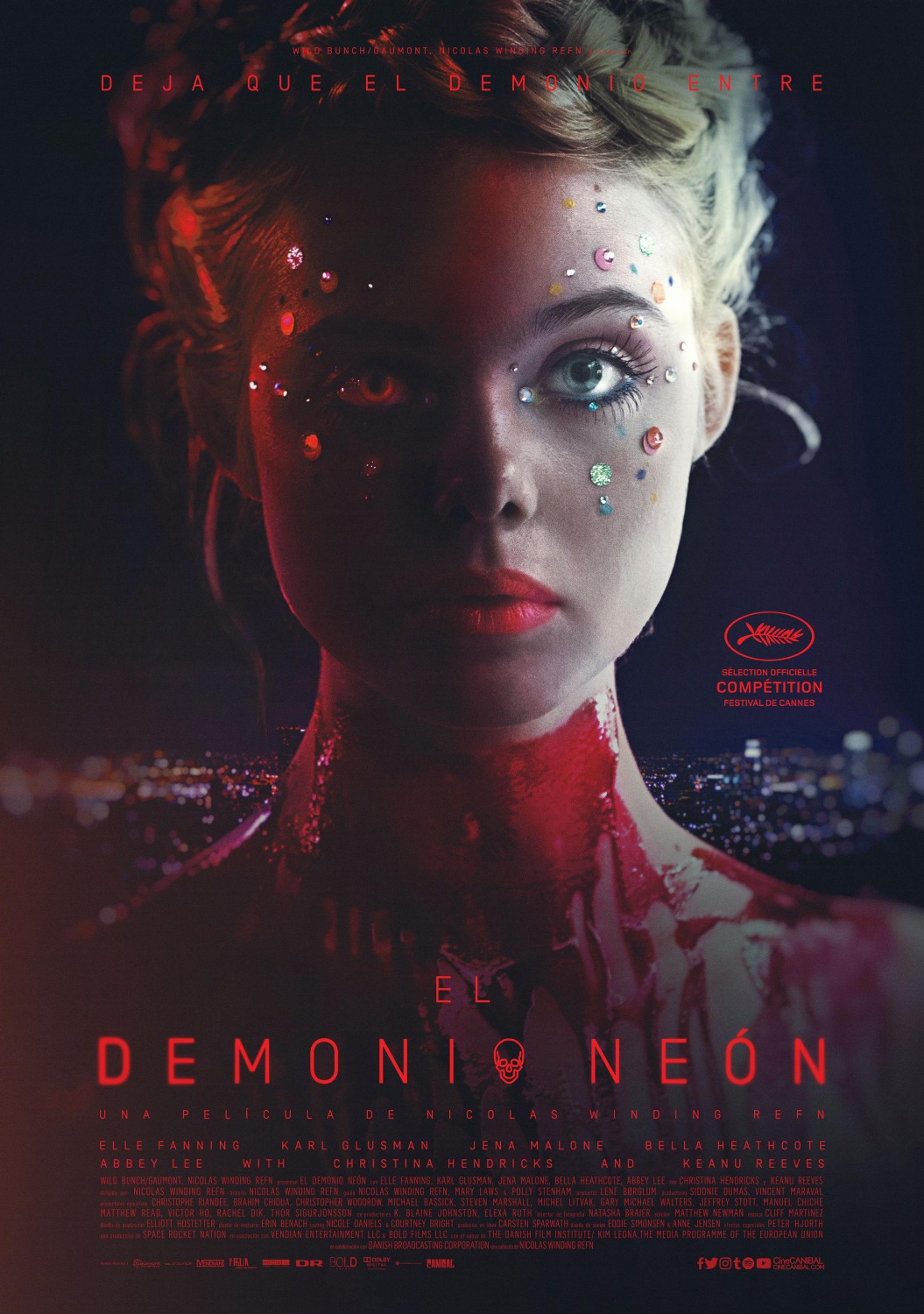
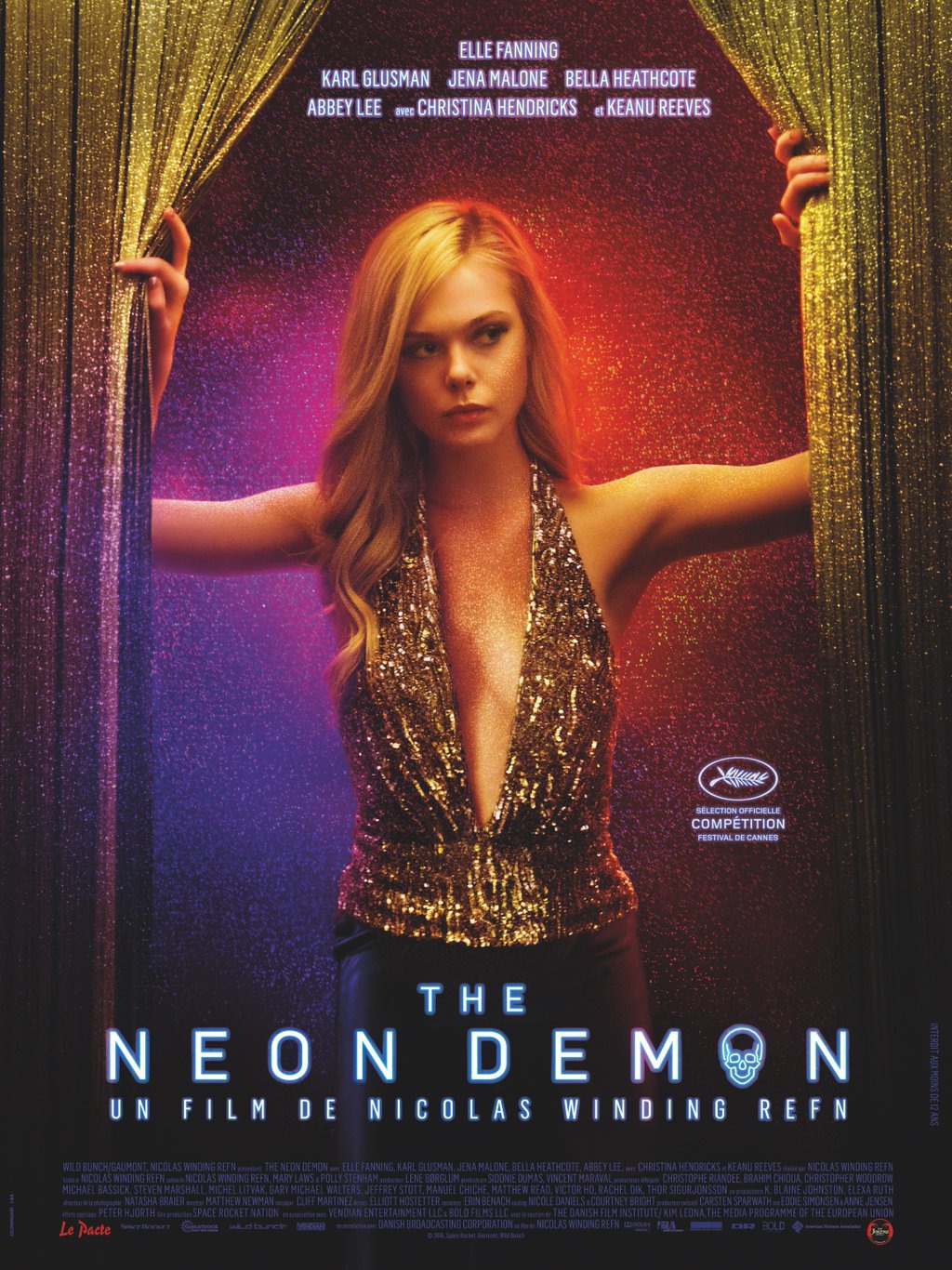
“Beauty isn’t everything. It’s the only thing.”
Here’s a fun game: is the previous quote from Nicolas Winding Refn’s 2016 horror film
The Neon Demon, or a line from online influencer
Clavicular, the famous “looksmaxxer” who smashes his own face with a hammer to supposedly improve his looks?
While an approximation could no doubt be attributed to “Clav,” as his followers call him, it is Alessandro Nivola’s character, fashion designer Robert Sarno, who utters the line a little over an hour into The Neon Demon. He says it after forcing a woman to stand and pose in a restaurant so that her attractiveness can be judged by a younger man.
The woman in question has made several alterations to her body in an attempt to remain relevant, which Sarno dismisses as a pathetic imitation of “real” beauty. The younger man repeats the old adage that “it’s what’s on the inside that counts.” Sarno can only smile at the naivety.
A decade later, Clavicular and the broader looksmaxxing subculture have, unfortunately, aged Refn’s film spectacularly. It’s almost mainstream to believe that you might as well die if you’re ugly.
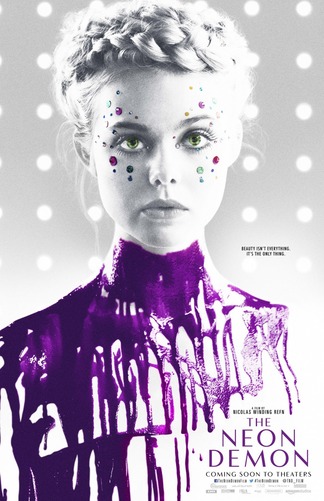 The nightmarish world of The Neon Demon is one where beauty is indeed everything, but an increasing number of both real-life women and, surprisingly, men, subscribe to this belief without irony. Looks have often been compared to currency, but Refn’s commentary on beauty already prophesied a pagan ideal capable of consuming those who worship.
With Refn back at Cannes after nearly a decade away, premiering his latest to
unusually terrible reviews (even for him), detractors once again seem eager to declare the Danish provocateur a fraud. I don’t doubt at all that Refn has finally flipped his lid, obsessing over his obsessions too close to the sun.
But even though I can’t comment directly on Her Private Hell, having not seen it, I do know that virtually everything Refn has made post-Drive has been controversial. His films are too slow, too strange, too self-serious, too obsessed with surfaces, sex, and violence. With modern ‘metaphorror’ so preoccupied with substance, Refn seems to ask: won’t someone think of the style?
It is not so much my hope to convince anyone that
The Neon Demon is Refn’s masterpiece—cannibalistic fashion horror isn’t
really any normal person’s cup of tea—but to point out how ahead of its time the film now feels. Refn has always been a troublemaker, someone who calls himself a
“pornographer” to get a rise out of critics. While such theatrics have drawn more eyes to his films, they've also led the consensus to underestimate the words behind one of cinema’s few truly uncompromising voices.
The Neon Demon follows Jesse (Elle Fanning), a high school dropout who arrives in Los Angeles hoping to become a model. Her natural good looks prove an extremely handy tool for knocking on doors, and she’s quickly picked up by a modeling agency that convinces her to say she’s 19 (she’s actually three years younger, barely). Makeup artist Ruby (Jena Malone) introduces her to fellow models Gigi and Sarah: one already exhausted by the industry’s constant demand for newer, younger bodies, the other about to reach her expiration date.
Refn wastes little time establishing the film’s focus on looking. Ruby’s first line—“Am I staring?”—comes as both women stand before mirrors, their backs to the camera. Nearly every major interaction in the film involves some act of visual evaluation: auditions, photographs, makeup application, undressing, posing, and, of course, appraising someone’s looks. Characters rarely converse like normal people. In this world, there is only the surface—or the cover of the book, so to speak.
In an extraordinarily blunt sequence, the girls interrogate Jesse about who she sleeps with and what cosmetic “work” she has had done. Ruby remarks that lipstick shades are always named after either food or sex, practically announcing the film’s thesis out loud before we’ve even memorized the names of these characters. Refn, for all of his bluster and bravado, has never claimed to be good at foreshadowing. (Or driving, or dancing, or talking to women, as he reminded everyone during his latest presser at Cannes.)
It is easy to mock Refn’s self-seriousness, his glacial pacing, his fixation on neon lighting and bone-dry dialogue. It is harder for audiences and critics alike to accept that these exaggerations are often operating in the register of myth or fairy tale. The Neon Demon is not interested in psychological realism any more than Suspiria or The Texas Chain Saw Massacre (Refn’s favorite film). He approaches Los Angeles and the fashion industry as a literal underworld populated by predators, necrophilia, and sacrificial offerings, one where every moment feels heavy with portent. And why not? Why shouldn't a story this otherworldly feel like a glimpse into another dimension?
And so the film spirals into exactly the kind of blood-drenched nightmare a bad trip foretells. Jesse gradually becomes intoxicated by the control her beauty grants, alienating boy/friend Dean while inflaming the jealousy of Ruby, Sarah, and Gigi. Despite her gifts, it is beauty itself that is worshipped, and worship requires a sacrifice.
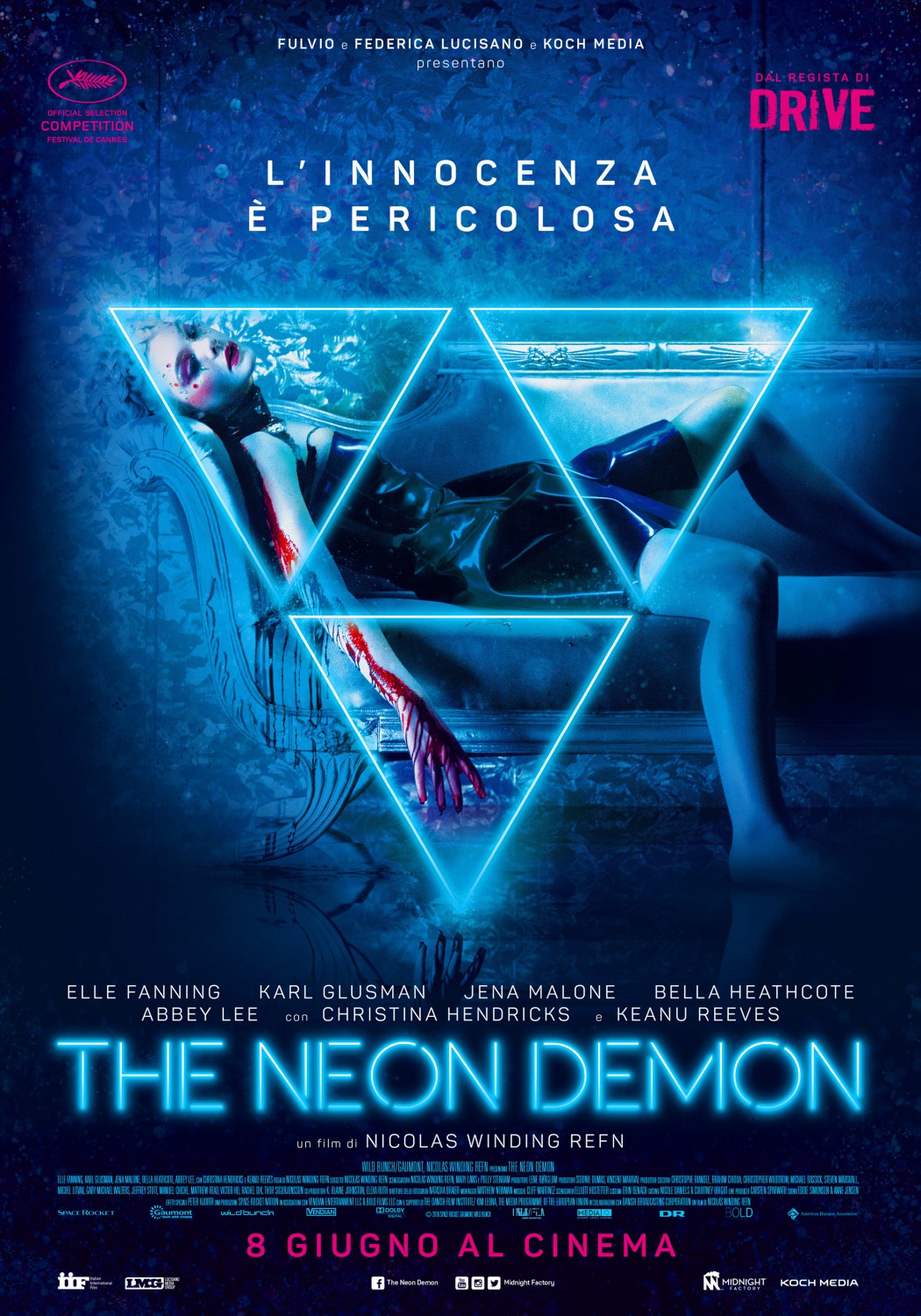
After Ruby’s affections are refused, the gang kills and literally eats the virginal Jesse, opening up the job market at the cost of trying to digest an eyeball, hoping to somehow absorb her charm using black magic. I’m not sure I’ll ever forget Jena Malone bathing in a bathtub filled with blood as Cliff Martinez summons hell itself in the soundtrack.
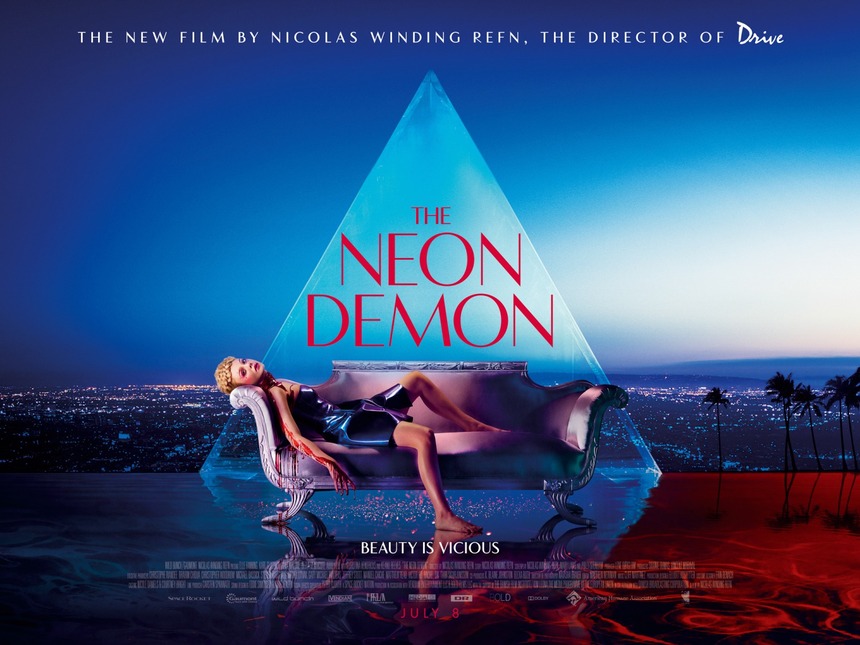
The twist is absurd. But it’s only slightly more absurd than influencers bonesmashing for TikTok or teenagers treating cosmetic surgery as “good grooming,” as Sarah says. Though the majority are non-surgical, cosmetic procedures among teens have steadily risen over the past decade, no doubt driven by social media.
Call it prediction or simply acknowledging the inevitable, but
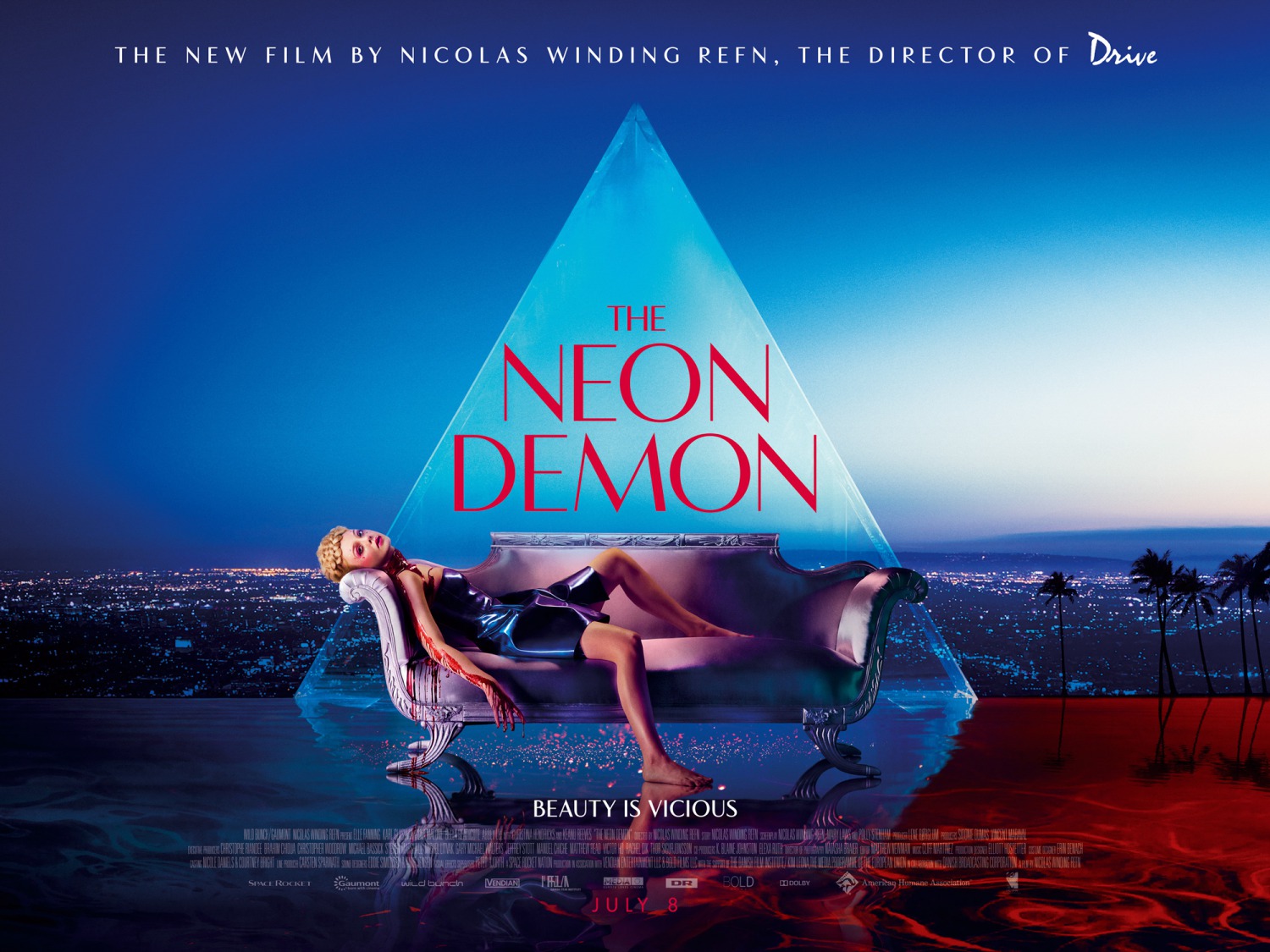
The Neon Demon knows people willingly turn themselves into objects that, as the opening scene shows, end with playing dead for the camera. “It had to be less about nowadays and more about the future,” Refn said in a
2016 interview with Elle magazine. “The future moves so fast [that] before we know it, it has become the past."
Look at Coralie Fargeat’s
The Substance: Fargeat’s film received widespread acclaim in 2024 for its combination of body horror and feminist anxieties about aging and desirability. Yet
The Neon Demon explored many of the same ideas nearly a decade earlier. Both films explore beauty as competition, the body as a product, and how women are pressured into (and enticed by) reproducing impossible standards even as those standards destroy them. What if women absorb the values powerful men impose on them and begin viewing one another through the same harsh light?
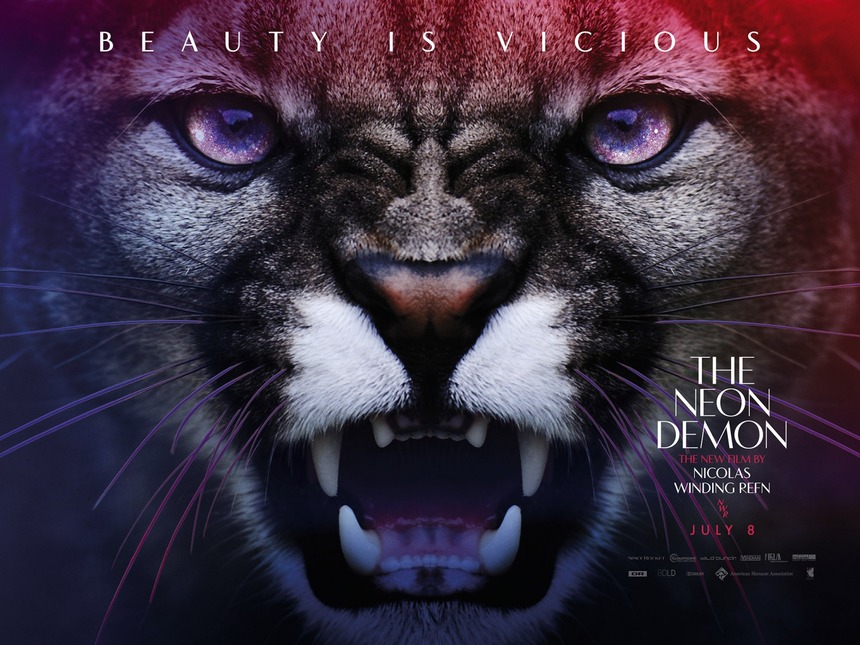
Of course, even if Refn's film came out today, it’d likely still be controversial. The Substance frames its horror with broad camp and winking satire, while Refn approaches the material in the only way he knows how: a vision much colder, dreamier, and stranger. He shoots fashion photography with the same menace he once brought to the criminal underworld in Drive.
But he also carries over that sense of mystery and allure; the industry appears grotesque yet hypnotic, the power it offers nearly akin to that of a god (or a demon). The director has openly admitted that he
cannot truly critique fashion, only attempt to show both the glamour and vulgarity.
Refn is also a man, a man making a film about being a stranger to Los Angeles, to women, and, yes, even to beauty. (His words—Refn may not have the jaw of Ryan Gosling, but he’s always employed good tailors.) The Neon Demon appreciates “real” beauty, as demonstrated by the Brothers Grimm-esque ending where Gigi is seemingly too impure to digest Jesse’s remains. After all, Jesse is the heroine, and the people who want to tear her down are the big bad wolves. Refn, of all people, is naturally drawn toward vanity and pretty things—it’s why all his films look so good.
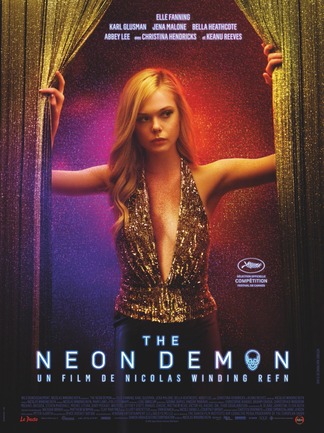
The problem is if beauty is everything, as it so often is. We’re told multiple times that Jesse has no talent and that she’d be nothing without her face, but the first person to point this out is Jesse herself.
It's all she has. It seems only natural for her face to become her identity, but again, beauty is a commodity.
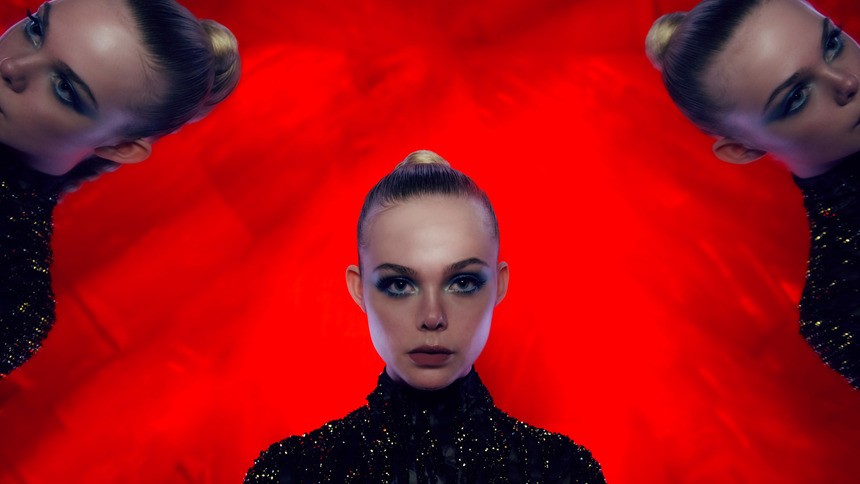
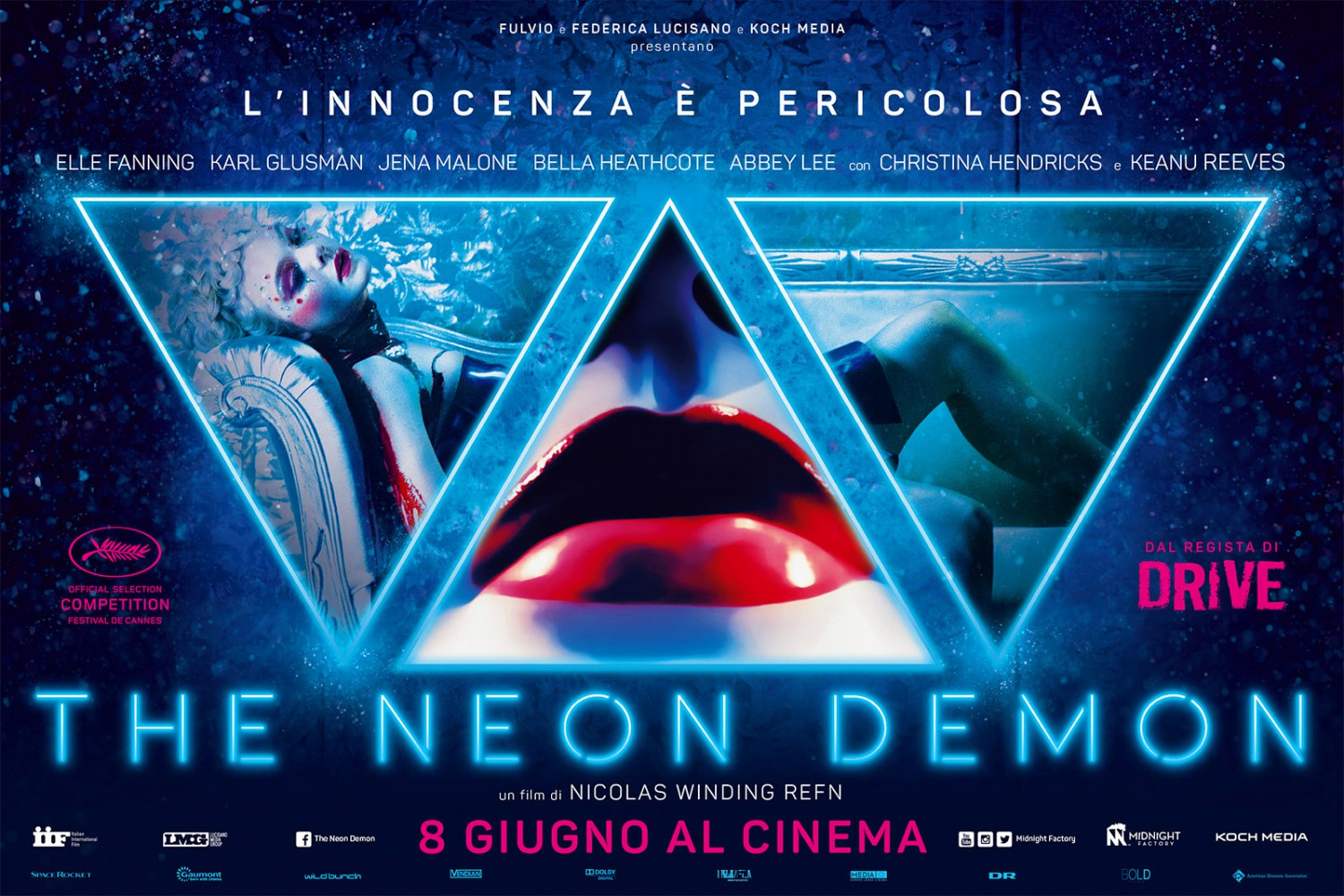
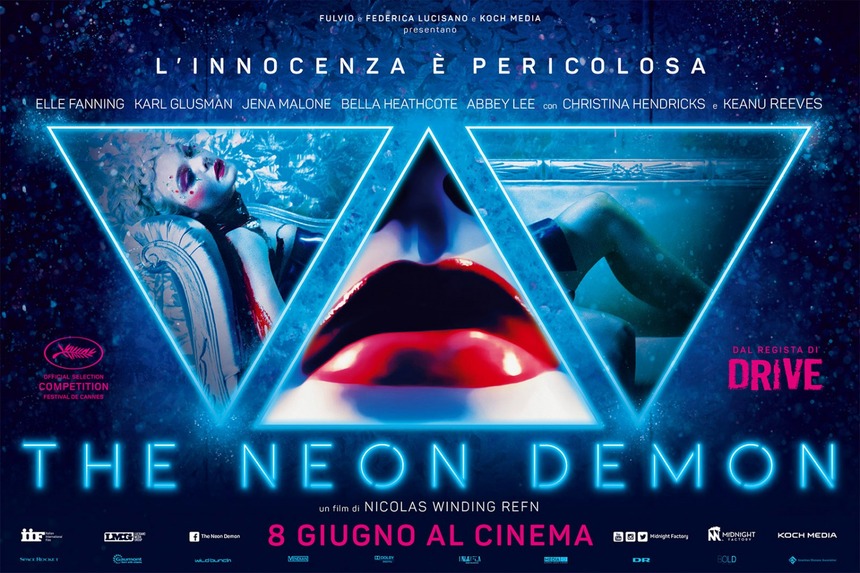
Take, for instance, the hallucination where Jesse stands surrounded by Technicolor neon triangles and kisses her own reflection. It is one of Refn’s most indulgent sequences, but also one of his most powerful, and most telling.
Jesse is enveloped by her own image, gazing upon herself as an object of desire, feeding her own narcissism. Contemporary reviews often clock the triangle imagery as empty pseudo-symbolism, and yet it’s rather obvious what being surrounded by walls that reflect your own face back “means” (shoutout to Lucile Hadzihalilovic’s The Ice Tower, another recent film that expanded on this very idea, and one that features a climax that virtually recreates a scene in The Neon Demon).
The film repeatedly returns to mirrors, reflections, and doubled images because, like The Substance, Jesse and Ruby both want the same thing, yet only one has it. Early on, Jesse recalls seeing the moon as a child and feeling as though it were watching her.
If beauty is in the eye of the beholder, then it is this “eye in the sky” that has a different sort of power. When Jessie stands in the moonlight and vocally acknowledges her godlike genetics—the unspoken no-no for anyone graced with good looks—she is promptly destroyed by Ruby for her hubris. The makeup artist/morgue cosmetologist later seems to perform some sort of ritual in front of an open window, the full moon in full view.
Why do people torture themselves and devote so much time to trying to look sexy? Well, because being beautiful really does have tremendous worth. If we push the witchery and killing to the back burner for a second, Ruby is simply a character who spends all her time prettying up others to receive love she never gets or gives herself. It’s self-love that is absent across the board in Refn’s nightmare, perhaps the issue afflicting people today.
Certainly, The Neon Demon remains an acquired taste. Refn still writes dialogue like someone who’s been trapped in a hotel for 15 years, Oldboy-style, and a story this taboo will never appeal to everyone. But the attempt to reduce his films to a pretentious aesthete obsessed only with style has always felt, itself, sort of lazy. The back third of his career is obsessed with surfaces because they are about surfaces: fantasies projected outward, larger-than-life constructs, and dark desires lurking beneath.
And despite endless accusations of misogyny, The Neon Demon (co-written with two women, Mary Laws and Polly Stenham, and dedicated to Refn’s wife, Liv) is at least acutely aware that it’s a film made by a man. Refn may sensationalize the violence because provocation is shocking, thrilling, and even arousing to his juvenile taste, but he hardly celebrates it.
Men in the film remain exploitative presences lurking around every corner: a photographer demanding his subject remove her clothes, a designer nearly climaxing to a runway walk, or Keanu Reeves’ sleazy motel manager casually alluding to “real Lolita shit” with underage girls. Likewise, the voyeurism that such a story could entail is largely reduced until the end, when we finally see Gigi and Sarah through Ruby's eyes.
 Even in more superficial ways, The Neon Demon has aged well. Star Elle Fanning is now a renowned talent, while the film’s hyper-stylized aesthetic—dismissed in 2016 as hollow, yet itself an Argento revival—has only grown more influential in both indie and arthouse horror.
The director even claimed in a recent interview with Indiewire that NEON, the distribution company that has become synonymous with modern prestige genre cinema (along with A24), reportedly took its name from his film. More bluster? Who can say?
With Refn back once again ruffling feathers, it is a reminder of his singularity. Despite receiving the same feedback over and over (even today, it seems), the Dane continues to push his lurid vision further, convinced that transcendence lies at the end of the neon-lit road. It's true that The Neon Demon arrived ahead of the curve, foreseeing a future beyond just cinema.
Whether Clavicular will still be relevant when his hair grays and his teeth fall out is anyone’s guess. But we already knew ten years ago that beauty is a weapon, capable of turning people both against one another and against themselves.
Jesse insists throughout the film that she does not want to become like the older, emptier models surrounding her; they want to become her. But in Refn’s horrific fairy tale about the cult of beauty, desire always returns to consumption. And for the characters in The Neon Demon, you are what you eat.