
THE STRANGER Interview: François Ozon on Existential Authorship and Colonial Visibility

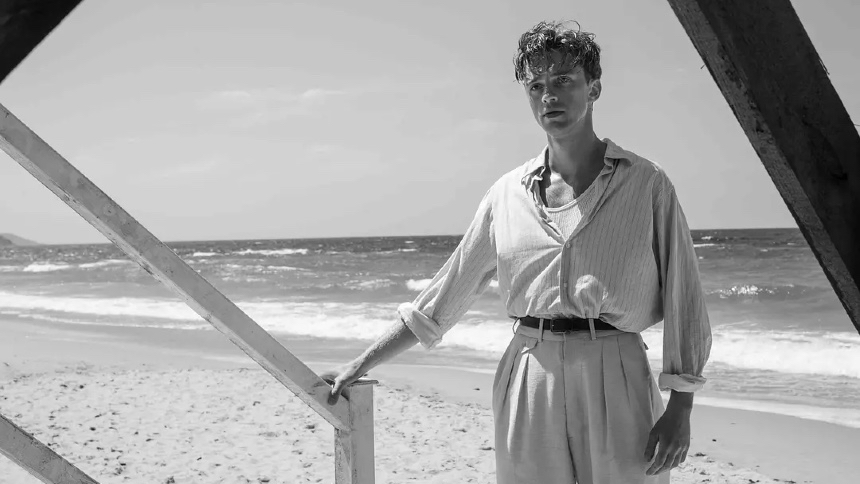
Starring Benjamin Voisin, Rebecca Marder, Swann Arlaud, and Pierre Lottin, François Ozon’s latest feature, The Stranger, is adapted from the famous eponymous novel by French philosopher Albert Camus.
Celebrated as a classic of existentialist literature, Camus’ The Stranger is known for its portrayal of an emotionally detached and indifferent protagonist, exploring themes of alienation, absurdity, and the conflict between the individual and a hypocritical society.
Ozon’s adaptation remains largely faithful to the original text, using black-and-white cinematography to convey the novel’s austere tone. Filmed through the gaze of an observer, the film captures the subtle expressions and gestures of its protagonist.
Notably, this is not the first time Camus’ masterpiece has been adapted for the screen – Italian maestro Luchino Visconti previously made his own version. Ozon’s decision to revisit this monumental work thus comes with the inevitable challenge of following in the footsteps of two great masters.
After The Stranger’s world premiere at the 82nd Venice Film Festival, I joined the group interview with Ozon in a relaxing afternoon, listening to his reflections on the artistic and philosophical choices behind this literary adaptation.
Screen Anarchy: You direct a film nearly every year. How do you maintain such a consistent output?
François Ozon: It’s my job. And there is a beautiful line of Camus who says, “To create is to live twice.” It’s perfect for me.
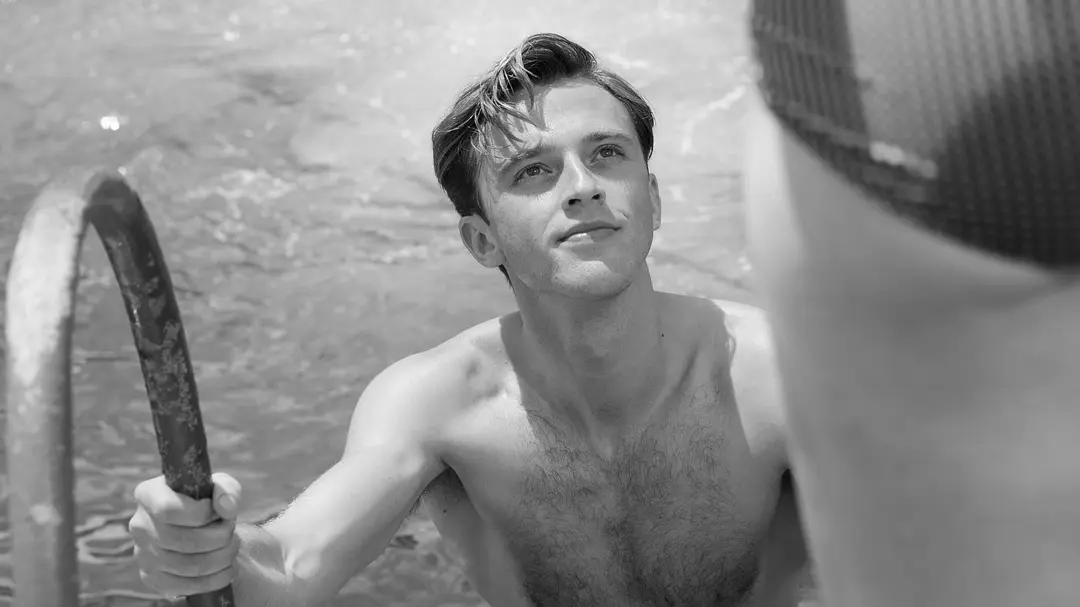
Your film closely aligns with both the novel and Visconti’s adaptation. For example, certain scenes, such as the swimming platform, are nearly identical to those in THE STRANGER (1967). Was this intentional?
Visconti’s film? No, my real reference is the book. The film by Visconti is very close to the book, literally. He was not able to make exactly the film he wanted because Camus’ widow was on the set, and she asked him to follow the book exactly.
He had no opportunity to change or to make an adaptation. And I think that's one of the problems of the film, because when you adapt, you have to betray. You have to accept that the literary language is different from the cinematic language.
So you have to take some options, you have to change, you have to tell the story in a different way. And it was not what Visconti was able to make. I read many interviews of Visconti explaining that he was not happy with the film. He was not happy with the cast because his first choice was not Marcello Mastroianni but Alain Delon.
And I think it was the best idea. I love Marcello Mastroianni! But I think he's not the right one for us as French, because he's so charming, so Italian. I think he could play Marcello, but he's not directed in the way he should be. Working on my adaptation, I had the feeling that the best Italian director for the adaptation was not Visconti but Antonioni.
Especially his film The Eclipse (1962), which is one of my favourite movies that stars Alain Delon and Monica Vitti. They’re a beautiful couple. I had in mind the scenes when they walk in Roma, which is so beautiful. So I told Rebecca and Benjamin, you have to be as magical as they are in the film. It was a big pressure. Rebecca said, “But I’m not blonde!” We don’t care – she just needs to be beautiful.
When did you decide to shoot in black and white, and what informed that choice?
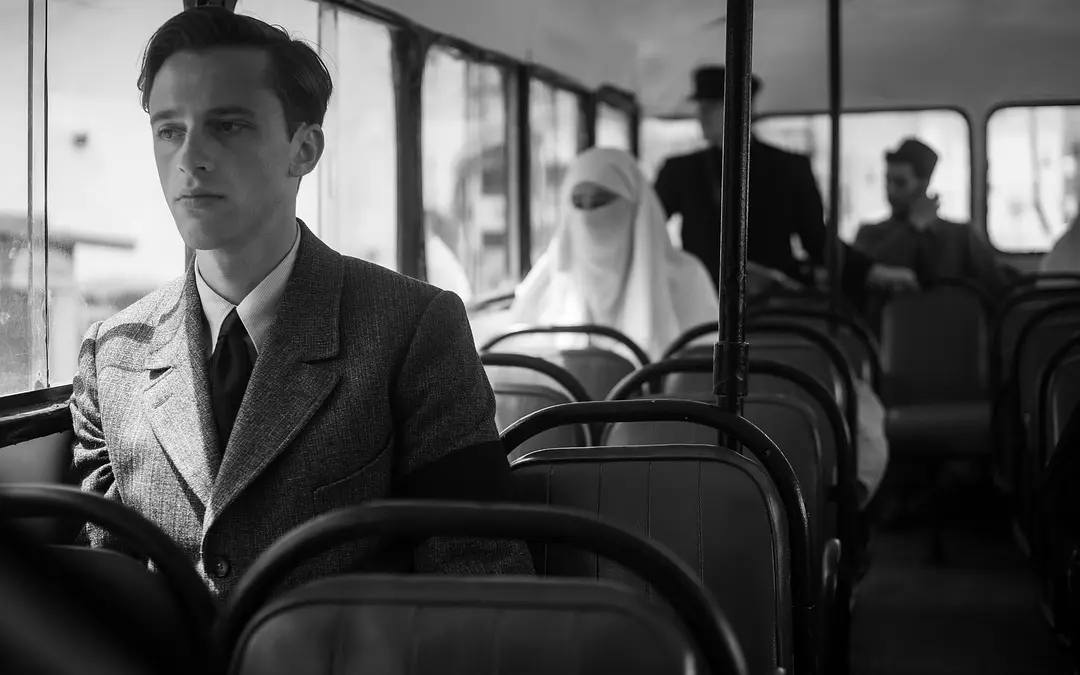
It was obvious to me. I already made a film in black and white. It is Frantz (2016), which is an adaptation and a period movie, too. I think all collective memories of colonialism are in black and white, especially about Algeria in France. We have so many documents, pictures, and films about this period, which are in black and white.
I had the feeling it would give a kind of relics to the film, to see Algiers in black and white. I already knew I wanted to start with newsreels for this movie. The topic of colonialism and the speech of the French would make it easier to enter the lost world that doesn't exist. It was aesthetic, of course. But it was economic too, because I didn't have the budget of a blockbuster to recreate Algiers as it was.
So when it’s in black and white, it simplifies things. For the set designer, for the costume, everything. It turned out to be beautiful. When I read the book, I had the image in black and white.
Would you say it also somehow emphasises the sense of estrangement, which is the gist of the novel?
Yes, for us today, black and white is strange. That’s true, because we are full of colours, and the films are full of colours. And because it's a philosophical book, I had the feeling that the black and white was more adapted to describe all these existentialist questions.
Also, it’s more pure and abstract. You are not disturbed by colours. But it was a real choice, because in the script, everybody told me, “Are you sure to make the film in black and white?” As there are so many descriptions in colours in my film. In the book, there is the red dress of Marie, the blue sea, and the sun... all the colours were in the book and in my script. But for me, it was clear.
I’m always surprised to hear that almost all French people have read these kinds of classics when they were teenagers. In most countries, people haven’t read all these classics. Does it change how people look at film for you?
It was a big challenge. When I decided to adapt it, I was quite anxious, because everybody in France has read the book, especially at the end of school. So many French people told me they were curious to see what I would do, because it's their favourite book.
It was a great pressure. I knew I would deceive some people, because everybody has their own mise-en-scène of Meursault in mind. Everybody has their own image in France of who Meursault is.
It was funny, though, because when we showed the trailer and the first image of the film, some people said, “Oh, Meursault is exactly like Benjamin Voisin, it’s perfect.” And some others said, “He’s absolutely not like this. He has dark hair, but he has no blue eyes.”
But actually, there is no description of Meursault in the book – we don’t know – it’s a white page, on which you can project who you want. It’s the first time I adapt a masterpiece. Very often, when I made adaptations, it was from a minor piece of work. It was not very famous, so I didn’t have the gun on my head.
What made you choose it?
Because I love the book, and actually, I don’t totally understand the book and the character, and I said, maybe I would understand it better by making the film.
Did you?
I’m not sure. I have always had some questions, but it's the strength of a masterpiece to escape interpretation. I hope the mystery of the book is still in the film.
You said that you didn’t change details, but there is a scene with a tomb; I guess it was an addition. And I remember there was no dialogue in the book between Marie and the sister of the man. Did you decide to add these details to have a sense of the problematic context of the book, which was written by an author born in a colonised land? He was a Frenchman, and the book had some flavour. Why did you add these details?
Yes, it is important to look at the story through the eyes of today. It is not possible to make the film as in 1942. We are in 2025, and we know what happened between France and Algeria.
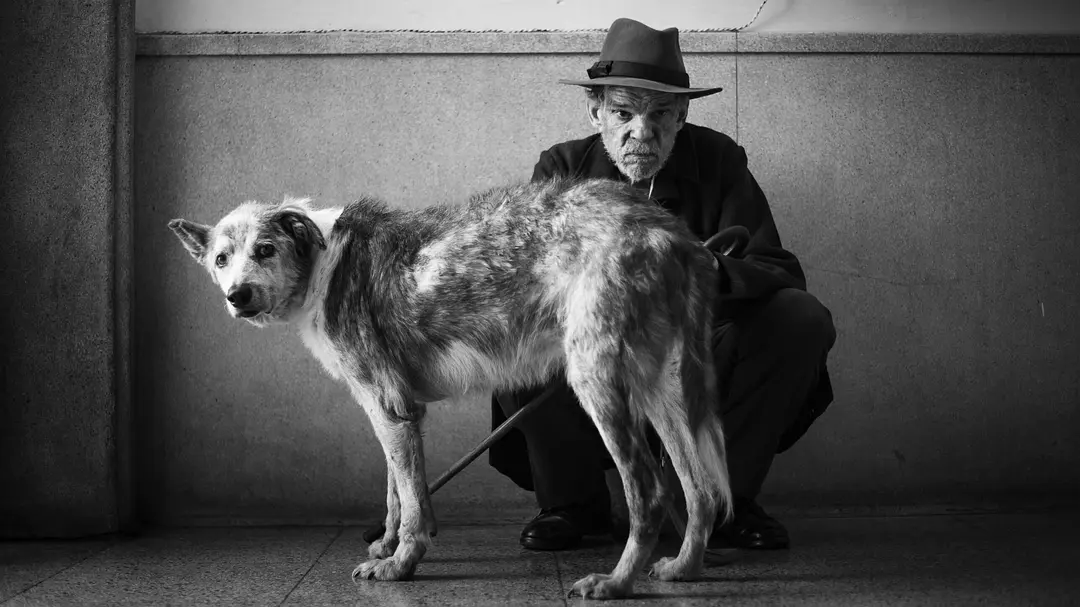
There was a war. We know all the bad things of colonialism, so I need to put this context in the film, and because all the men are so toxic in the film: Meursault doesn’t cry when his mother dies, Saint-Est beats his mistress, and Salamano beats his dog. All the men are terrible. So I need a counterpoint.
The women are important, especially the character of Marie. I decided to develop the character to give a voice to the Arab people in the film, because in the book, they don't have a voice, nor a name.
For me, it was obvious to give them, at the moment in the film, their point of view. This small scene between the two women is very important for me, because you understand, at this moment, the gap between the two communities.
Marie is maybe the only one who understands there is a problem, and she says, “I’m sorry, we don’t speak about your brother.” She knows the situation is absurd. The name of the Arab is not given at the trial, which is quite shocking for us. And Marie understands that, being able to speak to this woman.
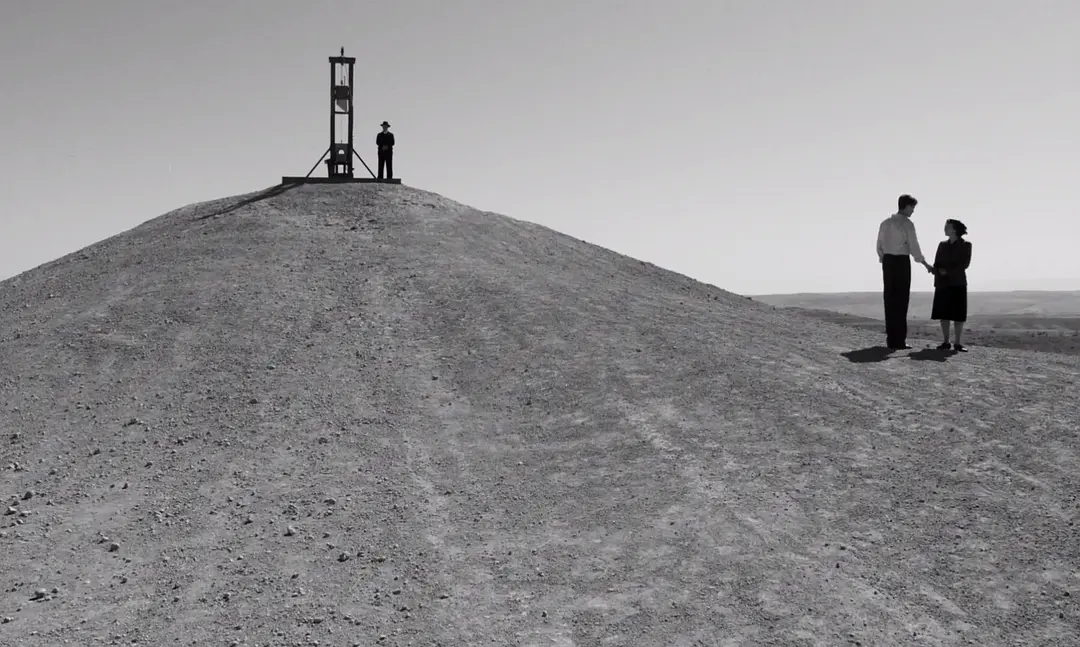
It’s a real freedom to have an Arab woman at the trial, as historically it was not possible. I took this choice here artistically, as well as the end of the film, where the scene on the grave doesn't exist.
In the film, the narrator comes up at very certain points, just after the murder, and at the end of the film. He recites the text from the book in the first case. Why did you decide to put him just in this?
I didn’t change the text; it’s exactly the text of Camus. I love this piece of text. The language in French is quite beautiful – I don’t know how the translation is for you - but it’s so poetic. I think the whole book is about this point of view when he says “I, I, I...”.
But in the film, you watch and observe him without access to his intimacy and interiority. So I thought it would be strong at the moment to hear his voice, and to use it at two key moments in the film. In the murder scene, when he says the beautiful things, “I” breaks the balance and the harmony of the day.
I think it’s quite strong. At the end of the scene, he says, “I’m open to the tender indifference of the world.” In French, it’s beautiful – I don't know if it sounds the same in English, but it’s so strong and powerful for me.
What made you think that Benjamin could be the right actor?
It was the second time we worked together. We worked on Summer of 85 (2020), and he was quite a teenager at that time; now he tries to be a man. It was a big challenge for him because his nature is very extroverted.
So I asked him to read the book of Robert Bresson, not on the cinematograph, but the one in which Bresson explains what he's looking for – not the actors but the models. For him, it was a real job, as it was quite difficult to contain everything inside. It was not easy and very physical. And he had just the last scene in which he could explode.
It's funny because in the chronology of the shooting, we started with the last scene, since I wanted his beard and long hair. I thought it was a good idea to have all the emotions at first, and then work on a different way.
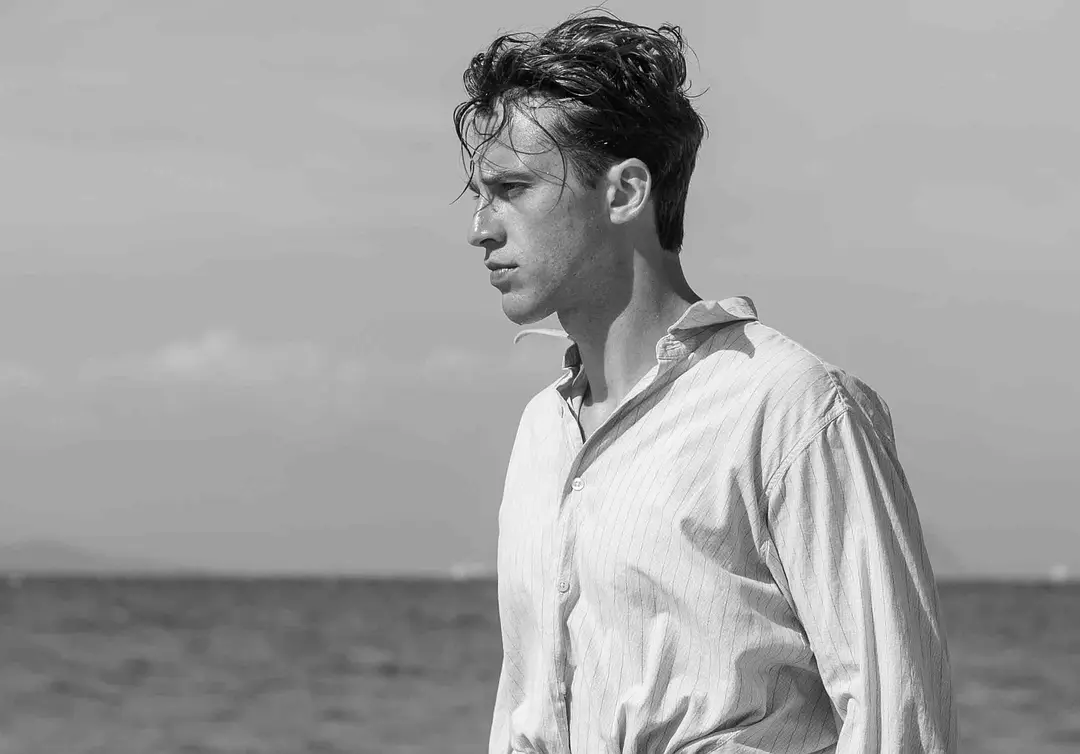
Was it also how the main character looked in your head when you read the novel, because you said everybody has an image of him?
Yes, for me it is obvious that you can’t empathise with Marceal but are fascinated by him. So I needed an actor with a big charisma, someone mysterious like Alain Delon, who, when he was young in the 60s, was very antipathetic in all his characters. But he was so beautiful and mysterious that you couldn’t stop looking at him.
We tried to work on that with Benjamin to feel a kind of fascination with his character, in order to understand and be touched by his sensuality and his beauty. This is important because identification is not possible. It depends on people.
What would you say is the biggest challenge you’ve met during the production of the film?
I think it was quite sad not to shoot in Algeria. I shot in Morocco. We had no choice, because the relationship between France and Algeria is so complex today. We had to recreate this world. It was a real challenge.
You talked about models, and it’s interesting how Pierre Lottin flows from WHEN FALL IS COMING (2024) to this one, where he plays Raymond. Why is it important for you to cast the same actors in different movies?
When I like to work with an actor, I’m very pleased to work with them again. We become friends very often. When I know them well in life, I know they have so many faces to explore.
For example, for Benjamin, it was a real new face for him. And even for Rebecca, when she was in The Crime Is Mine (2023), she was an intellectual lawyer. But in this film, she’s more physical and sensual. She didn’t have the opportunity to show that in another film. So it’s always interesting to try something new with an actor you like to work with to explore something new.
Your last film was so much about colours. And this one is not, apparently. I wonder if there is a difference in the choreography of the actors in how they move when you shoot in black and white?
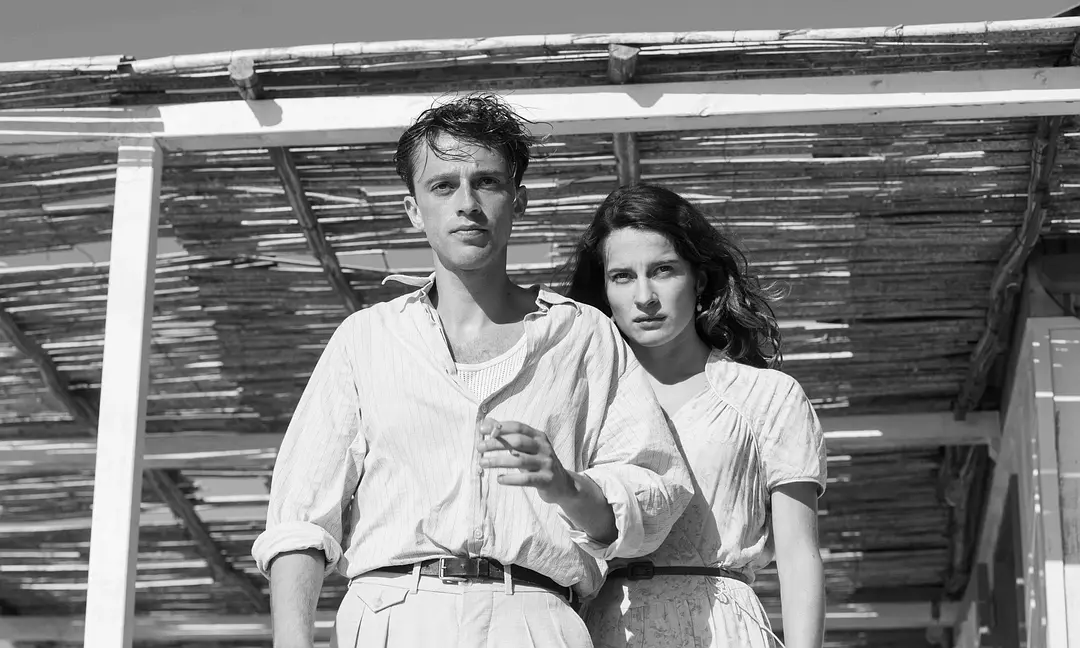
When you shoot in black and white, you will become very curious, because your cinephile memory awakens. For example, when I shot on the beach where Rebecca was wearing a white swimsuit, suddenly, watching her, I said, “She’s like Elizabeth Taylor in Suddenly, Last Summer (1959).”
And filming Benjamin with his costume in the streets, I said, “Oh! It could be Cary Grant or James Stewart.” This is because we have all these memories of old movies in black and white. It was not my goal, but it arose in spite of my will.
Most of the films in the official competition are very politically oriented, referencing political issues. Now you’ve made a movie which is clearly political.
It’s normal. See the world in which we live, and the absurdity and madness of the world of today. As an artist, you live with your time. That’s why I needed so much contextualization for the film. And that’s why I gave a name to the Arab.
It was a kind of answer to the invisibilization, for example, the Arabs in Gaza who have no name and no face. So it’s important to resonate with today.
Is it even possible to make a film that is not political at all?
Yes, it’s still possible.
Would it be even possible to make a film that is absolutely not political?
You have to watch so many movies in which there is no political point of view. I don’t say you have to be political today, but actually, we should all be political today. Maybe it’s time to be political all the time.
Art is something you have to fight. I think the audience is aware of the situation in the world. Do they want only to see films to be distracted, or do they want to think? I don’t know.
I was told that it’s a difficulty at the moment that the audience is shying away from more heavily political films because of everything happening in calmer times. People are more open to entertaining films.
The news is very worrying. But I also understand that people want to have fun. I think both are not incompatible. For me, the big films are the films in which there is a political discourse, but also something aesthetic when things mix.
For example, when I made a film like By the Grace of God (2019), which was a great success in France, there was also a very important political and social dimension. The film touched the audience because it answered to an anxiety that existed in French society and to a question of opportunity.
Today, is there enough time to look at what French colonisation was like in Algeria? It was a big issue for French society, and people wanted to see that kind of film. They were touched by it because it talked about a very important subject.
I’m very curious to know how the French audience will react to the context of the story, which is still an open wound for many French people. Colonisation in France is still a taboo subject.
How is the issue of colonialism seen in France today?
It’s a real problem for French society. I think it was so painful for many French people because many were born in Algeria. They consider that it's their country. I realised almost all French families have a link with Algeria while working on the film.
My grandfather was a judge in Algeria. He escaped an attack. So my whole family came back from Algeria to live in France. It was something that I vaguely knew. We didn’t talk about it. My mother told me things. But there's something that’s a little bit hidden.
I think that France didn’t do the work of mourning and sufficient analysis on this period. Historians did it, but it wasn't very popularised. It results in the fact that very few French films talk about it.

Do you feel this content is inappropriate or infringes upon your rights? Click here to report it, or see our DMCA policy.


