
Echoes: How WICK IS PAIN Redefines the Cost of Creation

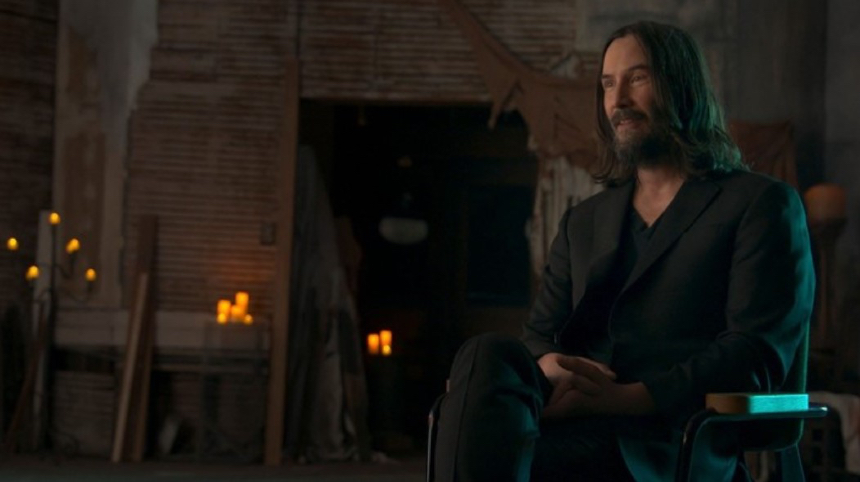
Wick Is Pain is a 2025 documentary that chronicles the making of all four John Wick films.
The journey from an independent film to a billion-dollar franchise is directed by Jeffrey Doe. It details the struggles the independent production endured, and the story of pushing through those setbacks has become widely celebrated among fans.
I am not going to explain what is included in the documentary, but how different the journey of cost-bearing is from other similar action films. We have seen punches and kicks, gun fights, and high building falls in other films as well, especially if you are familiar with the Mission: Impossible franchise, where Tom Cruise has performed death-defying stunts himself. Why do the John Wick films stand apart?
Firstly, I observed that Wick is Pain documents 'pain' as identity, endurance, and perseverance for the protagonist, John Wick. Pain is not just a phase for him where the heroes undergo for a certain time and come out stronger, fight the villains, and find their ultimate solace.
Take Neo from The Matrix, for example: pain does exist for him. He gets beaten, shot, and even killed. But pain is a step towards awakening; it serves as a mechanism for transformation, and he comes back stronger since his pain was temporary. The enlightenment that came afterwards was permanent.
This is not the case in the John Wick film series. Pain for John Wick is emotional as he suffers from the grief of his wife's loss, and that anguish is compounded when his dog, the last gift and living memory of her, is killed. As aptly put by BBC, he "is driven by humanizing grief." His films show that survival is not victory, but the world keeps punishing him endlessly in every sequel, and he keeps hoarding the pain and damage in every film.
All across the four films, Wick tries to leave and is dragged back. He is constantly in search of peace but is constantly denied. He keeps fighting for freedom, but the cost keeps increasing. He survives each time, but at an even greater physical cost. Pain isn't a phase for John Wick, but the persistent atmosphere.
We have seen hardcore action in other popular action films too, such as The Matrix franchise (1999-2021), the Bourne film series (2002-2016), and Atomic Blonde (2017). Most of the stunts were trained by Chad Stahelski's 87 Eleven stunt coordination company. However, John Wick took hyper-stylized gun-fu and graced it with practical, rapid-fire shooting and extremely tactical firearm training.
Wick is Pain vividly paints the picture of bruises, cuts, and physical toll- like the swollen knees- that Keanu Reeves had to endure to bring the film's intense hyperreal action to life. Certainly, there were stuntmen working alongside Reeves as well, but the visible proof of the hardworking Reeves, who has a humble persona as well, amplified the narrative.
The price of bringing the action to life is especially evident in the long takes of the John Wick films, which allow the audience to witness the full choreography in a single, uninterrupted sequence. In contrast, earlier action films like The Bourne Identity relied heavily on rapid cuts and shaky camera work, which, while intense, often obscured the precision of the stunts. The philosophy of the John Wick series is to make every moment of violence feel grounded, readable, and physically earned. Wide frames and extended takes not only highlight the actors' skills but also reveal the meticulous work of every crew member behind the camera.
While Atomic Blonde, trained by the same stunt coordination team, delivered brutal realism -- most famously in the long stairwell fight -- it featured fewer large-scale set pieces than the Wick films, which consistently escalate both in scope and complexity. Similarly, The Matrix broke new ground with revolutionary "bullet time" visual effects and a philosophical depth never before seen in an action movie. Yet, its stylized, floaty movements lacked the tangible, weighty impact that the John Wick series achieves through physically grounded stunts.
The cost of creation is evident in the weeks of rehearsals, the camera precision engineering, repeated physical execution, and exhaustion layered over previous exhaustion, as seen in the overhead sequence in the Paris apartment in John Wick 4. Inspired by the video game The Hong Kong Massacre, the scene turns the space into a living blueprint: dragon's-breath shotgun blasts streak across the room. It is one of the boldest stylistic evolutions in John Wick films: a cinematic language never been visible in the action genre before, obviously breaking conventional rules.
Wick is Pain emphasized the escalation of world-building in every sequel instead of shrinking. Chapter 2 expanded the assassin world, Chapter 3 increased scale, while Chapter 4 delivered massive, inventive set pieces. This is where many action franchises decline, and the creation was reframed each day with shared suffering on Wick's sets.
The documentary rightfully ends on the note that pain is good, as pain helps us grow. Imagination doesn't stop, but always has a price, even if it is physical. The creative freedom gives rise to an effortless spectacle on the outside; it usually means someone endured something extraordinary to make it look spectacular.
Echoes is an opinion column on film and television from the perspective of a writer based in Pakistan.

More about Wick Is Pain (2025)

More about John Wick
- WICK IS PAIN Review: Behind the Scenes in the Action Franchise
- BALLERINA Review: All She Wants To Do Is Dance (But Her Shooting Skills Are Better)
- Friday One Sheet: WICK IS PAIN
- JOHN WICK: Lionsgate Announces a Fifth Chapter, Donnie Yen Spinoff And Animated Prequel Are in The Works
- JOHN WICK: CHAPTER 4 Review: It's Big. Really Big. For JOHN WICK Fans That's Great.
More about John Wick Chapter Two
- WICK IS PAIN Review: Behind the Scenes in the Action Franchise
- BALLERINA Review: All She Wants To Do Is Dance (But Her Shooting Skills Are Better)
- Friday One Sheet: WICK IS PAIN
- JOHN WICK: Lionsgate Announces a Fifth Chapter, Donnie Yen Spinoff And Animated Prequel Are in The Works
- JOHN WICK: CHAPTER 4 Review: It's Big. Really Big. For JOHN WICK Fans That's Great.
More about John Wick: Chapter 3 - Parabellum
- WICK IS PAIN Review: Behind the Scenes in the Action Franchise
- BALLERINA Review: All She Wants To Do Is Dance (But Her Shooting Skills Are Better)
- Friday One Sheet: WICK IS PAIN
- JOHN WICK: Lionsgate Announces a Fifth Chapter, Donnie Yen Spinoff And Animated Prequel Are in The Works
- JOHN WICK: CHAPTER 4 Review: It's Big. Really Big. For JOHN WICK Fans That's Great.
More about John Wick Chapter 4
- WICK IS PAIN Review: Behind the Scenes in the Action Franchise
- BALLERINA Review: All She Wants To Do Is Dance (But Her Shooting Skills Are Better)
- Friday One Sheet: WICK IS PAIN
- JOHN WICK: Lionsgate Announces a Fifth Chapter, Donnie Yen Spinoff And Animated Prequel Are in The Works
- Donnie Yen's Caine Gets His JOHN WICK Spinoff Next Year


