
Available Light 2026 Review: BEYOND THE LEFT HAND PATH, Or, A Temple of Set Guide on How to Live a Full Life

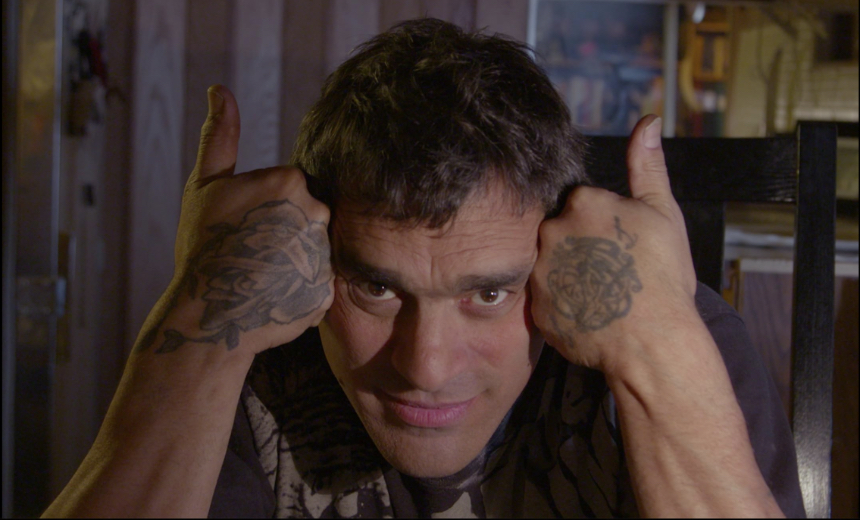
James C. Kirby was an intense man.
He lived not one life, but several: A priest of the Temple of Set, a hotel chef, a social worker for traumatized men, a craft jeweller, and the former owner of Canada’s largest occult book store. The latter of which he bartered for a large cache of 30,000-year-old Mammoth Ivory. He then became one of Yukon’s most celebrated carving artists.
When building a deck for his remote trailer, he went much further, and built an entire home around it, with the trailer still existing as the central heart of the abode. On the surface, Kirby looks like an olive skinned composite of Bruce Campbell and Michael Shannon, with perhaps a hint of Tommy Chong. He gives off a similar kind of combined charm and energy to boot.
He is described by his longtime partner, and fellow artist Clair Strauss, as one of the beasts from Where The Wild Things Are — rough and strange on the outside, but gentle and soft underneath. The man did not seem to do anything half-assed. And yet he did so many things — even dying with intention. After a terminal cancer diagnosis, Kirby was one of Canada’s first recipients of MAID, or Medical Assistance in Dying, on Halloween, surrounded and witnessed by friends, naturally.
Several years ago, documentary filmmaker Jessica Hall made a short film, The Left Hand Path around Kirby’s metal and bone and wax molded fabrication work for the Temple of Set’s 42nd Anniversary. After Kirby’s diagnosis with stage four pancreatic cancer, she worked to combine the mountains of extra interview footage she had gathered previously (Kirby is also a bit of a showman and raconteur) with post-mortem talking heads segments with friends and family — many of the artists, temple initiates, and others caught up in his considerable gravitational orbit.
Not fussy in its cinematography, as it is repurposed ‘raw’ interview material from the 2017 short, this lends itself to a loose almost ‘outtake’ vibe (quite literal in at least one amusing shot) which allows a lot of unguarded human-stuff to seep through the cracks. This is contrasted with the camera lovingly caressing Kirby’s art pieces in stand-alone smooth tracking vignettes that dazzle with detail and craftsmanship. The bone, stone, and metal jewellery offer as much insight into Kirby as his own self reflection and search for spiritual freedom.
You do get a considerable picture of Kirby’s worldview in Beyond The Left Hand Path: His views on the differences between the Church of Satan, which he sees as confrontational and more of a satire of Abrahamic religions, versus the Temple of Set, which is more inclined towards self examination and a personal journey though all the destruction, suffering and brokenness of life to find personal integrity.
You do get a considerable picture of Kirby’s worldview in Beyond The Left Hand Path: His views on the differences between the Church of Satan, which he sees as confrontational and more of a satire of Abrahamic religions, versus the Temple of Set, which is more inclined towards self examination and a personal journey though all the destruction, suffering and brokenness of life to find personal integrity.
Or more succinctly, to be able to be alone with yourself.
Kirby speaks at length in there being no difference between a magician and an artist, or for that matter, a politician (someone who gets people to do what needs to be done via words alone); it's own kind of spell. He is a spell-caster himself. It is not difficult to see the profound effect he had on people around him.
They tell their stories in Claire’s brightly lit gallery space, surrounded by James’ stone and copper serpentinite sculptures. This includes “The Watcher,” a bird with a hidden serpent climbing up its spine. It was a piece that stood vigil to his workshop.
They tell their stories in Claire’s brightly lit gallery space, surrounded by James’ stone and copper serpentinite sculptures. This includes “The Watcher,” a bird with a hidden serpent climbing up its spine. It was a piece that stood vigil to his workshop.
Kirby is a special kind of paradox, both of mystery and pragmatism. It is deeply compelling to watch, and yet also a casually warm combination of goofery and humour to boot. He lights up the screen, even as he occasionally delves into philosophical esoterica; he does so as an invitation, not a gatekeeer.
“Build your own soul. Build you own tools.” We are currently in the Anthropocene geological epoch, which is defined by humanity's pervasive effect on geology, making humans a dominant force shaping the planets ecosystems.
“Build your own soul. Build you own tools.” We are currently in the Anthropocene geological epoch, which is defined by humanity's pervasive effect on geology, making humans a dominant force shaping the planets ecosystems.
Impacted rock from nearby copper extraction, which he forages for himself in these abandoned spaces, and stresses his body dragging huge pieces stone out of the quarry, is the foundation of his belief centred around repurposing materials, be it animal, rock, and human. His interior space is built from mirrors and oak reclaimed from a renovation of the hotel he worked at as a cook, another form of repurposing raw materials into a meal. He has no running water in his house, but plenty of tools for grinding, polishing and other forms of creative manipulation.
His own death is a form of spiritual up cycling, for which he had more control than most. He will continue in Beyond The Left Hand Path, itself up-cycled from previous materials, layered and combined with new elements to demonstrate a life completely lived. Transformation, not obliteration; this documentary is healthy stuff for the soul.
His own death is a form of spiritual up cycling, for which he had more control than most. He will continue in Beyond The Left Hand Path, itself up-cycled from previous materials, layered and combined with new elements to demonstrate a life completely lived. Transformation, not obliteration; this documentary is healthy stuff for the soul.

Do you feel this content is inappropriate or infringes upon your rights? Click here to report it, or see our DMCA policy.


