
SHEEP IN THE BOX Interview: Hirokazu Kore-eda on the Future of AI Technology and Human Society

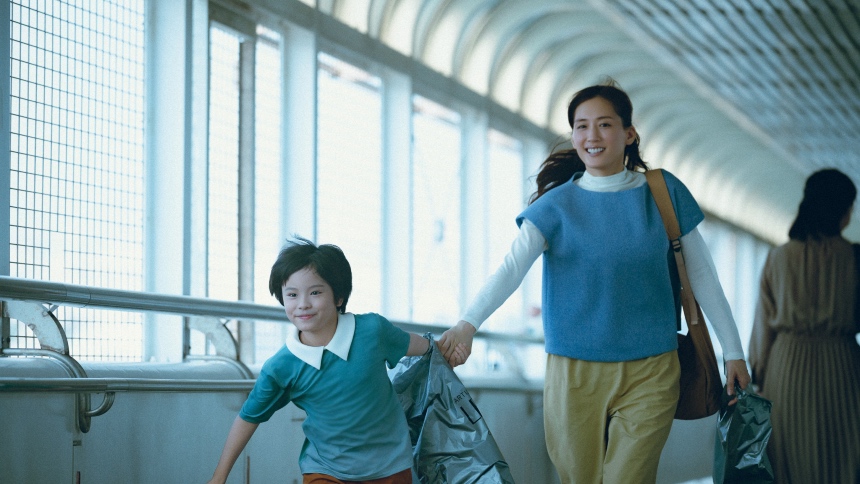
Veteran Japanese filmmaker Hirokazu Kore-eda’s latest film, Sheep in the Box, is a tender and healing journey through interactions with a humanoid and an ordinary family that has just lost their young child.
While its motif may recall Nobody Knows or Shoplifters, Kore-eda’s interest extends to the plausible future of human coexistence with AI beings, moving beyond a simple narrative around alternative, non-biological families.
The film had its world premiere at Cannes this year and received mixed feelings amongst audiences and critics. On the occasion of the film’s North American theatrical release, I had the opportunity to speak with Koreeda, now a sexagenarian, who shared some deliberate answers from his careful observation and extensive research.
When asked about the impact AI might have brought on the filmmaking industry, he was silent for up to 30 seconds — you could easily read the complicated expressions on his face. Indeed, when facing the technological revolution of artificial intelligence, this humanist master, who is skilled at depicting the profound connections between human beings, is still trying to catch up with the world to show his own understanding of our future society intertwined with the anxious exisitence of AI.
ScreenAnarchy: The film is set in a near-future shaped by soft science fiction, yet you reveal relatively little about the wider society or the city in which the story takes place. Instead, the film remains focused on the intimate world of the family. Was this a deliberate choice? What interested you about exploring such a large technological and social shift through this very small, domestic space?
Hirokazu Koreeda: The idea that changes that happen societally can also be reflected in the changes that happen in the family. That is the philosophy around making dramas regarding home or family dramas.
So I think that as long as you have what happens within the family dynamic reflected very faithfully in society, you can establish a narrative. For me, that’s something I’m good at and very efficient — as a means to make a film within a limited budget.
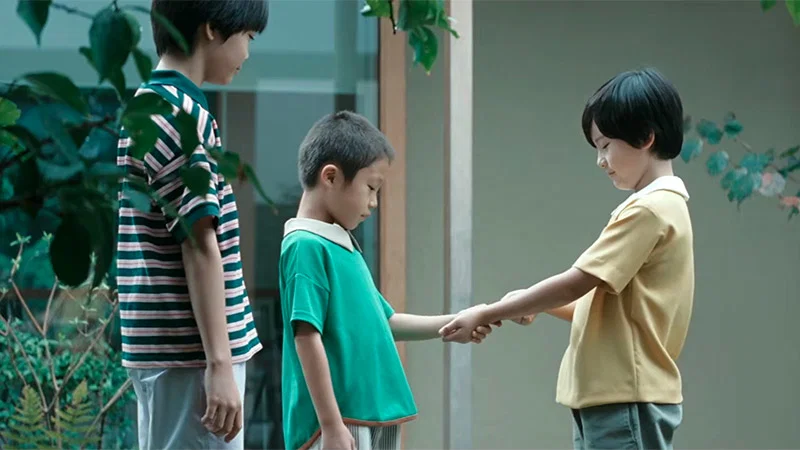
We know the film’s title was inspired by THE LITTLE PRINCE. I’m curious about the symbolism behind the title: What do the “box” and “sheep” represent, respectively, from your perspective? Does the title, in some way, suggest the human capacity for imagination or regeneration?
I think there are many ways to interpret the title, but I did think the phrase is an encapsulation of certain fables, which concern the power of imagination and humans’ capability for imagining.
Right now, at least with how technology is going, our human ability to imagine is what differentiates us from AI, the kind of definitive criteria that separates us from this technology. So I wanted to use that as a gateway to tell the story.
Although artificial intelligence is central to the film, you seem less interested in directly addressing the broader ethical questions surrounding the technology. In particular, within the family, Kakeru initially seems to be treated almost as a product designed to fulfil a particular function, rather than as a being capable of forming genuine emotional connections with humans. How did you approach this tension between artificial intelligence as a “product” and as something that might develop its own emotional agency?
I actually do believe that AI has the potential to develop something like an emotion, though it may not be the same as what we experience as human beings — in fact, it doesn’t have to be the same to be valid. This spring, I heard about a study about AI speaking to itself or one another, without the mediating presence of a human.
AI can find a way to communicate with each other makes total sense to me. Once that communication happens, groups of AI may come together and create a society where they might develop an understanding of themselves outside of human beings.
As human beings are very vague and fickle, a society led by AI completely independent of human beings is possible to me, and that’s something I’m trying to depict in this film.
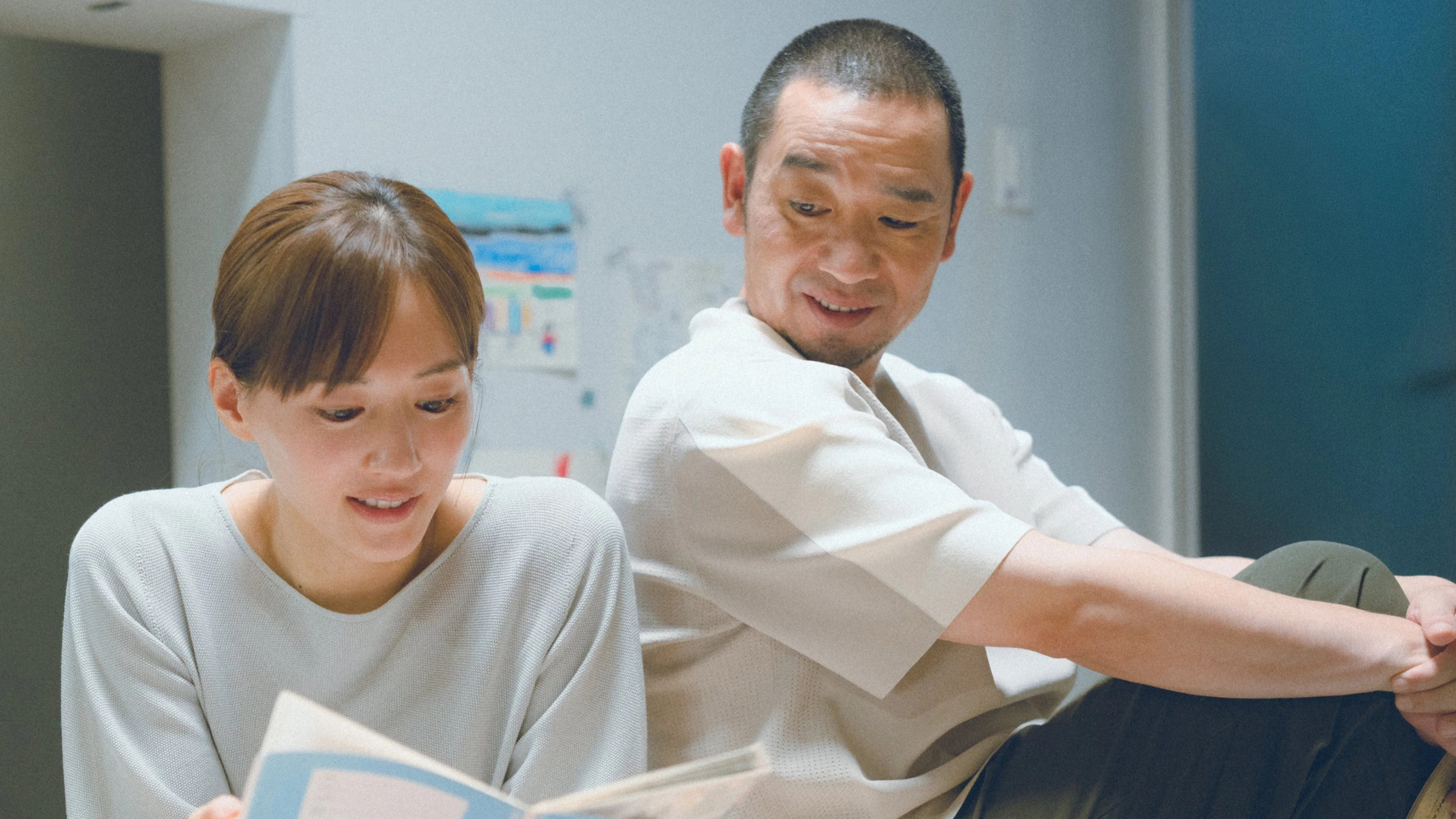
In the film, AI seems to offer people a new way of responding to absence, or perhaps even replacing what has been lost. Do you think technology can genuinely help us live with grief, or does it simply allow us to postpone confronting it?
I think it’s impossible to simplify it, as there are many sides to this matter. On the one hand, AI could be used to ease the pain of people who experience grief; on the other hand, it could also be something used to postpone the grief that one is meant to confront.
We usually try to make things into black and white, but it’s not that easy. All technology contains a kind of duality; that is also true of AI, which has nothing to do with grief.
As a filmmaker whose work is deeply concerned with human behaviour and emotion, has the rise of artificial intelligence changed the way you think about filmmaking itself? Do you believe there are aspects of human experience that cinema — or filmmakers — should protect from becoming automated?
I write, direct and edit all my films to avoid isolating myself from the whole process. At each step, I try to talk to people, having them read my scripts and supervise my edits.
There's a term called script doctor, and there are many books on scriptwriting. In these books, there are rules about how to build a strong narrative, and how much certain pressure the protagonists should experience. If you follow that so-called “rulebook”, you do end up with a film that's easy to understand and interpret.
It's not as if I don't use these ideas as a kind of reference, but I also think that if every filmmaker were to follow this rulebook on how to produce a narrative or how to screenwrite, every film would become similar.
And that's something that we're seeing. I think most blockbusters that you see coming out of Hollywood seem to follow the same “rulebook”. I begin to wonder, what AI did they use? Or what script doctor are they seeing? How come every action film has to have a fight that happens on the roof of a train as it goes through a tunnel? Are they all talking to the same script doctor? So I think that's deeply problematic.
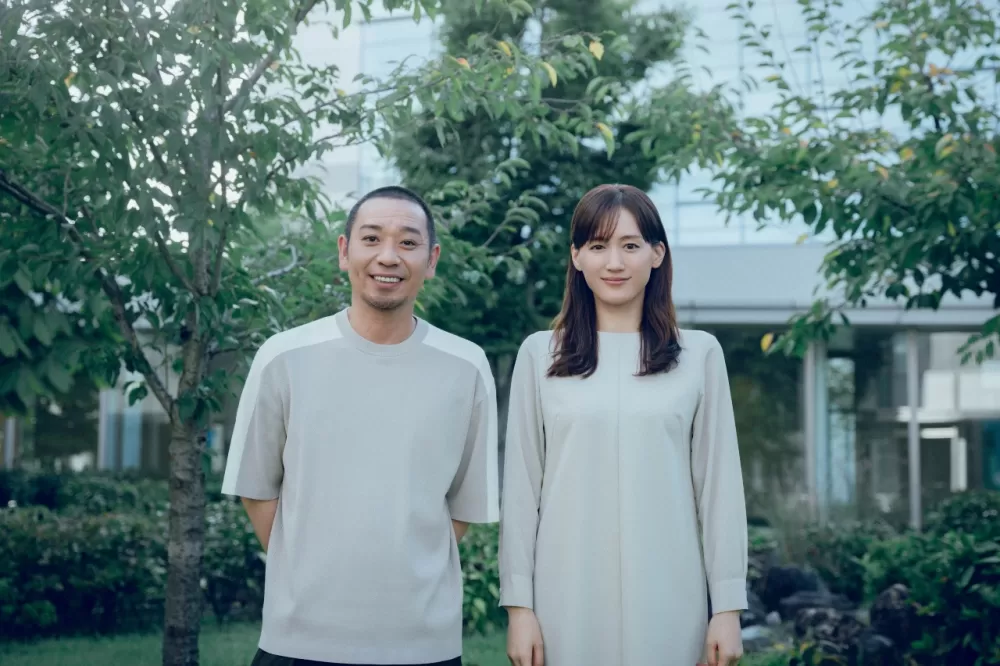
I also think there's no one way to direct an actor. It's something you have to tailor to each relationship; or else the actor and the director don't grow together.
The same can be said for story: everything depends on an individual narrative that needs to be told. The use of AI poses a risk of losing some diversity in the types of stories being told. And I don't think this is just limited to the use of generative AI.
For instance, I think about how car scenes now are no longer shot on the road. We use studios and LED panels to imitate the light that hits someone's face. That means we are prioritizing a kind of productivity, but we're losing a sense of spontaneity.
So what does it mean for the actors to no longer have that experience of the wind going through their hair as they act? There's a loss of physical reality in the film, which also translates to how we use digital technologies versus celluloid film in the filmmaking process nowadays.
I don't think it just comes down to removal or protecting filmmaking from generative AI, but more about the general risk of how focused on productivity the entire industry has become.
The mother in the film is an architect. What made you choose this particular profession for her?
When I first wrote the film’s short plot, the main character was supposed to be a furniture designer. It was really important that, from the beginning, their work dealt with touching and handling wood.
I learned that architects are separated into two camps. There are architects who design on computers, on CAD or whatever. And then there are architects who design by modelling.
All of the architects I spoke to and tried to research were people who use their hands and dioramas. Their designs could only be understood when they are spatial — something that they are able to interact with.
In reading those architects’ writing or seeing their designs, I realized I might be in the camp of modelling. Although architects and filmmakers are not quite the same, the process of filmmaking could be similar compared with architecture. I wanted the protagonist to be an architect to share that space of design with the humanoid, who re-enters the family with a new life, for he would also grow into an architect of a different kind in his own right.
And that the family, at the very last scene they would enter into this forest and look up at this one tree and imagine in three different ways what kind of house they could build there. And that the camera would be looking at their back as they look up at the tree. So it's not as if I had a very clear idea of what the last scene was going to be, but I think that was somewhere in the back of my mind.
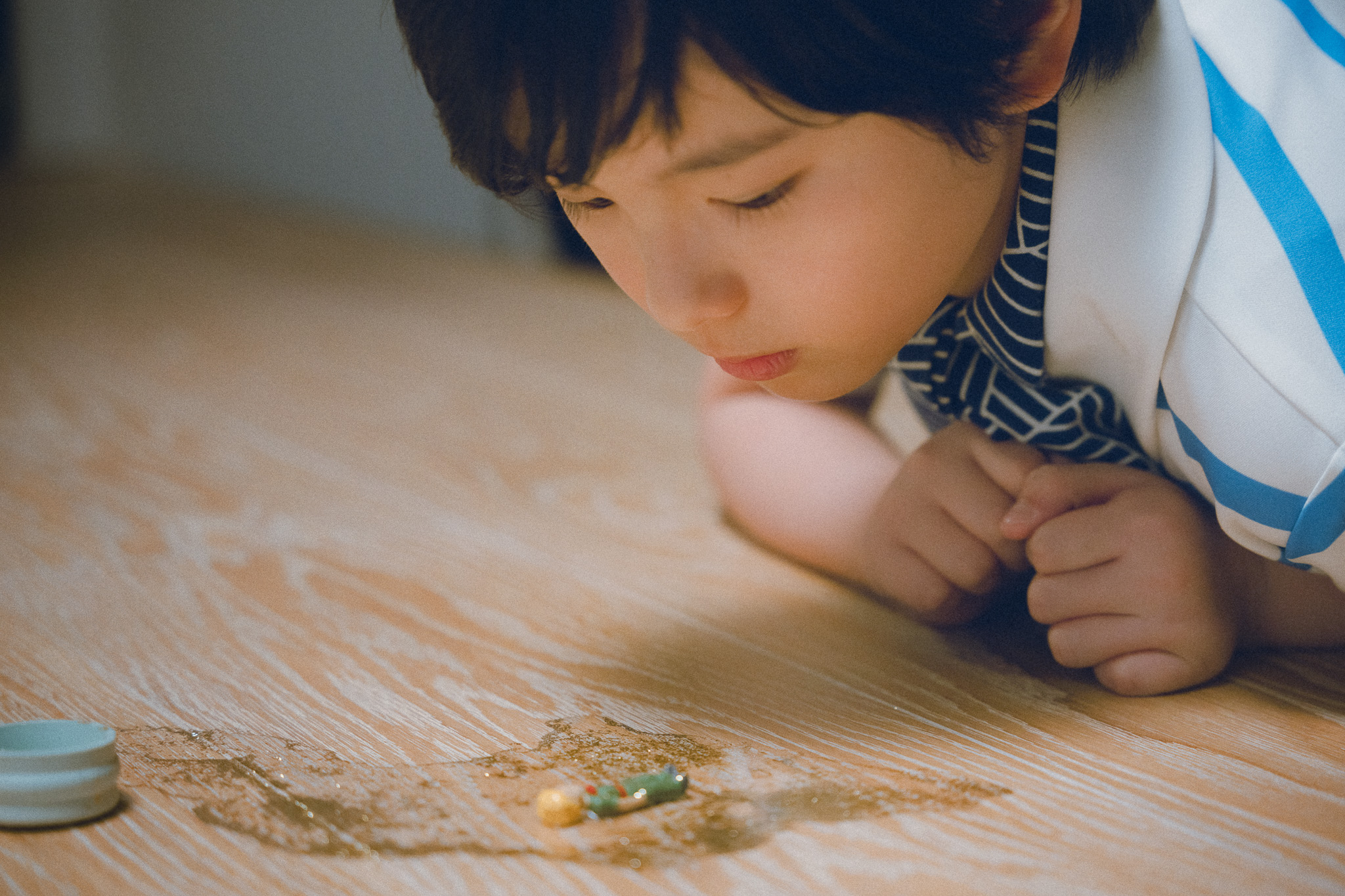
How did you work with the actors to establish the dynamics of this unconventional family, and particularly to shape Kakeru’s performance as someone who is both part of the family and, at the same time, an outsider?
Before we started filming, it was important to create a situation where they could familiarise themselves with each other. I wanted the three of them to have activities together.
There’s a scene where they need to choose a memory to put in the humanoid robot; you can see the family playing with water guns and going to the beach together. Those are the activities we made time to do beforehand, so that they can get to know each other.
As an actor, it was also crucial to understand the distance they needed to have from one another as a family. After the set was done, we had them play games, particularly necessary for the child actor who plays Kakeru.
However, I didn't direct him to act in any way like a robot or ask him to perform in a specific way that might justify him as a humanoid, because the adults interacting with the humanoid are feeling a sort of discomfort around the fact that he is not quite a human.
So the only thing I asked the young boy was to stand still or not to blink for a few seconds. That could be challenging because it's very difficult for a nine-year-old boy to follow. I remember during the audition, I told the children to sit or stand still, but most of them found it incredibly hard. What makes this actor special is that he was able to do that and played the role well.

Do you feel this content is inappropriate or infringes upon your rights? Click here to report it, or see our DMCA policy.


