Berlinale 2026 Review: LUST Constructs a Minimalist Chamber Study of Authority and Desire
Bulgarian director Ralitza Petrova's sophomore feature continues her examination of individuals shaped by institutional structures, shifting the focus toward a more contained study of psychological control and personal disintegration.

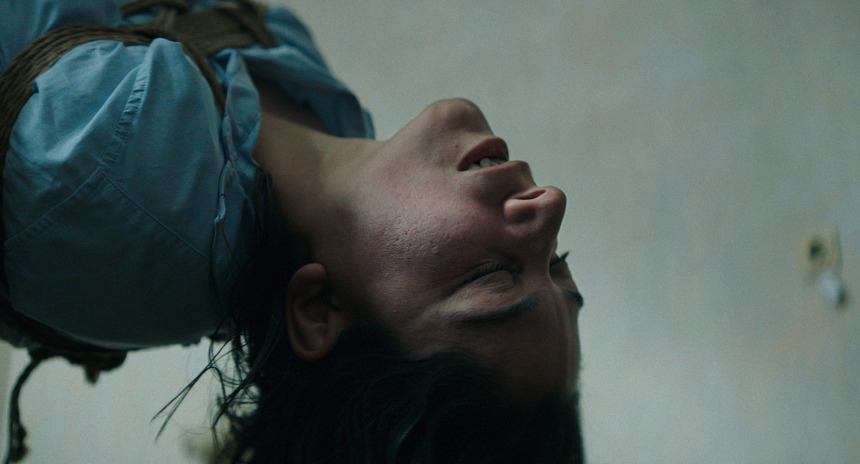
Bulgarian filmmaker Ralitza Petrova’s sophomore feature Lust begins with what appears to be a straightforward administrative task before gradually opening into a study of control and its erosion.
Lilian (Snejanka Mihaylova), a 41 year old criminal psychologist working in the United States, returns to Bulgaria after the death of a father she barely knew. Her intention is procedural. She plans to sign the necessary documents, renounce the inheritance and return to the life she has built far from her homeland.
Instead, she encounters a web of legal obligations, financial liabilities and unresolved familial absence that prevents a swift departure. What initially resembles a bureaucratic inconvenience slowly becomes a confrontation with a past that has remained largely unacknowledged.
As Lilian moves through municipal offices, anonymous interiors and a series of improvised encounters, disruptions begin to appear in the rigid routines that have governed her life. The inheritance she hoped to refuse proves less material than psychological.
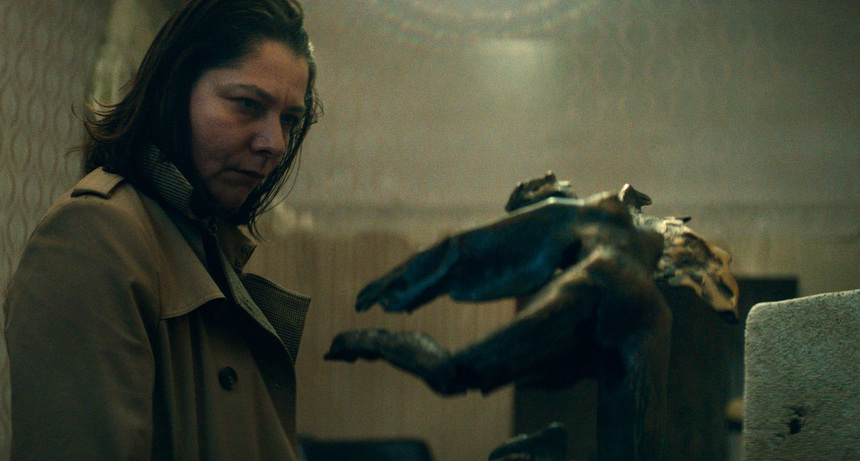
Petrova approaches this premise with the formal discipline that has defined her work since the beginning of her career. Her cinema favors a pared down visual and narrative language, already evident in her debut feature Godless, which premiered in Locarno and received the Golden Leopard. That film examined the moral erosion of post socialist Bulgaria through the story of a nurse involved in identity theft schemes targeting elderly patients. Its story unfolded within a bleak social environment where corruption appeared embedded in everyday transactions and emotional life had been reduced to pragmatic survival.
Although Lust shifts the emphasis from systemic corruption to personal psychology, it continues Petrova’s interest in individuals shaped by absence and institutional structures. Her films repeatedly examine how authority, whether professional, social or emotional, can operate as a protective architecture that simultaneously obstructs genuine connection.
In Lust, that architecture is embodied in Lilian’s profession. Her work evaluating inmates in prison settings places her in a position of diagnostic authority, assessing the psychological stability of others within a strictly regulated environment. As the film progresses, the symmetry of this arrangement begins to dissolve. The professional language of detachment that structures Lilian’s work gradually reveals itself as a personal survival strategy.
Compared with the broader social canvas of Godless, Petrova opts here for a more contained narrative structure. Much of the film unfolds inside the half empty apartment of Lilian’s father in a socialist era tower block.
Initially stranded there by accident, Lilian begins to remain in the space voluntarily, treating her isolation almost as a therapeutic experiment. Her expression remains largely impassive, and it soon becomes clear that she participates in a support group addressing compulsive sexual behavior, communicating online with a partner tasked with helping her resist those impulses.
The film assumes the shape of a chamber piece, with Lilian moving through the sparse rooms of her father’s apartment. The man she claims barely to have known emerges indirectly through objects left behind. A former artist who appears to have lived an ascetic life despite significant debts, he becomes a presence defined through absence. Although Lilian repeatedly insists on her emotional distance, unresolved paternal tensions surface throughout the film.

Lust maintains the austere visual aesthetic associated with Petrova’s earlier work. Interiors are stripped of decorative detail and filmed in subdued color palettes that reinforce the atmosphere of emotional depletion. The story moves away from the overt social drama that structured Godless, while retaining its raw visual approach.
Despite the protagonist’s sexual compulsions, Petrova avoids eroticization. The film instead recalls the familiar proposition that sexual dynamics often reflect structures of power. Lust becomes less a story about sexuality than an examination of the mechanics of (self) control, even as it draws on the familiar motif of a wounded daughter confronting the absence of a father figure.
The theme of homecoming also frames Lilian’s return, echoing narrative structures seen in other Bulgarian set films such as Nina Roza. The apartment becomes a repository of fragments that gradually reopen suppressed memories. Among the objects Lilian discovers is equipment used for Shibari rope bondage, an unexpected element that becomes intertwined with her own unresolved emotions and psychological tensions.
Petrova’s treatment of paternal absence and identity avoids conventional melodrama. Lust unfolds as a measured study of emotional restraint, at times approaching a near vacuum of affect. Lilian appears detached even in her professional interactions with inmates, reinforcing the sense that empathy itself has become carefully regulated.
While the film is less plot driven than Godless, which carried a sharper narrative impact, Lust moves toward a more meditative register. Petrova draws on recurring Freudian motifs of sex and death, constructing a minimal story of self confrontation and self awakening that largely sidesteps familiar dramatic conventions.
The film enjoyed its world premiere at the 2026 Berlinale. Visit the festival's official site for more information.
Lust
Director(s)
- Ralitza Petrova
Cast
- Mark Collier
- Alexis Atmadjov
- Snejanka Mihaylova