Berlinale 2026 Review: WHERE TO? Turns Late-Night Rides Into a Study of Intimacy and Displacement
Israeli director Assaf Machnes' debut feature unfolds as a dialogue driven chamber piece set within Berlin's nocturnal rideshare circuits.

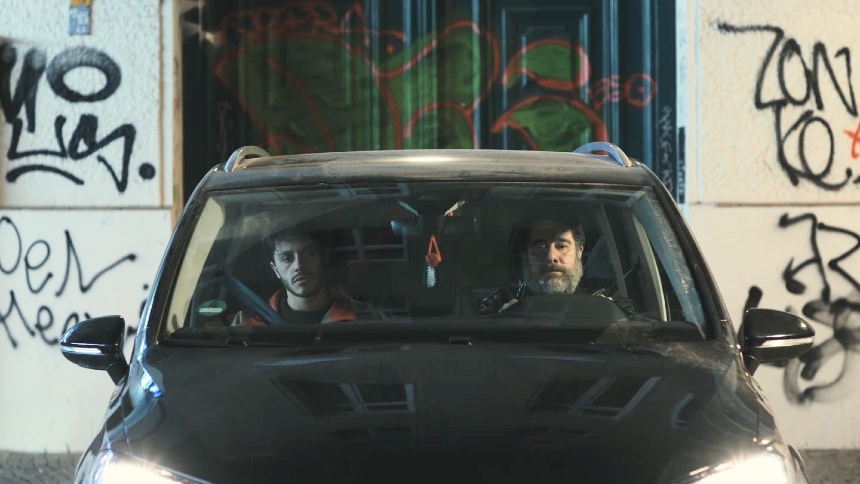
Where To? opens in motion.
Cars glide through Berlin’s fluorescent corridors while music spills out from basement clubs and anonymous apartments. In his first feature, Israeli director Assaf Machnes constructs a series of nocturnal journeys between two men who repeatedly encounter one another within the confined space of a rideshare vehicle.
Hassan (Ehab Salami), a middle aged Palestinian Uber driver, spends his nights transporting partygoers across the city. Among them is Amir (Ido Tako), a young Israeli queer visitor who arrives in Berlin after a breakup and begins exploring unfamiliar aspects of his identity. Across several encounters that unfold over two years, their conversations gradually accumulate into an unexpected bond shaped by displacement, generational distance, and political realities that remain largely outside the car yet are never entirely absent.
Machnes arrives at his debut feature following a series of short films concerned with memory and inherited trauma. Works such as Auschwitz on My Mind and Seven Minutes demonstrate a preference for intimate stories in which broader historical and political questions emerge indirectly through personal encounters. His characters tend to carry the weight of history internally rather than articulate it directly. That approach informs Where To?, where the geopolitical context remains largely implicit.

Where To? unfilds as a chamber film. Much of the film takes place inside Hassan’s car, filmed in a Taxi Confessions-style. Gig economy platforms have become a recurring narrative device in recent cinema, appearing in works such as The Story of Souleymane, which approaches the delivery economy through social drama, or Self Driver, which addresses the gig economy through satirical escalation. Machnes adopts a more restrained approach. His film remains primarily character driven, avoiding heightened genre elements in favor of conversational observation.
Berlin itself becomes a neutral ground where national identities temporarily recede. Removed from the immediate environment of Israel and Palestine, Hassan and Amir interact within a space that allows their differences to surface gradually. Yet the political context persists through memory and family ties, particularly in Hassan’s strained relationship with his daughter, who plans to marry a German partner.
The film engages several intersecting themes, including masculinity, generational displacement, and queer identity, without isolating any single one as its dominant thesis. Amir’s relationship troubles unfolds alongside Hassan’s struggle with paternal expectations. Their recurring encounters during Amir’s nighttime wanderings gradually assume the contours of a father and son dynamic, two solitary figures whose similarities become visible despite cultural and generational distance.
The story eventually reaches the period surrounding the events of October 2023. Machnes approaches this historical moment obliquely. Rather than shifting toward overt political commentary, the event registers as a background rupture that subtly alters the emotional atmosphere of the characters’ interactions.
Throughout the film, the act of driving functions as metaphor for life. Hassan continues to move through the city, transporting strangers from one destination to another while conversations unfold in transit. The road remains open, the city continues to circulate, and the encounters between the two men leave gradual traces.
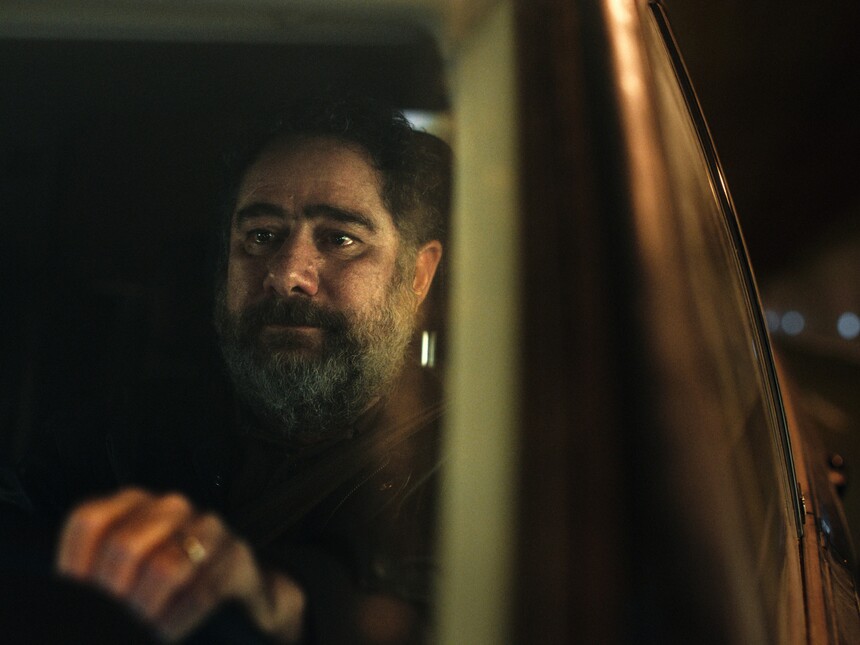
Cinematographer Maayane Bouhnik maintains visual fluidity despite the restricted space of the car interior, working with alternating perspectives from the front and back seats. Editing by Or Lee Tal and Shauly Melamed sustains the film’s rhythm, preventing the dialogue driven structure from becoming static. The pacing favors conversational exchange rather than extended observational takes.
Ultimately, Where To? is structured around the motif of lost or unresolved relationships. Hassan reflects on a romantic connection from earlier in his life, while Amir attempts to navigate the aftermath of a volatile relationship that brought him to Berlin. Their parallel attempts to reconnect with past partners provide the emotional background of the film and motivate many of their conversations during the nocturnal drives.
Within this structure, the cultural and political differences between the two men function less as the film’s central concern than as contextual background. Machnes does not approach the encounters as an explicit political statement.
Instead, he observes how two individuals shaped by different histories and generational experiences establish a tentative rapport while living in displacement. The film situates their personal struggles with intimacy within a broader geopolitical reality.
The film enjoyed its world premiere at the 2026 Berlinale. Visit the festival's official site to watch a clip.
Where To
Director(s)
- Assaf Machnes
Cast
- Derya Durmaz
- Enzo Brumm
- Rama Nasrallah