
WUTHERING HEIGHTS Review: Emerald Fennell Tackles Emily Brontë's Gothic Drama With Mixed Results

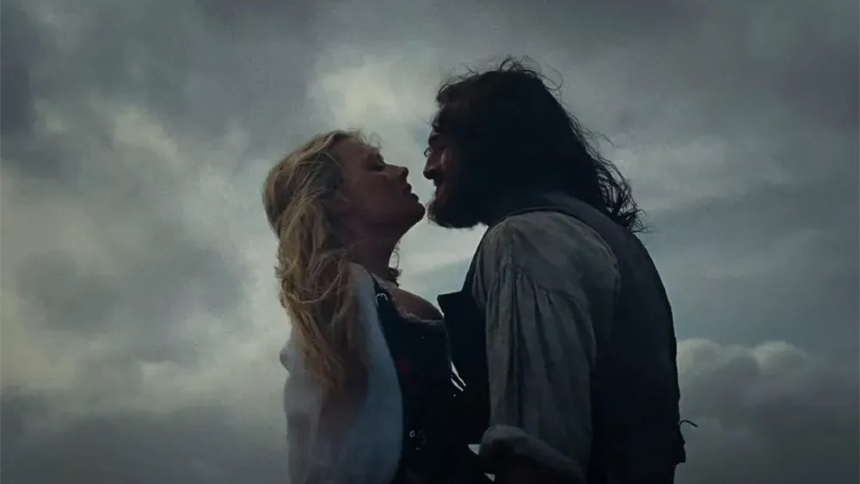
For filmmakers stuck in a creative lull or stall, there’s nothing better than taking a dip into the public domain, pulling out a work of fiction long past its copyright expiration, and adapting, revising, or reinterpreting it accordingly to match contemporary tastes and their own preoccupations.
That’s not to say — or necessarily suggest — that British-born writer-director Emerald Fennell, fresh off an Academy Award for Best Original Screenplay for Promising Young Woman and its intentionally divisive, controversy-courting follow-up, Saltburn, fell into a precarious, idea-free slump and had nowhere to turn except the public domain, but it is certainly a plausible scenario. In that scenario, the uncertain Fennell turned to her personal library for inspiration. There, she rediscovered one of her favorite novels, Wuthering Heights, Emily Brontë’s 1847 Gothic novel. Realizing it had been at least a decade since it was last adapted into a feature-length film, Fennell decided Wuthering Heights would make a perfect third film.
Whatever the inspiration (or lack thereof), Fennell decided to follow a well-worn path in reworking Wuthering Heights, a novel with at least 20 English-language adaptations going back a century (and countless others in different languages), for 21st-century moviegoers, complete with hyper-stylized sets, baroque, chiarascuro cinematography, ten new tracks from pop-star Charlie XCX, and opulently anachronistic costumes that would make a Crimson Peak-era Guillermo del Toro positively green with envy.
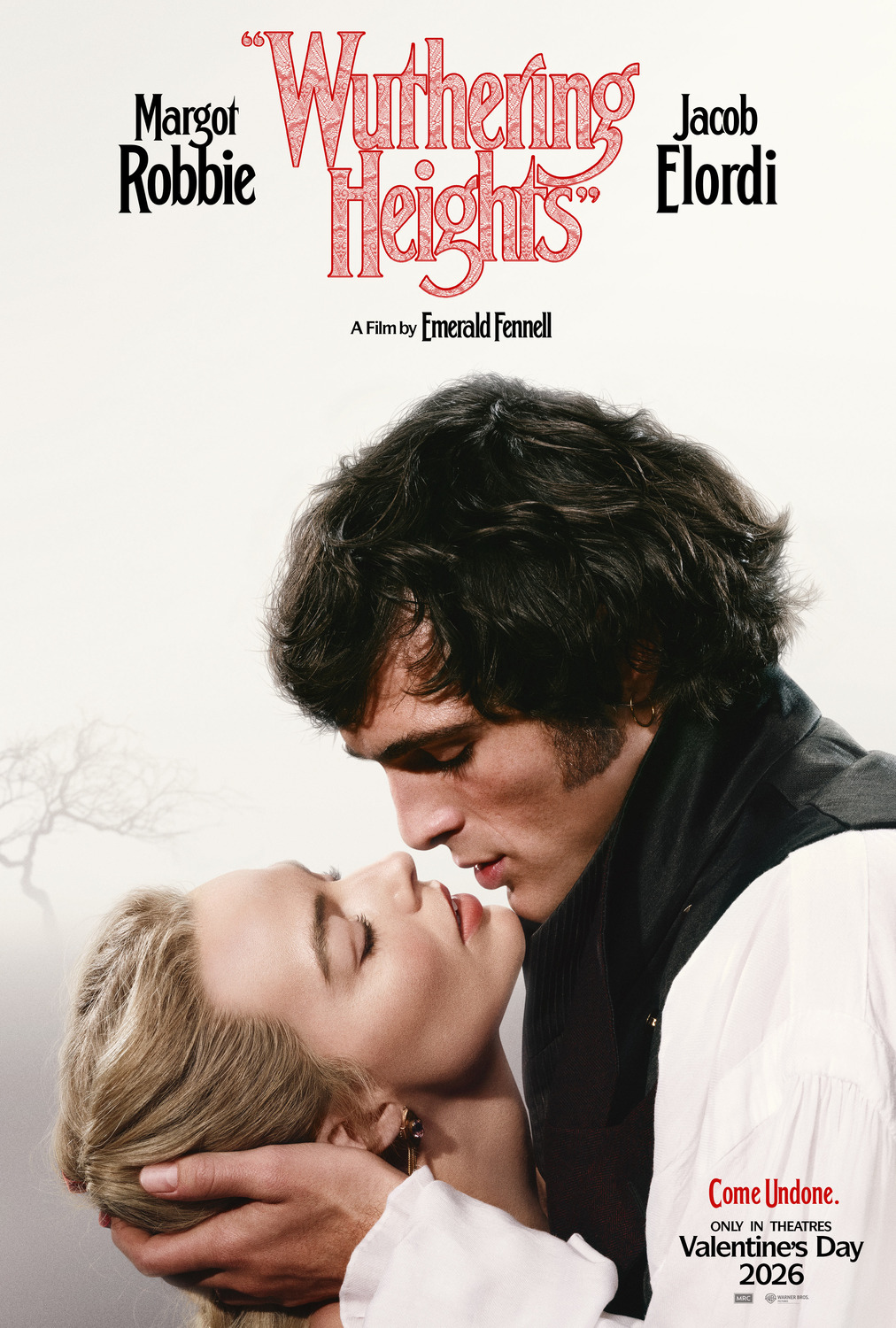
As utterly fantastic as Wuthering Heights looks and sounds — and it uundobutedly looks and sounds like nothing currently screening in movie theaters — there’s still a familiar, albeit almost unreognizable, story about desperately doomed lovers, Catherine “Cathy” Earnshaw (Margot Robbie), born to aristocratic status on the West Yorkshire Moors, if not actual wealth, and the singularly named Heathcliff (Jacob Elordi), the low-born servant semi-adopted as a child by Catherine’s dissolute father (Martin Clunes) as a playmate and foil for his brattishly demanding, self-entitled daughter.
The grisly specter of doom doesn’t appear until much, much later in Fennell’s reinterpretation. Instead, Fennell introduces Cathy (Charlotte Mellington) and Heathcliff (Owen Cooper, Adolescence) as tweens, the former with her lifetime companion, Nelly (Vy Nguyen), as they witness the public hanging of a convicted criminal. His presumably panic-stricken face hidden under a sackcloth, the condemned man grunts, groans, and writhes in his final moments as an enraptured Cathy and bedraggled villagers look on, and Fennell signals the unerringly unsubtle approach to come: Subtext, as someone once said, is for cowards, and Fennell isn’t a coward. Far from it.
That opening scene inextricably connects Death (Thanos), sex (Eros), and the doomed fate of her characters. Cathy rejects the poor, long-haired, bearded Heathcliff for a life of safety, security, and material comfort in the arms, not to mention the sumptuously appointed mansion, of their next-door neighbor, Edgar Linton (Shazad Latif), and his Anglo ward, Isabella (Saltburn co-star Alison Oliver). Cathy marries Edgar, moves into the Linton manor, and acquires a wardrobe fit for royalty, all while the brooding, tormented Heathcliff departs the area for parts unknown, returning only when he’s acquired a fortune of his own to exact, if not exactly his revenge, then insert himself disastrously into Cathy, Edgar, and Isabella’s lives.
While Heathcliff causes Cathy kinds of emotional and mental anguish, Fennell doesn’t shy away from embracing the more thorny, cliched tropes of the Gothic romance. Steam- and fluid-filled sex scenes, mostly of the heternonormative kind, between a married Cathy and an obsessed Heathcliff, fill up the languid, meandering middle section of Fennell’s reinterpretation, turning Brontë’s novel into an old-school bodice-ripper rather than a characterological study of frustrated, suppressed desire and its discontents.
Literary purists will certainly have a field day with Fennell’s take, and not only because Fennell, like most adapters, leaves the second half of Brontë’s novel unfilmed. Many have already taken issue with Elordi’s casting, claiming, not without merit, that Brontë’s Heathcliff was — and always will be — ethnically ambiguous (Romani or possibly South Asian, among other possibilities). Elordi’s dark features or his ethnic background, Basque parentage by way of Australia, will do little to obviate that particular objection from certain hearts and minds, but taken on its own, as a consciously non-literal adaptation, it’s far less of an issue, especially evaluated on its own(i.e., Elordi’s performance).
The age of the performers (Robie is 35, Elordi is 28) will also prove an issue for some, but far more salient is the supposedly color-blind casting of Hong Chau (The Whale) as the adult Nelly, relegated here to observer/manipulator status, and Latif as the cuckolded Edgar. Nelly’s arc suggests a sociopath-in-training, while Edgar, seemingly wealthy beyond imagination, suffers from terminal blandness. They’re both depicted as impediments or obstacles to Cathy and Heathcliff’s pure, unadulterated, “true” love. Adding the element of race here suggests that both their presence and their interference in the story somehow violate a natural order that prohibits race-mixing.
Regardless of Fennell’s rationale behind casting Chau and Latif as Kelly and Edgar, respectively, their casting is merely a means to an end, the depiction of Cathy and Heathcliff's doomed romance. For Fennell, Cathy and Heathcliff represent a terminally toxic couple, imprisoned by social convention and unbridled, hedonistic passion, who leave a swath of ruined or damaged lives behind before they exit this mortal plane for the next off-page one.
Ultimately, the Cathy and Heathcliff characters in Fennell’s Wuthering Heights are objects of pity, not admiration. And while the same can’t be said of Fennell’s film, it’s clear that Fennell made a film that her 14-year-old self would embrace with pride.
Wuthering Heights opens, only in movie theaters, on Friday, February 13, via Warner Bros. Pictures. Visit the official site for locations and showtimes.



Do you feel this content is inappropriate or infringes upon your rights? Click here to report it, or see our DMCA policy.


