Tallinn 2025 Review: SUNDAY NINTH Probes Memory, Estrangement, Blurred Line Between Fiction and Documentary
Kat Steppe's feature fiction debut examines the disintegration of memory and identity through a hybrid fiction-documentary lens, using the fractured relationship between two estranged brothers as its narrative anchor.

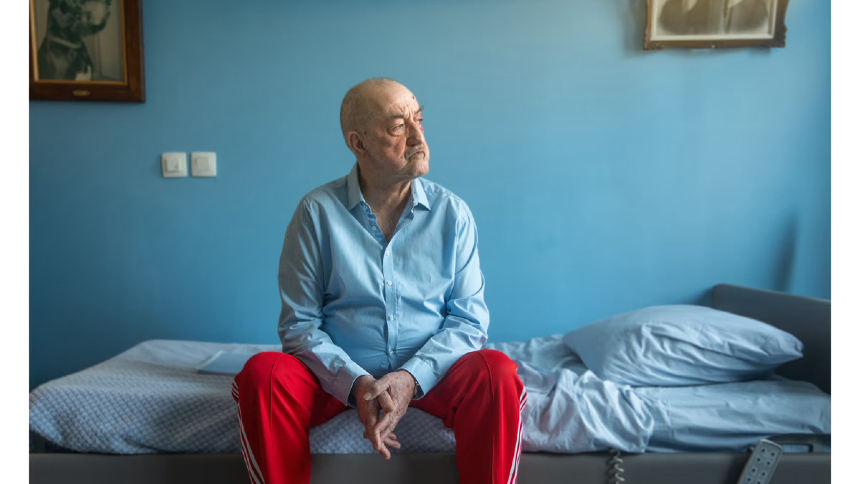
On an ordinary afternoon in a Flemish care home, a fight breaks out between the confused Horst (Josse De Pauw) and the provocateur Franz (Peter Van den Begin).
Franz continues to needle Horst during each visit. Although Horst is in the facility due to Alzheimer’s, it becomes clear the two men have not seen one another for more than three decades. Franz’s sudden interest is soon tied to his precarious financial situation.
Sunday Ninth, the feature-length debut by Kat Steppe, follows Horst at the moment his memory begins to disintegrate and with it his sense of self. Steppe, who also wrote the script, structures the narrative around a formative incident that ruptured the brothers’ relationship 30 years earlier.
One of the therapeutic methods used in Horst’s treatment involves revisiting past events. The film moves between Horst’s present-day hospitalization and scenes from his adolescence with Franz, touching on childhood disputes, parental favoritism and the woman who ultimately drove them apart.
Steppe approaches her fiction debut with methods drawn from long-term documentary practice. Her earlier work in Taboo, Food for Thought and socially engaged television projects shows an interest in quiet observation, proximity and an ethics of listening. In preparation for Sunday Ninth, Steppe volunteered for nearly a year as a caregiver in a residential facility. This extended immersion shapes the film’s dramaturgy.
Characters are built not as overt narrative devices but as composites of behaviors, conversations and relational patterns she encountered on a daily basis. Horst in particular emerges from her interactions with one resident whose fluctuating self-awareness and vulnerability informed the character’s foundation.
Though the film avoids melodrama, Horst’s encounters with Franz trigger impulsive, subconscious aggression. His mind no longer recognizes Franz but his body still does. Franz, meanwhile, hovers like a vulture waiting for an inheritance, and an old romantic attachment reappears in a gesture of belated reconciliation. Steppe creates a slow-burning, fragmentary narrative that seeks to evoke the cognitive state of a person living with Alzheimer’s, where memories resurface without chronology and generate further confusion rather than clarity fuelling frustration.
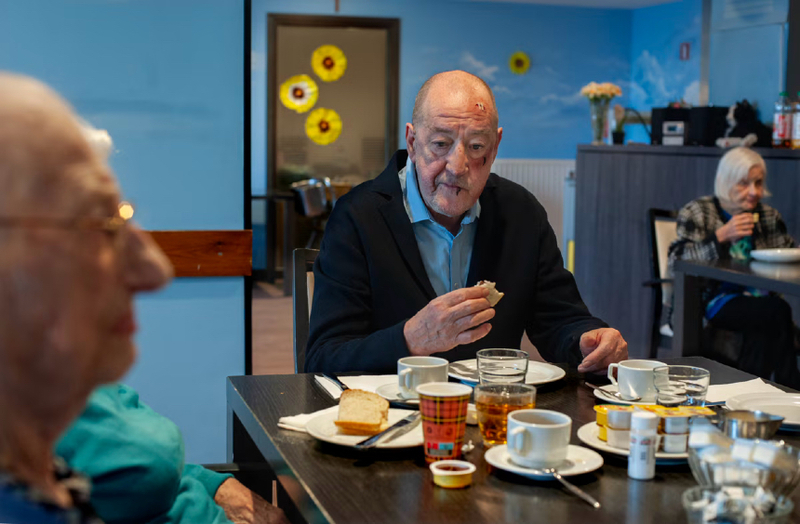
Steppe again draws on her documentary background by situating the story in an actual care facility and incorporating real residents into the film. Some appear in interactions with De Pauw, others in short segments of their own, extending the thematic focus beyond the brothers. Sunday Ninth thus incorporates docudrama elements into the fictional storytelling. The patients’ contributions function as discrete narrative threads rather than atmospheric background, even as Horst’s attempts to reconstruct his life remain the film’s center.
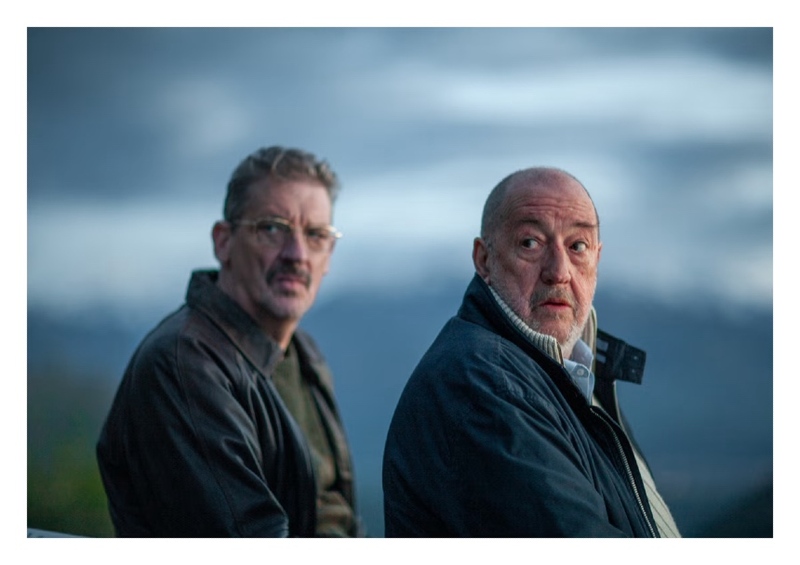
Cinematographer Renaat Lambeets uses the working care home to maintain a naturalistic visual register. Certain compositions and naturalist color palette recall Ulrich Seidl’s sensibility, and a few scenes evoke hospital scenes from Import/Export. Steppe does not, however, pursue the more confrontational dimension found in Seidl’s work. The flashbacks feature marked spotlighting and a distinctly staged quality that stands in contrast to the real facility. Their artificial tone suggests the instability of memory or Horst’s attempt to reconstruct events that have been distorted by later emotional trauma.
Sunday Ninth, a docufiction with touches of dark, masculine-tinged humor, follows a protagonist gradually and involuntarily detaching from the external world while also losing his own internal bearings. The humor is offset by measured notes of melodrama as the film revisits Horst’s romantic past. This nostalgia-driven thread runs parallel to the central story of the brothers and provides the emotional contour through which their conflict is ultimately framed.
Jan Van Der Weken won the Best Editing award for Sunday Ninth at the 29th edition of Tallinn Black Nights Film Festival.
Sunday Ninth