
Toronto 2025 Review: DIYA Builds an Emotionally Charged Thriller Out of an Ancient Cultural Issue

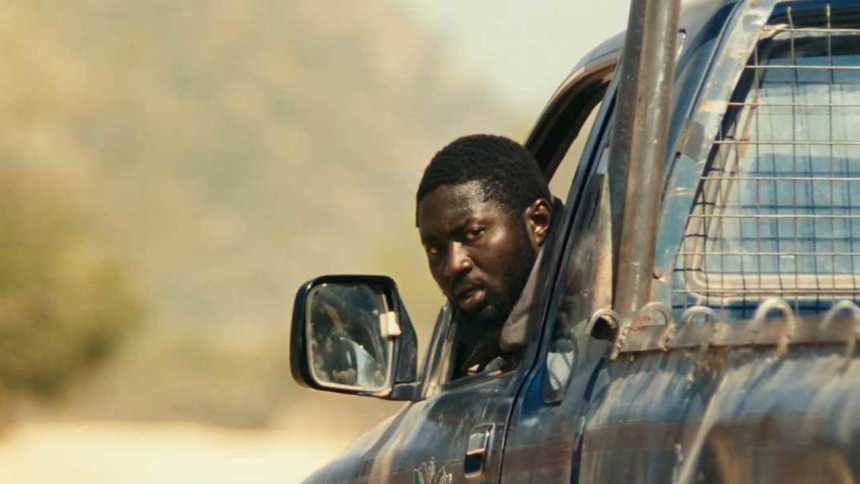
Wherever you are on this planet, one split second can change your life. This may be instantly, or the first domino in a slow, irreversible crash-out of all the best made plans. For Dane Francis, an NGO driver on the dusty and traffic heavy streets of N’Djamena, that instant is a glance away from the busy street while driving. We have all done it, an buzzing alert, a text message, a phone call from the boss, a momentary grabbing of the device for a glance that feels innocent until it is anything but.
The result is Dane striking a young boy in front of a primary school. On the cusp of fatherhood himself, with his very pregnant wife in her last trimester on the verge of delivering their first child, a boy. Dane is shocked and mortified by what may happen next. Taking immediate action, not waiting for the delayed ambulance in the chaos of traffic, he drives the injured boy, with the help of a chaperoning schoolmate, to the nearest hospital.
Because Dane was on company time, he hopes that the NGO will pay for the boy’s hospital bills. But when he is arrested for hit-and-run (but oddly, not kidnapping), his employers sever his employment immediately. As if no source of income on the eve of the start of his own family, is not bad enough, the family of boy, who succumbs to his injuries in spite of the transfer to ‘the modern hospital,’ demand a blood debt. This monetary compensation, a fiscal vendetta along the lines of "an eye for an eye, a tooth for a tooth" is both the title and moral core of Diya.
Offering a rare look at a country that is very seldomly put on screen, the landlocked Republic of Chad in Central Africa, director Ronaimou Adoumbaye captures his home country with a sharp eye for detail, and a knack for narrative propulsion. Red fabric curtains brushing up against an Adobe wall, the hazy morning crawl of thousands of motorcycles and small delivery trucks across the Chari river, or the diaspora of great faces of the people in the various factions and social strata that Dane, or his wife, must traverse with expedience. This is the stuff of any good procedural thriller and a complex world on screen.
Languishing in prison, where the police demand bribes from Dane for administrating the Diya. His family, and the boy’s family from a tribe in Northern Chad clan, arrange a meeting. The array of brothers and uncles who definitely look like trouble, and glare during the negotiations. The women are most silent, but their eyes are equally intense. Unemployed, and without a car, he has only fourteen days to come up with more than a years salary, that sum itself to western eyes $13,000 is not much, to African pockets, that is can be life-changing money, even when is negotiated down from more than double the original ask. His wife’s property, their home, and their belongings are either not enough, or not liquid enough along the strict timeline to come anywhere close.
While his wife purses other, more traditional leads from her extended family, Dane is presented with an opportunity from his cellmate, Ousmaru. A career bad guy, one of the more criminal elements of N’Djamena, whose street credo is “God doesn’t help the poor. Eat or be eaten,” he offers him a driving job for a caper going down in the north end of the country.
The result is Dane striking a young boy in front of a primary school. On the cusp of fatherhood himself, with his very pregnant wife in her last trimester on the verge of delivering their first child, a boy. Dane is shocked and mortified by what may happen next. Taking immediate action, not waiting for the delayed ambulance in the chaos of traffic, he drives the injured boy, with the help of a chaperoning schoolmate, to the nearest hospital.
Because Dane was on company time, he hopes that the NGO will pay for the boy’s hospital bills. But when he is arrested for hit-and-run (but oddly, not kidnapping), his employers sever his employment immediately. As if no source of income on the eve of the start of his own family, is not bad enough, the family of boy, who succumbs to his injuries in spite of the transfer to ‘the modern hospital,’ demand a blood debt. This monetary compensation, a fiscal vendetta along the lines of "an eye for an eye, a tooth for a tooth" is both the title and moral core of Diya.
Offering a rare look at a country that is very seldomly put on screen, the landlocked Republic of Chad in Central Africa, director Ronaimou Adoumbaye captures his home country with a sharp eye for detail, and a knack for narrative propulsion. Red fabric curtains brushing up against an Adobe wall, the hazy morning crawl of thousands of motorcycles and small delivery trucks across the Chari river, or the diaspora of great faces of the people in the various factions and social strata that Dane, or his wife, must traverse with expedience. This is the stuff of any good procedural thriller and a complex world on screen.
Languishing in prison, where the police demand bribes from Dane for administrating the Diya. His family, and the boy’s family from a tribe in Northern Chad clan, arrange a meeting. The array of brothers and uncles who definitely look like trouble, and glare during the negotiations. The women are most silent, but their eyes are equally intense. Unemployed, and without a car, he has only fourteen days to come up with more than a years salary, that sum itself to western eyes $13,000 is not much, to African pockets, that is can be life-changing money, even when is negotiated down from more than double the original ask. His wife’s property, their home, and their belongings are either not enough, or not liquid enough along the strict timeline to come anywhere close.
While his wife purses other, more traditional leads from her extended family, Dane is presented with an opportunity from his cellmate, Ousmaru. A career bad guy, one of the more criminal elements of N’Djamena, whose street credo is “God doesn’t help the poor. Eat or be eaten,” he offers him a driving job for a caper going down in the north end of the country.
As Dane traverses city and country pursuing an ill defined criminal opportunity, with and abstract payout Diya acts as impromptu road-trip as well, with some well plotted, and sharply rendered twists along the way. Dane is haunted by the mother of the boy he killed, and starts to see her in places that may simply be coincidence, or may be the fresh psychological trauma.
The film ultimately rests on the imperfect everyman played by Ferdinand Mbaissané. His expressive face invites empathy, and he is demonstrably not a bad person as he is pushed towards ever more shady deeds as the clock winds down. All this at a time where he was just starting to make a life for himself, and should be celebrating the birth of his first child. Watching him go through the proverbial wringer is harrowing, but equally empowering as his flawed humanity, as much as it got him in the mess, is proven to be the stuff to get him out of it.
The practice of Diya was made illegal in 2019 by the Chad government, but is still widely practiced by some groups under the table. The film Diya slips in a lot of subtle social commentary about both the practice itself, how it brings communities together by blood of kin in spite of petty differences -- and how it can weaponize tribal divisions and bring out the worst in strangers, both social classes, spiritual beliefs, and formal institutions - all with their own agendas. Notions of morality and spirituality are flirted with here, visually, and occational asides in the dialogue, but such mainly left to the viewer to fill in. The movie does aims to be more hopeful than cynical, however.
The film ultimately rests on the imperfect everyman played by Ferdinand Mbaissané. His expressive face invites empathy, and he is demonstrably not a bad person as he is pushed towards ever more shady deeds as the clock winds down. All this at a time where he was just starting to make a life for himself, and should be celebrating the birth of his first child. Watching him go through the proverbial wringer is harrowing, but equally empowering as his flawed humanity, as much as it got him in the mess, is proven to be the stuff to get him out of it.
The practice of Diya was made illegal in 2019 by the Chad government, but is still widely practiced by some groups under the table. The film Diya slips in a lot of subtle social commentary about both the practice itself, how it brings communities together by blood of kin in spite of petty differences -- and how it can weaponize tribal divisions and bring out the worst in strangers, both social classes, spiritual beliefs, and formal institutions - all with their own agendas. Notions of morality and spirituality are flirted with here, visually, and occational asides in the dialogue, but such mainly left to the viewer to fill in. The movie does aims to be more hopeful than cynical, however.
Well made, with a social purpose that augments, rather than hinders, the filmmaking, more work from Ronaimou Adoumbaye, and any burgeoning film scene in Chad would be most a welcome thing. Seek Diya out if you can find it. It is driven in a pursuit to both entertain, challenge, and educate. It is also a great time at the movies.

Do you feel this content is inappropriate or infringes upon your rights? Click here to report it, or see our DMCA policy.


