Review: BARBARIAN, Hell Really Is Other Airbnb People
Georgina Campbell and Bill Skarsgård star in the thriller, opening in movie theaters Friday.


Nothing says "stranger danger” like showing up at an out-of-town rental in the middle of a nighttime downpour, finding the entry blocked, the owners unavailable via cell phone, and someone else already inside, enjoying warmth and comfort in your place.
It’s enough to make Tess Marshall (Georgina Campbell), the co-protoganist of writer-director Zach Cregger’s solo feature-length debut, Barbarian, bolt from the premises and back into the dark. Except, of course, it’s late, she’s tired, and she has a potentially life-changing job interview the next morning in downtown Detroit with a documentary filmmaker.
Besides, the stranger in question, Keith (Bill Skarsgård), seems to anticipate and counter every objection Tess can possibly make even as she warily decides to spend the night, taking the bedroom (only after sheets are changed), and locking the door. Cregger spends narrative real estate teasing out Tess’s understandable wariness and eventual decision to spend the night, making Tess the rare genre character who, while not recognizing she’s actually in a horror film, acts and reacts within the parameters of normal expectations, right up until she wakes up in response to a noisy Keith in mid-nightmare.
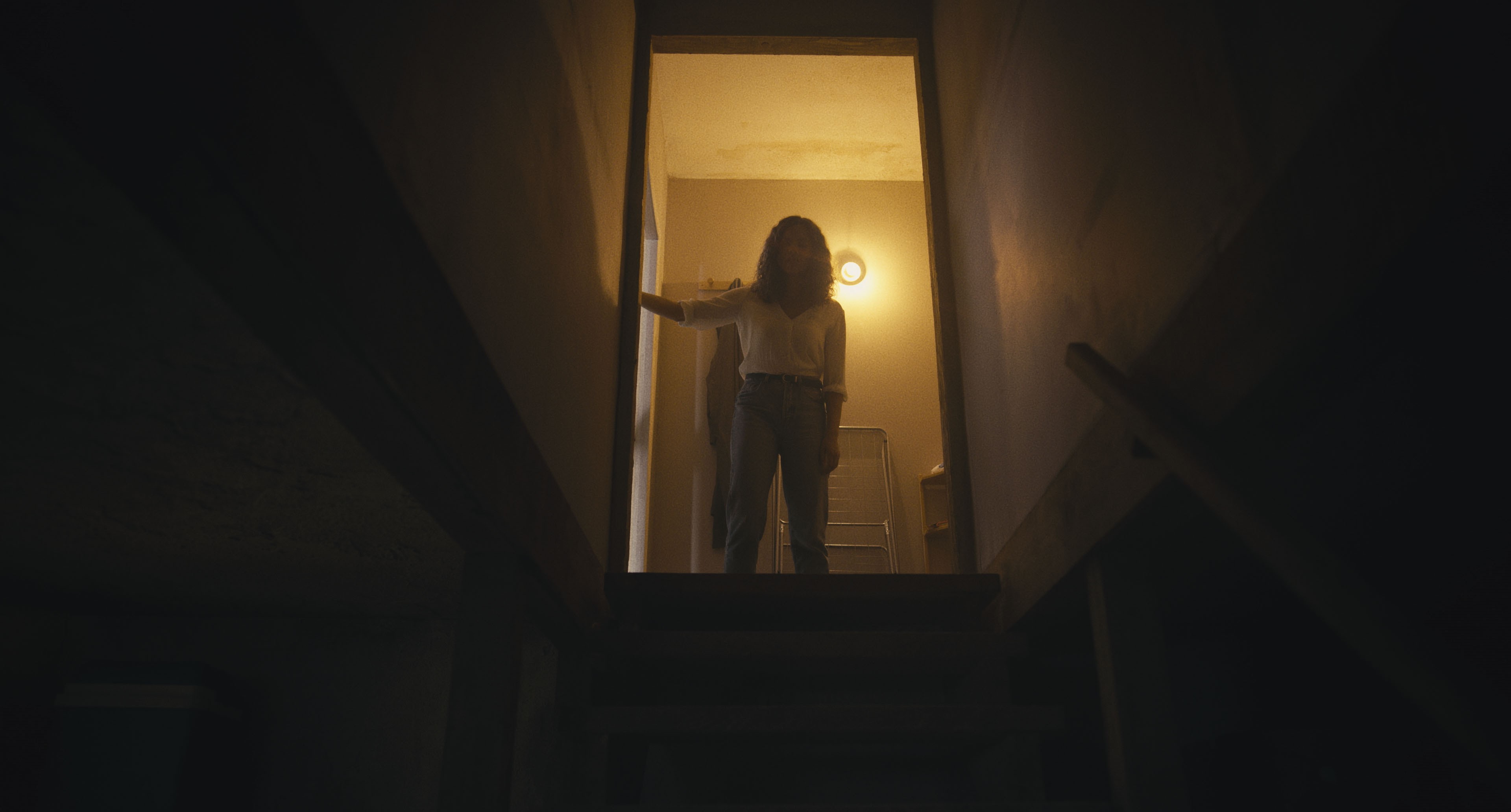
Tess’ decision to return to the rental after her interview, however, pushes believability near the breaking point, though somewhat understandable given the warming relationship she’s begun to develop with Keith. Unfortunately for Tess, if not the audience on the other side of the screen, whatever future she thinks she might have with or without Keith runs afoul of a skin-crawling discovery -- a hidden set of rooms and a seemingly endless series of tunnels under the house -- after venturing innocently downstairs for much needed bathroom supplies.
Initially, Barbarian unfolds as a tense, high-stakes two-character drama centered on Tess and Keith, with Keith, the "stranger" in the above-mentioned scenario adding just enough doubt about his underlying intentions toward Tess for the audience to empathize with and root for Tess to make it out alive, preferably with limbs, fingers, and toes intact. Casting Skarsgård, so memorable as Pennywise the Clown from the two-part It film, as Keith was something of a coup. Even when everything about him or his demeanor suggests good intentions or innocence, audiences can’t help but suspect something’s amiss, and that Tess should give into her base instincts and run or drive away as fast as humanly possible.
It's then, however, that Cregger reveals his first of several, possibly too many, swerves and switchbacks, adding a potentially new existential threat to Barbarian. Much like last year’s winner of the Embrace the Insanity Award winner, James Wan’s deliriously enthralling Malignant, all of those turns and feints can be a bit too much for audiences expecting a far more straightforward thriller.
Cregger leaves audiences little room for hesitation: Either accept where he decides to take Barbarian narratively or exit the film (and the theater) immediately. For those who do accept Barbarian’s unpredictable, chaos-filled story, a steady stream of horror, humor, and terror await, right up until the final, reality-bending moments.
A filmmaker with a background in comedy, Cregger understands that there’s a thin, often permeable line between horror and comedy, between gasping and laughing, often in the same scene or even the same shot. From the first, overhead shot of Tess’s temporary refuge turned prison, filmed so it appears as a separate, standalone structure, to the reveal of the rental’s carefully delineated interior (larger on the inside than it is outside), and on through claustrophobic shots of the hidden rooms and tunnels under the rental (an homage, in part, to Wes Craven’s The People Under the Stairs).
Like Craven before him, Cregger isn’t hesitant to inject political and social commentary into Barbarian: Tess, a Black woman in a white-male dominated world, finds herself dismissed, igorned, or seen as disposable by authority figures. Tess’s precarious position is made all the more unstable due to her intersectionality (Black, woman).She's not alone either. The other women in Barbarian don’t fare particularly well either, suggesting the title doesn't just refer to an individual villain, but to the patriarchal system that demeans, degrades, and devalues women, victimizing at every turn.
Barbarian opens Friday, September 9, in movie theatres everywhere.