
Made in Prague 2026 Review: LITTLE THIEF, Brisk, Assured Small-Town Heist Comedy
Czech filmmaker Ondřej Hudeček's brisk Moravian heist comedy turns pandemic-era insurance fraud into a small-town Robin Hood story, mixing regional farce with sympathy for its flawed hustlers.

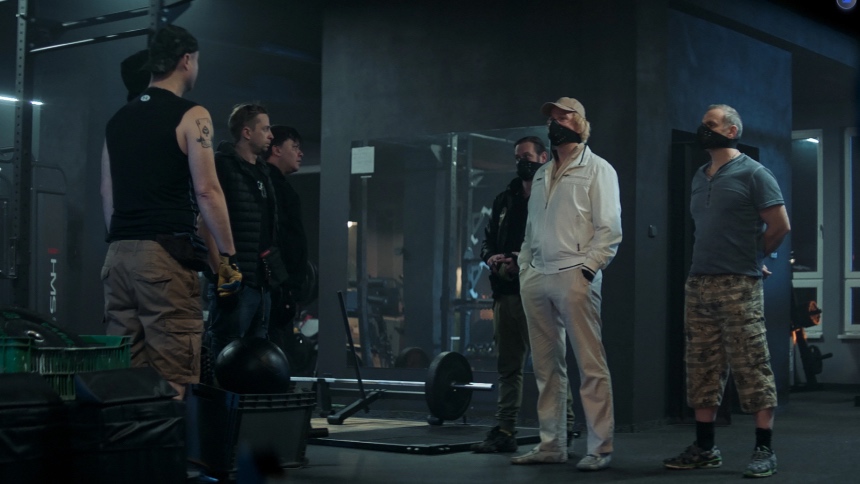
Rising Czech filmmaker Ondřej Hudeček, who won the Short Film Special Jury Award for Best Direction at Sundance for his short Peacock, has completed the small-town heist comedy Little Thief as his narrative feature debut.
His planned feature-length and highly ambitious follow-up to Peacock, Bohemian Rhapsody, has been over a decade in the making. Writing, directing, and lensing, Hudeček creates a Czech version of a small-town Robin Hood for the pandemic era.
Little Thief starts with a nocturnal chase. A truck full of hay bales is fleeing a local brewery owner, with the guys in the truck bed throwing bales at the vehicle pursuing them. One of them is wearing a Jason Voorhees mask for no reason whatsoever. With dawn comes justice, and the young driver, Luboš, who goes by the nickname Lupyn (Matyáš Řezníček), becomes the fall guy for the night’s stealing escapade.

He is released from prison early, not necessarily for good behavior but, as Lupyn wisely observes, because there are not enough guards after many have fallen ill with COVID-19. Sent home to live with his mother, he attempts to reintegrate into society. This proves difficult not only because of his fresh status as an ex-prisoner and a reputation that spreads rapidly throughout his hometown, but also because opportunities are disappearing as the government shuts businesses down.
The homecoming to his childhood bedroom is all the more sour when he discovers that his mother, Ilona (Eva Vrbková), is now living with the bumbling local police officer Čenda (Václav Neužil), who got him into prison in the first place. Local business owners shun him as a prospective employee because of his “sticky fingers.” Brewery owner Gazda (Jaroslav Vlach), the very same man from the opening chase, takes him under his wing in the fatherly fashion of a believer in second chances.
Hudeček utilizes different coronavirus waves and the tightening and easing of government restrictions as a dramaturgical tool and a framework for the story. At the height of the first serious wave, local business owners have to close their businesses, and the shutdowns begin to bleed them dry financially.
One business is saved because it has been burglarized and can claim insurance money. It takes little imagination to fathom who the mystery thief might be, and other local owners begin approaching a surprised Lupyn for a similar act of salvation. He denies involvement in the merciful crime, but the prospect of a cut of the insurance money proves too tempting for the broke ex-prisoner. He puts the old band back together and starts looting.
Hudeček is well versed in filmmaking conventions, genre aesthetics, and a cinephile approach, as he demonstrated in Peacock. Idiosyncratically staged and stylized as a period queer romance, the short biopic about nineteenth-century Czech playwright Ladislav Stroupežnický combines black humor, bright colors, and blazing self-irony.
For all this flair, however, Little Thief is a more conventional endeavor, shot on location in Hudeček’s hometown of Strážnice. Hudeček uses a framing narrator who introduces Lupyn and bookends Little Thief, akin to Sam Elliott’s Stranger in The Big Lebowski, although Pavel Zedníček’s narrator never appears onscreen.
Where Elliott brings his Southwestern drawl, Hudeček opts for the Slovácko dialect, spoken by the narrator and the characters alike, anchoring the story in a very specific Moravian place. In another instance of intertextual serendipity, the speech recalls the similar, though not identical, South Moravian dialect of Věra Chytilová’s 1992 cult classic The Inheritance or Fuckoffboysgutentag. Many of its lines have taken on lives of their own over more than three decades, and a similar comic flavor runs through Little Thief.
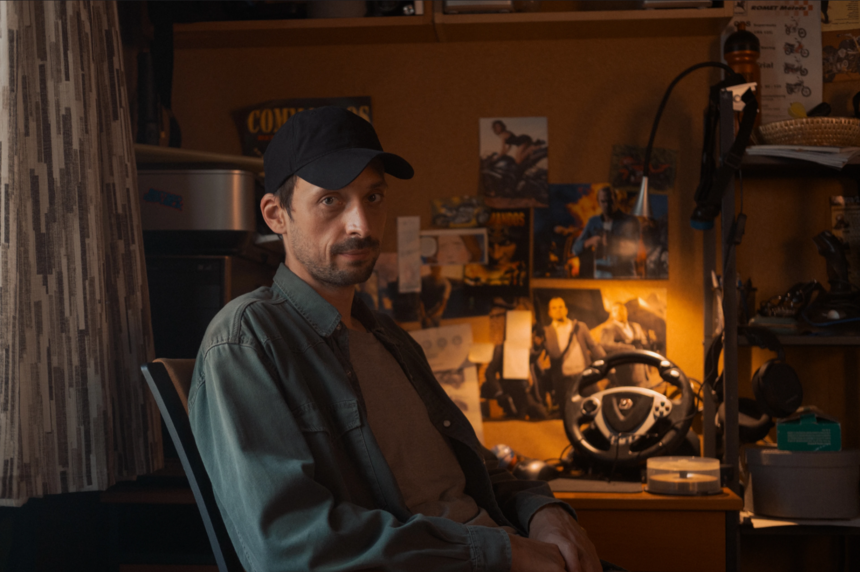
With an almost two-hour runtime, the small-town heisting accommodates several smaller stories, each providing an arc for a character in Lupyn’s orbit. In addition to Lupyn becoming the temporary local savior on the wrong side of the law, there is an obligatory romantic entanglement with his old flame Tamara (Denisa Barešová), who has returned from Canada to care for her grandfather and works at the local gas station. There are also Čenda’s awkward attempts at playing house as an unwanted stepfather.
Most importantly, there is the larger narrative arc involving local “entrepreneur” Aleš Sasín (Stanislav Majer) with a ridiculous blond hairdo almost worthy of Jacobim Mugatu, leaving little doubt about who the villain is. Sasín has a predatory business model of his own: whenever a local business is hit hard by COVID-19 restrictions, he swings by and buys it up. He repeats the process, with owners selling only as a last-ditch effort to save themselves. Lupyn, Čenda, and Sasín become entangled in a larger scheme that tests each character’s moral boundaries.
Like Chytilová’s The Inheritance or Fuckoffboysgutentag, Little Thief takes place in a small town populated by characters molded by their environment. Chytilová mines Czech boorishness in a bittersweet farce, whereas Hudeček acknowledges it without making it the center of attention, using it instead as local color.
Hudeček’s dialogue is less punchy than Chytilová’s, although there is a clear difference in intention. He focuses more on genre-bending in his small-town heist comedy. And he finds more sympathy for his flawed characters on the social periphery.
Hudeček has come up with a strong debut, showcasing his storytelling skills while merging several genres. Despite its 118-minute runtime, Little Thief does not feel heavy, thanks to its brisk pace and intermingling character arcs.
Little Thief will have its UK premiere at London’s Regent Street Cinema on November 7 as part of the 30th edition of Made in Prague Festival.


