New York 2026 Review: ROSE By Any Other Name
Sandra Hüller and Caro Braun star in Markus Schleinzer's period drama.

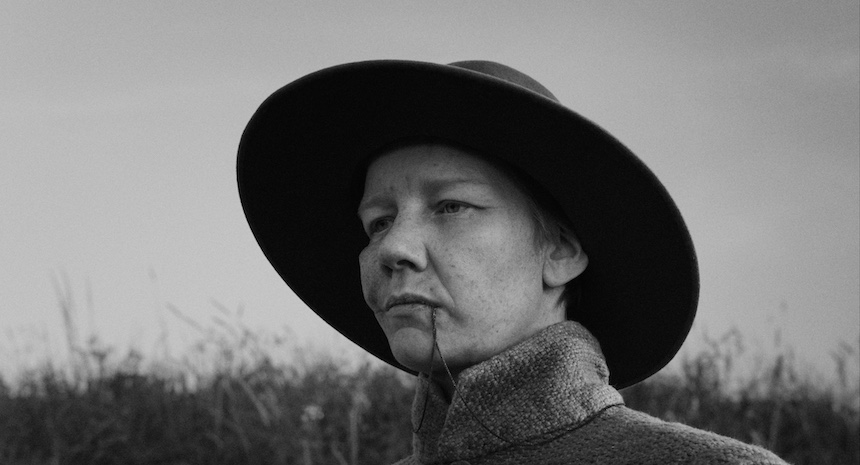
Rose is a candid presentation of a woman's place in society in 17th century Europe.
Avoiding the pitfalls of period dramas with similar subject matter, where things often get overly melodramatic and didactic, Markus Schleinzer opts for a more matter-of-fact approach, depicting harsh prospecting lives of pastoral Europe after the 30 Year War.
Sandra Hüller plays a mysterious disfigured war veteran returning to a rural village to claim a long neglected farmland. No one remembers the descendants of the property and it's in such disrepair, they don't make much of the stranger taking over the land.
It turns out 'the soldier' is a woman and has been pretending to be a man all her life, for the freedom it grants in the world at the time. The soldier, with his bravery -- defending other members of the community from a vicious bear attack -- and diligent work ethics, gains the trust of the village, still steeped in rigid Protestant beliefs and patriarchy, where siring an heir means more than anything. To expand the farmstead and to gain access to the neighboring creek, Rose agrees to marry Suzanna, a neighbor's daughter.
Under the pretense of 'protecting the purity', the couple don't consummate their usual marital duties and concentrate on the daily, back-breaking work. They acquire some servants to help out at the stead. Things get touchy when sexual needs are not met and the pressure to have an offspring becomes dire. And by some miracle, Suzanna is pregnant and the family affords peace and tranquility for a while. But when Rose is stung by bees while doing beekeeping duty and faints, her secret is revealed.
Markus Schleinzer presents a story of a woman pretending to be a man, during a time when religious and societal restrictions for women were tantamount, with direct, clear-eyed vision of a woman trying to find her place in a man’s world and yearning to be free. Thankfully, Schleinzer spares us the depiction of unnecessary graphic violence and torture. A crisp monochrome image by Austrian cinematographer Gerald Kerkletz (Walden), often lit by candlelights, adds to the serene and somber mood of the film.
But the star of the film is, of course, Hüller. Time and time again, Hüller shows how multifaceted and gifted an actress she really is. In a role with make-up (a nasty scar from gunshot wound) that covers half of her face, she still manages to communicate the range of subtle emotions of a person living with a big secret and an even bigger, untold backstory. Caro Braun, who plays Suzanna, is also great, starting out as a naive young woman who is married off by her father without a single consideration, then later becoming a confidante of Rose and co-conspirator in pursuing their freedom together.
As the secret of the two women is revealed and an angry village mob gathers for a big confrontation, Rose gives a passionate plea, of what matters the most: A good, contributing member of the community and a great neighbor and friend, or a person who just has manhood between his legs? As the tragic ending rolls around, Rose becomes Renée Falconetti from Dreyer’s Passion of Joan of Arc, complete with the straw-weaved throne on her head.
Quietly devastating and deeply moving, Rose presents the hypocrisy of its time and the unforgiving nature of rigid patriarchal society, without ever being too sentimental or preachy.
Rose screens several more times at the New York Film Festival. Visit the official festival site for more information.
Dustin Chang is a freelance writer. His musings and opinions on everything cinema and beyond can be found at www.dustinchang.com
Rose
Director(s)
- Markus Schleinzer
Writer(s)
- Markus Schleinzer
- Alexander Brom
Cast
- Sandra Hüller
- Caro Braun
- Marisa Growaldt