CRUEL STORY OF YOUTH 4K Review: Anger and Desire in Post-War Japan

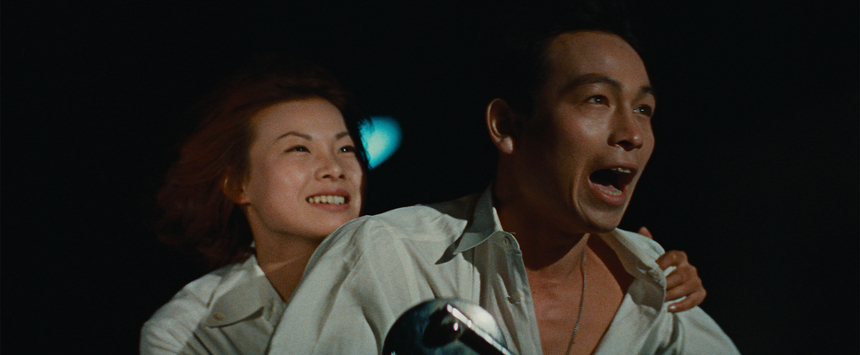
In western cinema, the 1950s and 1960s are often portrayed as a time of youth in revolt: the birth of a teenager as a particular cultural and social entity, and with it, the problems of education, social life, work, and integration into society, or resistance to that. But it wasn't just an issue of the west. Japan had its own situation around young people. The generation that grew up in the aftermath of World War Two and what that meant for Japan, often found themselves at odds with their parents and those in power. And many filmmakers responded with stories of that generation.
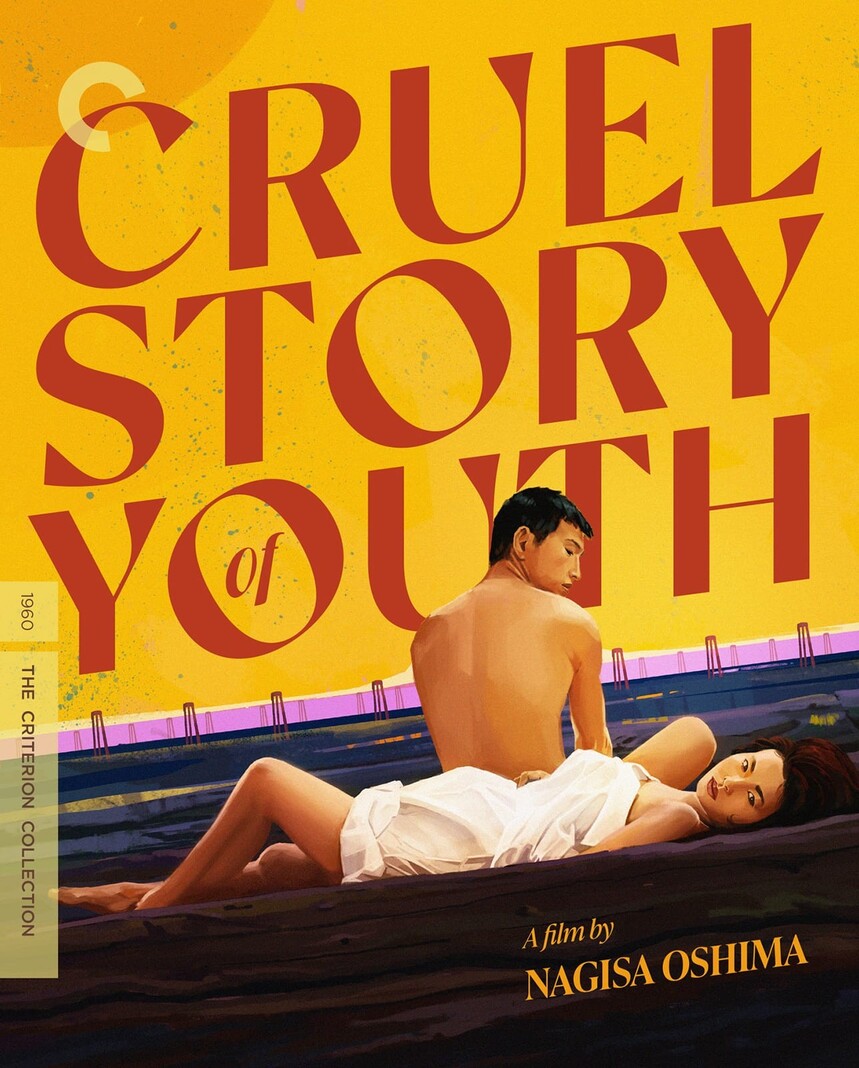
Criterion Collection has reissued one of the key films of that era with a new 4K restoration, Cruel Story of Youth. Oshima Nagisa's second feature film was a loud scream into the world not only of Japanese cinema, but Japanese life, representing what might seem on the surface to be angry and mean young people, but dug deeper to show how that anger was a reaction against a society that seemed to hate them.
Makoto (Kuwano Miyuki) is a high school teen, bored and maybe burying sadness over the loss of her mother. Kiyoshi (Kawazu Yusuke) is a university student who perhaps doesn't bother going to class. They meet when he rescues her from an attempted rape by an older man. Despite Kiyoshi's aggression towards her, Makoto becomes infatuated, and they concoct a plan to rob the old men who try to take advantage of the seemingly vulnerable teen. As Makoto slips into alcoholism despite her older sister's warnings, she and Kiyoshi's escapades become increasingly dangerous, risking both their lives.
The red letters on the newsprint of the opening credits stand in for all the meanings of the colour: passion, love, anger, madness. Oshima wants the audience to know that this is not just a love story, this is set at its time of volatility for a reason that is not just contemporary. As many protested against the continuing Japan/US pact that would see Japan acquiesce to a foreign power, young people were portrayed as difficult, unreliable, unsanitary, and rebellious against traditional Japanese culture and society. So when Makoto and Kiyoshi begin their ill-fated affair, it's not just a rebellion against their families or situation, it's something of a rebellion against the powers that be. They become what they are accused of being, since few other options are given to them.
Kiyoshi seems the somewhat typical angry young man, seen across cultures in this era: as the world is changing around him, there is no place for him. He has seemingly little interest in becoming one of the young men who coerce women into prostitution, but has no interest in his studies either. Manoko is given an education, but as a woman, there is only so much opportunity for her to have an independent life; mainly she is expected to marry and have children. She is naive and desperate to lash out after her mother's death, the lack of discipline from her father, and a sister who doesn't want Makoto to repeat her mistakes.
Kiyoshi and Manoko's first 'date' is in a quiet part of Toyko harbour, jumping over logs, risking their necks, and Kiyoshi's cruelty seems bizarre: he pushes Manoko into the water, doesn't let her get out, and eventually, rapes her. But Manoko doesn't seem to care about this terrible treatment, and it's very hard to watch from the 21st century, and I don't even think it's justifiable by saying that it's a product of its time, but I hope that Oshima was making a point about how men treated women, and how women were essentially taught, to accept this treatment as a twisted form of love. It's beautifully shot, which emphasizes the horror of Kiyoshi's actions and Manoko's response.
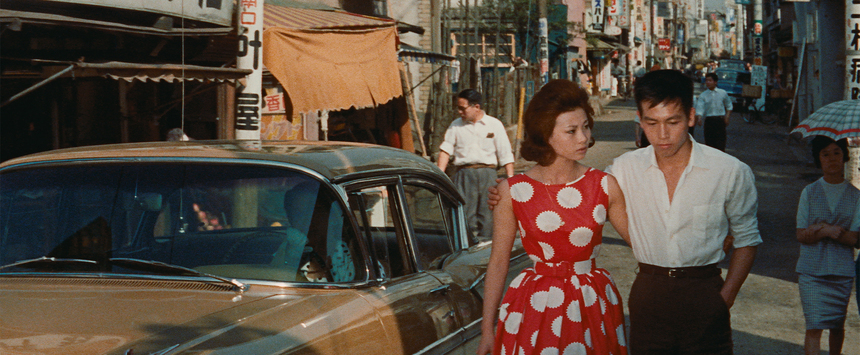
Oshima employs close-ups frequently in this film: he wants his audience to know these characters, see every mark of beauty and ugliness on their faces as they race headlong further into a dangerous life. They use the circumstances of their meeting to play tricks upon unsuspecting rich men, extorting them for money to pay for drinks. Manoko sinks into alcoholism, even as Kiyoshi begins to truly fall in love with her.
His love perhaps can never make up for his cruelty, which remains a constant even if he is also loving, but when she is in danger, he seems to realize how the two of them are too intertwined at this point. Kawuzo and Kiwano are both focused and raw as Kiyoshi and Makoto: we can feel both anger and sympathy toward them, we want them to be happy but maybe not together, we want the world they live in to be better for them and to them, but cannot let go of the blame the young people share in their disasters.
Cruel Story of Youth was part of a brief but an important wave of Japanese cinema, made by those who grew up under the shadow of the post-war era. Inspired in part by the French new Wave but standing as a testament to Japan of the mid-20th century, it presents an uncomfortable, often upsetting, but still emotionally true story of a generation lost in petty crime and dangerous love.
Special Features
The 4K restoration was undertaken by Shochiku, the studio that produced Oshima's early work, from the original 35mm camera negative, so it looks glorious in its original eye-popping colour, lights and shadows, and monaural soundtrack.
There is quite an oddity in the short film included, Tomorrow's Sun (1959), It seems to have been a promotional short for the various young film stars, some of whom were likely known at that time, and some who were working their way up the proverbial ladder. Each is presented with a different 'theme': riding a bicycle, surfing, at a nightclub, It's like an acting agent's advertisement for their clients, but also feels like Oshima was learning how to frame performances.
His passing just recently made it bittersweet to watch a wonderful interview with Tony Rayns. Filmed in 2005, he notes how sex and crime were two ways that most people would often rebel against a society and culture that deemed them unimportant, and how this is reflected in Cruel Story of Youth. Rayns discusses the filmmaker's upbringing, his student filmmaker days, early years as a political dissident and radical, to his later years where he made some concessions in order to get his films made. Pairing this with an essay from film studies author Chris Fujiwara makes for insight into Oshima and his work. Fujiwara discusses the 'sun tribe' unofficial series of films on adolescents, who at this time in Japan, were often the subjects of negative social commentary and public accusations of immorality. He looks at Oshima's lack of transition or explanatory shots, his love of close-ups, and the famous scene on the logs with its questionable sexual politics.
This disc also comes with a mighty extra of Oshima's first feature film, A Town of Love and Hope. It's only *just* a feature clocking in at a little over 60 minutes, but it's a rich story, with full character arcs and important commentary on another issue facing Japan at this time: the class divide. A young man is selling his beloved pigeons to earn money, as his mother is too sick to work and support him and his sister, and they already live in abject poverty. A teen girl buys the pigeon, and then tries to help the young man. His teacher is also trying to help him in high school, and confronts the teen's father, an executive at a factory that doesn't like to hire high school students. Even if they speak in a roundabout way, it's clear that the factory executive means that the more educated someone is, the less that makes them the ideal worker, so no wonder so many youth would feel angry and disenfranchised. Even as the teacher becomes romantically involved with the teen's brother, she knows their class divide will likely come between them, and it does. The black and white film is deceptive as the film has multiple layers of meaning, with no character being perfect or all good or bad, but showing how those with means set impossible standards, and the poor have to sometimes deceive or break the law in order to survive. It's a complex and sad film, full of life, hope, and anger.
Cruel Story of Youth is now available to order from The Criterion Collection, in either the 4K/Blu ray two disc format, or the single Blu rayu format.
Cruel Story of Youth
Director(s)
- Nagisa Ôshima
Writer(s)
- Nagisa Ôshima
Cast
- Miyuki Kuwano
- Yûsuke Kawazu
- Yoshiko Kuga
Tony Rayns on Cruel Story of Youth
Writer(s)
- Tony Rayns
Cast
- Tony Rayns