Echoes: KPOP DEMON HUNTERS One Year Later, Rediscovering Its Shamanic Inspirations

It's been just over one year since one of Netflix's crowning masterpieces came out on June 20, 2025. I'm talking about KPop Demon Hunters, whose head-banging songs and powerful storyline gripped audiences of all ages and all regions of the world alike.
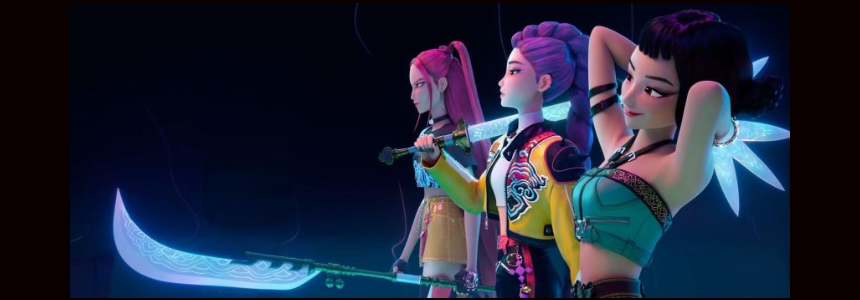
The creator, Maggie Kang, wanted to stay true to her roots, and this is the reason Shamanism, one of the oldest Korean cultural and spiritual traditions, is spotted everywhere in the film. Rumi's the Great Four Together sword, Mira's curved sword called Gok-Do, Zoey's snazzy set of knives, even Derpie the Tiger and Magpie all have symbolic interpretations of their own.
Setting the background in the prologue immediately takes viewers into the fantastical premise and couldn't have been better paired with the infectious hit "How It's Done," showing our dynamic trio slaying demons like pros. If the preservation of K-pop music and traditional Korean shamanism had a baby, KPop Demon Hunters would be it.
Kang always wanted this film to be "Korean" in every way possible, as per Deadline. She wanted to root the mythology and was delighted that shamans had always been females. With spectacularly styled outfits for Rumi, Mira, and Zoey, she aimed for superheroes who were "beautiful, badass, and strong" along with "really funny and stupid."
She clarified that being stupid wasn't meant negatively; rather, it is the most real version of humans in the superhero category that takes a lot of confidence and courage to unshackle oneself from the vulnerabilities and come in full swing with acceptance.
Kang had to confront her own inner fears when she had to blend Korean and Western influences. She told ELLE Magazine: "I never had an identity crisis about skirting two cultures, until making this. I had Korean pride all through my life, and it was the first time I felt, Am I doing this correctly? And my dad got me out of it. He said, 'As a director, you can only make a movie that's true to you.' That liberated me."
The bigger picture of shamanism embedded within the film is also to fight your inner demons, which are sometimes literal demons. Rumi, for example, struggles with her half-demon/half-human identity. She keeps the secret to herself, listening to the advice from her aunt Celine to hide her demon markings. Aunt Celine wanted to protect Rumi from the intense stigma she was certain would follow, but as a result, Rumi finds it difficult to open up to anyone, even her closest friends.
In shamanism, it is often referred to as confronting the darkness within oneself, rather than destroying the demons in the outside world. Fear, guilt, trauma, and even parts of one's identity, which were once suppressed in Rumi's case, need to be loosened in order for growth to begin. As soon as she stops running from who she really is, she embraces both sides of herself and becomes a source of unbeatable strength.
True victory lies in defeating inner demons, the film concludes. In Rumi, it presents a powerful metaphor for anyone who feels pressured in real life. Huntrix's songs and performances are meant to activate the Honmoon, and music plays a central role.
With its eloquent synthesis of identity and Korean shamanic traditions, KPop Demon Hunters captured the cultural zeitgeist, which still makes it a swoonworthy watch, even after a year.
The film remains available to stream on Netflix.
Echoes is an opinion column on film and television from the perspective of a writer based in Pakistan.