
BLADES OF THE GUARDIANS Review: Yuen Woo-ping Roams His Gallant Martial World with an Ensemble Cast
A constellation of Chinese martial arts stars shines in this epic historical action film, including Wu Jing, Jet Li, Nicholas Tse, among others.

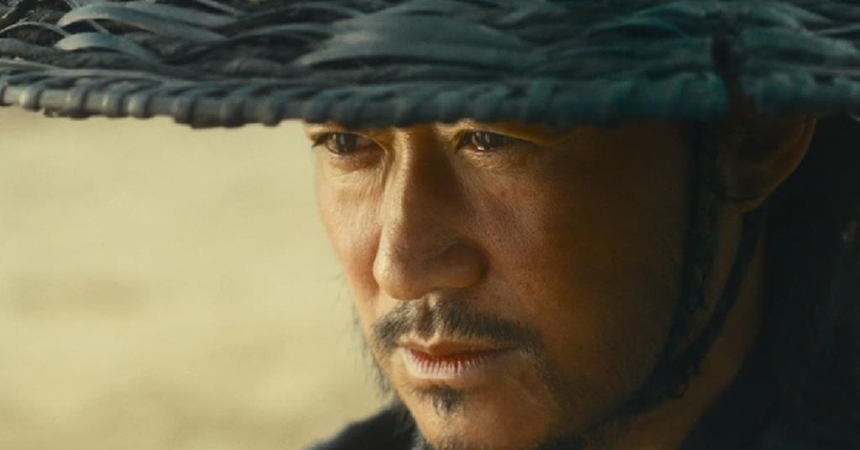
Yuen Woo-ping may not be the most prominent director of action films, but he is certainly one of the greatest martial arts directors when it comes to assembling a galaxy of martial arts talents within a spectacular scenario that evokes the mythic grandeur of contemporary epics like Dune.
Known for his work as an action director on films such as The Matrix series, Crouching Tiger, Hidden Dragon (2000), and The Grandmaster (2013), Yuen has taken the helm of several action projects in recent years, among which Blades of the Guardians stands out as perhaps his most visually striking wuxia film to date.
Right at the start, the rhythmic soundtrack (courtesy of William Wu Wai-lap) and sweeping yellow sands already transport us back to the late Sui Dynasty, a time when the people suffered, and corruption ran rampant. Zhishilang (Sun Yizhou), the enigmatic leader of an insurgent group known as the Flower Rebellion, has become a threat to imperial authority. In response, the Emperor dispatches his ruthless minister to the Silk Road.
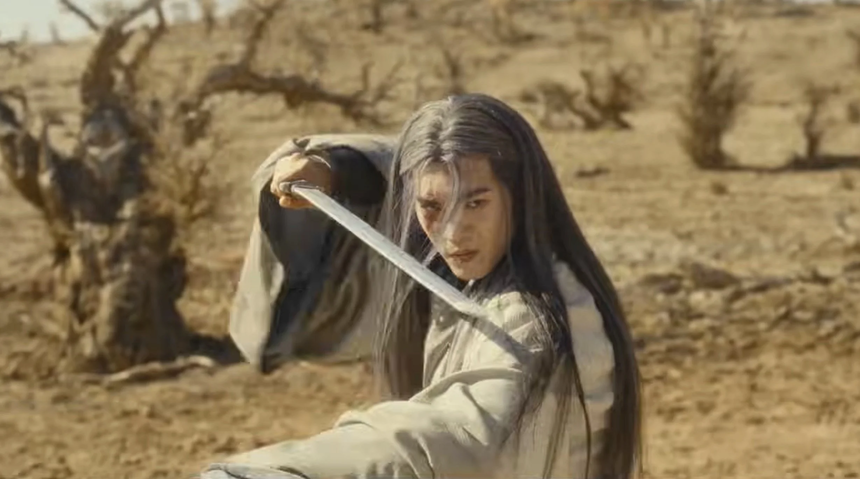
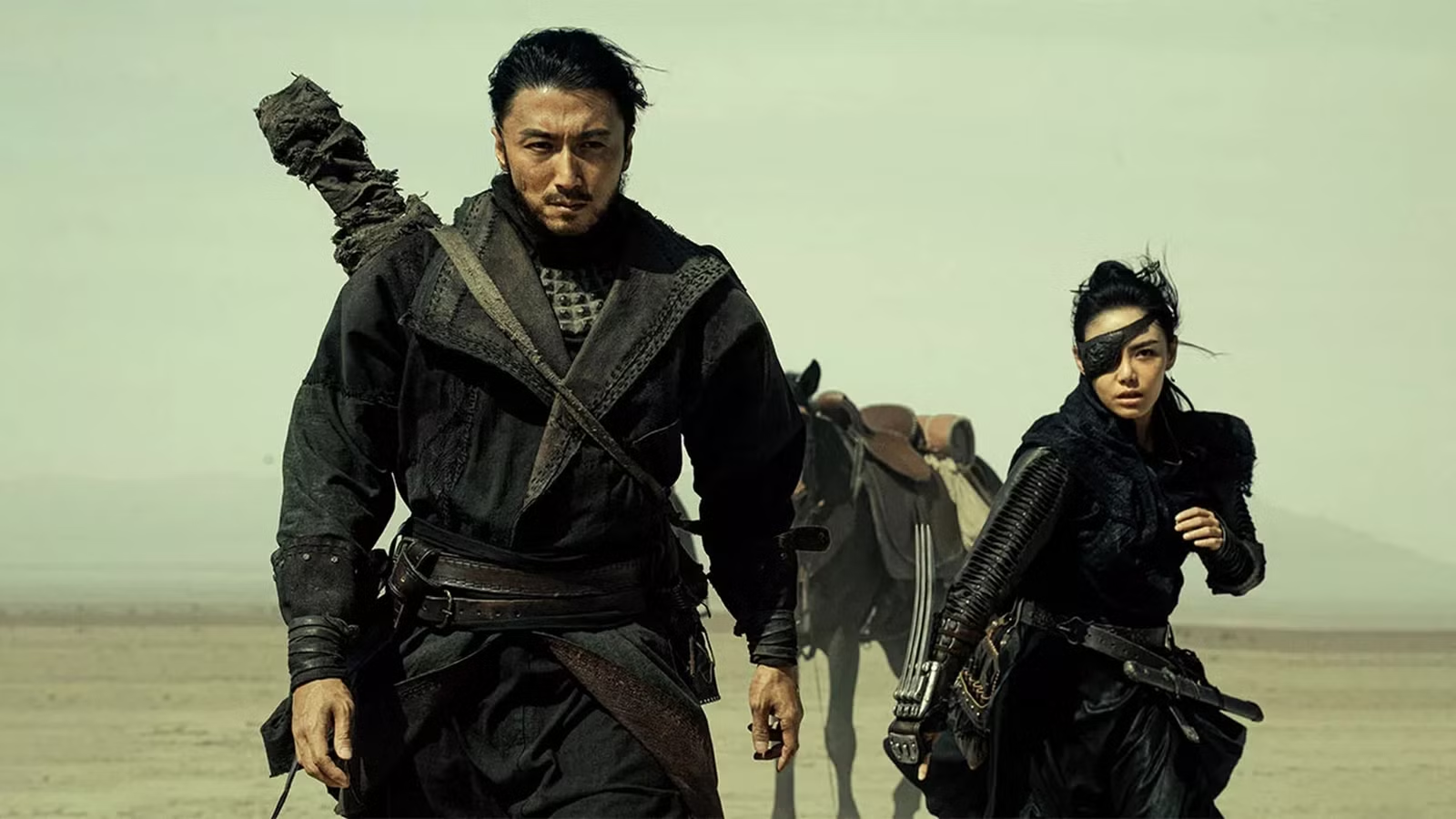
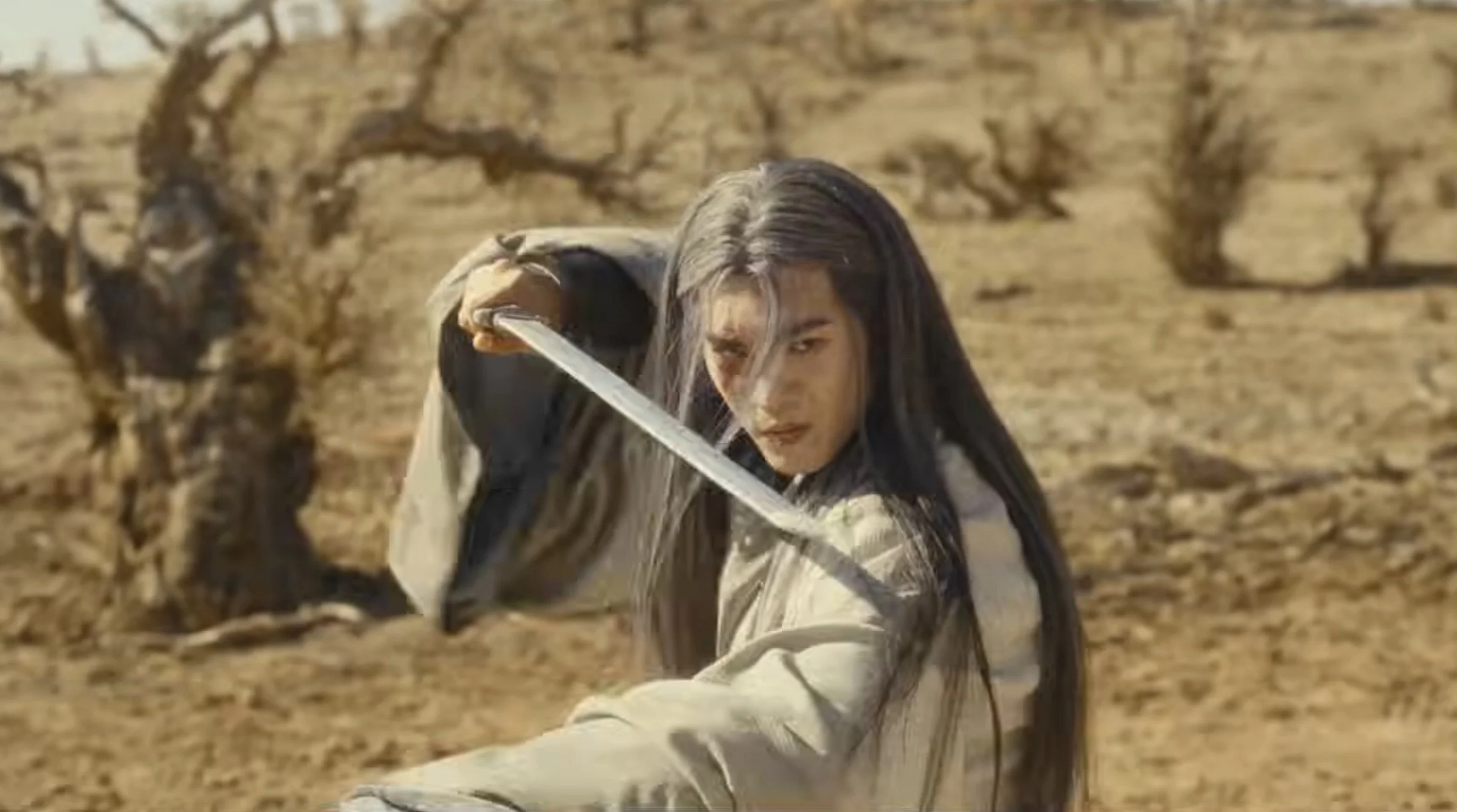
There, the wandering swordsman Dao Ma (Wu Jing) -- once a member of the Left Valiant Cavalry but now a drifter who has severed ties with the imperial court -- finds himself unwillingly entangled in the conflict. Travelling with the orphaned boy Xiao Qi (Charles Ju), Dao’s solitary life soon collides with forces far larger than himself.
After rejecting an offer of alliance from the formidable local governor Chang Guiren (Jet Li), Dao is forced to kill him and flee into an untamed frontier, where he is rescued by the radiant and fearless Ayuya (Chen Lijun). She is the daughter of Chief Mo (Tony Leung Ka-fai), a dignified and respected patriarch who leads the utopian-like Mo Clan.
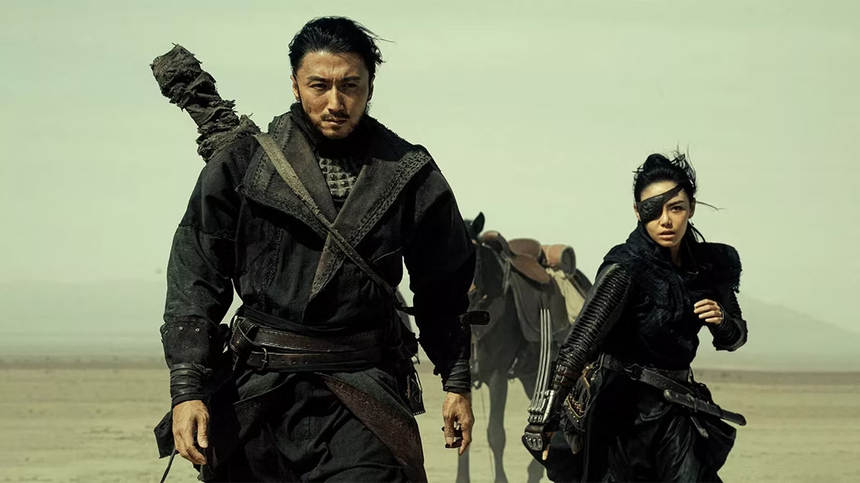
To repay a favour, Dao is asked to escort Zhishilang safely to Chang’an, accompanied by Ayuya, who has just withdrawn from a marriage agreement with Heyi Xuan (Cisha), an arrogant and power-hungry figure whose ambitions ignite conflict among the closely connected clans.
Through this perilous journey across the Gobi Desert, Yuen gradually constructs a layered portrait of the wuxia world. From imperial authorities to local courts, from wandering outlaws to penitent swordsmen, he offers a nostalgically classical yet grand vision of a martial world in which righteousness and justice remain the central moral values.
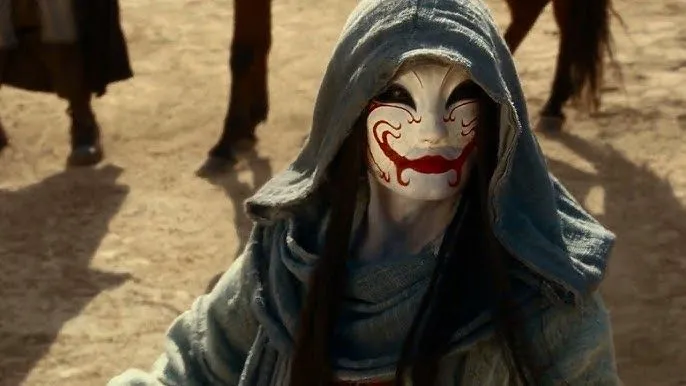
Yuen’s ambition is most evident in his unprecedented gathering of martial arts stars from multiple generations, though this also proves to be a double-edged sword. On the one hand, he pays respectful homage to their remarkable wire-fu techniques and fight artistry. Brief appearances by Jet Li, Kara Hui, Nicholas Tse, and Max Zhang reconnect the lineage of martial arts cinema across generations.
But on the other hand, the overwhelming number of characters sometimes disrupts the narrative balance. While Wu Jing clearly occupies the central role as the film’s protagonist, the film is unable to fully develop every character as thoroughly as in the original comic book by Xu Xianzhe. The first half occasionally becomes bogged down in action sequences, while several characters carry complex backstories that are not clearly introduced.
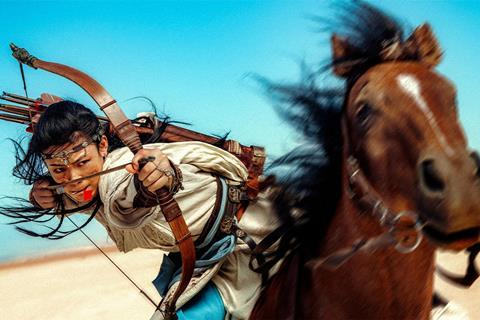
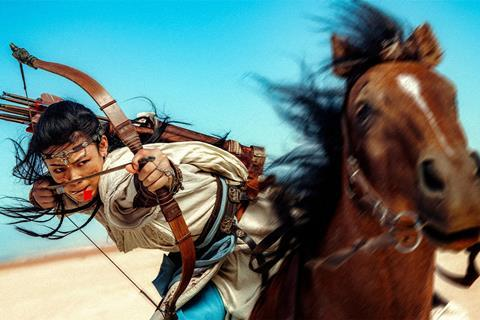
Nevertheless, Yuen still allows his actors sufficient space to express themselves both physically and emotionally in those gritty, fist-to-fist action scenes. While the film initially foregrounds an almost overwhelming display of masculine combat, the female characters gradually emerge with increasing narrative agency, leading them to reclaim their own autonomy in acts of vengeance.
Blades of the Guardians remains an exhilarating action film filled with striking set pieces, highlighted by a flaming oil-field battle and a sandstorm duel. With the support of cinematographer Tony Cheung, these confrontations achieve a tactile intensity in Yuen’s continued mastery of spatial choreography.
In this sense, Blades of the Guardians may represent a cinematic temperament that increasingly feels endangered: location shooting, unfiltered physical performances and a commitment to practical stunt work. In an era where digital manipulation and AI-assisted imagery are becoming ever more prevalent, Yuen’s insistence on tangible bodies and real landscapes carries an almost nostalgic power, a spirit that feels all the more precious -- and is exuberantly celebrated by Yuen and his ensemble cast.
The film was released on Friday, 17 March, in UK and Irish cinemas via Trinity Cinema Asia. Visit their official site for locations and showtimes. It is also set to close the 28th Far East Film Festival, with Yuen Woo-ping receiving the Golden Mulberry Award for Lifetime Achievement, on Saturday, 2 May. Visit their official site for more information.
Blades of the Guardians
Director(s)
- Yuen Woo-Ping
Writer(s)
- Tai-Lee Chan
- Chao-Bin Su
- Larry Yang
Cast
- Jing Wu
- Nicholas Tse
- Jet Li



Do you feel this content is inappropriate or infringes upon your rights? Click here to report it, or see our DMCA policy.


