Metrograph, New York's Lower Eastside repertory/arthouse film institution, is surveying the works of Thai filmmaker, Anocha Suwichakornpong, starting February 21st through two consecutive weekend screening of her feature-length and short films, as well as streaming of her work for home viewing.
Producer, teacher, and writer-director Anocha Suwichakornpong, a native of Pattaya, Thailand, has, since her Columbia thesis film Graceland premiered at the 59th Cannes Film Festival, regularly ranked among the most unpredictable of contemporary filmmakers. While consistent in her preoccupations, chief among these the social and political history of her homeland, she employs an eclectic array of formal and narrative devices in her work that frustrate any attempt at passive viewing.
I've been following her career path ever since watching her first feature, Mundane History. And gushed my admirations over her masterpiece, By the Time It Gets Dark. Her artistry, exploring the socio-political history of Thailand with layered, multifaceted, experimental ways of filmmaking, has been an intoxicating experience, to say the least.
Suwichakornpong's cinematic exploration doesn't stop at her own, but as a producer, she has become a formidable figure. In 2017, she co-founded Purin Pictures, a film fund that supports independent cinema in Southeast Asia, offering much needed assistance in a region that lacks adequate governmental support. Metrograph acknowledges her contribution as a producer in their concurrent series Currents of Southease Asian Cinema, featuring recent festival hits such as, A Useful Ghost, Memoria and Inside the Yellow Cocoon Shell.
Here are what I've found over the years:
For more information, please visit Metrograph
Mundane History (2009)
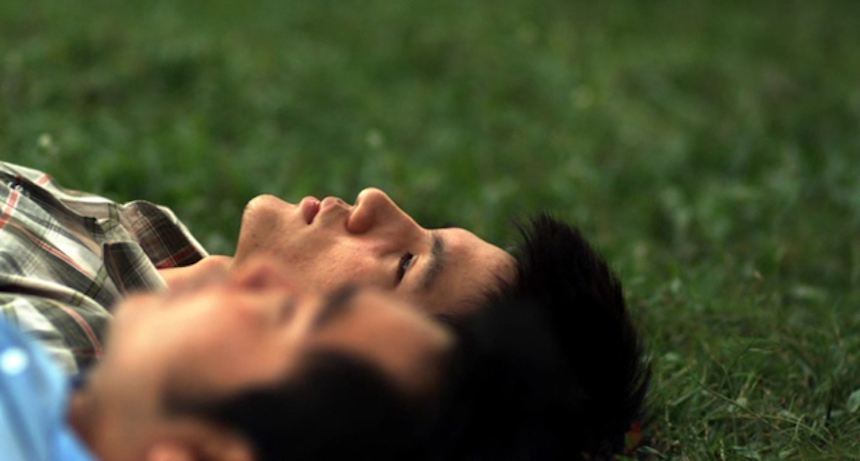
With a fractured timeline, Suwichakornpong's gorgeous film tells a slight friendship that develops between Ake, a young paralyzed man and his home care male nurse Pun. From what I gather, Ake's from a rich family and Pun is from the countryside. It was an accident that made the young man bed ridden and seems to have been attributed to his general somber mood. We see their repetitive days: eating, talking, reading, day after day. Stars are born and die just like us humans, even though it takes billions of years. Does our lives really matter? All we can do is live in the present.
Mundane History veers away from expensive philosophizing a la Tree of Life or soapy life affirming movies. There is no eureka moment. It just unhurriedly goes on about making a simple point in its own measured, quiet ways.
By the Time It Gets Dark (2016)
In a disjointed, fragmented, abstract, but best possible way, Suwichakornpong makes a case for moving images as a germinating force when depicting a historical event with By the Time It Gets Dark. It's also a self-reflexive contemplation on the role of a filmmaker depicting such an event.
It starts with a reenactment photo shoot of a pro-government paramilitary raid- roomful of shirtless young people lying on the ground in a warehouse with their hands tied behind their backs. A woman on the megaphone directs the soldiers with machine guns, " Be more forceful," "Hit them if you want to, " and so on. Then it's the countryside. In a large, airy, modern stone and wood house, a film director (Visra Vichit-Vadakan) is prepping her film about a former activist/survivor of the 1976 Thammasat University massacre. She brought the older woman whose memoir she's adapting down there, so she can interview her and record it on camera. But she struggles at the mere mention of her intentions- "I guess I want to make it because my life is so mundane..." She soon has a full blown breakdown in the forest and stumbles upon a magic mushroom. Roll the old science class time-lapse images of fungi in the forest.
The film takes several detours. One involves a long documentary style segment on tobacco plant harvest where we see from the harvest of the tobacco leaves to the industrial drying process. Then there is a continuing narrative involving a popstar (first seen at the tobacco farm) and his opulent lifestyle and fandom which includes a musical number ('making of' music video) in the middle of the movie. Then there is a young woman character who appears here and there, doing menial jobs - waitress in the cafe near where the filmmaker and her subject were staying, working as a busboy in the city tour boat, toilet cleaner at the airport and so on. But she turns out to be the one who instigates the breakdown of the filmmaker in the first place.
The fateful massacre where many student protesters lost their lives by the right-wing military troops, hangs over the film like a dark cloud. But Suwichakornpong treats everything non-judgmentally. Later in the film, prettier, more mannered actors repeat the scene of the director and her subject again in the same location, highlighting the futility of adapting historical events on the screen.
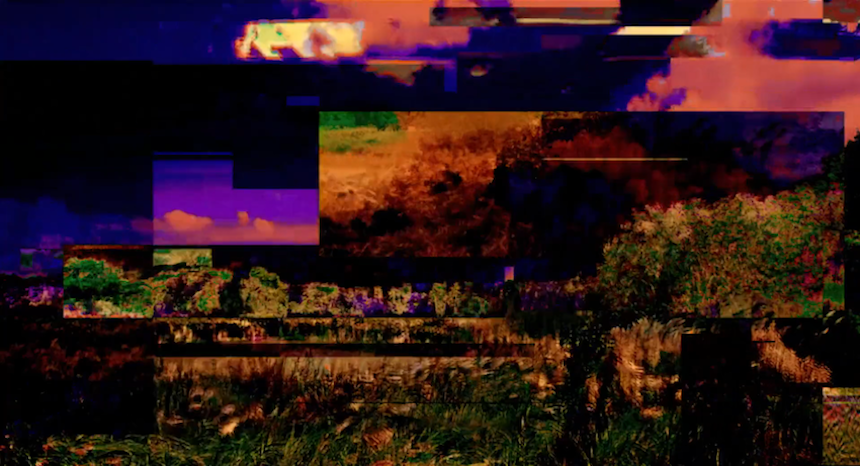
The film might sound too precious on paper - those too self-aware films in love with themselves. But the result of layers of these slightly connected vignettes and visual metaphors are anything but. Images are democratic- whether it's a trashy, seemingly inconsequential pop culture, the serious historical reenactments, Buddhist temple, disco tech and pixelated visual noise have the same value. It's a very Dostoevskian concept— like tobacco leaves and fungi, to give them meaning and purpose, these layers Suwichakornpong presents will need to sit and rot. I am just amazed by her wisdom and skills to convey this kind of complicated thoughts through the film medium.
Krabi, 2562 (2019) *in collaboration with Ben Rivers
The filmmakers Ben Rivers and Anocha Suwichakornpong met at the Thailand Bienniale and decided to work together on a project: specifically on Krabi, a touristy Southwestern town. And no doubt, the collaboration between two of the most adventurous contemporary filmmakers produces a multi-layered and intoxicating work that is a part travelogue, part ethnological study, part Antonioni-esque mystery, part contemplation on artificiality of cinema and part spatial-temporal musing on human existence.
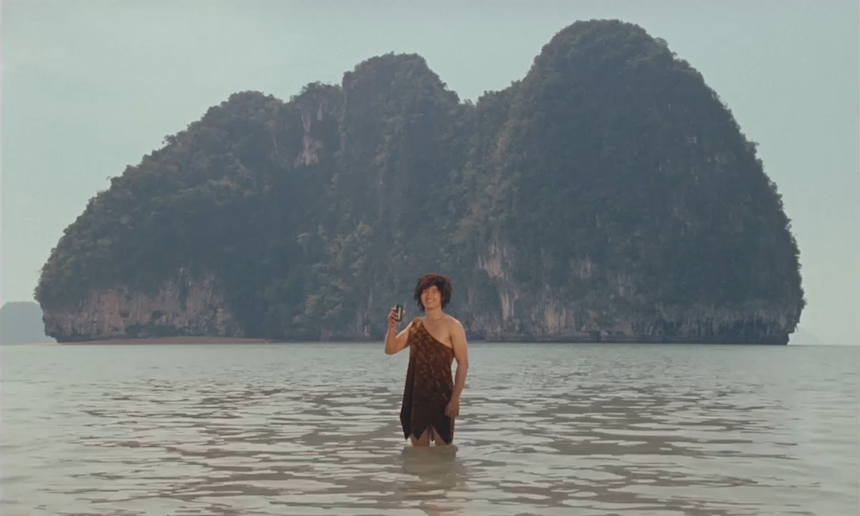
Krabi, 2562 concerns a tall and slender nameless woman (Siraphan Wattanajinda), with the central Thai dialect who comes into the touristy beach town. She looks like she is in 'pictures'. She is location scouting for a movie, or she is doing market research, or she is tracing steps to her parents honeymoon where she is conceived.(?) She hires a local tour guide who also dubs as a film crew for a commercial shoot. The mystery woman visits the famous fertility shrine located on the beach, takes a kayak ride into one of the numerous dark water caves along the shoreline, then visits a shuttered movie theater, now a home of hundreds of flying starlings and warn out B-movie posters. Then she disappears. The interviews with the tour guide and the movie theater manager and various others confirm this incident.
Collision and blurred line between the artificial and the real — the actors playing their parts mixed in with the locals, cinema as both business and nostalgia, neanderthals both reenacted and parodied, first world and third world, the symbiotic relationship of tourists and locals in popular tourist destination are all presented, in layers upon layers and they are delicious. Rivers and Suwichakornpong are less interested in who is exploiting who, but the delicate dance that is human existence between real and imagined world both in physical and spiritual sense. Injected are hints of Thailand's militant history, as the woman rides with a gaggle of school children in the back of the truck in the city proper with the sound of military marching, reminiscent of her masterpiece By the Time It Gets Dark, grounding the film from more surreal elements usually associated with Rivers' work. Krabi, 2562 is one of the most exciting cinematic endeavors I've encountered in recent memory.
Come Here (2021)
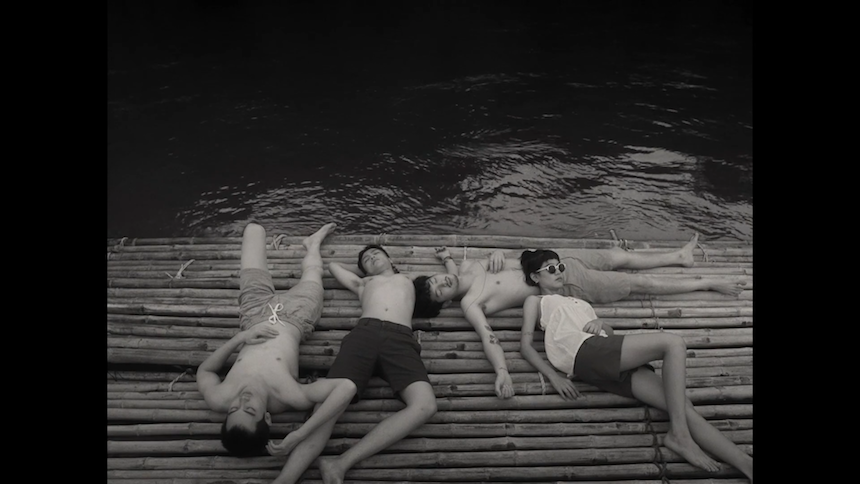
A group of young theater actors take a trip to Kanchanaburi, west of Thailand, where Death Railway, once a site for WWII atrocities where tens and thousands civilians and Allied POWs lost their lives in labor camps. But the museum is under renovation and closed. The group, consists of 3 boys and 1 girl, leisurely hangs out at the lake house, smoke weed, mimics animal noises and engage in mundane conversations.
In a parallel action, a woman who is camping in the forest seems to be lost. Dazed and confused, she finds a stream, drinks the water then changes into a boy. Then we see the lakeside bungalow scene play out again on stage, with a scenery shot from the train out the stage window, moving us forward.
In her previous films, Suwichakornpong engaged us in a socio-political history buried underneath the lush forest of Thailand. Her approach is getting more and more abstract with each new film. Come Here, clocking in at just over an hour, is like a puzzle piece with some of the vital pieces missing - what's the meaning of the transformation? Is the camper dreamed up by the girl by the lake or vice versa? How does Bangkok's zoo closing figure into the story?
With the country's train and railway having imbued historical significance, Suwichakornpong's new film charts progress, nature, harkening back to animism, the younger generations' collective historical amnesia, and the country's physical and spiritual transformation... in such a mysterious yet seductive manner. Watching Come Here is not frustrating- it provides you with enough threads, not at all in a teasing way, to decipher and mull over its sinuous connections and implications regarding history and it's thrilling.

Do you feel this content is inappropriate or infringes upon your rights?
Click here to report it, or see our
DMCA policy.