Screen Anarchists On Guillermo del Toro's FRANKENSTEIN
While Guillermo del Toro's adaptation of Frankenstein passed me by during its limited theatrical run, it sure arrived on Netflix pretty fast. I checked it out, discussed it with colleagues, and noticed there were many different opinions on it, even between fans of del Toro's work.
Divisiveness in opinion is awesome, so once again we had a quick round-up of opinions about the film, and have put them up here for all to see, in a gallery. As usual, we let the writer of the review speak up first: our Kurt Halfyard wrote a very even-sided review about it, and that's the official one we stick with, but he was kind enough to lead this article with a rewritten truncated version.
After him come the others! Click through them all to see our general reception of the film. Some are elated, some are disappointed...
Kurt Halfyard, Kyle Logan, Shelagh Rowan-Legg, Ronald Glasbergen, Michele "Izzy" Galgana, Peter Martin and Dustin Chang
contributed to this story.
Kurt Halfyard, Contributing Writer:
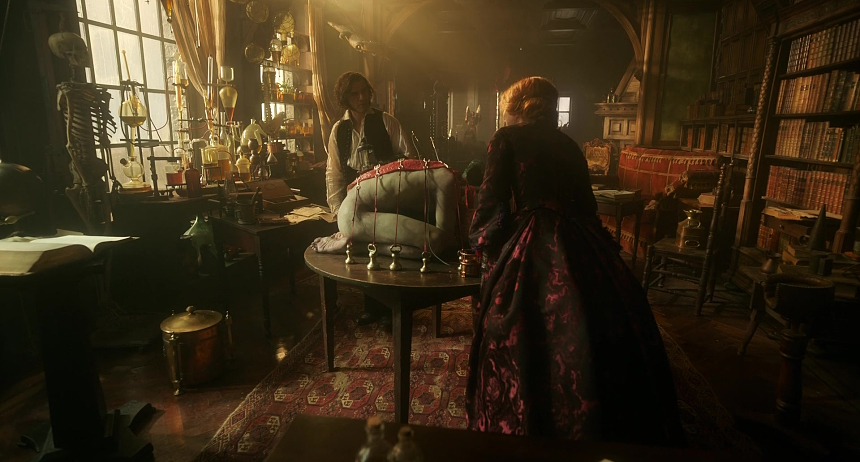
It is a crime against cinema that most people will have watched Guillermo del Toro’s Frankenstein via a streaming service. I know large 4K TVs and home projectors are pretty good these days, but this was a movie crafted for premium projection. It is a sprawling $120 million dollar ode to practical set design that demands the largest screen possible. Given its languid 150 minute run-time, attention —and attention to detail— is better served in a public theatre, rather than on the couch. Or worse, on a phone or laptop.
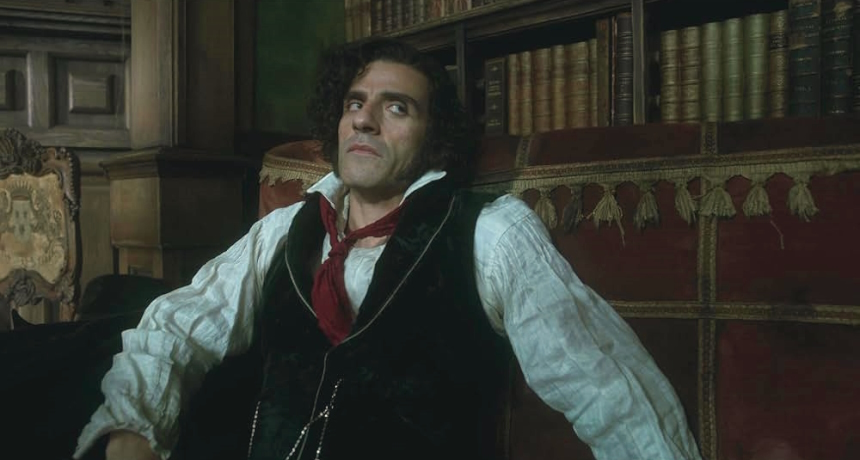
Frankenstein straddles the middle of a fine popcorn extravaganza, and a thoughtful Gothic art film. Everyone involved on the performance side is superb, particularly Oscar Isaac's intensely brooding unlikeable-dreamboat, with a lock of hair that flops in front of one eye when he is at both his highest and lowest across his arc from obsession, to anger, to vengeance, to death wish, to, eventually forgiveness.
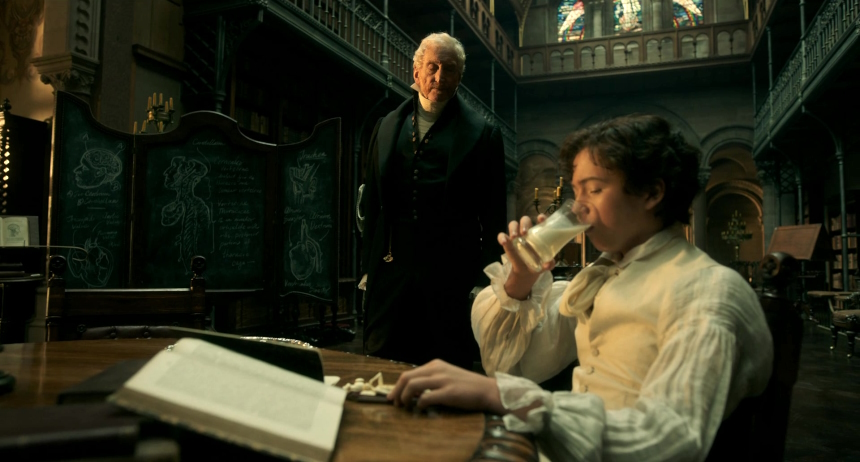
I was not entirely enamoured with the structure of the film, the film lags in the back half once the creature assumes narrative duties, but I was hooked via the litany of curious 19th century asides. Wet-plate photography! Quicksilver as a treatment for syphilis! And in the background, the Crimean War - the source of the fresh body parts for Victor Frankenstein’s experiment. Alas, Christoph Waltz’s Victorian era Peter Weyland, from the other (modern) Prometheus’ departs the film far too early, and the back half of the film suffers for it.
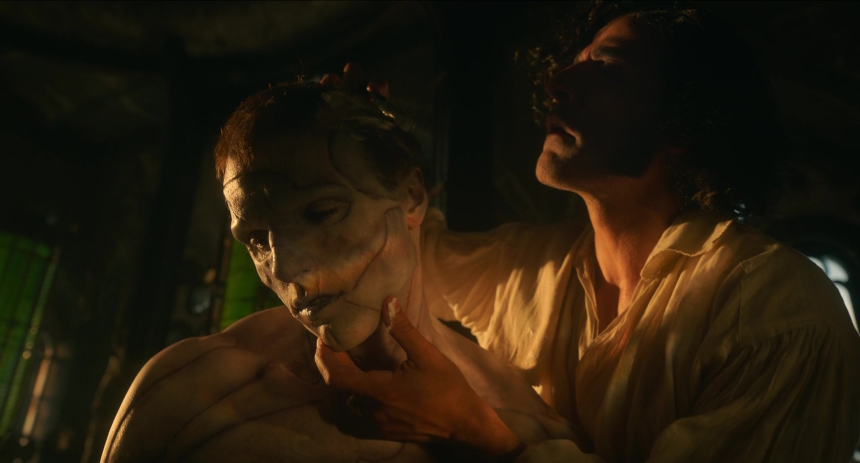
I know that in all del Toro movies, the monster is the thing, a sexy thing in most of them, but I found Jacob’s Elordi’s Emo-Übermensch to be more poise than profundity. His action sequences in particular, feel superfluous, and truth be told, often boring. Time with Mia Goth’s “Bride to Be” caught in a three-way love triangle (with Frankenstein, Frankenstein’s doomed brother and the Creature) feels too brief, and all too wasted.
While I enjoyed the experience on the big screen projected in a 100 year old theatre with an audience numbering over 1000, Guillermo del Toro’s Frankenstein is akin to mid-career Tim Burton interpretations of iconic novels Charlie & The Chocolate Factory and Alice in Wonderland. Not the work he will be remembered by. Rather, an auteur comfortable in his wheelhouse.
Maybe too comfortable.
Kyle Logan, Contributing Writer:
The lavish, downright awe-inspiring production design and costumes (especially Mia Goth’s gowns) in Guillermo del Toro’s Frankenstein are at odds with the film’s cinematography. It’s unclear whether cinematographer Dan Laustsen or Netflix producers are to blame, but the film has the same flat, muddy cinematography that’s become a house style for the streamer's self-produced movies and TV shows. It’s a disappointment not only in itself, but more so because it makes you question the beauty of the production design.
I have no issues with CGI creations as long as they’re interesting. But Frankenstein made me wonder whether sets were real locations or created in post, which isn’t a question you want rattling around in your head when you’re trying to engage with a movie based on an important literary text. Attempts at meaningfully engaging the text are also held at bay by del Toro’s hand-holding writing; the already much memed “you are the monster” line spoken to Victor is just the most egregious moment in a film that spoon feeds the audience its themes throughout.
Thankfully, despite the look and del Toro’s apparent disdain for any level of subtext, the emotional aspect of the film lands. Del Toro's writing may not be very interesting intellectually, but that obviousness works better when its deployed in the service of earnest feeling. And Jacob Elordi’s phenomenal work as the creature cannot be understated. His posture communicates so much about his fear, sorrow, anger, and, every so often, relief if never quite joy. The cast around him is also great, but even Oscar Isaac, who is top billed and centered for the first half of the film, feels like he’s supporting Elordi’s performance.
Shelagh Rowan-Legg, Contributing Editor
While Mary Shelley is often credited with inventing the science fiction novel (please see Margaret Cavendish’s The Blazing World), she did combine science fiction and horror in a way that had never been done before. Many have put this story of male hubris and monstrosity on both the stage and screen, but there has yet to be what we could call a canonical adaptation.
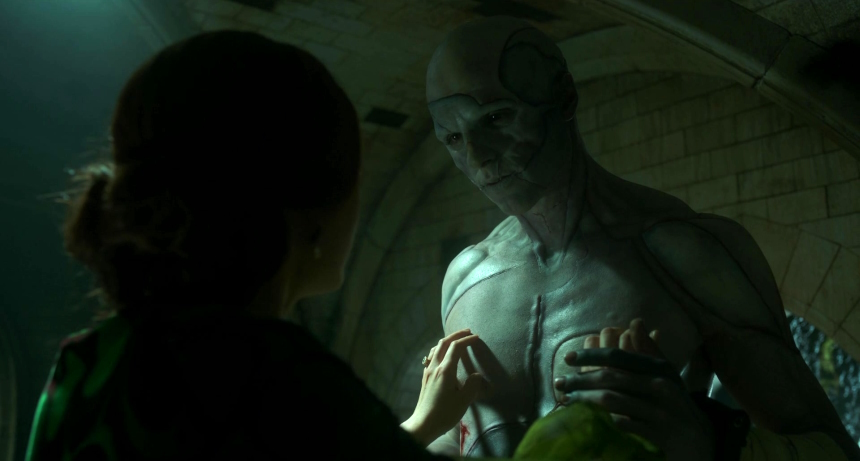
Until now? Well, yes and no. If you want look at what Shelley was exploring thematically, Guillermo del Toro has hit the nail at least closer to the head than previous films. Oscar Isaac’s Viktor Frankenstein was a hurt child who missed his mother, who grew into a cold and egotistical man. Jacob Elordi’s Creature is beautiful, filled with longing, and understandable rage. The erotic appeal of both men on their own steams up a room, and bringing the two of them together creates enough electricity to power a small city.
In narrative and style, does it keep in step with Shelley’s vision? Not so much. Walz’s character is invented for the film, though this change in the story works well. Mia Goth’s Elizabeth is robbed of screen time, mainly because Goth gives this role so much depth that we wish there was a scene with her and the Creature expressive their love in a more physical manner. As is del Toro’s style and interest, this is gothic romance and melodrama, so emotions are roiling, the design is glorious, and the sets feel grandiose. Shelley’s story is far more insular, quietly reflective, and fearful.
If you are a stickler for adaptation accuracy, you might get frustrated. But if you are willing to embrace the spirit of Shelley evoked and lean into the del Toro-ness of this, then like me, you’ll enjoy the film.
Ronald Glasbergen, Contributing Writer:
From Pan’s Labyrinth (2006) to Frankenstein, Guillermo del Toro’s films all share something claustrophobic — something that makes you feel uneasy. This latest, admirably executed interpretation of Mary Shelley’s Frankenstein; or, The Modern Prometheus, is no exception. The 19th-century Gothic fairy tale about immortality and the artificial creation of life using 19th-century means remains just as oppressive.
What makes Del Toro’s Frankenstein fascinating is precisely what also makes it suffocating: the emphasis on craftsmanship executed with watchmaker’s precision — and that is more than a mere analogy, since Del Toro previously made the impressive Cronos, a film even Rolex could learn from. The question, however, is whether all that perfectionistic, mechanical, and obsessive attention ultimately produces a film with a soul. That is, of course — just like the question of what such a soul actually is — exactly the issue that occupies the director in his quest for precision himself.
It is the same question that torments both protagonist and antagonist of Mary Shelley’s novel: What is the soul, and where in the body does it reside? No wonder that, according to the making-of documentary, this film had been on the filmmaker’s bucket list for many years. With Del Toro’s maturation as a director, the growth of his reputation, and, with that, the ability of his producers to acquire the necessary resources — thanks to Netflix — the time was finally ripe to make the film.
The creation of Doctor Frankenstein — a modern bringer of the life-giving fire — is assembled from remnants of human bodies gathered from a 19th-century battlefield. Breathed to life by the ingenious doctor. Del Toro’s Frankenstein believes however that his creation is a failure and keeps it hidden. Tellingly he even hates his creation.
Elizabeth, the fiancée of Frankenstein’s younger brother in this story, recognizes in the artificial being a universal, human character that — despite its countless stitches and imprisonment — is familiar to her. And the recognition is mutual. She realizes that the immortal being created by Doctor Frankenstein possesses a soul.
Mary Shelley and Del Toro have each envisioned a magnificent story. Just as this film is viewed through countless lenses, so too have many filmmakers interpreted Mary Shelley’s book and given it their own twist. And here on ScreenAnarchy.com, countless reviewers once again report on the quest for the soul of the film — in this case, a film that is itself about a quest for the soul.
Michele "Izzy" Galgana, Editor, U.S.:
Directed by the incredible Guillermo del Toro for Netflix, Frankenstein is the result of del Toro’s longing --- decades’ worth, in fact. The auteur with a deep love for the Gothic in all forms has finally achieved what he’s wanted to do for most of his life, and adapted Mary Shelley’s world-changing tale.
There are those out there with seemingly nowhere else to place their anger, despite having many real-life places it might be used for social change. These people, with a failure to find an outlet for the fear and rage they may be facing, have lashed out on-line towards the film. Their chagrin is that the adaptation isn’t as faithful as it should be, and those who are either scholars or near that realm, have made the cases why they dislike del Toro’s big epic. There isn’t enough space for me to get into this here; if you want to see what the discourse is, simply go on-line and you’ll see all the screaming, as well as the more level-headed debates, however lively. I certainly understand a few; for those crying out that a woman should be directing Frankenstein adaptations, I’m with you. However, look at the amount of female directors granted such funds for an epic-sized budget. You can count them on one hand. But most of us are looking forward to Maggie Gyllenhaal’s version of a sequel in The Bride. I know I am.
On the other side of the coin, there are del Toro fans for which the maestro can do no wrong. I’m not firmly rooted in either camp, but I live more towards this side of town. His artistic senses are unparalleled in this day and age. He cares. He hates AI; any real artist should, as well as those concerned about climate disasters and class warfare punched down on us from the ruling class.
Anyway, art is front and center at del Toro’s Frankenstein. Everything and everyone is gorgeous. The costumes, the production design, the actors, the operatic score befitting such a film. If I had just one critical thing to point out, it would be that we’re following Victor Frankenstein, who’s not a good person, to put it lightly. There are deeply infused father issues from childhood, which is supposed to explain why the character is so terrible as an adult. However, nothing shown on-screen really drives that point home as much as it should. The character of Elizabeth is both new and quite flawed. It felt as if she wasn’t developed nearly enough and I would have loved to have seen more depth than the wooden performance from Mia Goth given to us.
Del Toro is nothing if not a designer in every way, and so I must believe that this, too, was by design, however flawed. In the end, I found the film to be a worthy and deliciously Gothic tale to be added to the collective repertoire of Frankenstein adaptations.
Peter Martin, Managing Editor:
"I never considered what came after creation."
Watching Guillermo del Toro's Frankenstein on a big screen at an advance critics' screening last month was bliss, since it allowed me to fall completely under the spell of the director's creative visual creation.
Watching it on a decent-sized home television on Netflix could not compare, even though I have a 4K subscription. Still, I once again fell under del Toro's all-encompassing, incredibly detailed, and often breathtakingly beautiful vision, which remains very strong throughout the 10-minute prologue and the 80-minute first part of the story, as told by Oscar Isaac's Victor Frankenstein. The remaining hour or so felt more episodic this time.
What makes the whole thing work, though, is that del Toro is very much on the monster's side: an innocent who screams at his parent(s) like every teenager: "I didn't ask to be born!" I'm glad I watched it a second time, since it reinforces my belief that the movie is a stirringly fresh perspective on a very familiar story, even though it falters somewhat during the final 60 minutes.
Dustin Chang, Lead Critic:
The story of a madman's obsession destroying everything he loves and blaming it on his own creation, their unbreakable bondage and finally forgiveness really moved me in the end. Del Toro, chasing after his childhood dreams of remaking Universal Monster films, created something classy and beautiful here. As I watch it for the third time - two times in theaters and the third on streaming, I appreciate all the work GDT and his team have done in Frankenstein more and more. All the craftsmanship in mind boggling details they put in the film is truly astounding.
Considering daddy complex coursing through all of GDT films, his Frankenstein story makes much more sense, as an abusive, cold hearted father abandoning his child for being imperfect and having an epiphany later how terrible of a parent he has been and asking for forgiveness. I really loved it!
Me, Editor Europe:
It can be quite a risky affair, giving a director over 120 million dollars to create his decades-old dream project, because his dream may not be ours... On the other hand, you can be assured there will have been spent lots of thought on it. Maybe too much though?
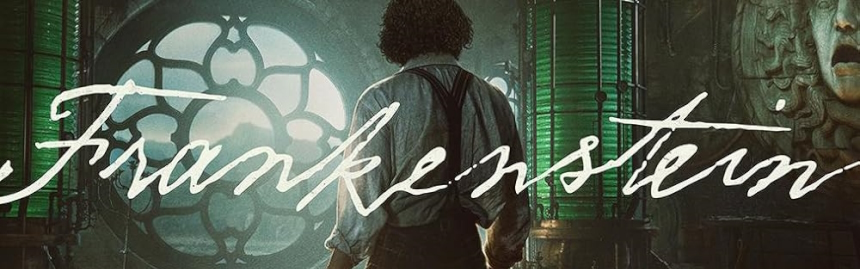
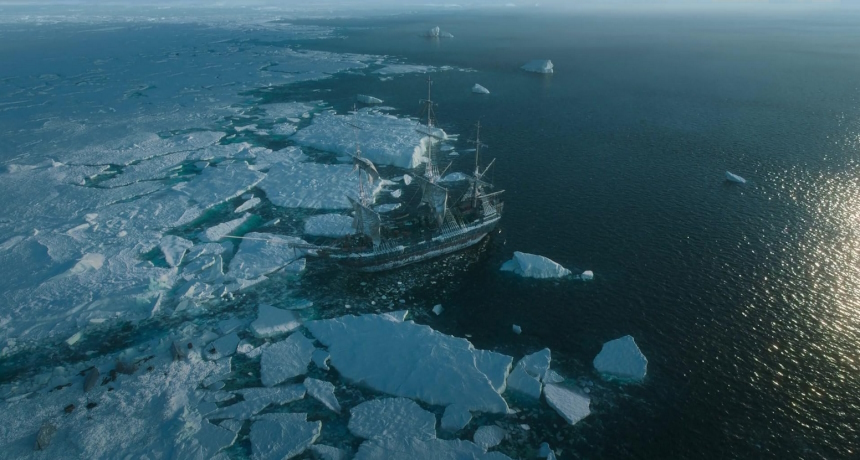
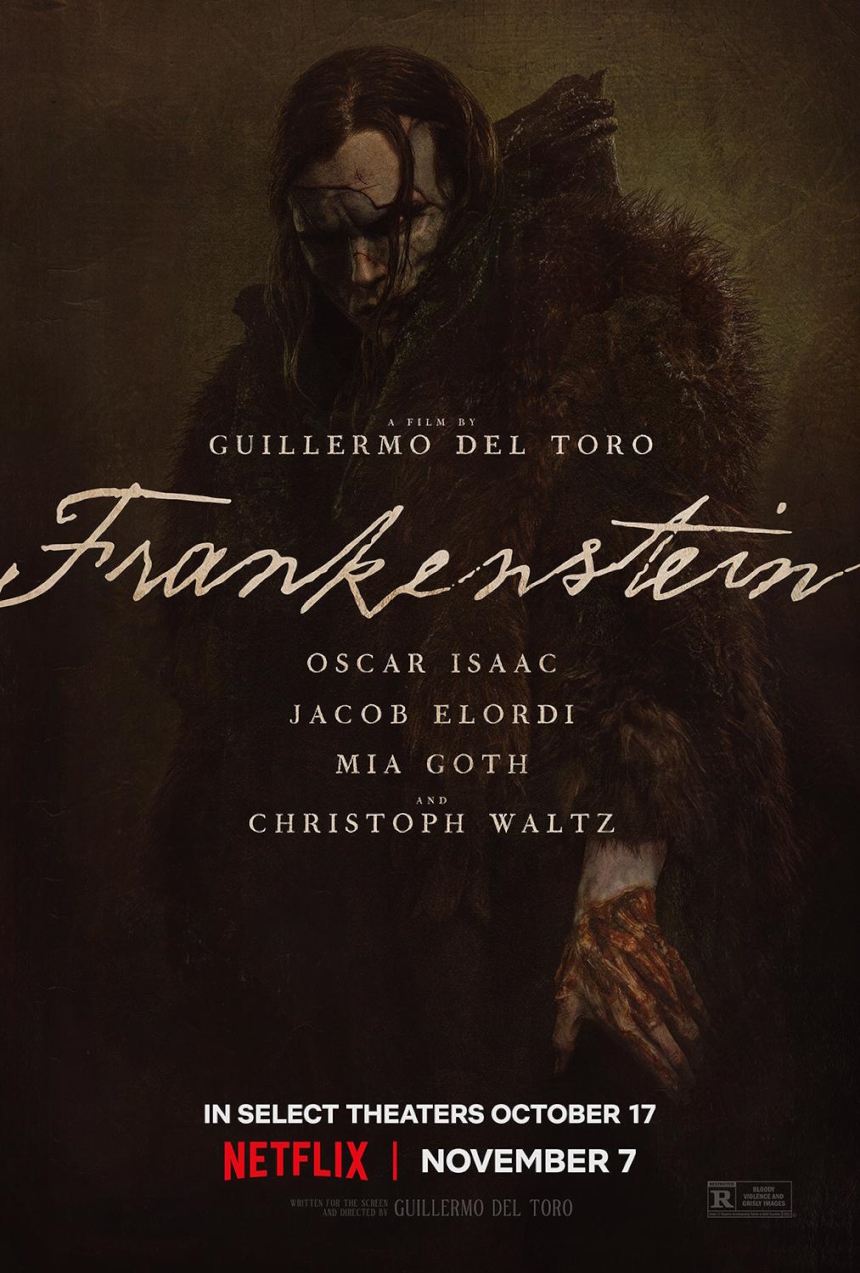
That's what I thought when watching Guillermo del Toro's Frankenstein. I'm happy that, like Kenneth Brannagh, he kept the polar bookends which were in the novel. But also like Kenneth, there are some puzzling diversions which, in my opinion, do not add anything. I mean feel free to embellish, slant, twist, or run off with the general idea all you like... as long as you make it MEAN something. In this case I was wondering why it was done. It takes ages to get to the actual monster making, and we learn a lot about what an unlikeable fellow Victor is. But, in truth, do we need to? Does that make the story work better? But at least Guillermo, with the changes he made, didn't have the audacity to call his version Mary Shelley's Frankenstein (though he does use her actual handwriting for the title card).
Having said that, Guillermo del Toro took me for quite a ride and I liked a lot of it. The creature's regeneration powers irked me a bit. He's a regular Deadpool in this, healing in seconds. But it does drive home that, like with Deadpool in Deadpool 2, suicide is not really an option. And that makes the ending both a warm and cold one.
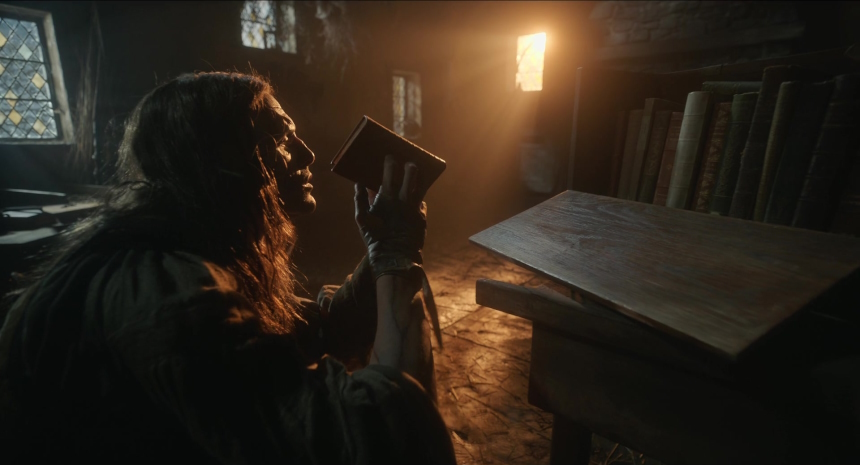
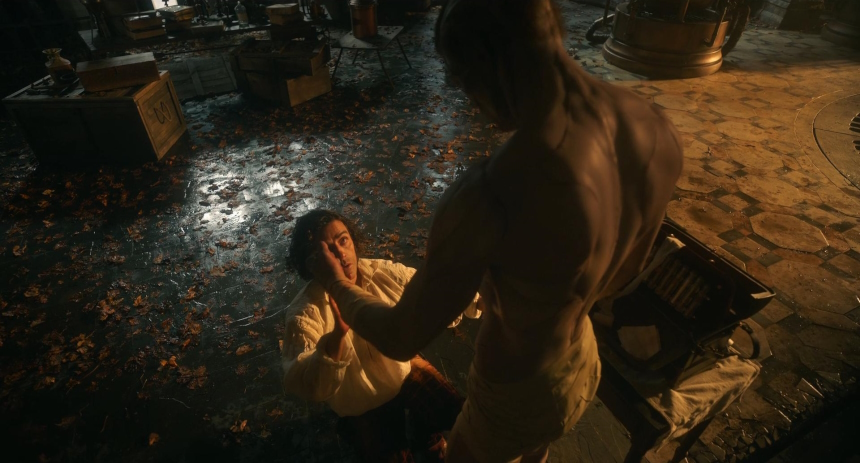
Many words have been written already about how beautiful the film is, but even that can be seen as overwrought. I know some people who really disliked the fairy-tale fakeness of it all. Me, I was delighted by it, I'm not gonna lie: I'm a magpie for visual grandness and this film is overflowing with it. Even choosing the stills for this article was a delight.
Guillermo del Toro's films are hit AND miss with me, we obviously like the same things but we don't totally overlap in how we look at them. His Frankenstein is a good example of that.
And that was the last of them. Not quite as diverse as some of the conversations we had, as nobody came straight out and panned the film. This article isn't quite the Frankensteinian mess of mismatched parts I had secretly hoped for. Still, we liked different things about it...
What did YOU think, though? Please leave your own impression of this film on our social media pages, which we have on Facebook and Twitter!
Around the Internet
Recent Posts
Leading Voices in Global Cinema
- Peter Martin, Dallas, Texas
- Managing Editor
- Andrew Mack, Toronto, Canada
- Editor, News
- Ard Vijn, Rotterdam, The Netherlands
- Editor, Europe
- Benjamin Umstead, Los Angeles, California
- Editor, U.S.
- J Hurtado, Dallas, Texas
- Editor, U.S.
- James Marsh, Hong Kong, China
- Editor, Asia
- Michele "Izzy" Galgana, New England
- Editor, U.S.
- Ryland Aldrich, Los Angeles, California
- Editor, Festivals
- Shelagh Rowan-Legg
- Editor, Canada