
Playback: Lee Sang-il, Ruptures and Reckonings, from CHONG to KOKUHO

Lee Sang-il drills into the emotional ruptures of life. His films study how people break -- and who they become afterward.
The Japanese director built a career on emotionally precise, performance-driven dramas that illuminate how people fracture under extraordinary pressure. His style is anything but flashy; instead, he allows for quiet moments to swell into devastating emotional impact. You see this in films like Villain (2010) and Rage (2016), where his tight character studies show how guilt or desire warps good and evil into one bundle.
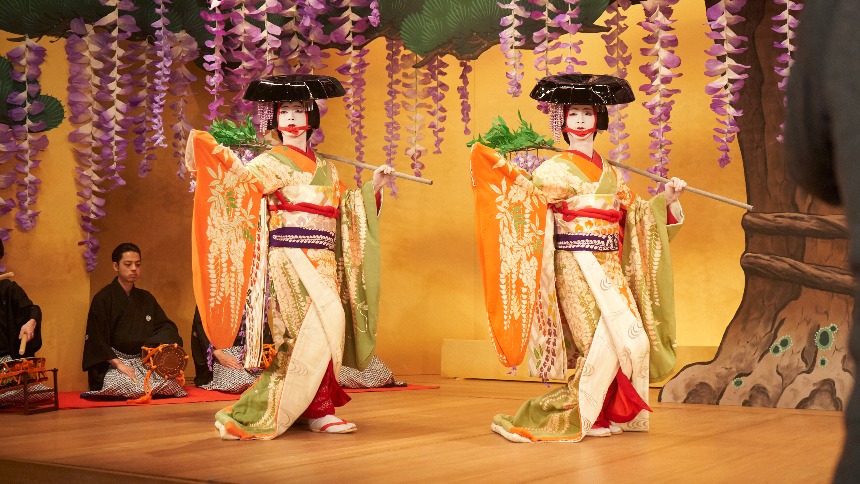
In his latest feature, the three-hour epic Kokuho (2025), the director jumps into one of Japan's oldest and most venerated traditions: kabuki. This performance, for those unfamiliar, is a centuries-old form of theater known for its stylized acting and elaborate costuming. Traditionally, kabuki was performed entirely by men, with female roles portrayed by onnagata, one of the form's most prestigious positions. In Kokuho, Lee follows the orphan of a Yakuza gang leader as he immerses himself in kabuki theater, sacrificing everything in pursuit of becoming a "national treasure."
Kokuho is already a box office hit in Japan, racking in more than $100 million. The film, Japan's Oscar entry, opened in Los Angeles on November 14 and will open in New York on November 21, via GKids Films.
Born in Niigata, Japan, in 1974, Lee was raised in a Korean-Japanese household. He studied at the Japan Institute of the Moving Image. His childhood inspired his first medium-length feature, Chong (2000), a story about the marginalized experience of Koreans living in Japan. Six years later, his breakout feature Hula Girls, a feel-good premise tethered to a serrated story about economic precarity and resilience, won multiple Japanese Academy Awards. It placed him firmly on the international map.
From there, this director vaulted from one incisive story to the next, showing us the weight of being alive, sparing nothing of the human experience. In Villain, he strips away the sensationalism of true crime to examine how love curdles under shame. Even Unforgiven (2013) -- the director's genre-shifting remake of the Clint Eastwood Western -- becomes a portrait of postwar trauma and personal reckoning.
For this edition of Playback, I'm rolling back the tape on a storyteller who exposes the fault lines we carry inside us.
Chong (2000)
Made as a graduation project, Chong (2000) bursts out of the gate as Lee's scrappy, semi-comic portrait of Korean high-school life on the margins of Japanese society.
Lee's incredibly personal debut takes place around a Korean high school and its struggling baseball team. It follows a crowd of third-generation Zainichi Koreans as they come of age, confronted with blatant racism from both their Japanese classmates and adults. Their banter and minor rebellions gradually expose how prejudice shapes even the most ordinary decisions about friendship.
Typically, I wouldn't include a medium-length film. But at just 54 minutes, it provides a decisive starting point for the director. It won the Grand Prix at the Pia Film Festival in 2000. This control of an ensemble cast is evident throughout the director's films. But what strikes me the most is Chong revealed his ability to approach heavy themes with precision and empathy without sacrificing a playful tone.
Hula Girls (2006)
Hula Girls (2006) takes the real 1965 scheme to build the Joban Hawaiian Center in coal-town Iwaki and turns it into a fierce, funny battle over class, gender, and survival.
This film plops us into mid-century Japan, when the country pivots from coal to oil. To save the ailing Fukushima community, a mining company proposes a Hawaiian resort and recruits Tokyo dance teacher Madoka (Yasuko Matsuyuki) to train miners' daughters as hula performers. The girls learn to dance, fighting blisters and family opposition amid a backdrop of economic despair. Yet, Hula Girls remains an uplifting story, a touching picture of human persistence.
With this film, Lee cemented his reputation as an ensemble director. It won five awards at the Japan Academy Awards, including Best Film and Best Director. It was also Japan's entry for the 79th Academy Awards in the best foreign language film category. More than anything, Hula Girls proved that Lee could smuggle incisive social commentary into a crowd-pleasing feature film.
Rage (2016)
Rage opens with a double murder and the word "rage" scrawled in blood on a door, then explodes into three tense stories where love is inseparable from suspicion.
Two detectives, Kunihisa Nanjō (Pierre Taki) and Sōsuke Kitami (Takahiro Miura), are assigned to the homicide of a married couple. Soon after the film begins, the detectives discover that the murderer has changed his appearance through plastic surgery. What follows are three vignettes of three young men, all of whom could be the killer.
These three strangers appear in distant corners of Japan -- Chiba, Tokyo, and Okinawa. Each is taken in by people desperate for connection: a woman rebuilding her life with a drifter, a gay salaryman sheltering a wounded young man, and a teenage girl drawn to a mysterious loner on an island. These three stories cultivate an emotional intensity, pulling you into each complicated relationship. Each narrative is slowly plagued by paranoia, corrupting any chance at any prevailing intimacy.
This is the second time Lee adapted a novel by Shuichi Yoshida, the first being his 2010 Villain. Here, Lee pivots to a structurally intricate story in which murder and distrust corrode the lives of many. It is a grand story, seamlessly cutting between storylines. In this way, it certainly paved the way for his 2025 epic, Kokuho.
Kokuho (2025)
Kokuho, meaning "national treasure," is Lee's three-hour kabuki epic, tracing how a boy born into a yakuza family claws his way into Japan's most exalted -- and punishing -- art form.
In 1964 Nagasaki, celebrated kabuki actor Hanai Hanjiro II (Ken Watanabe) joins yakuza boss Gongorō Tachibana (Masatoshi Nagase) for dinner and a private performance. Among the performers is Tachibana's young son, Kikuo (Sōya Kurokawa), whose turn as an onnagata -- a male actor specializing in feminine roles -- immediately captivates Hanjiro. But the evening ends in violence: Tachibana is brutally murdered, and Kikuo is taken in as an apprentice, training alongside Hanjiro's own son, Shunsuke (Keitatsu Koshiyama).
From the start, Kikuo is obviously the more ambitious of the two young actors. However, at this time, kabuki prioritized bloodlines and tradition over anything, meaning name would always protect the more laid-back Shunsuke. As they grow older, the two actors, played by Ryo Yoshizawa and Ryusei Yokohama as adults, become immensely popular with their two-person performance. Each dreams of becoming one of Japan's "national treasures." But the art form's beauty masks its brutality and the slow, corrosive toll it takes.
What is most compelling about the film is the relationship between the two young actors, particularly after Kikuo is chosen to succeed Hanjiro over his own son. This oscillating bond between rivalry and intimacy pierces the entire three-hour epic. It shows us how societal roles and traditions can suffocate the individuals trapped within them, generation after generation; how a resistance to change occurs with a certain matter-of-factness. It's a painful dance between ambition and love, about what one must sacrifice to become adored by the masses.
This is also one of the few films to explore kabuki in such depth, even though it's embedded in Japanese culture. "People in Japan obviously know about kabuki, and they have a certain image of it in their minds," Lee said in an interview with Screen Anarchy's Blake Simons earlier this year. "But, to me, the interesting thing about kabuki is the stories of the actors making it to the stage. These stories involve family ties and lineage, the passing down of heritage from father to son. It's a rich subject, and there was no kabuki film focused on it. I wanted to try my hand at it."
In Kokuho, Lee harnesses a barbed plot with ease, balancing two actors who treat one another as bitter rivals sometimes and soulmates at others. It traces the evolution of ambition to obsession. Still, like many of his films, the distinction between right and wrong is impossible to resolve. As we watched Kikuo perform, we must decide if the scorched earth behind him is worth his soul-stirring performance.

More about Kokuho
- Opening This Week: PSYCHO KILLER vs. HOW TO MAKE A KILLING
- Now Playing: SISU: ROAD TO REVENGE, ANGEL'S EGG, THE RED SPECTACLES
- KOKUHO Review: The Splendor of Kabuki
- Busan 2025 Review: KOKUHO, Heir Commits Himself to an Artist's Life
- KOKUHO Interview: Lee Sang-il and Satoko Okudera Discuss Japan's #2 Highest-Grossing Live-Action Film of All Time


