KOKUHO Interview: Lee Sang-il and Satoko Okudera Discuss Japan's #2 Highest-Grossing Live-Action Film of All Time

A lavish interpersonal epic that centres the art of kabuki theater and the men who perform it, Kokuho has surpassed all domestic box office expectations. The film is now, as of writing, the #2 highest-grossing live-action film of all time in Japan. (For those curious, the #1 spot is occupied by Bayside Shakedown 2).
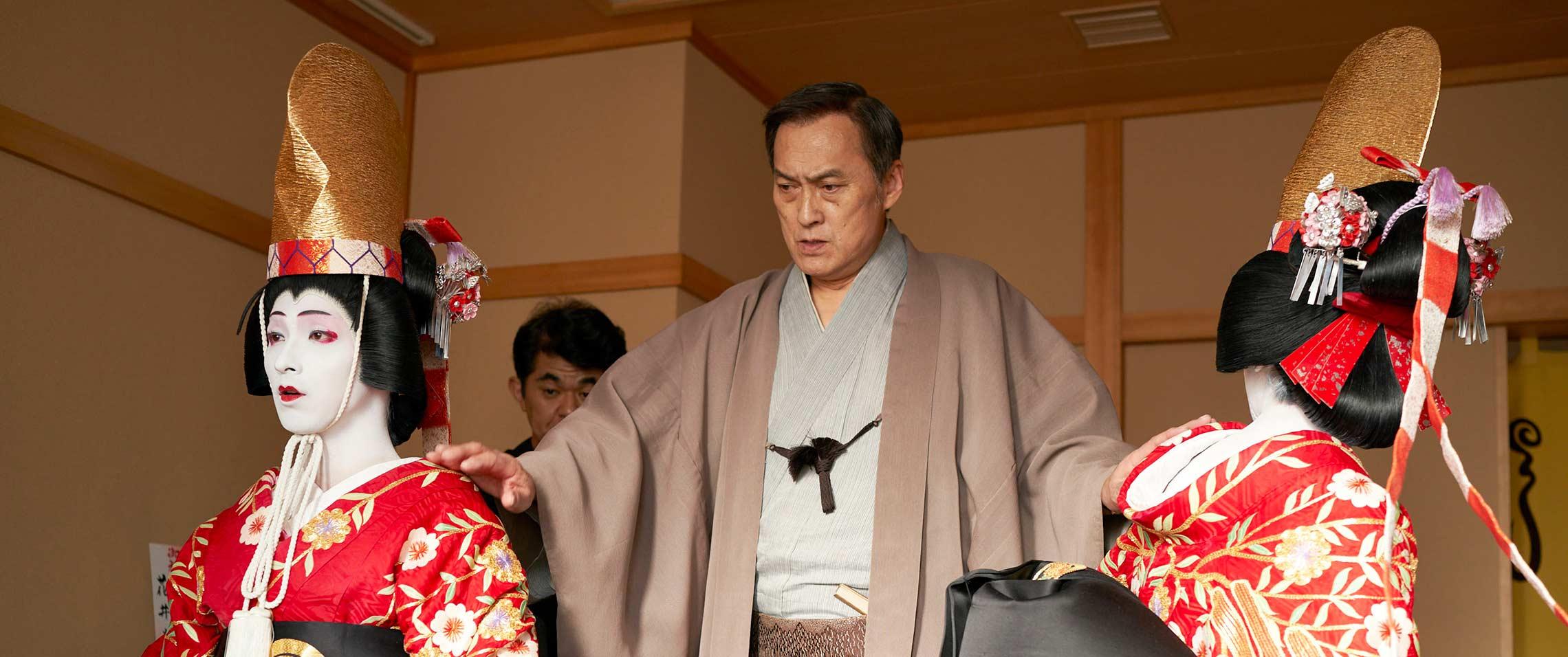
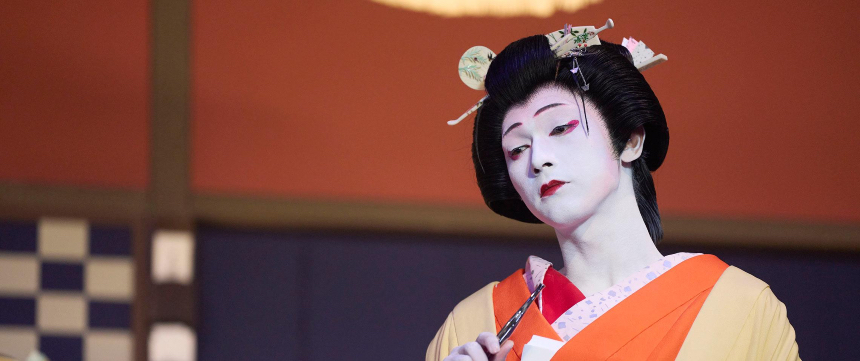
Adapted from the novel by Shuichi Yoshida (The Story of Yonosuke, Villain, Rude to Love), Kokuho (meaning "National Treasure") follows two male kabuki artists across five decades of their lives. In Nagasaki, 1964, Kikuo (Ryo Yoshizawa) watches as his yakuza father is murdered by a rival clan.
The boy is taken under the wing of a prestigious kabuki master and trained alongside Shunsuke (Ryusei Yokohama), the master's son and heir. Their friendship and rivalry shifts and evolves across the course of a near-three hour runtime, as we bear witness to their on-stage performances, their growth, their downfalls, their redemption.
I sat down with director Lee Sang-il and screenwriter Satoko Okudera in Cannes following the film's Directors' Fortnight premiere. In our lively conversation, we discuss how to best capture a singular form of theater on screen and on the page, and pinpointed some poignant motifs that Lee can't help but keep returning to.
Which of you originated this project, or was it a project that a producer proposed to you?
Lee Sang-il: Fifteen years ago, I had the idea to make a biographical film about an onnagata (a kabuki male actor who plays the female character). I began researching, but due to various difficulties, I had to abandon the project.
I spoke about this idea with [Shuichi] Yoshida-san, and he liked it. He started his own research on kabuki, and ended up writing the novel that this film is adapted from. Apart from the fact that it's a biography of an onnagata, it's a completely different story.
Kabuki has a storied history in Japanese cinema. What made you want to take on this challenge?
Lee: There aren't actually that many films that have kabuki as the main focus. We have Zangiku monogatari by Kenji Mizoguchi, but that was made 80 years ago - there isn't much besides that. People in Japan obviously know about kabuki, and they have a certain image of it in their minds. But, to me, the interesting thing about kabuki is the stories of the actors making it to the stage. These stories involve family ties and lineage, the passing down of heritage from father to son. It's a rich subject, and there was no kabuki film focused on it. I wanted to try my hand at it.
Okudera-san, what did you think of the novel when you first read it?
Satoko Okudera: Rich and dense -- but very interesting. I think there are almost eight-hundred pages, and I read it in one day.
Lee-san, you've worked from Shuichi Yoshida's writing before with the films VILLAIN and RAGE. What attracts you to his writing?
Lee: I think the perspective that we have on human beings is very similar, and the way he crafts and presents characters is very enticing. I also think the way we try to see society objectively and the things that strike our attention are similar.
We're not saying that humans are bad per se. We have this kind of objectivity and nihilism towards humanity, and yet we try to find the goodness within them - we have the same kind of love towards humanity.
Thinking further on that with your wider filmography, you often take on projects that center individuals who have a rich inner life but are at first glance perhaps misunderstood in their intentions. What attracts you to that kind of narrative?
Lee: In Rage it's more than one person, but I do tend to focus on one main character. I also realized that I have this pattern in my movies where the last scene is a close-up of the main protagonist.
I think it's a result of me wanting to see the full flow of where the story goes, where that person is going towards - and that last facial expression is where they end up. But your question is more about why I'm doing this, and not what I'm doing - and that's where I'm not completely sure. I think I need to think about it a bit more.
Both of you have a strong focus on time in your work. Okudera-san, your films are often concerned with a cast of characters as they move through pivotal moments in their lives. How do you go about writing that kind of screenplay? Do you start with the characters, or do you start with their timeline?
Okudera: Usually I focus very much on the characters rather than the timeline, but Kokuho was a bit different. We had 50 years to cover - a huge span, so I had to take into account both aspects equally.
Lee-san, your films are often long, character-driven epics. They're usually between two to three hours and you're in the middle of that ballpark here. What draws you to that kind of runtime? What do you appreciate about it?
Lee: Before we did any editing, the film was twice as long. I do try to have an objective of two hours, so, when the script is made, I design it to fit that runtime. It's just that when it comes to filming, you have the scenes that you need to have in the film, yes, but I also try to give the film more substance and shoot the moments that come before and after.
These couldn't be written in the script - they're scenes in between the lines of dialogue that will help us make and constitute the actual scene we want to film. I think that these in-between scenes are very important for the actor's experience.
As a result, we end up with a lot more material than the script suggested. I'll try to compress that in the edit, but, because of this approach, it's difficult to contain it to the initial objective of two hours.
I love how you capture the theater space in this film. It's impressive how you show us a kabuki performance from angles that make it feel live - from the wings, from the audience - always in motion. Was that an instinctual approach, or did it require deep consideration to make these scenes feel so present and alive?
Lee: What I felt was most important to capture in these scenes was the inner feelings of the characters. Simply presenting a beautiful cinematographic adaptation of on-stage kabuki wasn't enough - I wanted to really explore the depths of what is going on behind the scenes while they're on stage - their feelings, their process. Are they feeling joyful? Are they feeling under pressure? Are there objections, omissions? Are there stops? This is what I really wanted to capture.
Have you directed for the stage before?
Lee: I haven't, no, so this was a new experience for me.
This is a highly domestic film in its themes, in its history, in its cultural iconography. What do you hope that the Cannes audience takes from this film? Do you expect it to be understood as it will be in Japan? The explanatory subtitles that accompany the kabuki performances are a really lovely touch.
Lee: We had the premiere last night. Observing the audience's reactions, I think we were able to convey more than I expected. I think there are a lot of things they don't completely understand - which is completely normal.
Maybe the fact that they were not that familiar with [the history and the kabuki form] enabled them to focus more on the expressions and state of the characters, and perhaps that helps to convey the film's central message.
Okudera-san, what do you think?
Okudera: I don't think much about the differences between overseas people and Japanese people, and the main topic of this movie is a difficult topic even for Japanese audiences. The plays featured in this movie were written in the 1700s - modern Japanese people find them equally difficult to parse. Seeing the screening yesterday, I felt that people understood the film's message.
It's a major year for Japan at Cannes this year - there are five other features, including one from Genki Kawamura, who I'm aware you've both worked with before. What is your impression of the moment that Japanese cinema is in right now on the international stage?
Lee: I don't think I'm all that well-placed to accurately analyze the current state of the Japanese film industry, but I think we have an easy comparison in our neighbours in Korea. There's a richness and variety in Korean TV production right now - a lot of TV dramas especially. In the film industry, I feel that there's less and less variety lately.
I think that the Japanese film industry is still in the process of holding and maintaining variety. We have five movies, as you were saying, that have been selected here this year. I haven't been able to see them all, but I think that each of them have a very different mood.
Okudera: I've been quite concerned that the Japanese film industry has been operating in two extremities - big-budget movies and very low-budget movies - with nothing in the middle. Recently, a lot of films from people who are courageously accustomed to working with very small budgets are seeing funds come in from overseas, and they've been able to launch bigger and more diverse initiatives. I feel relieved by this new balance.
What drives each of you forward in your work?
Okudera: Sometimes you create something and people don't really watch it. My answer is very simple, but what drives me forward is making works that people watch and go away thinking "oh that was a good story".
Lee: I usually look back on what I created and go "oh, I should have done this or that - next time then!". It's about overcoming those afterthoughts.
Kokuho premiered at Cannes in Directors' Fortnight, is currently playing theaters in Japan to major success, and will make its North American Premiere next month at the Toronto International Film Festival. With thanks to Yuki Fujiwara for additional translation.