Serial Killer Brno 2025: YLE Head of Drama Jarmo Lampela Talks Global Growth, Creative Risk, Future of Finnish TV

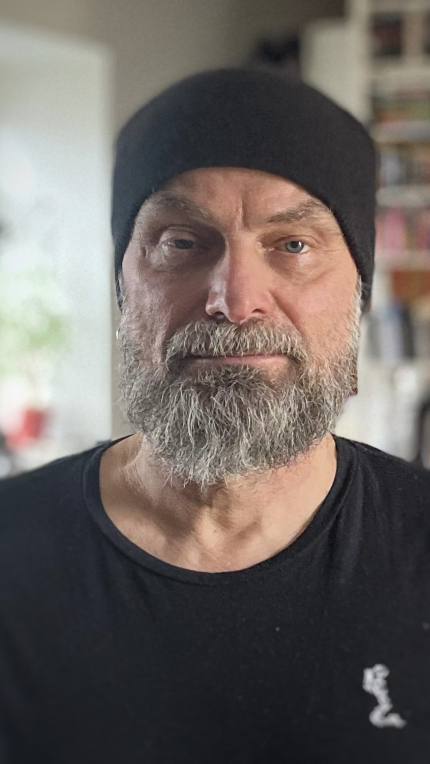
When Jarmo Lampela took over as Head of Drama at Finland’s public broadcaster YLE in 2015, the country’s television landscape was on the brink of transformation.
A decade later, Lampela has become one of the most influential figures in Nordic drama, steering YLE through the streaming revolution and positioning Finnish storytelling firmly on the international stage. Under his watch, YLE has evolved from a primarily domestic drama producer into an active player in global co-productions, partnering with broadcasters and studios from Chile to Italy.
In the conversation with Screen Anarchy at the Czech television and web series festival Serial Killer in Brno, Lampela reflects on a decade that has redefined what public broadcasting means in the digital era. He discusses how Netflix’s arrival dismantled the language barrier for small-language markets, why Finnish drama thrives on authenticity over scale, and how YLE balances national identity with global appeal.
From politically charged period pieces to edgy comedies and speculative sci-fi, Lampela’s slate reveals a fearless approach to genre and form, grounded in meticulous development and long-term partnerships rather than quick wins. He shares insights into YLE’s evolving drama strategy, the complexities of international co-production, and why the future of Finnish television may just lie in a black-metal animated family sitcom.
In Nordic countries, we have a long history of public broadcasters exchanging content. In the 1970's and 1980s, it was (shows for) children and cultural programs and documentaries, then some drama coproductions, mainly between Denmark, Norway, and Sweden, where the languages are mutually understandable.
Finnish, however, is completely different, so Finland entered that arena a bit later. Today, the partnerships are much wider. We’ve been co-producing with Spain, Belgium, Chile, Italy, and of course within the Nordics. That internationalisation has changed our whole strategy.
It’s more like a flight route map. If you think of an airline: the closer the hub, the more routes you have; the further away, the fewer. For us, it’s similar. In Europe, it’s easier to find organic stories with resonance across borders. Between Finland and Canada, for example, it’s harder.
Looking at your slate, I noticed some bold choices. Public broadcasters are often seen as conservative, but YLE’s lineup includes edgy, even provocative work aimed at younger audiences. Do you have complete freedom?
Crime shows travel well, but we also try to push into fresh directions. The Queen of Fucking Everything is a good example. It came from writer-director Tiina Lymi, whose previous mini-series had already been a hit. The new series introduced a type of protagonist, a woman in her late 40s, that we didn’t yet have in our programming. It was something fresh, and it became part of the New8 initiative we share with other European broadcasters.
How did that project develop?
Does YLE have an in-house team of writers?
Normally, we invest in development step by step. If a company comes with an idea that fits our strategy, we finance the first package: characters, themes, a 15–25-page concept of series. Then, if it progresses, we finance further development. The more complex the story, the more research and architecture is needed, normally three to six additional months just to build the structure, episode treatments, and storylines.
If both sides are satisfied, we greenlight the pilot script along with an international pitch deck or “Bible.” That stage usually takes eight to 16 months, depending on when we start the international pitching tour. From there, it’s all about securing partners and building the funding base.
And how does financing work with a public broadcaster?
In Finland, if a production company brings 25% international funding, they can apply for the Business Finland production incentive. That caps our contribution at a maximum of 50% of the budget.
What kind of budgets are we talking about?
For high-end dramas, our range is between €500,000 to €1 million per episode, depending on production value. Our biggest so far was Last to Brake with €1.3–1.4 million per episode, a 1970s period drama about Finnish motorcycle champion Jarno Saarinen, who became world champion and tragically died in Monza in 1973. That required visual effects, international shooting, and 30 vintage motorcycles restored to working condition. A big project, and an expensive one.
You mentioned Latin America, but you’ve also been developing projects with Canada. How did those start?
Often through contacts, someone we know comes back with a story that includes a Finnish angle. With Canada, we considered one project where the theme was universal, even if the story itself was Canadian. In such cases, we consult our acquisitions team, who commission hundreds of hours of international content every year. We need to make sure we’re not investing in a co-production that overlaps with something they’re already buying.
That’s one of the reasons why acquisitions executives are now part of our drama team, so we always know what’s happening in the international market, and they can advise us which projects make sense to join. Thirst, the Canadian project by Trio Orange, was an eco-thriller with sci-fi elements, quite unusual compared to our usual crime and drama output.
So you’re not afraid of genres?
No, not at all. We co-produced White Wall with SVT, which started from a Finnish idea. It’s near future sci-fi set in a mine in northern Sweden, where workers discover a 200-meter white cylinder buried half a kilometer underground. Not supernatural, but speculative, realistic sci-fi. It showed us that audiences are open to more than just crime.
But crime still dominates?
Yes, crime is still popular, but we see it more broadly, as part of the suspense umbrella. For us, it’s not only police procedurals. Seconds, for example, was about accident investigators trying to find out why a train exploded in a small Finnish town, killing nearly 40 people. It’s suspenseful, but without detectives or murder mysteries.
You even tried horror once. How did that go?
At the time, Finland didn’t have a real horror tradition, so it didn’t spark much discussion. Since then, we’ve seen more “soft horror” features, and I think the younger audience, 15 to 29, is increasingly open to experimenting with the genre. Sometimes it just takes time for the audience to be ready.
How do you measure the popularity of a project, traditional TV ratings or VOD numbers?
The old model was simple: if the premiere got strong linear ratings, you had a hit and maybe a second season. Netflix changed that, sometimes they let a show “fly” for a year, then check how many people return to it on VOD.
At YLE, since 2015 all dramas have premiered on our player. Linear broadcasting matters less and less. For example, The Queen of Fucking Everything performed strongly on VOD, less so on linear. Our audience is already accustomed to digital viewing, so we look at 30–45 day performance. But it’s not just numbers: we consider international interest, critical reception, and completion rates. If 700,000 start the first episode but only 100,000 finish the season, we have a problem. Social media buzz is also a factor.
So the shift to digital-first also changed your commissioning approach?
Yes. For older audiences, linear still works, especially international titles, relationship dramas, soaps, period pieces, they find their slot. But high-end dramas for international audiences are digital first. And the more smart TVs are in homes, the more people want to choose what and when to watch.
The term “quality TV” is often used. Is it your focus?
What is “quality TV”?
People usually think of HBO: big budgets, prestige creators, big names, cinematic feel.
For us, quality starts with the script. If the writing isn’t strong enough, the project will never get international partners on board. Producers know this, a pilot script has to be really well written.
Of course, we can’t compete with US budgets of $8-20 million per episode. But within the Nordic scale we know what we can do, and audiences here have high expectations. They don’t forgive weak storytelling, even in shows aimed only at domestic viewers. If they don’t like a Finnish series, they switch immediately to a global streamer.
What are you working on now?
There’s a lot in development in drama series team lead by commissioner Suvi Mansnerus. One project just moving into production is Focus, about a young figure skater and her toxic relationship with her coach. It came from a young producer who had been a professional tennis player before moving into film, so she knew the world she was writing about. It’s a fresh take, and very easy for us to jump into.
We also have another sports-related drama, set in Nordic cross-country skiing, publishing in early 2026. It follows female athletes and the sacrifices required to become the best. It’s not a love story in the traditional sense, but about the love–hate relationship with your sport, the passion that drives you and the pain that comes with it.
Our investigative thriller Seconds is going into a third season, co-produced with NDR/ARD in Germany and Danish ReInvent Studios. And as a minority partner, we’ve joined Learning to Fly, a coproduction with Odeon Fiction Germany, Drama Nation Sweden, and Studio 60 Spain. It’s based on the true story of the young German pilot who flew a Cessna to Red Square in 1987, but it’s not just about the flight. It asks how the hell it was possible, and what the consequences were inside the Soviet Union.
Many of the projects you mentioned are based on true events. Is that a trend in Finnish TV?
Yes, at least many of them start from real-life observations or experiences. Of course, there are completely fictional ideas as well, you never know where they’ll come from. When a story is rooted in true events, it’s easier for audiences to connect: they recognize that this really happened, but at the same time, the story speaks to something larger. Take Last Break, our motorcycle racing drama.
On the surface it was about Jarno Saarinen and the races, but really it was about how amateur racing transformed into a huge international business. Riders used to fix their own bikes, then suddenly Yamaha arrived from Japan and began hiring them. So it became a story about how the whole world changed.
Is there anything unconventional in your upcoming slate?
Yes. For the first time we’re producing an animated series, Belzebubs. It’s a family sitcom, but the family just happens to be occultic. The father is the guitarist in a black metal band, they wear corpse paint, and live by their own “occult” values. It’s Modern Family meet Addams family with a family sitcom with satanic twist. The first season has 13 episodes of 22 minutes each, premiering in autumn 2026. It’s a Finnish–Italian–Spanish co-production.
And what’s the tone, satire, parody?
It’s hilarious, but not easily comparable. It’s not South Park, not Rick and Morty. It has dark, nihilistic humor, but also warm humor because, at its heart, it’s still a family.
What’s the market potential for a show like this?
The idea came from J.P. Ahonen, a well-known comic artist who started publishing Belzebubs online. Very quickly he had half a million followers worldwide. There’s even a virtual band, with musicians who’ve released two albums through a German label and already performed some animated concerts.
So there’s already an international fan base, and that convinced us. When we discussed it at YLE, it was greenlit immediately. Development followed the same process as our dramas: building the characters, setting up a writers’ room, and eventually pitching internationally. Rai Fiction and 3CAT in Spain joined as partners, along with Mago production in Barcelona and Moviment in Italy.
Animation takes time, you need years of conceptual and visual work before production. Different countries are handling different parts: some focus on 3D visuals for locations, others on finalizing characters. It’s 2D animation, but digitally produced rather than hand-drawn.
Broadcasters and streamers are all looking for “the next Rick and Morty.” Is that the benchmark here?
We’ve heard that too, but I don’t think Belzebubs should be compared. It’s unique, dark, funny, warm, and entirely its own world.