Playback: Bill Condon, Spectacle and Secrets from GODS AND MONSTERS to KISS OF THE SPIDER WOMAN

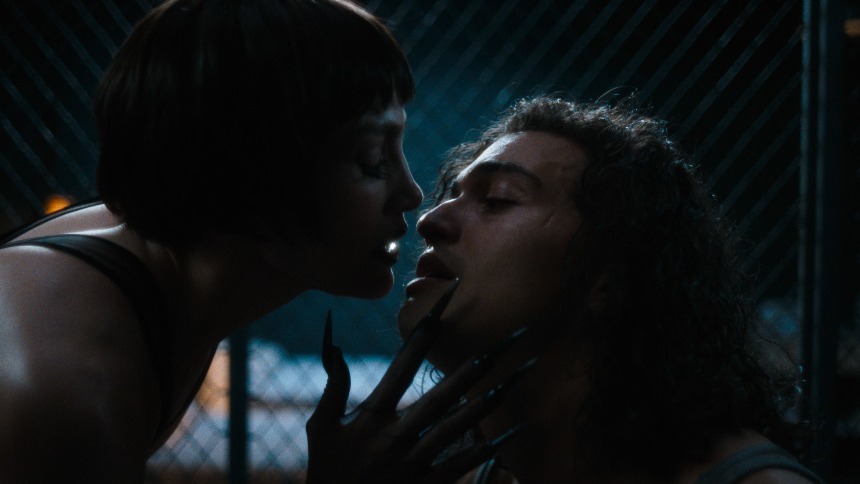
Bill Condon loves a spectacle, not just for the noise or the glamor, but for the ache that hides behind it. The lonely showman, the fading diva, and the monster who only wants to be seen; Condon tells stories where the tension between what dazzles and what wounds toes a thin, thin line.
This week, Condon's Kiss of the Spider Woman, the second adaptation of Argentine author Manuel Puig's 1976 novel by the same name, hits theaters. The musical stars a magnetic Jennifer Lopez, alongside head-on performances from Diego Luna and Tonatiuh. It tells the story of two men sharing a prison cell during the Argentine dictatorship, one escaping through cinematic fantasy, the other through political conviction. Here, Condon returns to his oldest obsession: how people perform to survive themselves.
Now a household name, Condon spent years trying to break into Hollywood, first as a journalist, then as a screenwriter. The New York City-born filmmaker wrote two B-movies in the early 1980s: the indie slasher Strange Behavior(1981) and the sci-fi alien flick Stranger Invaders (1983).
These preceded his inaugural feature film: the Jennifer Jason Leigh-starring, yet forgettable Sister, Sister (1987). This Southern Gothic film endured heavy criticism, effectively stalling his career. But Condon had already developed a taste for risk--and failure--from the films that he credits as inspiring him. One example is Sweet Charity (1969), a Bob Fosse musical panned on arrival. "For me, Sweet Charity started a lifelong love affair with movies that are reviled and rejected in their time," he once told Moviefone.
Condon finally found his footing with Gods and Monsters in 1998, a partly fictionalized story that follows the final days of Frankenstein director James Whale, played by Ian McKellen. That year, he won the Academy Award for Best Adapted Screenplay over Terrence Malick's The Thin Red Line and Elaine May's Primary Colors. This upset propelled the director to new heights--so much so, the New York Times reported that Condon was the "most stunned" person at the awards show.
Ever since, Condon has remained firmly in Hollywood. He penned the beloved musicals Chicago and Dreamgirls, while weathering backlash for his Twilight chapters and his reimagination of Beauty and the Beast. Through it all, he's kept chasing stories too bold to play it safe. For the debut of Playback, I'm rolling back the tape on his hits and misses.
Gods and Monsters (1998)
Gods and Monsters traces the fading brilliance of a filmmaker haunted by his own creations. Condon's first well-received film follows the openly gay director of Frankenstein and Bride of Frankenstein, James Whale (McKellan), while he's living in seclusion in 1950s Hollywood after suffering a stroke. As Whale contemplates his past (and his legacy), he forms an unlikely (anything but platonic) friendship with his young gardener, Clayton Boone, played by Brendan Fraser.
There's no doubt this movie exists as a thematic umbrella for Condon's career. Nowhere else in his filmography is the throughline so obvious: A tumultuous love story, where fantasy acts as a veneer for our true selves. It's a must-watch for anyone trying to parse out the director's recurring obsessions.
Kinsey (2004)
Alfred Kinsey's curiosity about human behavior becomes both his calling and undoing in Condon's 2004 biopic, Kinsey. The American sexologist--perhaps most commonly associated with the Kinsey Scale--pursues a scientific understanding of desire with fierce rigor. As his research expands to include interviews with thousands of Americans, his detached curiosity blurs with personal longing. Liam Neeson's sharp, frenzied portrayal of Kinsey is balanced by Laura Linney's heart-steadying performance as his wife, Clara. A story of scientific ambition mutates into a story about the cost of obsession.
When it premiered, critics hailed its intelligence and restraint, calling it one of the most thoughtful biopics of its decade. At the time, it was admired that Condon deftly turned potentially scandalous material into a study of curiosity and compassion. It's a movie about sex that's really about the hunger to understand, a bridge between his intimate dramas and his long-lasting love of spectacle.
Dreamgirls (2006)
Dreamgirls is Condon at his most exuberant: a dazzling rise-and-fall musical where glamor and heartbreak share the spotlight. The ensemble cast alone--Beyoncé, Jennifer Hudson, Jamie Foxx, and Eddie Murphy, to name a few--is enough to turn heads, but Condon's gift in complicating his stars allows charisma and vulnerability to share the stage.
Condon's cinéma à clef taps into the drama surrounding Motown Records and the events that tore apart The Supremes. Here, we follow the fictional Dreamettes, led by Effie White (Hudson), alongside Deena Jones (Beyoncé) and Lorrell Robinson (Anika Noni Rose), as they ascend from Detroit nightclubs to national fame. It charts the emotional toll on their manager, Curtis Taylor Jr. (Foxx), and the exploitation that underpins their success, at the height of the commercialization of Black musicians in the 60s and 70s.
Killer outfits and Beyoncé-forward musical numbers: This is a luxurious watch. Its rapid-fire editing sweeps us into the chaos, amplifying every emotional jolt. It does, however, leave some of its narrative haphazardly out of the spotlight, making it a fun yet occasionally unfulfilling watch.
The Twilight Saga: Breaking Dawn, Parts 1 and 2 (2011, 2012)
The Twilight Saga elicits some strong responses from its lovers and haters. It endured plenty of hate for the three movies before Condon took the helm. But Condon took Stephenie Meyer's dazzling vampires and crafted an unnecessarily effective finale (with operatic pizazz) for this supernatural teenage romance.
Part 1 picks up as Bella (Kristin Stewart) and Edward (Robert Pattinson) get married, facing the obvious consequences of a human-vampire union. This is, namely, about Bella's pregnancy with a half-vampire child. It ramps up with Part 2 when their absurdly named daughter, Renesmee, is threatened by the Volturi, a vampire cult who wrongly believe the child is immortal.
The whole premise is absurd--and the two films revel in the heightened camp of it all. This is entirely in step with Condon's larger oeuvre, which often turns sentimentality and spectacle into something strangely sincere.
Beauty and the Beast (2017)
If Condon were to revive any Disney film, Beauty and the Beast feels like the inevitable match. His sensibility slots neatly into a film whose characters curate their identities for the world. Beauty and the Beast simply translates that obsession into a fantasy register: a cursed man (the Beast, played by Dan Stevens), who must relearn tenderness, and a heroine (Belle, played by Emma Watson) who sees through artifice.
Each live-action Disney remake is as dubious a project as the last. Condon does what he can. He stays as faithful to the original's spirit while indulging his love of grand gestures. This film reveals his reverence for classical storytelling and his comfort within studio spectacle--a logical step in a career spent staging transformation as a kind of performance.
Premiering: Kiss of the Spider Woman (2025)
Kiss of the Spider Woman throws every Condon trademark into the ring at once. His new film reimagines the celebrated stage musical (itself based on Puig's novel) as a dual-narrative film of queer identity and cinematic fantasy.
Set in 1983 Argentina, Molina (Tonatiuh), a gender-nonconforming window dresser imprisoned for "public indecency," is assigned a cellmate: Valentín (Luna), a Marxist revolutionary detained for his political activities. Molina copes with the brutal, oppressive conditions by retreating into the world of cinema--he tells and inhabits a lush, Technicolor musical fantasy centered on his idol, a diva named Ingrid Luna (played by Jennifer Lopez), who assumes multiple roles, including the titular Spider Woman.
Molina's fantasies are bridges between the two characters' disparate worlds, a way to escape or, really, articulate inner truths. Valentín comes to understand the depth and courage in Molina's queerness, and Molina, in turn, confronts the weight of political sacrifice. It may have everything Condon typically obsesses over, but it's a bit careless when it comes to handling its real problems, leaving us wanting more.
The main takeaway, in the end, is that J-Lo belongs in a musical--and I hope we see her perform this way again.
Playback is a column that rewinds through a director's defining works in the week their new film premieres.
http://