
Busan 2025 Interview: HANA KOREA, Frederik Sølberg on Directing Across Cultures, Casting Minha Kim

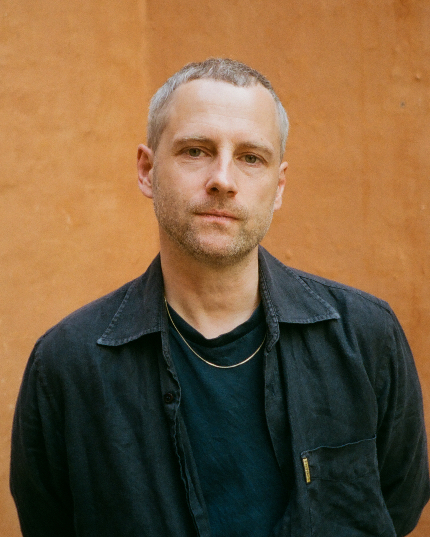
Danish filmmaker Frederik Sølberg makes a striking transition from documentary to fiction in Hana Korea, creating a fiction debut feature that is both intimate in scope and universal in resonance.
The film follows Hyesun, a young North Korean refugee negotiating the dizzying contradictions of life in the South. What begins as a portrait of arrival, through the rigid structures of state integration programs, expands into a nuanced meditation on freedom, belonging, and the emotional costs of reinvention.
Rooted in years of research and shaped through collaboration with screenwriter and translator Sharon Choi, Hana Korea blurs the line between documentary authenticity and narrative cinema. Sølberg draws on his own upbringing in a divided Europe and long-standing interest in Korea’s history to frame the story not as a geopolitical parable, but as a deeply human journey. The result is a film that resists sensationalism, instead offering a restrained and immersive perspective on displacement, memory, and the precarious hope of a new beginning.
In the discussion with Screen Anarchy, Sølberg reflects on the leap from non-fiction to scripted drama, the challenges of directing across language and culture, and the collaborative process that made Hana Korea possible.
Screen Anarchy: Your previous work has been in documentary. What drew you to fiction for this project?
Frederik Sølberg: I think I’ve always had quite a cinematic approach to filmmaking, and most of my main inspirations are fiction films. But here it was really about the story. I wanted to make an immersive and intimate film about what it feels like to be a North Korean living in South Korea.
We started out with a documentary approach, doing research in the way I normally would for non-fiction. But as the project developed, I realized I wanted to zoom in on the personal aspects of this transformation. Fiction offered the right tools to unfold that potential.
What first sparked your interest in North Koreans living in the South?
There’s a long version, but I’ll try to keep it manageable.
I grew up in Denmark in the 1980s, when Europe was divided by the Iron Curtain. My earliest family holidays were in Eastern Bloc countries: East Germany, Czechoslovakia, Hungary, Yugoslavia. So from very early on I had a strong impression of this strange division between East and West, and I think it planted a seed of interest in politics and history.
More specifically, 15 years ago I went to Korea for the first time. On my very first day, I met two Korean men at a restaurant who tried to explain what the division of the country meant to them. It made a big impact on me. One of them ended our conversation by saying, “All we want is Hana Korea.” Hana means “one” in Korean. That moment really stayed with me and deepened my interest in Korean history and society.
Later I learned about the Hana One Center, which is an integration center for North Koreans arriving in South Korea. I was fascinated: How do you help people go from being citizens in a dictatorship to becoming free individuals in a modern society? That transformation really intrigued me. I even did a radio documentary on the Hana One Center, and that eventually sparked the idea for a film starting at the moment a North Korean arrives in the South.
So you began with research and meeting people who had gone through that transformation?
Exactly. Back then it was mostly radio work and general research. In 2019, I approached Danish producer Sarah Stockmann, and together we teamed up with Korean producer Heejung Oh. From the beginning we had this motto: to make a film with “a view from outside, but knowledge from inside.”
We started interviewing North Koreans, trying to see if there was a potential story. That’s when we met Hyo-rin, who became the inspiration for the film. She was very open, shared her entire story with us, and at the end she said: “I want you to tell this story, because you’re not Korean.” That gave us both the mandate and the encouragement to move forward.
She has been part of the research process ever since. Over the years, I’ve spent a lot of time with her, in her neighborhood in Seoul and in the provincial city where she studied. Even though we don’t share a language, with the help of translation apps we built a relationship, and she gave me invaluable insight into how she experiences South Korea.
How do you direct a Korean cast when you don’t speak the language?
It’s definitely a challenge.
The script was written in collaboration with Sharon Choi, who is not only a talented screenwriter but also a translator. She worked with Bong Joon-ho during the Parasite press tour, and she has been an essential bridge between creative and cultural mindsets. We started working together in 2022, exchanging drafts, and she also acted as my translator on set. She knew the intentions behind every scene, so she could communicate that to the cast in Korean.
The script was written in English, then translated into Korean. On set I worked with both versions, and the Korean dialogue was also transcribed into Latin letters, so I could follow the rhythm and structure of the lines. Cinema, after all, is more than dialogue. You can tell a lot just by watching the monitor, body language, rhythm, emotion.
Sometimes we did extra takes to be sure we captured the right nuances. Sharon would explain the performances, and then I would decide based on her input and my own intuition. Our lead actress, Kim Minha, speaks English fluently, so we could communicate directly about details, which helped enormously.
There was also the challenge of the North Korean dialect. We had North Korean experts on set to ensure authenticity.
And the crew, was it mainly Korean or Danish?
A combination. This film could only be made through a strong and equal collaboration between the Danish and Korean teams. Without that partnership, it would have been impossible.
So on set, how did you manage the crew dynamic?
For most of the six years of development, we were a small Danish–Korean team. But when it came to the shoot, everything was on location in Korea. The crew was predominantly Korean, with a few exceptions: our Danish DOP, Stephanie Stål Axelgård, plus a Danish camera assistant, a line producer, and a sound engineer from Kenya. The working language was English, and when necessary Sharon Choi or our producer Heejung Oh would translate.
The cast is impressive. How did you manage to secure such well-known actors?
I was also impressed. Our Korean team did a remarkable job in casting and guiding me through Korean cinema.
I had already seen Pachinko and was blown away by Minha Kim’s performance. We reached out, not really expecting her to accept, but she wanted to meet. When she read the script and came to our first meeting, it was almost magical. We immediately realized she was on the same page. She connected deeply with the character and brought her to life in a way that felt both natural and powerful.
Equally important was forming the trio of Minha Kim as Haesun, Jooryoung Kim as Suki, and Seohyun An as Bomi. Together they created the perfect balance. Their relationship really carries the film, and I think it’s one of the crucial elements that makes the story work.
Did you do rehearsals before shooting?
Yes. Minha Kim came to Copenhagen while Sharon and I were finishing the script. We did an acting workshop with her, almost sculpting the character together. She has this incredible ability to take on a role and really nail it. To be honest, there wasn’t much to adjust, she was spot on from the beginning.
What was the biggest shift for you in moving from documentary to fiction?
The scale. My first feature documentary was four people driving around in a van. Suddenly, I had a full crew. In fiction, preparation is everything, you can’t just improvise or change course without affecting dozens of people. It’s a big machine.
Shooting on location in Seoul is already a challenge, and doing it with a Danish director on a limited budget made it even more complex. But our Korean crew was incredible, making things possible that seemed almost impossible. This film is really a product of teamwork. You can only make something like this if you help each other, and that’s what we did over six years.
The film retains a documentary sensibility, even though it’s fiction. Was that intentional?
Absolutely. From the start I wanted the audience to really feel and relate to the transformation Hyesun goes through. The best way to do that was by using a strong cinematic concept rooted in authenticity.
There’s already so much sensationalist content about North Korea, YouTube is full of it. But to make a profound, intimate portrait of someone leaving a dictatorship and becoming a free individual, fiction gave us the tools. Hyesun makes the biggest sacrifices in pursuit of freedom and happiness. But is it worth it? Will she ever feel truly free? Those are the questions I wanted the film to explore.
One choice that stood out was how you only hint at the protagonist’s past in China without showing it directly. Why did you leave that to the imagination?
For me, filmmaking isn’t about giving all the answers. It’s a dialogue between the work and the audience, between the personal and the political. I like subtle storytelling, leaving pieces for viewers to puzzle together. That’s why there are things we only insinuate rather than make explicit. It felt right to do it that way.

Stream Hana Korea

Around the Internet
Recent Posts


