Locarno 2025 Review: SOLOMAMMA Fuses Arthouse Intimacy with Genre-Inflected Reflections on Single Motherhood
Norwegian director Janicke Askevold offers a restrained yet layered exploration of solo motherhood, merging Scandinavian arthouse sensibilities with subtle genre elements to examine shifting family dynamics in contemporary society.

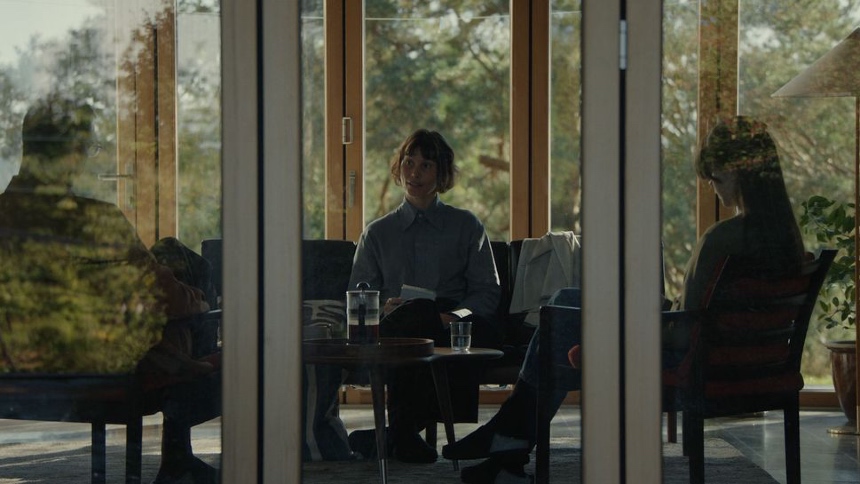
A woman lies to meet the biological father of her child. Not for romance, nor revenge, but for a sense of belonging, for herself, and for her son.
Solomamma, the feature debut by Norwegian director Janicke Askevold, follows Edith (Lisa Loven Kongsli), a journalist and single mother by choice, as she quietly infiltrates the life of her sperm donor under the guise of profiling his tech company. As her personal and professional boundaries blur, Edith’s need for connection evolves into a moral ambiguity that challenges the emotional scaffolding she has built around her life.
Set in Oslo’s muted light and shaped by Askevold’s interest in contemporary family structures, Solomamma emerges as an examination of the quiet ruptures between autonomy, biology, and social expectation.
Askevold’s directorial approach reflects a hybrid sensibility. Her background in theatre and short-form narrative is evident in the interiority of her characters and the economy of the dialogue, while her stated inspirations, ranging from Korean minimalism to French formal playfulness, inform a visual style that based on stylized realism.
Cinematographer Torjus Thesen captures Edith's plight with a careful eye for texture, sterile architecture and soft natural light contrast with the protagonist’s inner volatility. The film’s visual grammar incorporates occasional paranoid slow zooms and formal restraint that signal shifts in psychological tension without overemphasizing them. The minimalist style, supported by understated musical motifs and performances, favors emotional suggestion over exposition.
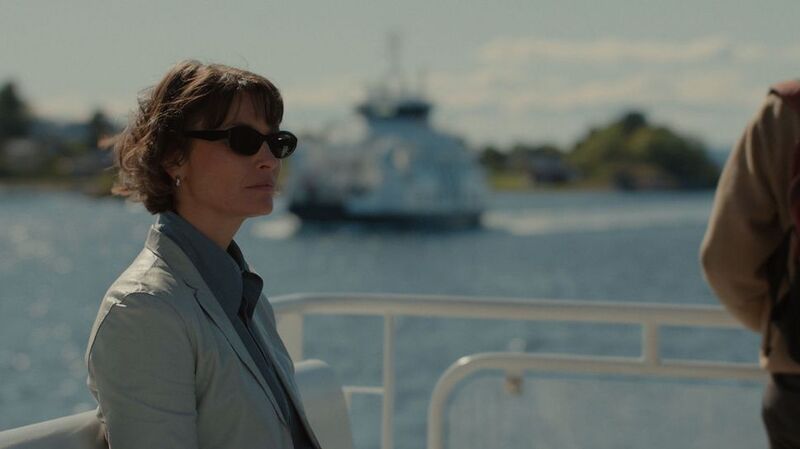
Askevold has framed Solomamma as a response to the shifting landscape of familial norms. Her research-driven writing process, undertaken during her own pregnancy and involving interviews with Norwegian solo mothers, psychologists, and fertility specialists, anchors the film in lived experience. But the drama extends beyond documentation.
The story is structured around a personal crisis. Edith closely observes her son, occasionally calling him “an old soul” as he exhibits behavior that, while typical for children, strikes her as eccentric.
She overanalyzes these traits, going so far as to consider possible diagnoses such as ADHD, autism, or other seemingly hereditary conditions. At the same time, she is increasingly anxious that her son, conceived anonymously, might one day experience the same emotional absence she felt after being abandoned by her own father. This generational echo underlies her otherwise rational decision to become a single parent and forms the emotional basis for the central deception: her decision to seek out the biological father of her child.
Solomamma interrogates the contradictions at the heart of contemporary parenthood. While Edith’s decision to raise a child alone is framed as both empowered and necessary, the film complicates any easy celebration of independence.
Instead, it depicts solo motherhood as an ongoing negotiation between empowerement and doubt. The tension is not that Edith cannot cope, but that her internal standards of adequacy are shaped by inherited ideas of what a family should be.
In terms of structure, the film follows a linear progression, though the pacing slows considerably in the second act to accommodate the psychological ramifications of Edith’s decision. The donor, Nils (Herbert Nordrum of The Hypnosis), is not rendered as a mere symbol or fantasy object. Instead, he is portrayed with a kind of quiet melancholy, living a professional “plan B” life, modestly successful in children’s game development but burdened by unfulfilled ideals.
Askevold and co-writer Max Stegger introduce elements of genre storytelling, particularly through the subplot involving Nils’ stepdaughter, whose growing curiosity toward Edith creates a subtle tension that complicates the otherwise muted domestic scenes. However, these narrative escalations serve character development and infuse a thriller-like storytelling when Edith infiltrates Nils' family.
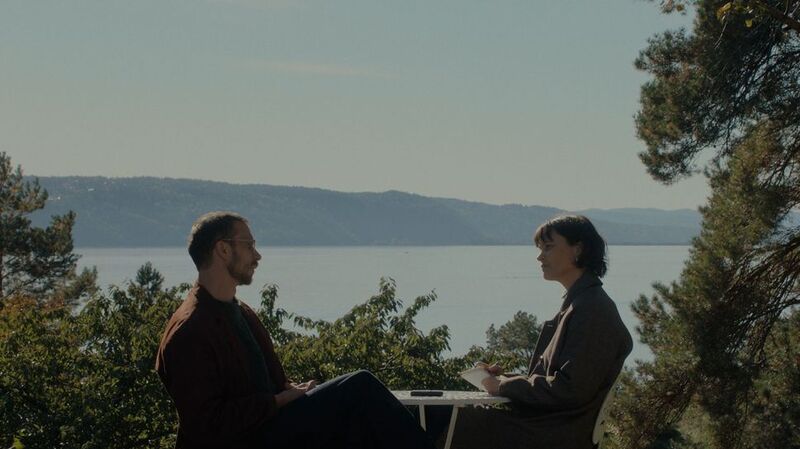
Solomamma is composed with a modest precision. Its visual compositions are often symmetrical but not rigid, suggesting a desire for control in a world of emotional instability.
Scenes with Edith’s ailing mother, with whom she shares an apartment, further explore generational expectations. The mother represents an earlier model of womanhood and family structure. The intergenerational dynamic subtly evokes the realities of the so-called “sandwich generation,” caught between caring for aging parents and young children, though Askevold avoids rendering this as thematic weight.
In relation to Askevold’s previous works, her short Le Contrat and the made-for-TV film Sammen Alene, Solomamma represents a continuation of her interest in family constellations, identity, and social norms. The film extends the questions she has previously posed into a more expansive and ambiguous register. While Le Contrat approached relational conflict in a confined narrative form, and Sammen Alene centered on social isolation, Solomamma explores how personal choices are shaped by social structures and unspoken anxieties.
Solomamma stems from the Scandinavian arthouse tradition that foregrounds psychological realism and ethical ambiguity, while subtly veering toward genre storytelling that bridges the gap between auteur cinema and more audience-oriented fare. Though minimalist in form, the film quietly incorporates elements of emotional suspense, particularly through narrative withholding and character dynamics.
Its focus remains intimate, centered on Edith’s relationships with her son, her mother, Nils, and a friend who shares the same sperm donor, yet the questions it raises about parenthood, identity, and biological connection resonate with broader contemporary concerns. In doing so, Solomamma is a character-driven drama with genre undercurrents, inviting wider audiences into a restrained but emotionally charged exploration of modern family structures.
Solomamma
Director(s)
- Janicke Askevold
Writer(s)
- Janicke Askevold
- Jørgen Færøy Flasnes
- Mads Stegger
Cast
- Lisa Loven Kongsli
- Herbert Nordrum
- Nasrin Khusrawi