Locarno 2025 Interview: SOLOMAMMA Director Janicke Askevold on Redefining Family, Donor Anonymity, Building Intimacy Through Genre

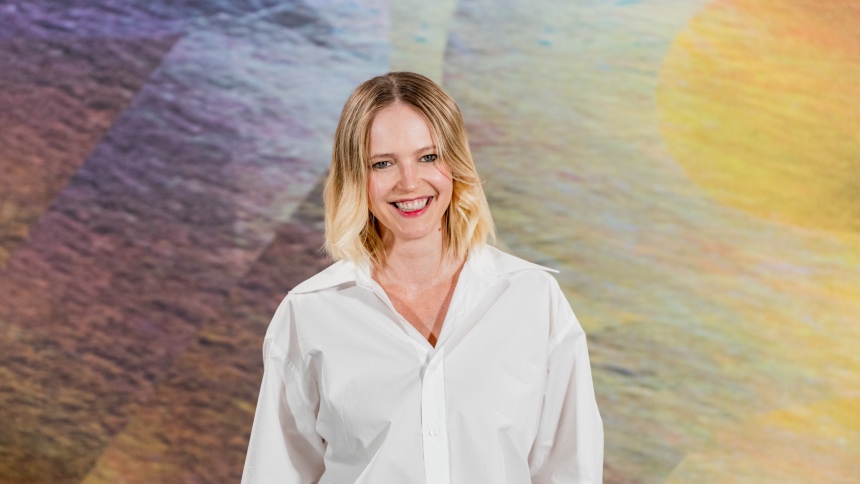
Norwegian director Janicke Askevold offers a portrait of contemporary parenthood, one that dissects shifting familial structures through an intimate and disquieting lens in Solomamma.
Blending arthouse precision with psychological thriller undertones, the film follows Edith, a single mother navigating loss, maternal anxiety, and the complicated ethics of biological connection in an age of anonymous sperm donors and digital kinship networks.
Loosely inspired by real conversations with solo mothers and grounded in meticulous research, Solomamma is less a social issue film than a character study wrapped in a modern fable of identity, desire, and belonging. Askevold, who developed the project through Norway’s New Talent Scheme, draws on both sociological insight and cinematic instinct, working closely with co-writer Max Stegger and cinematographer Torjus Thesen to build a story that is at once emotionally restrained and tonally charged.
Askevold talks to Screen Anarchy about the process behind Solomamma: its development, character dynamics, and the fine balance between realism and heightened atmosphere. The conversation traverses everything from the implications of donor culture and generational caregiving to the aesthetics of slow zooms, retro thrillers, and Scandinavian minimalism.
Screen Anarchy: I read that you based the movie on real conversations with solo mothers. Why did you want to have those conversations in the first place?
Janicke Askevold: Because I see family structures, the standard of “normality,” change with every generation, and this is where we are today. There are many types of families now, and this was a structure I didn’t know much about. But more and more of my friends were becoming solo mothers.
When I discussed it with people around me, I felt there was a lot of engagement, strong feelings, and opinions about it. I thought, Okay, there’s a space for this kind of film right now. And I didn’t know of any other films that really talked about it, so it felt like the right time to make one.
Are you curious from a sociological perspective about these changing family structures?
Absolutely. You see films from the 1970s, like Kramer vs. Kramer, which was about divorce with a child, that was the big social question of that time. That’s no longer such a discussion today. Now we’re talking about solo parenting, surrogacy, all these other forms of family. Things have evolved a lot since then.
So you heard all these anecdotes and opinions from solo mothers, when did the actual spark for the story happen?
I was pregnant myself at the time, and I couldn’t travel. I live in Paris but I work in Norway, so I stayed put and spent a lot of time talking to solo mothers in Norway. I wanted to base the story on Norwegian women. I spoke to psychologists, doctors, clinics… it was wide-ranging research.
Is that kind of in-depth research part of your working method?
Yes, definitely. I like to really understand what it’s like. And I discovered something interesting I didn’t know before, there are all these social media groups where solo mothers connect, support each other, and even meet in real life. Some women also look for others who used the same sperm donor. They have a donor code, my code is this, does anyone else have the same?
And why would they want to do that?
Because it’s the reality. In the film, Edith is about to lose her mother, and she’s all alone with her son. She thinks, He only has me. If he could have a connection with another child from the same donor, they could grow up like siblings if they wanted. I know women who do this in real life.
But does the biological part make that much difference?
That’s the question I wanted to explore. I think it’s fascinating, because biology is still important to many people. Even though we’ve evolved and social connection can be just as important, there’s still this almost animal instinct in us that’s drawn to biological belonging.
Is Edith based on a specific person?
No, she’s inspired by different stories. But in the film, her father left when she was a child, so she grew up with this void from being abandoned. She’s afraid her son will feel the same absence of a father figure, and that’s why she invests in the relationship with the half-sibling’s family, so her son has another person to relate to.
The film combines an art-house sensibility with genre elements. Why bring in that layer?
That came with Max Stegger, the second screenwriter. We wanted to raise the stakes, play with a kind of thriller style. There’s this subplot with a stepdaughter who becomes very interested in Edith, so the consequences of Edith’s actions come back to her. It made the storytelling more engaging.
And your lead actor Herbert Nordrum did you cast him after auditions or did you have him in mind from the start?
I actually wrote the part for him. I’d seen him in The Worst Person in the World and thought he was fantastic.
But in THE WORST PERSON IN THE WORLD, he’s going wild.
Yeah, but I wanted the donor to be a complex person. He’s not the perfect guy, the handsome cliché, I thought that would be boring. I wanted someone you could believe she falls in love with, but who’s also fragile, with a certain insecurity.
And Edith, was that part also tailor-made for Lisa Loven Kongsli?
At first, I didn’t even realize she was Norwegian because she usually works more internationally. When I found out, I thought she was perfect for the role.
But most importantly, more than her being amazing, or him being amazing, they had to work together in a way that made you believe in the chemistry. We did chemistry tests, improvisations. I loved how she found playful ways to take control of situations without using charm to get something. I respect that. I love that in the character.
Did you adjust the script after seeing her performance?
I came in with my vision, but Lisa made it hers. We had many conversations and rehearsals, so the result is really a collaboration between my vision and hers, and Herbert’s.
Was it hard for him to play so stoically, without smiling?
Not at all. He just comes in and does itm perfect from the first take. He’s very intelligent.
You’ve said you do heavy research. Did you also research the genre elements, how to build atmosphere, false flags in the plot?
Yes. For that, I really looked to Korean filmmakers. I love that style, it’s cold but with beautiful compositions.
The house we found was perfect for it. We looked at about 25 houses before finding this one, just outside Oslo. It had that coldness, but also warmth from the wood. For other elements, I looked more toward French cinema, Agnès Varda, Truffaut, for playfulness and heightened realism. We had very little time to shoot. We had to make hard choices, sometimes only one shot instead of coverage from multiple angles.
Budget constraints?
It was more about shooting days. But I like that challenge, it forces creativity.
Wasn’t it stressful?
Of course. But pressure gives the whole crew a kind of energy.
Any regrets in the editing room?
Sometimes we were scared we didn’t have enough, but it turned out fine. No major surprises.
Did you experiment much in editing, especially for the slow build-ups?
Some scenes completely changed place. We cut a few, mostly in the first act. We had the music composed before editing, so we cut with it already in place. That was important, the music set the tone. It’s an emotional journey, so the music reflects her insecurity: a touch of melancholy, a slightly broken, childlike quality.
Did you adjust scenes to match the music?
Not exactly, we adapted the music, but the tone was set early.
You use slow zooms — unconventional and a bit retro.
Yes, with the DoP Torjus Thesen, we both liked the zoom, but we wanted to be careful. We didn’t want to go full Succession.
Did you test the visual language before shooting?
We got financing not only from the Norwegian Film Institute but also a budget to shoot a pilot, almost a year before filming. That was part of the application. We used it to test mood and atmosphere. It was very helpful.
I also read you were part of the New Talent scheme.
Yes, it’s designed to give space to new voices, not necessarily from a traditional film background. It opens the door to different stories. The budget is low, but you have complete creative freedom, even in casting.
No interference?
None. They were interested in the process, but never interfered. It was a very positive collaboration.
There’s a mix of loneliness, desire, guilt, and agency in the film, but it never tips into melodrama.
I wanted Edith to be complex, not a heroic “strong woman” but a human being, with insecurities and curiosity. We always understand her actions. She lies about who she is when she goes to see the donor, immoral, in a way.
I wouldn’t call that immoral.
Maybe not. Maybe it’s just human. Her first motivation is to understand her child, maybe there’s a hereditary factor to his behavior. Later, she gets fascinated by the man.
You also explore his perspective.
I wanted to know, when a man donates sperm and meets a child from that donation, does he feel a connection like a woman might? Niels is lonely, he dreams of having a family, so meeting a biological child stirs something in him.
Did you research the male point of view?
I listened to many donor profiles from sperm banks. I even made a profile myself, not to find a donor, but to access the system. The Danish clinic I used has public donor recordings.
It’s public?
Yes, the Danish clinic makes them public, anyone can listen, I think. I was very surprised by how much you learn about the donor just from that recording. You hear the voice, and the way the sperm bank presents the man, they’re selling him.
Like Tinder, but for sperm.
Exactly. And I wanted to present Nils in the same way at first, through his donor profile. It became a red thread throughout the film. In the profile, he has big dreams, he wants to do important work. In reality, he makes games for kids. That gap between the image we present and who we really are fascinated me.
Why did you make him a children’s game developer? That’s a choice that could invite controversy.
He was the hardest character to create. We didn’t want him to be perfect, but also not a loser. We wanted someone complex, someone living a kind of “plan B” life. He didn’t achieve the great things he imagined, and he never had his own children. That gives him a certain melancholy, like Edith, like her mother.
So the children’s games are part of his imperfection?
He took the job as an opportunity, it made him money, but he’s embarrassed by it now. He’s not proud of it. He’s not where he thought he’d be in life.
Another interesting figure is Edith’s mother, part of what’s called the “sandwich generation,” caring for both a child and an aging parent.
When Edith decided to have a child alone, her mother agreed to help, so they moved in together. But five years later, the mother is ill, and the roles reverse. Edith has to care for her mother instead of the other way around. That’s a reality for many women who become mothers later in life, they expect their parents to help, but those parents are already aging.
Did you ever feel conflicted about not giving Edith’s son a father figure in the story?
In the first draft, there was an ex-boyfriend, the reason she became a solo mother. But we didn’t want the story to be about her caught between two men. The unique element was her journey as a solo mom, so we took him out.
And the child actor, was he experienced?
A little. He was four and a half. His parents work in cinema, so the process felt natural for him. They rehearsed at home in a respectful way, never pushing him. It was important that he wanted to be there. Sometimes it’s the parents who want it more than the child, but he genuinely enjoyed it.
And he came to set prepared?
Yes, he knew his lines, and we did very few takes. He listened well to direction. People called him an “old soul,” which I think came from the way he interacted with adults without the usual barriers.
Was that meant to hint at the autism spectrum?
No, not at all. Edith doesn’t recognize everything about herself in him, but she’s obsessed with what he’s inherited from her and from the donor. We, as the audience, see a happy child, but she’s constantly scanning for signs that something might be missing. She’s afraid she’s not enough.
And the stick obsession?
That came from my own daughter. Her pockets were always full of things she picked up from the street.
What are you working on?
The next project is in very early stage. I’ve received funding from the Norwegian Film Fund, the classic scheme this time. It’s also centered on family constellations and how our life choices affect our children. It’s a feature film.
Image courtesy of Locarno Film Festival