Berlinale 2025 Review: THE BLUE TRAIL Reimagines Aging in a Dystopian Future
Gabriel Mascaro continues his exploration of hybrid storytelling with a dystopian fable that reimagines aging as an act of defiance.

Brazilian director Gabriel Mascaro follows his techno-religious dystopia Divine Love with another lo-fi sci-fi, The Blue Trail.
His latest film shifts toward ageist satire, depicting a dystopian vision of forced displacement under the guise of economic efficiency. In this near-future Brazil, a new law mandates that citizens, upon reaching retirement age, be relocated to remote housing colonies.
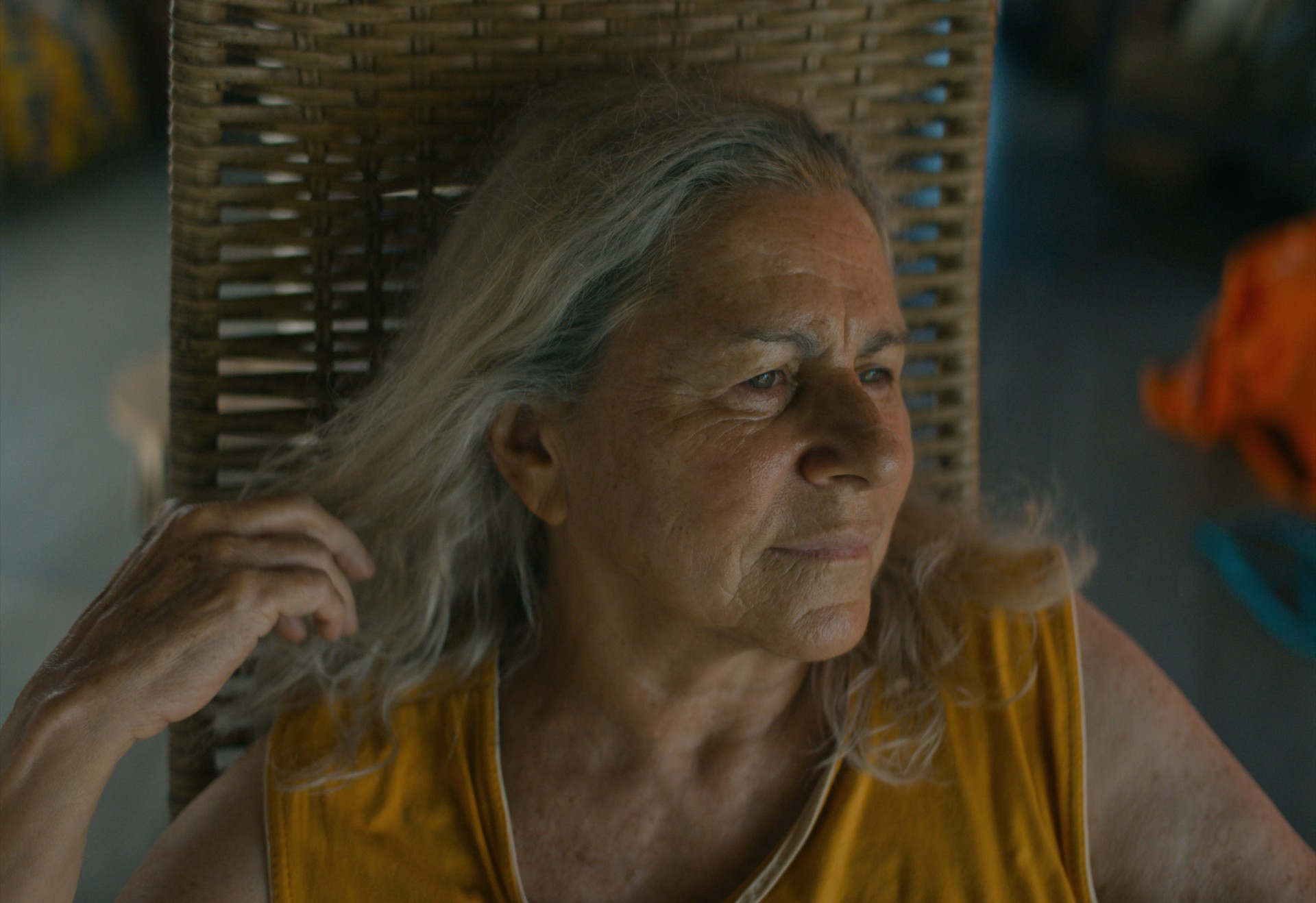
At 77, Tereza (Denise Weinberg) remains active, working in an alligator butchery. One day, the government delivers a trophy to her door, recognizing her for surpassing a designated age milestone, an honor she views with disdain. Soon after, the countdown begins for her forced relocation to an elder colony.
Stripped of her autonomy, she must seek her daughter's approval for every purchase and trip. Frustrated by these restrictions and still in good health, Tereza resolves to embark on an illegal journey to experience flying before her relocation, a final act of defiance before losing her personal freedom entirely.
Mascaro has long explored bodies in motion, from the itinerant cowboys of Neon Bull to the techno-religious devotees of Divine Love and the wind-worn figures of August Winds. His films exist at the intersection of documentary realism and heightened lyricism, often blending genres to construct speculative landscapes grounded in Brazil’s social realities.
The Blue Trail continues this approach, portraying bodies as sites of resistance. Through a dystopian premise shaped by tropical surrealism, the film challenges conventional notions of aging and political control, unsettling familiar expectations.
Mascaro’s films have examined labor, spirituality, and state intervention in private life. The Blue Trail shifts the focus to state-mandated obsolescence. Here, society does not simply neglect its elders but systematically removes them from public life, relegating their final years to isolation under a totalitarian regime. Tereza’s journey becomes an assertion of self-definition in the face of imposed irrelevance.
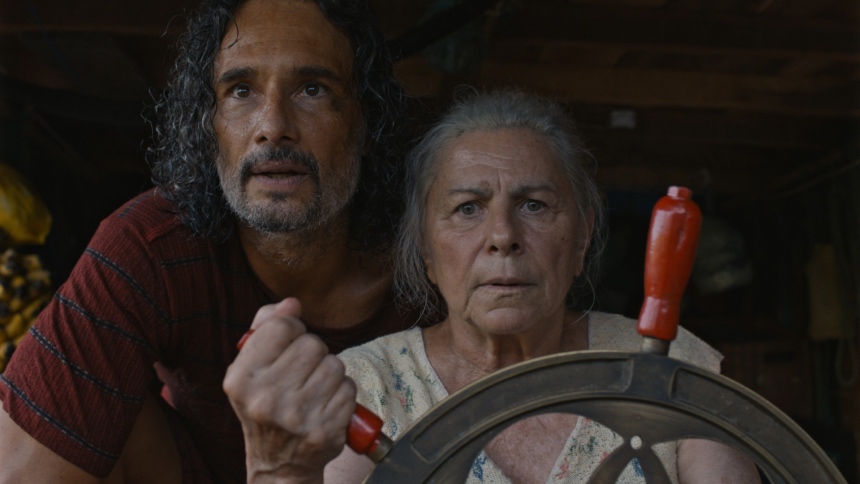
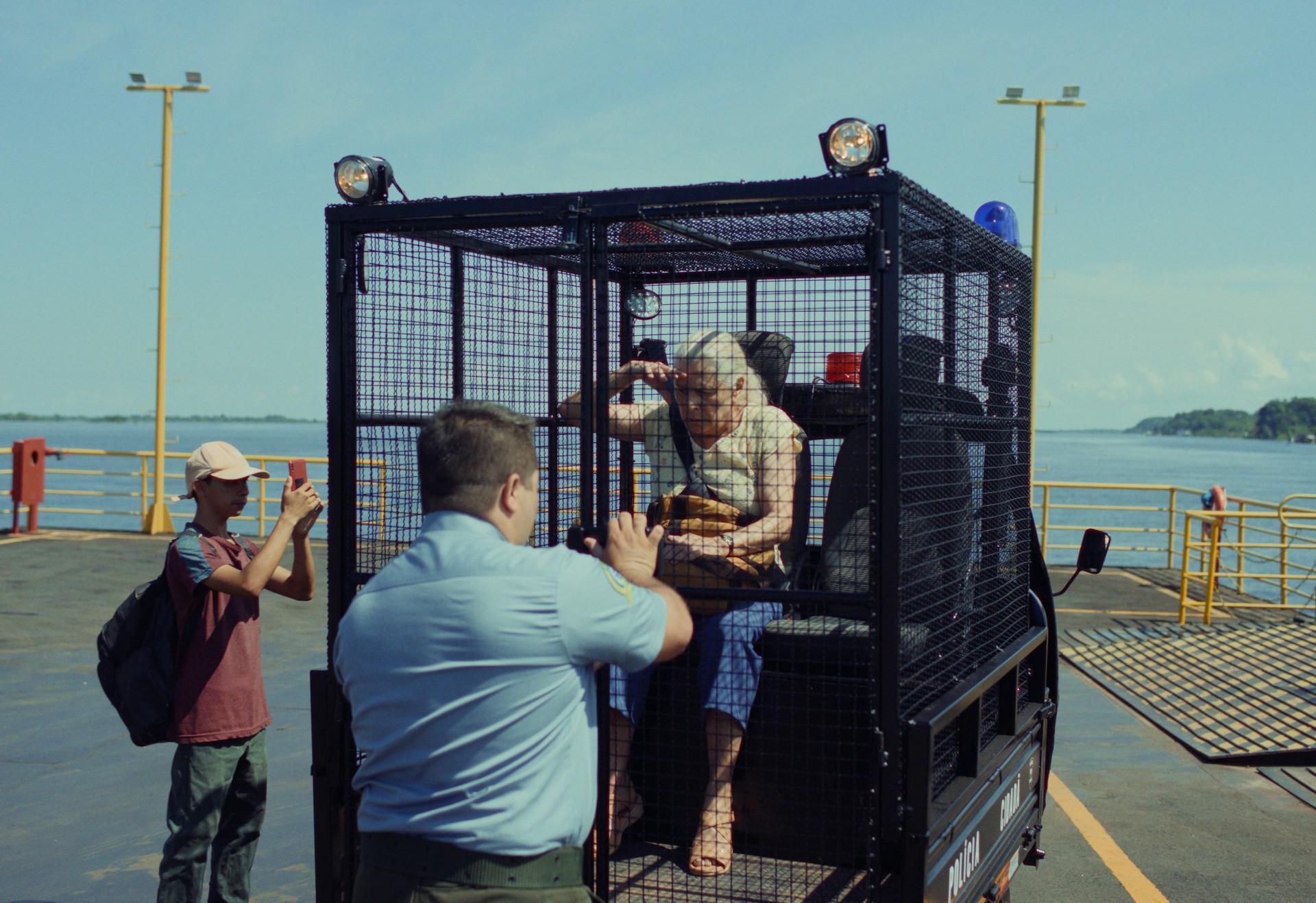
The Blue Trail follows a monomyth structure, with Tereza on the run from the authorities, pursued by a police unit in a peculiar vehicle known as the “wrinkle wagon.” Seeking refuge, she goes into hiding with Cadu (Rodrigo Santoro), a river smuggler burdened by his own regrets.
As they drift along in a dilapidated boat, their initial wariness gives way to an uneasy camaraderie, Tereza’s blunt pragmatism cutting through Cadu’s cynicism, which masks a more idealistic side. The film’s title refers to a phenomenon they encounter in the jungle: a rare snail that leaves behind a luminous blue trail. According to legend, a few drops of its slime, if placed directly in the eye, grant prophetic vision.
As Tereza pursues her goal of experiencing flight, her journey takes unexpected turns. What begins as a symbolic act of freedom becomes something more. She realizes she does not want to merely glimpse freedom but to reclaim her life, despite the state’s restrictions.
The satire in The Blue Trail escalates as those around her begin to distance themselves, fearing legal consequences for aiding a fugitive. This grim reality draws uncomfortable parallels, yet scriptwriters Tibério Azul, Murilo Hauser, and Mascaro infuse the narrative with moments of humor, tempering its bleakness without undermining its critique.
Mascaro continues his exploration of hybrid forms. The Blue Trail blends multiple genres, combining dystopia with elements of a road movie, eco-fable, lo-fi sci-fi, and light magical realism, while also incorporating a feminist perspective.

Though it presents an ageist dystopia wrapped in soft satire, the film steers away from outright bleakness. Instead of descending into dark drama, Mascaro shapes the narrative as an uplifting journey, even as tragicomic undertones remain.
Beyond Tereza’s irritable charm and the film’s comedic undertones, her journey through the Amazon unfolds as a transformation. The narrative aligns closely with her perspective, allowing moments of fable to emerge. Tereza becomes too compelling a figure to simply falter.
When she finds an unexpected ally in Roberta (Miriam Socarrás), an entrepreneur running an itinerant Bible-selling business, she begins to reinvent herself. Embracing her newfound independence, she embodies the old adage of truly living life, even as the state seeks to confine her.
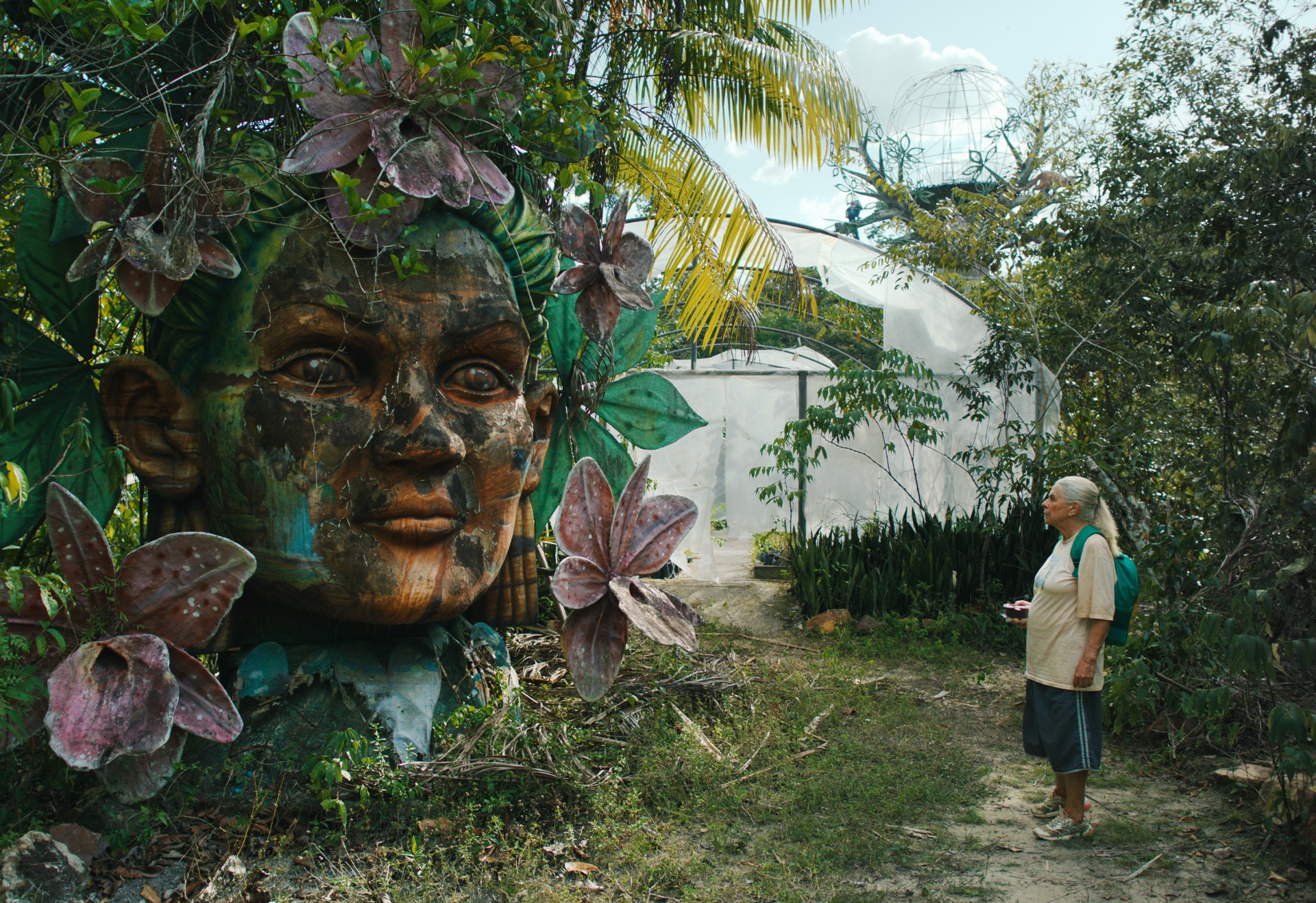
While The Blue Trail begins as an exploration of aging under a totalitarian state, it soon shifts toward a story of newfound liberation in later life, framed by the looming threat of enforced obsolescence. Mascaro departs from the neon-lit, urban dystopia of Divine Love, instead embracing natural landscapes that evoke the atmosphere of classical magical realism.
Though the film’s production design remains minimalistic, art director Dayse Barreto makes inventive use of props, ensuring the visual world feels textured and engaging without drawing attention to budget constraints.
The Blue Trail is less overtly socio-political than Divine Love, instead leaning into a mytho-poetic mode of storytelling influenced by the legacy of Latin American magical realism. Tereza emerges as an unlikely protagonist in a transformative journey that underscores the message of hopefulness that it is never too late. The film’s comedic undercurrents further soften its dystopian premise, making it more accessible to a wider audience while maintaining its critical perspective on aging in the modern society.
The Blue Trail won the Silver Bear Grand Jury Prize at the Berlinale 2025.
O Último Azul
Director(s)
- Gabriel Mascaro
Writer(s)
- Tibério Azul
- Gabriel Mascaro
Cast
- Denise Weinberg
- Rodrigo Santoro
- Miriam Socarras