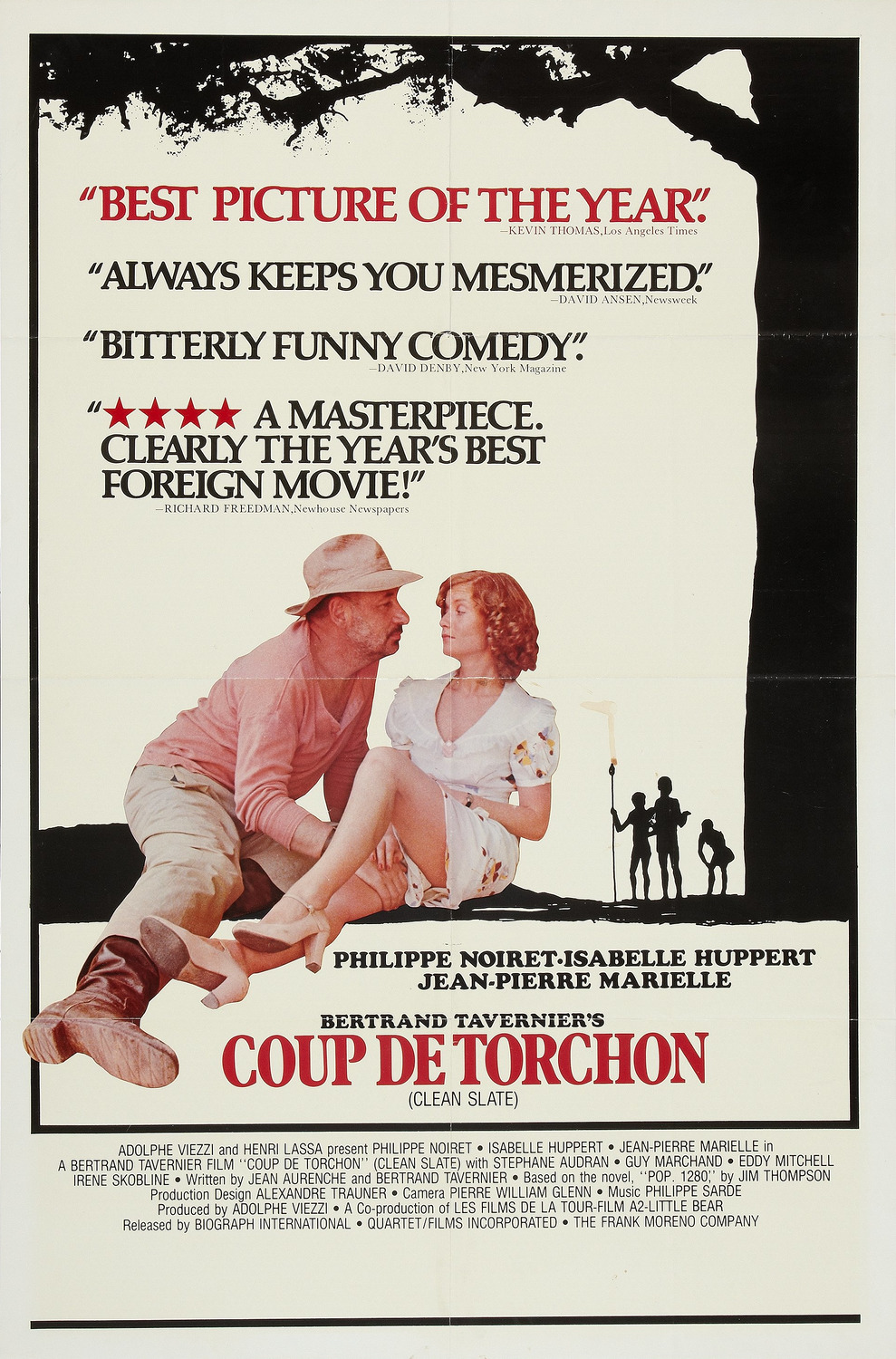
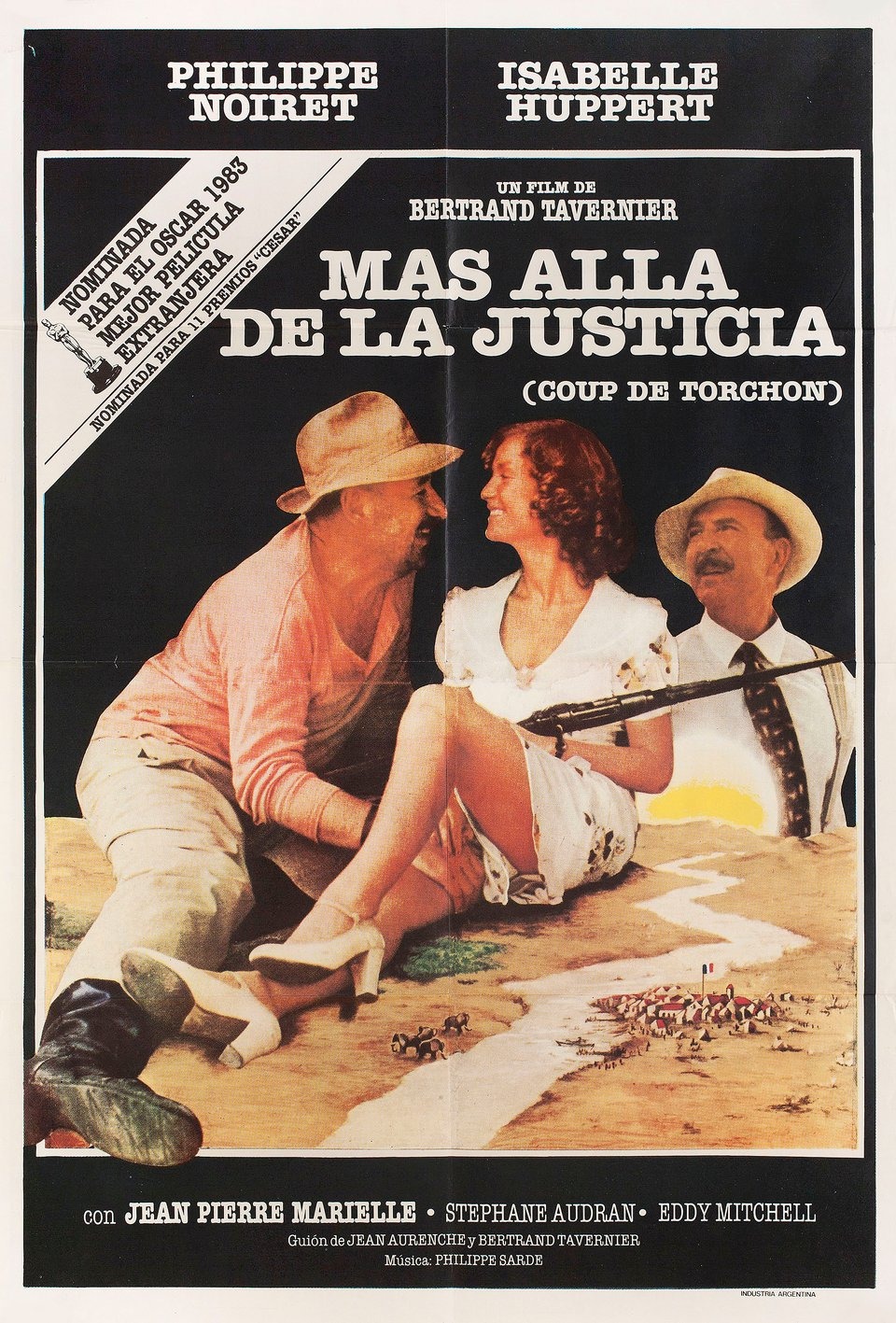
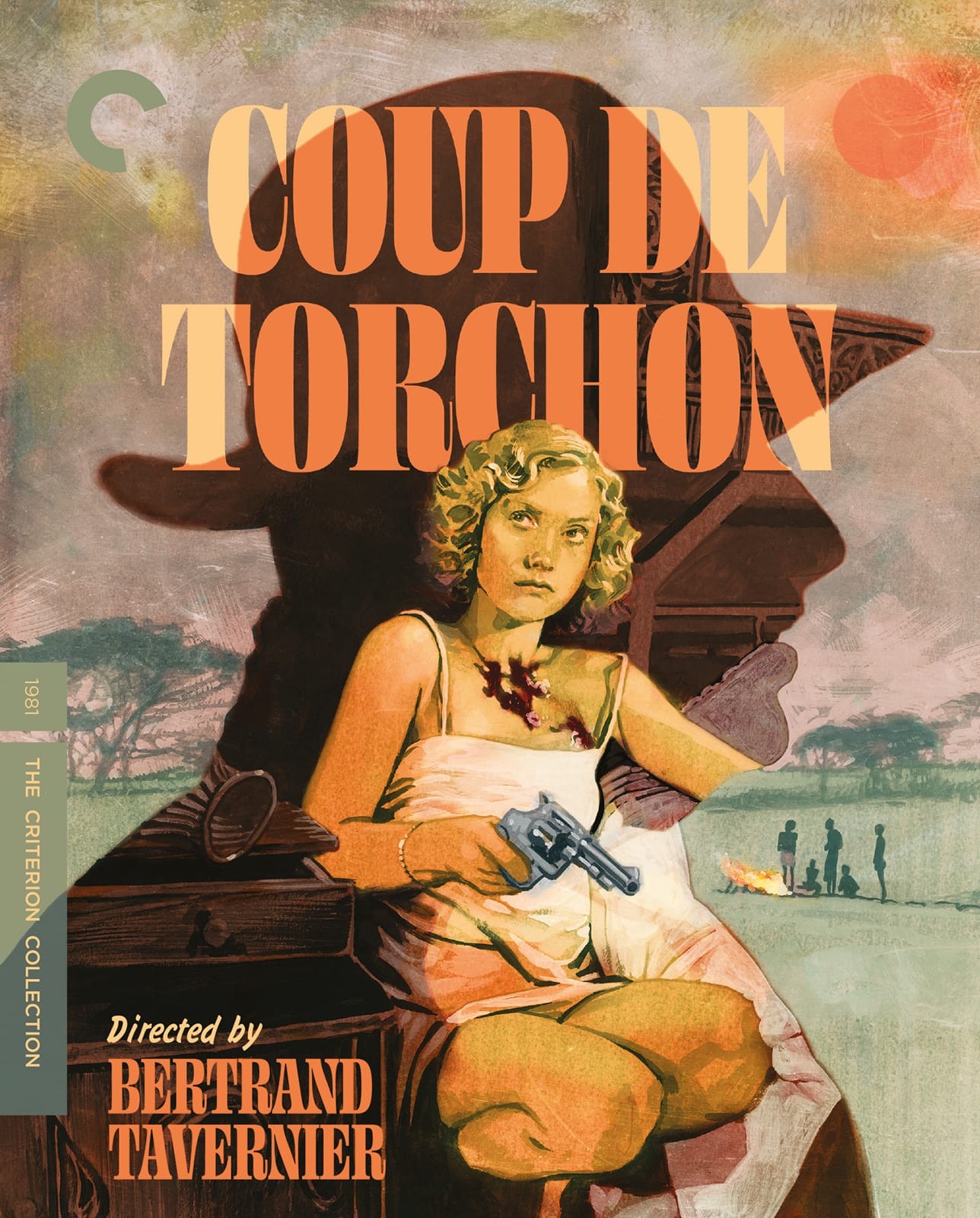
COUP DE TORCHON Blu-ray Review: Sleepy Policeman, Hidden Malice
Philippe Noiret and Isabelle Huppert star in Bertrand Tavernier's startling adaptation of Jim Thompson's pulp noir, now available on a Criterion Collection Blu-ray.

Watch out for the sleepy ones. When they are awakened, they bite.
Coup de Torchon (Clean Slate) (1981)
The film is now available in a beautiful new transfer on Blu-ray and DVD, from The Criterion Collection.
I first saw Coup de Torchon at Filmex in Los Angeles in 1982. It caught me entirely by surprise and was a transformational experience for me, teaching me that films do not have to be what they initially appear to be. I was afraid it would not hold up after 44 years. I need not have worried.
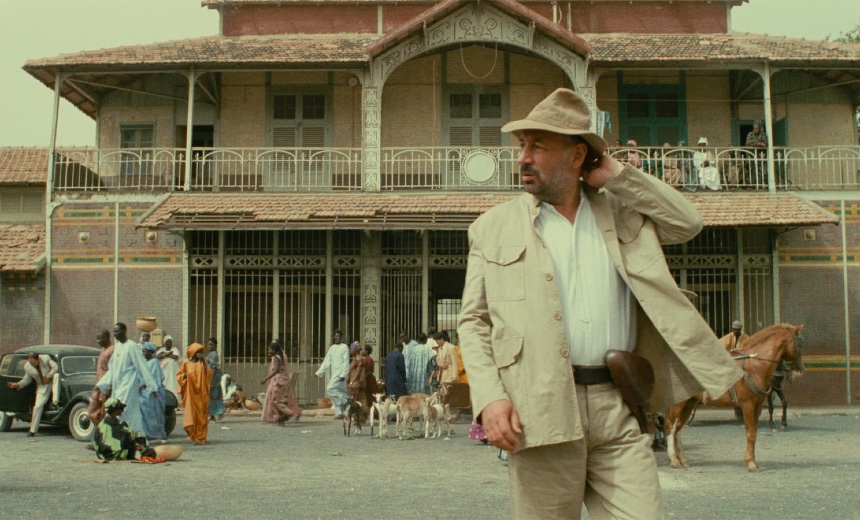
Lucien Cordier (Philippe Noiret) is always sleepy.
The only police officer in Bourkassa, a small village in the colonial territories of French West Africa in 1938, he knows everyone, and generally treats the native residents kindly, which is more than can be said for his fellow French citizens, who run roughshod over people they don't consider to be humans.
(Fair warning: The English-language subtitles are casually replete with the N-word, invariably voiced by rude, boorish, insulting, nasty, scheming French citizens, whose acts show them to be not humane, even with those they consider 'human.')
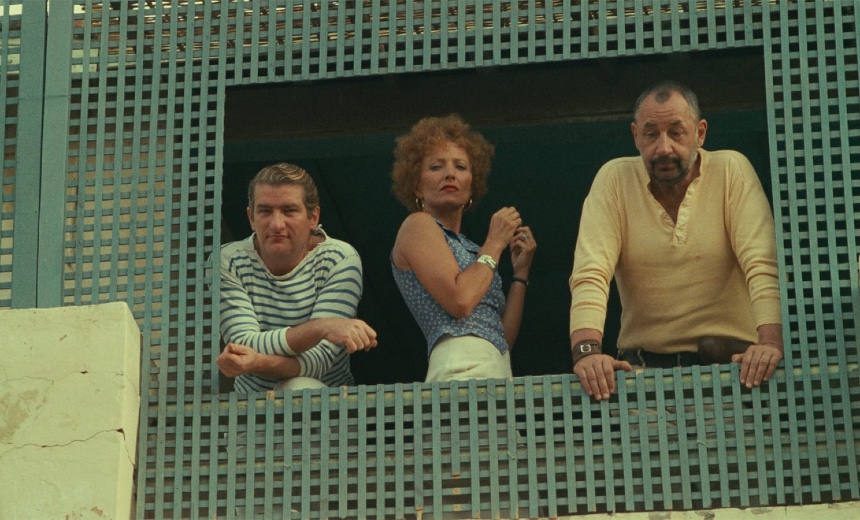
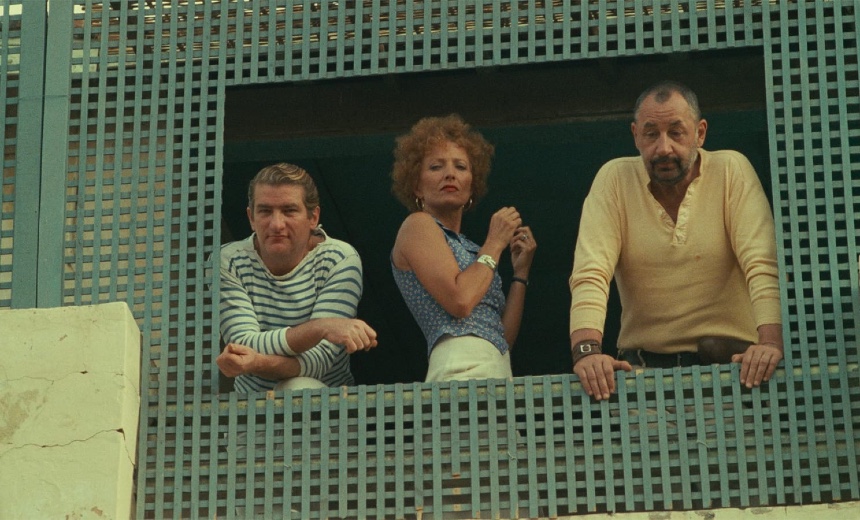
Lucien is married to Huguette (Stéphane Audran), whose affections have long since dried up. Instead, she carries on with her "brother," Nono (Eddy Mitchell); it's obvious to everyone, including Lucien, that Nono is Hugette's lover, but Lucien accepts her repeated insistence that Nono is her brother, even though Nono calls her 'mother.'
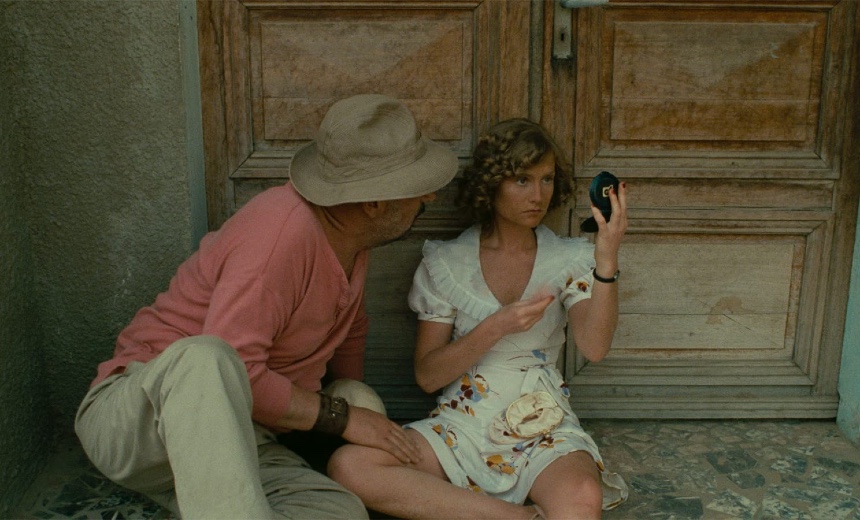
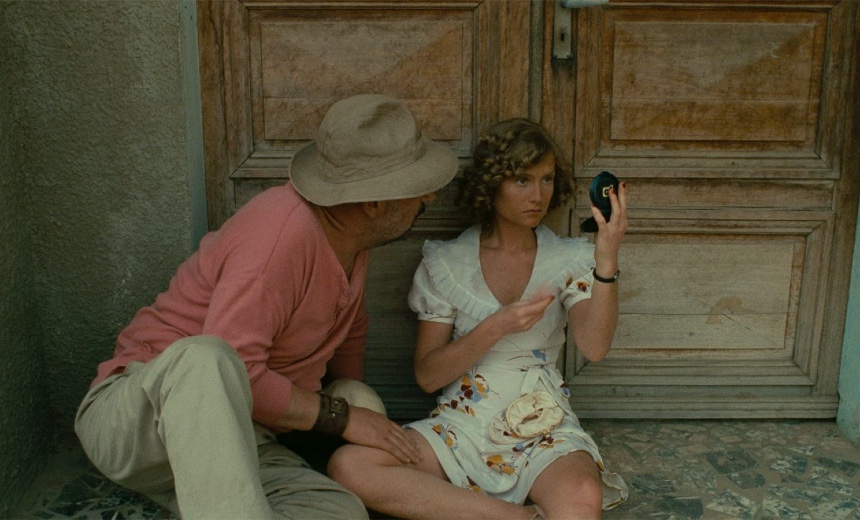
For his part, Lucien flirts affectionately with Rose (Isabelle Huppert), who is married to Marcaillou (Victor Garrivier), a pig of a man who physically and verbally abuses her in public, constantly. Yet Lucien never intervenes, until the abuse is completed and he hurries to console her.
A new schoolteacher, Anne (occasional actress Irène Skobline, giving a lovely performance) arrives in town, allowing Lucien to show his softer side. As an outside observer, she sees what's happening and is curious, without wanting to dig into anyone else's business. But she looks at Lucien and the other French citizens with a suspicious eye.
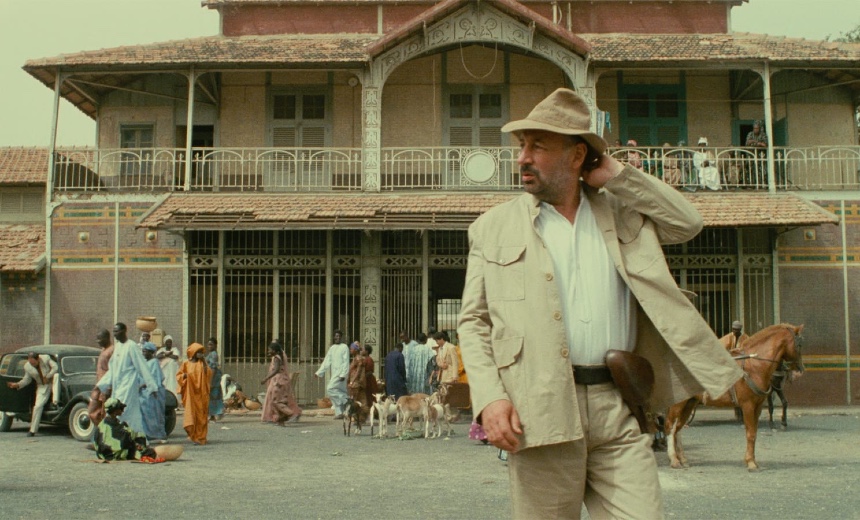
Beyond his sleepy nature, Lucien is constantly ridiculed by nearly everyone, including Hugette, Nono, Marcaillou, and two nasty, ill-tempered pimps (Jean-Pierre Marielle, Daniel Langlet) who run the village brothel, among other illegal activities. When Luciene visits a nearby big city police department to ask for their advice to deal with the pimps, the chief Chavasson (Guy Marchand) mockingly kicks him hard in the butt, knocking him down repeatedly, and tells him, in effect, 'that's how you treat the pimps.'
Lucien takes them at their word, and soon sets out on a reign of quiet terror that is entirely unsettling.
The new 4K digital restoration looks wonderfully soft and lustrous, making this film noir look unlike most other film noirs, which was intentional on the part of the filmmakers. The uncompressed monaural soundtrack is crystal clear and splendidly complements the visuals.
The inciting incident, noted above, is where Pop. 1280, a pulp novel by the superb Jim Thompson, first published in 1964, begins. In adapting the book, set in the the early 1900s in the American Southwest, screenwriters Jean Aurenche and Bertrand Tavernier first establish Lucien in his element, before following certain narrative beats and inventing their own diabolical embellishments.
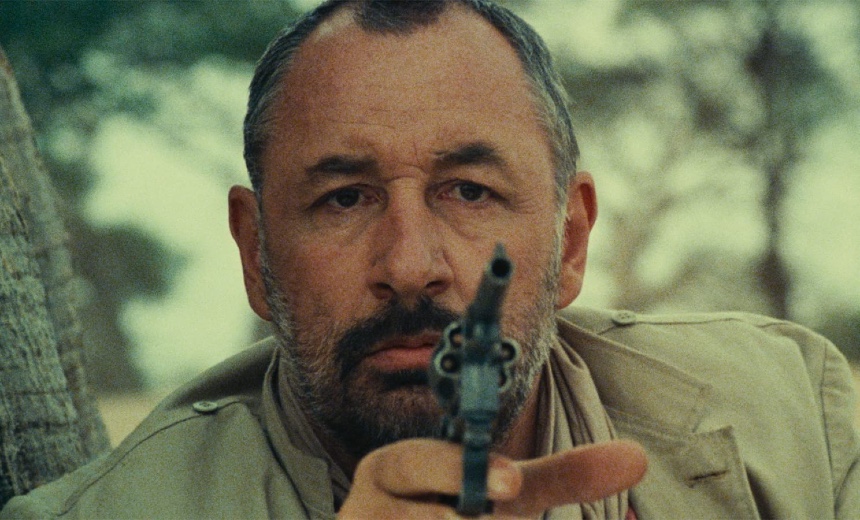
Supplements begin with a newly-recorded feature, with Jim Thompson biographer Robert Polito (17:05) talking about Thompson's life and career up until Pop. 1280, and then giving the political context of that era when the book was published. He makes comparisons between the book and the movie, notes the changes and additions, and praises the filmmaker Tavernier's decision to make those changes, primarily not simply making a literal translation of the book, which is why Polito declares this to be his favorite among all the Thompson-to-screen adaptations.
In a 2001 interview with the Criterion Collection, director Bertrand Tavernier (46:58) talks about his great admiration for the novel., his various unsuccessful attempts to adapt it to the screen, his idea to see it in colonial French West Africa, his changes to the novel, the challenges of filming entirely on location in Senegal, why he decided to use a Steadicam extensively, and the actors and their performances. It's a wonderfully insightful interview, broken up with occasional clips from the film to illustrate the points under discussion.
The Making of Coup de Torchon (23:30) is a French-language documentary, made on location during production. It features Tavernier, Noiret, Huppert, Marielle, and cinematographer Pierre-William Glenn, who talks about the 'soft' look that Tavernier wanted, in contrast with other French period films shot on location in Africa, as well as how he used the Steadicam, which he says was used to shoot the entire film.
Tavernier explains, in Alternate Ending, that co-screenwriter Jean Aurenche conjured up a final scene for the movie which featured French soldiers turning into skeletons, two gorillas dancing, and more existential questions. Tavernier says his producer was 'horrified' when he saw what Tavernier had shot -- without enough money to pay for the skeleton effect and other elements -- and the director credits composer Philippe Sarde for writing six minutes of music that allowed the film to end as it does now.
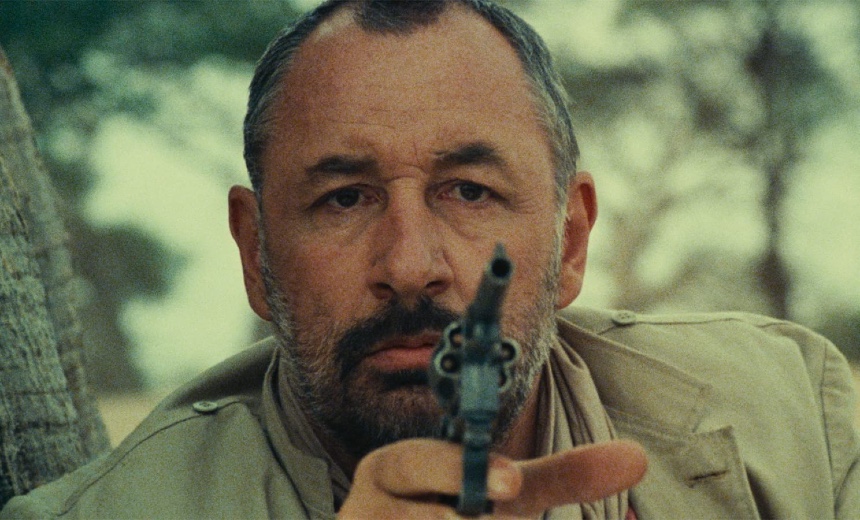
Both the spoiler-filled American -- don't watch until you've seen the movie, please! -- and French trailers are included. The French trailer is far superior: evocative, mysterious, and buoyed by a little footage that appears to have been specially shot for the trailer, in which Noiret as Lucien speaks to the camera and says a little bit about the characters. (The trailer below, from Rialto Pictures, is not included in the package, but shows the quality of the new transfer by Studio Canal.)
The included booklet contains an awesome essay by scholar Lynn Anthony Higgins, giving context on Tavernier and his father, nicely summarizing his first four films in the 1970s, and putting Coup de Torchon into further context.
Conclusion: Highly recommended.