
San Francisco's Original Movie Palace, The Castro Theatre, Reopens With Harry Melling's PILLION

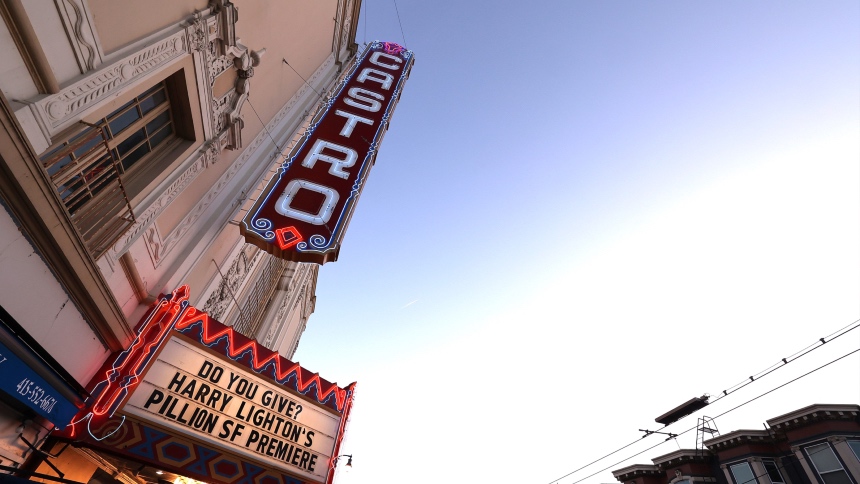
The second movie palace to bear the name, the Castro Theatre in San Francisco opened more than a century ago (1922).
Originally serving the working-class inhabitants of the area, the Art Deco-inspired Castro Theatre ran new and old theatrical releases for the better part of half a century before demographic changes irrevocably changed the Castro district and with it, the theatre itself. Beginning in the late 1960s and continuing into the early 70s, the Castro became a haven for LGBTQ+ individuals facing discrimination, bigotry, and violence. With the arrival of Harvey Milk, the first openly gay politician to hold political office, the Castro District received national recognition.
Both a longtime repertory house for wide-ranging film programs and local festivals, including the San Francisco International Film Festival, the Frameline Film Festival (the first LGBTQ+ festival in the country), and the Jewish Film Festival (among others), the Castro Theatre closed three years ago for renovations spurred by the pandemic (low attendance) and new management, APE (Another Planet Entertainment), which was focused less on the Castro’s film history and more on the Castro space as a multi-media entertainment venue, the latter much to the disappointment of frequent Castro filmgoers.
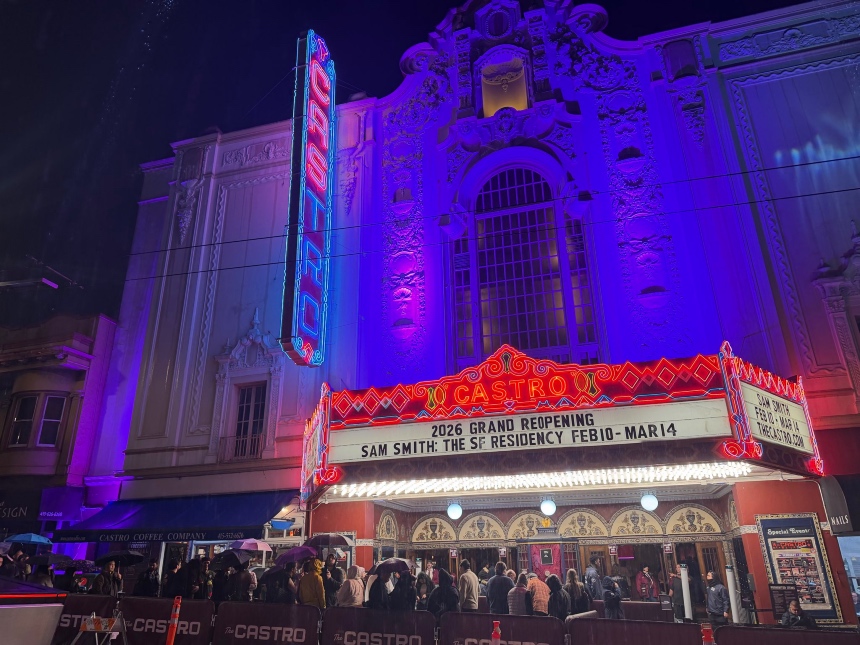
But that was three years ago, and change, whether wanted by the local community or not, has come to the Castro Theatre. Reopening first as a concert venue with singer-performer Sam Smith in a month-long venue and, more importantly, for our purposes, as a film-second space on February 12, the Castro Theatre hosted the local premiere of writer-director Harry Lighton’s feature-length debut, Pillion, an erotically charged comedy-drama.
Co-starring Harry Melling (The Pale Blue Eye, The Ballad of Buster Scruggs) as a confidence-challenged, semi-lost gay man and Alexander Skarsgård as the enigmatic biker who radically upends his romantic life, the risk-taking Pillion isn’t, as one character aptly puts it, “everybody’s cup of tea,” but for those in the queer BDSM (bondage, discipline, and sadomasochism) community (leather biker edition), Pillion was, is, and likely, always will be a breath of fresh air, the rare chance to see themselves depicted not with prurience or judgment, but with empathy and a measure of understanding.
Pillion follows Melling’s character, Colin, through a wide range of emotional, physical, and sexual BDSM experiences, all via the strict, orderly instructions of the dom, Skarsgård’s Ray, to Colin’s sub. Not without humor, sometimes funnier or even hilarious, Pillion adapts familiar coming-of-sexual-age tropes to wonderfully subversive, transgressive effect, something the mixed audience (cinephiles, A24 fans, the leather BDSM community) appreciated wholeheartedly at every plot turn or emotional beat.
A late-film dinner conversation involving Ray, Colin, and Colin’s parents, Pete (Douglas Hodge), and Peggy (Lesley Sharp), will likely prove the most divisive, but not the reasons someone unfamiliar with Pillion would assume. From the start, Lighton reveals Pete and Peggy as unconditionally supportive of their openly gay son. Like most parents, Pete and Peggy just want Colin to find a healthy, long-term, romantic relationship for himself. They’re far from sure that Colin’s submissive arrangement with Ray or the latter’s deliberately mysterious persona (e.g., means of income, past, etc.) qualifies as healthy or possibly even long-term.
They’re more right than wrong, though it’s a question Lighton clearly delights in leaving unanswered. What’s clear, though, is that the audience, regardless of how they identify, has reached a point where rooting for Colin’s happiness in whatever form it takes has become reflexive. That, if nothing else, points to Lighton’s unqualified success as a storyteller and the uniformly strong performances of Melling, Skarsgård, Hodge, and Sharp, not to mention a supporting cast, including local bikers Lighton specifically recruited for authenticity.
Befitting the reopening of the Castro Theatre, the night ended with a QA involving Melling, Lighton, and interviewer Race Bannon, a local writer, activist, and community organizer, with questions ranging from the usual whys, hows, and whens: Lighton abandoned one newly unviable project during the pandemic for Pillion, Melling discussed the various challenges demanded by the role, while members of the local community celebrated seeing themselves onscreen and thanking Melling, Lighton, and the absent Skarsgård for making Pillion.
As for the newly renovated Castro Theatre itself, it has never looked better (thanks to the refurbished ceiling, walls, and fixtures) and still leaves room for improvement (the newly installed retractable chairs leave much to be desired in terms of comfort). Overall, however, the grand reopening of a much-beloved movie palace left most, if not all, moviegoers happy with the reopening and looking forward to the next movie-related event.
The Castro Theatre reopened on February 13, 2026, for movie-related events. Pillion is currently playing in select theaters and nationwide on February 27, 2026.

Do you feel this content is inappropriate or infringes upon your rights? Click here to report it, or see our DMCA policy.


