European Film Awards 2026 Interview: Liv Ullmann on Cinema as Legacy, Responsibility and the Soul Before the Camera

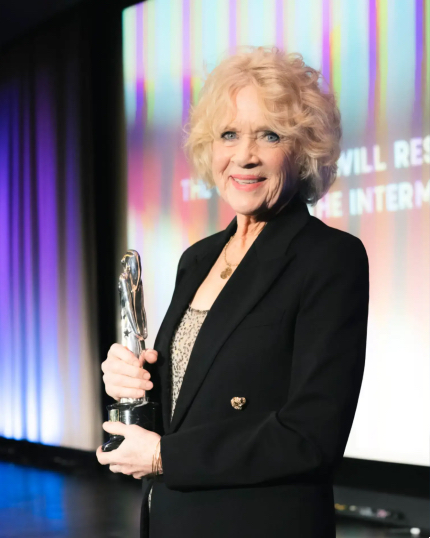
At the 38th edition of the European Film Academy’s European Film Awards, Liv Ullmann received the European Lifetime Achievement Award.
Speaking with quiet precision, Ullmann framed cinema not as industry, nor even primarily as art, but as legacy. She suggested that what earlier civilizations built in stone; filmmakers now build in images. “What somebody made in the beginning with the ruins,” she reflected, “we are making now with films.”
The metaphor was not ornamental. For Ullmann, cinema functions as a civilizational trace, the emotional and moral residue of an era. Film, she said, “captures everything,” including music, thought and the invisible tensions between human beings. It is what we leave “to those who are coming after us.”
Yet her emphasis was not on posterity alone. Ullmann pivoted quickly from aesthetics to responsibility. It is not only about artists and film culture, she noted, but about “people that are living the same time as us having no choice.” The obligation, as she sees it, is to use one’s talent, “the film talent in whatever you do”, for those people, and to remain grateful for the privilege of artistic expression. The “others,” she insisted, “is part of who we are.” Cinema, in her formulation, is inseparable from social conscience.
Reflecting on a recent film she expressed pride in, Ullmann described it as the story of “two normal people who completely change for what happened to them, and didn’t change in a good way.” She characterized it as “a reflection on what thoughts are,” even evoking the notion of “personal ruins.” The phrase resonates with her earlier metaphor: just as societies leave behind architectural remnants, individuals carry the internal debris of experience. Transformation, in her view, is inevitable, but not always redemptive.
The award also prompted a meditation on age and artistic evolution. Ullmann acknowledged, with characteristic candor, that she no longer performs. “I’m old,” she said plainly, wondering aloud what one can do at her age.
Yet she immediately reframed the question. It is “wonderful to be in my age,” she added, because it brings memory, and with memory, perspective. She described gradually discovering that she belonged “in the performance place,” then later as a writer, and eventually as a director. Not every work, she admitted, succeeds. “Sometimes it’s bad and sometimes it’s good.” What mattered was knowing she belonged, because in the work, she felt free.
When asked about the differences between entering cinema in the 1960s and today, Ullmann avoided industrial comparisons. Instead, she returned to the mystery of performance. She recalled directing an actress who, once the camera began to roll, revealed something entirely her own, something that emerged “from her soul.” That moment, she suggested, encapsulated her enduring pride in being an actor.
The camera, in her experience, discloses what even the director cannot fully anticipate. Since witnessing that phenomenon, she said, she has always been proud of the profession.
Cover image courtesy of © 38th European Film Awards Berlin 2026, Iris Wang.