Berlinale 2026 Review: A CHILD OF MY OWN (UN HIJO PROPIO), Documentary Reenacts a Kidnapping

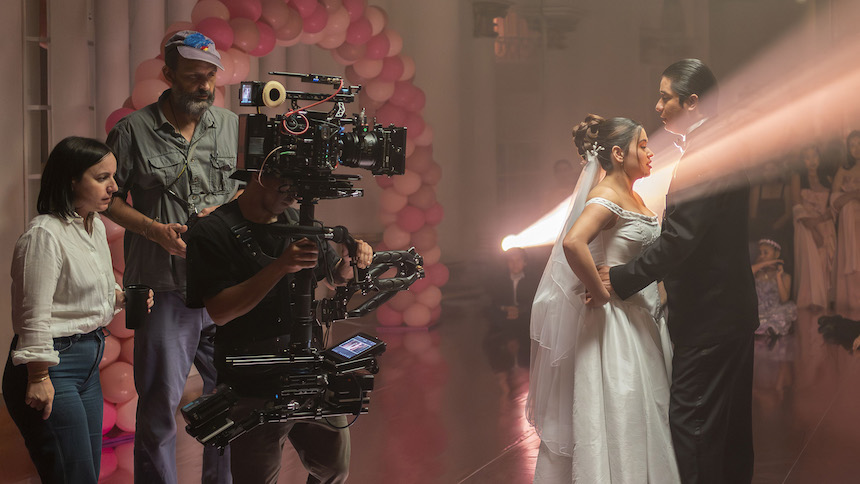
Based on a notorious crime in Mexico, A Child of My Own (Orig. Un hijo propio) examines how and why a nurse kidnapped a baby for her own. As she did in The Mole Agent, director Maite Alberdi mixes fact and fiction to reach insights that go beyond the limits of the true crime genre.
Alberdi starts her film with performers auditioning for the part of Alejandra (eventually played by Ana Celeste), who is 17 and pregnant when she marries Arturo (Armando Espitia).
We see what looks like video of their wedding in 2000 as Alejandra announces on the soundtrack that her desire to be a mother led to decisions from which "there was no turning back."
A nurse in a hospital maternity ward, Ale suffers through three miscarriages, disappointing her husband and his disapproving mother. She meets Mayre, a pregnant hospital patient who seems indifferent about keeping her baby. Ale makes a pact with Mayre to pay her bills in return for taking her daughter when she is born.
Ale pretends to be pregnant to her husband and family, gaining weight, buying maternity clothes, faking doctor appointments, dancing at her baby shower.
After Mayre gives birth, Ale sneaks the baby outside in a shopping bag. She meets Arturo, who drives them to a motel. That night. police break down the motel door and arrest them both for kidnapping.
Alberdi switches the documentary's perspective to the real-life Alejandra, who was sentenced to prison for 13 years. Despite her harsh life, she maintains a relationship with Arturo. On her release, they try to move back together.
Alberdi includes interview footage with the real-life Mayre and her husband; with the judge who sentenced Alejandra; and with her mother and Arturo. She replays home videos and surveillance footage that show how carefully her film followed actual events.
The shifts from real to reenacted scenes, from actors to real-life characters, and from the past to the present, makes it difficult for viewers to trust what they are seeing. But everything Alberdi does serves to broaden and illuminate her story. We may not know what is true, but we come to understand how a woman could take such drastic steps.
In the hands of Alberdi and her crew, we experience the same suffocating life Alejandra lived, a fantasy of pink clothes and nursery furniture, while her in-laws pressure her to reproduce. The details of her life in prison—how difficult it is to bathe, the razor wire and guard towers on the horizon—place her story in an entirely different and unforgiving light.
By presenting the documentary from Ale's point of view, Alberdi could be seen to be taking her side. But the director includes so much conflicting testimony that it becomes more and more apparent how ill Ale is. Whether Ale believed her testimony in court, whether her story is true, is less important than the fact that she needed help.
Alberdi stages scenes that may or may not have taken place, like conversations among nurses in hospital hallways, and dramatizes other moments with techniques borrowed from fiction film.
But there is an integrity to her approach, one that finds the truth behind Ale's delusions. By the end of the film, as the real-life Alejandra and Arturo stand by the camera watching performers acting out their lives, Alberdi not only subverts expectations about the true crime genre, but shows how rewarding it can be in the right hands.
The world premiere of A Child of My Own screened in the Berlinale Special section. It will stream on Netflix.
Photos © Luis Antonio Rojas / Netflix