THE BREAKFAST CLUB 4K Review: We Won't Forget About Them

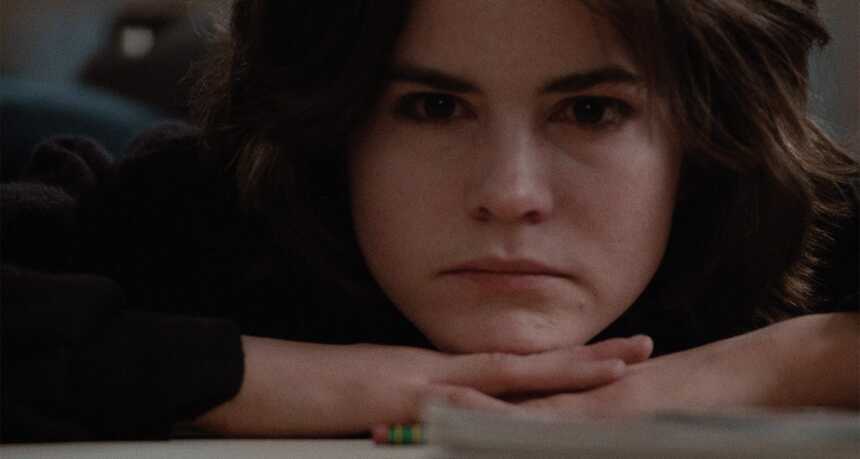
We Gen-Xers, like generations before and and probably the ones after us, will often lament how things were 'better' when we were young. But there is one point on which this is likely true: there was no internet, blogs, or social media when we were growing up. I shudder to think of my existence as a teen had this not been the case. Since even as the world and cultures therein changes, so many of the problems that teens face remain the same, and why certain films, even those that seem of there time, keep being rediscovered by subsequent generations.
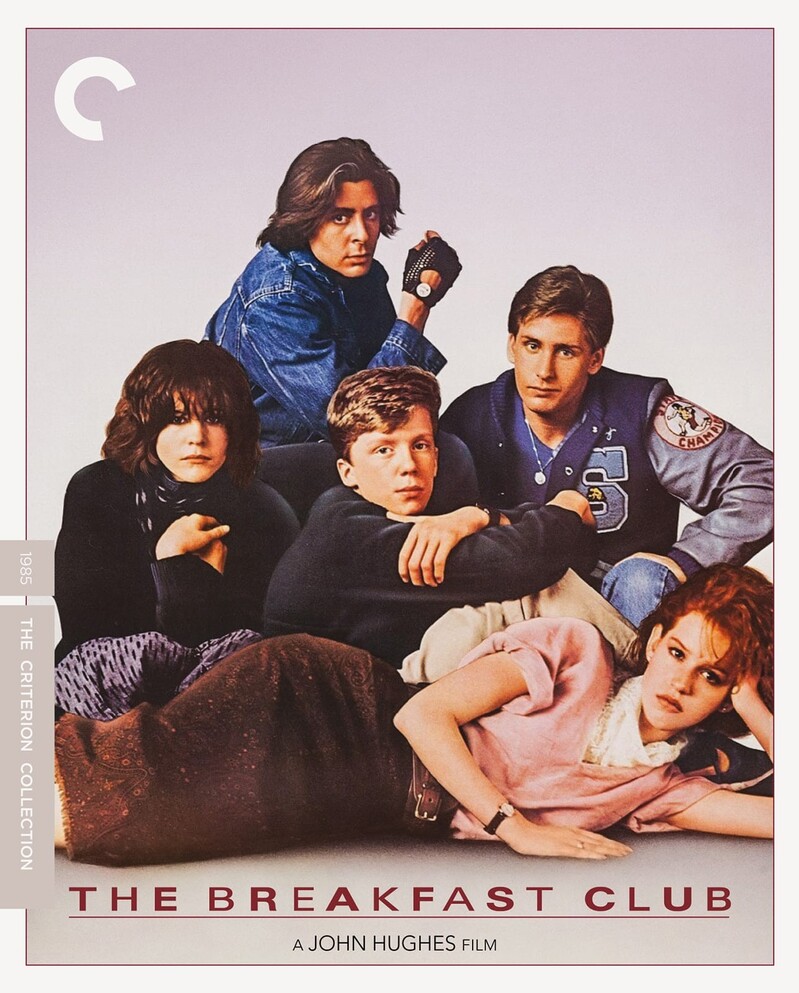
There was never a filmmaker who quite captured the voices of teens of the 80s quite like John Hughes, and while he made several of these classic, perhaps none has continued to resonate quite like The Breakfast Club. The tale of four very different kids stuck together during a Saturday detention remains iconic not only in its characters and story, but even the poster is homaged to as be instantly recognizable (look up the poster for 2023's Bottoms as just one example). Criterion recently re-issued their edition of the film with a 4K upgrade, ready to the next round of us older folks to introduce it to the teens in our life.
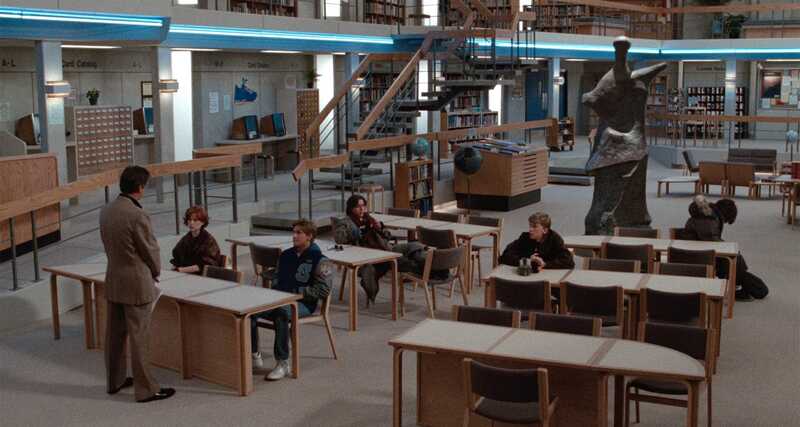
Five teens: popular girl and the 'princess' Claire (Molly Ringwald), top student and the 'brain' Brian (Anthony Michael Hall), golden boy and the 'athlete' Andy (Emilio Estevez), the reclusive 'basket case' Allison (Ally Sheedy), and anti-authoritarian 'criminal' Bender (Judd Nelson) had all committed various infractions for which they are forced to serve detention on a Saturday. With Vice Principal Vernon (Paul Gleason) as their supervisor, without means to communicate with the outside world or document this tribulation, they are supposed to do nothing except write an essay explaining who they think they are. Without their usual social cliques around them, with only each other for company, they shed their inhibitions, their high school personas, and discover they have more in common than they think.
The David Bowie quote that begins the film ('And these children that you ppit on as they try to change their world, are immune to your consultations, they're quite aware of what they're going through'), written in 1971, also remains timeless. The teenager emerging as a specific social class mainly in the 20th century with the expansion of public education, they have all the emotions of an adult, but often neither the maturity or experience to deal with them. And back in 1985, as now, they're not always given the means to do so.
Each of these kids belongs to a clique, determined partially by activities and interests, but as often as not by their economic status. Even if Allison could act like Claire, it's doubtful Claire would look on her as a potential friend without the money to back it up. If Bender had an interest enough in school to get good grades, he likely would not be a part of Brian's circle. Until this day, nonhe of them sough to question their high school social standing, particularly as for some of them, they see themselves as above the others. Hughes and his actors show how conformity draws these artificial lines, without necessairly painting any of these kids are horrible.
Kids like Claire and Andy, who are closest in terms of social status in high school, still have contend with parents who are superficial and overbearing, respectively. Brian also faces extreme pressure to have the perfect GPA. Bender clearly comes from an impoverished and abusive home, and hurt people hurt people. Allison seems to be ignored by everyone, most frightfully, her parents. Neither money, nor talent, nor smarts, will necessarily save any teen from pain or heartbreak.
Watching it again, 40 years on, it's still accurate about how kids today can feel put into boxes both by their own peer group and their parents to which they don't want to belong, and how their pain is what can unite them, if only they would look past some superficial trappings. No doubt that even if popularity doesn't seem a burden, it can make someone lonely; whether it be academic or athletic success, pressure to win can make any kid act out in terrible ways. Label someone as a 'problem', never give them a chance to speak their mind, and they might embrace a dangerous rebellion.
At the same time, it's hard not cringe at how awful Bender is, mostly to Claire (again, hurt people hurt people), and likewise, Claire's conceit about her popularity (reminder: being well-known is not the same as being popular). It's hard not to feel a little angry at how apparently Bender being as asshole to Claire means she's going to like him. Allison's make-over made me angry when I first watch it, and it still does, though maybe less so. This was part of an 80s & 90s trend to show that the nerdy/weird girl could get a boyfriend if she just made herself into the standard beauty. Though looking at it now, Allison is wearing less make-up and showing her face (I just wish they had let her wear a simple scarf rather than that awful white poof that looks like she's trying to emulate someone she's not. Let her be kooky!)
Still, it's easy to get swept up in the film, not just for nostalgia's sake, but for it's whip-smart dialogue, the performances, the killer soundtrack (with one of the greatest theme songs of all time, thank you Simple Minds), and small moments that showcase character: Allison letting her dandruff 'snow' onto her drawing; Claire bringing a sushi lunch; Brian suddenly becoming verbosely smooth when he's stoned. Gleason and John Kapelos as Carl, the school janitor, provide supporting insight into adults who have to deal with teens every day and how they look at their lives now compared to what they thought they would be when they were young.
Each of the main five actors (only two of whom were actually teens when the film was shot) gives their character the respect deserved, never belittling of judging even the worst moments. Their pain is worthy of our time, as is their newfound joy at unlikely friendships. No moment is wasted, as each is a link in the chain that brings these kids together, even if only for this one day. Is it enough, then, for them to all know they're not alone, that someone out there whom they never expected, understands their pain? Maybe in today's world, these five would have found a way to say 'fuck it' and keep their bonds, regardless of what their various friends said.
It's possible that decades of love make me think The Breakfast Club stands the test of time, but it's a film that I look forward to sharing with the kids in my life when they get old enough, to see if this theory holds up. Whether it still accurately reflects the lives of teens or is only of its moment, it remains one of the best films of the 1980s in giving insight through humour and drama, the quiet desperation of the teenage life.
Special Features
The existence of a well-preserved original 35mm camera makes for a pristine transfer of the film to 4K (and Blu-ray as previously released) , with a remastered soundtrack taken from the 35mm magnetic DME track. So yes, it still looks and sounds great. And as I learned in one of the special features, this library setting for most of the scenes was purpose-built in the gymnasium of the then-closed high school in which they filmed (excellent work by the production team).
The long series of extended and deleted scenes prove interesting for a few pieces of missing information: the janitor predicting the teens' futures (quite unpleasant for them to hear and know this might be true); a scene with Claire and Allison beginning to bond; and Claire telling why she was given Saturday detention (hint: it was not for skipping school to shop). There's also some interviews from the cast taken on the set, part of the huge promotion of the time. Included in an interview with Ringwald's and Hall's on-set tutor (a legal requirement for children in film), with her own insights as to how they dealt with the pressure of making a film while still teens. There's also the electronic press kit, feature an interview with editor Dede Allen, describing how shooting in continuity not only helped the actors' process, but her editing as well.
The documentary Sincerely Yours features most of the cast telling their memories of John Hughes and the film's production, the effect it had on their careers, where it sits in their oeuvre (it remains Ringwald's favourite of her films with Hughes, apparently). Filmmakers Diablo Cody and Michael Lehmann discuss the influence the film has had, even decades on, as seminal in representing American teen life.
Two audio interviews with Hughes himself provide insight into his career, from his beginnings in advertising, to his work with National Lampoon, to his breakout Sixteen Candles and his process for writing and casting. Add to this David Kamp's essay that delves further into the shape of Hughes' artistic endeavours and it's a important and detailed understanding of Hughes and how his straddling of the Boomer and Generation X eras helped shape his desire to write about the forgotten generation.
The two standouts of the special features are 'Describe the Ruckus', a video essay during which we Judd Nelson reads from Hughes' production notes, and an interview with Molly Ringwald from This American Life. The former lets us see into Hughes' on-set process and his vision of the film day-to-day. In the latter, RIngwald sets up a tape recorder, to record her and her daughter watching The Breakfast Club, Matilda for the first time. We get to hear how Ringwald sees the film as a parent, and understand how a newer generation might relate (or not) to the characters and story. It's a fascinating and heartfelt exercise.
The Breakfast Club is now available to order from The Criterion Collection, in either Blu-ray or 4K/Blu-ray combo.
The Breakfast Club
Director(s)
- John Hughes
Writer(s)
- John Hughes
Cast
- Emilio Estevez
- Judd Nelson
- Molly Ringwald