Sound And Vision: Eskil Vogt

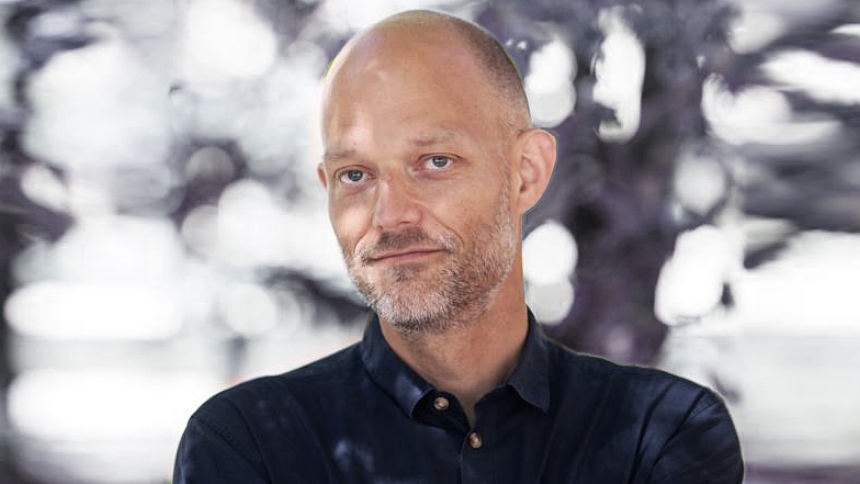
In the article series Sound and Vision we take a look at music videos from notable directors. This week we look at White Birch's Seer Believer, directed by Eskil Vogt.
Eskil Vogt is mostly known as a screenwriter, who has collaborated with Joachim Trier extensively, on films like Reprise, Oslo August 31st, Thelma and The Worst Person in the World. As a director he made Blind, a psychosexual metatextual arthouse film that is severely underrated, and the bad kids horror film The Innocents, that I had some misgivings about.
Shortly after his first screenplay for Joachim Trier he also made a music video for White Birch's Seer Believer that in some ways fits the large, encompassing scope of his screenplays and feature films. In Eskil Vogt's work it is never about just the protagonist, it is about life and the universe as a whole, and the place of the characters in it. A friend of mine, an up-and-coming director, often says about his own films that "specificity is universal". It is the sort of philosophy Eskil Vogt embodies in his screenplays. By leaning in to the particulars and peculiarities of his characters, he touches on something grander, honest and truthful, that will resonate with a whole lot of people.
There is also something unnerving and uncanny about some of his directorial work, that both meshes and clashes with this universality. In Blind, the two converging stories crash into each other in surprising ways, when it turns out that one of the stories is from the perspective of a less than reliable narrator, and the other story might not be even real. In the uncanny The Innocents, normal kids' games eventually turn gradually darker, when there seems to be something supernatural and unnatural at play in some of these kids. It is this clash between the uncanny and the universal that is part and parcel in the music video for The White Birch's Seer Believer.
On the one hand you have the lovely Super-8 footage wherein we see The White Birch's lead singer, Ola Fløttum from his birth throughout his childhood. The free-flowing imagery is striking, especially as Fløttum has a characteristic youthful appearance, that of a kid who still has to grow into some of his features. There is a dreamlike quality to the shots, that of memories tumbling all over each other. When Fløttum sees a current-day version of himself as a child, and when we circle back to that shot at the end, we also get to the sort of universal wonder that is present in a lot of Eskil Vogt's directorial work and screenplays. Here it is the meeting of the self that feels strikingly ordinary, just as the frozen time sequence in The Worst Person of the World, touched upon something greater by using visual, symbolic shorthand.
Less successful, and eerily uncanny is the choice to let the older images of the lead singer lip-sync some of the lyrics. The effect pre-dates current day AI, as the song and video are more than a decade old, but still has some of the same stilted and off-putting mask-like 'qualities' that the worst AI-creations can have. The music video would have been better without this gimmick, even though it fits thematically well within Vogt's love for the distancing and the uncanny. As it is the very first thing Vogt directed himself I won't be too hard on it, as it shows a lot of the promise he banked on in his later works. I might not be the biggest fan of The Innocents, where I feel like the film accidentally gives off some very bad messages about neurodivergent-coded characters. But I still think Vogt, as a director, has his own voice and style outside of his collaborations with Trier. Trier couldn't have made Seer Believer, as it wouldn't fit his style. Vogt by his own could.