Sound And Vision: Dick Maas

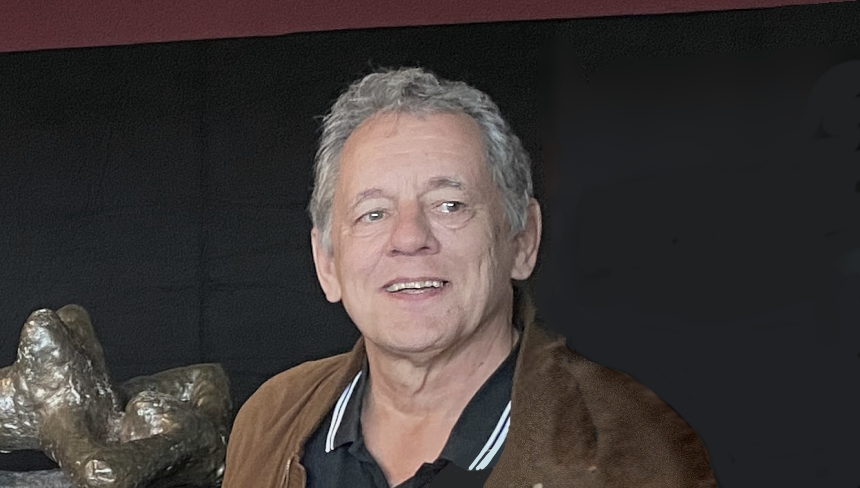
In the article series Sound and Vision we take a look at music videos from notable directors. This week we look at several music videos for Golden Earring, directed by Dick Maas.
Dutch cult director Dick Maas made a few minor cult hits states-side, that are big deals in his home country (and mine) the Netherlands. He stormed onto the scene with elevator-horror (not to be confused with elevated horror) De Lift, a deliciously gory and sleazy film about an elevator killing people. He followed this up shortly after that with Flodder, a film about a white trash family and their fight with their elitist neighbours, that spawned two sequels, a television series and even a comic book spinoff in the Netherlands. And of course there is Amsterdamned, a water-based slasher-movie set in the canals of Amsterdam. All three were huge hits, even though Dick Maas never could make the leap across the pond that successfully.
With Amsterdamned II, the belated sequel, opening in Dutch cinemas shortly, I want to look at a part of Dick Maas' music video output that has some clues as to why Dick Maas never got foot on the ground in America as much as he would've deserved. Because Dick Maas is pretty much inspired by American cinema in a way Dutch directors rarely were before him. As he states on the cover of his autobiographical 'how-to-make-films-guide" Buurman, Wat Doet U Nu?, he is not a director who is there to convey messages. Instead he wants to entertain the audience, which means that there is a streak of lurid and irreverent humor running across his movies and music videos that on the surface seems tailor-made for American audiences, but that might be a bit too Dutch in its blunt directness.
The music videos are barely mentioned in his autobiography, but I feel that especially his music videos for Golden Earring are quintessential for understanding Dick Maas' style. He also made two pretty good music videos for the once-upon-a-time very popular singer Marco Borsato (who is currently involved in a #metoo-trial), the Dutch R&B-band Mai Tai, one (not to be found online) music video for Billy Falcon, and the title-track for Amsterdamned by Dutch band Loïs Lane, but his five best and most essential music videos are for Golden Earring, which I will focus on here.
The first music video Dick Maas ever made, even before De Lift, was The Twilight Zone (see below), which was on heavy rotation on the American MTV. The music video is a pastiche of the spy genre, through a Dick Maas-lense, making the sexuality and violence of the genre more text than subtext, ending on a haunting note with singer Barry Hays, playing a spy, being captured and chained in a potentially lethal scenario. The most explicit scene is one in which a femme fatale is seen approaching the lead character topless. That scene was deemed too racy for MTV America, and was cut out of a lot of versions of the music video. For Dutch television it very probably was no problem. The song and video were a hit in America, a rarity for a Dutch band.
That might be why Clear Night Moonlight(also below) is clearly set in America, taking a look at quintessential American tropes like diners, joyriding and the gangster genre, although I have the feeling it was at least partly filmed in the Netherlands. It is a Dutch look at American culture, something Maas often does, incorporating Hollywood iconography in his films, infused with some typical Dutch-isms.
That Dutch-ness hits a snag with When The Lady Smiles (also below), a very interesting music video where even if the music video was considered fairly risque for Dutch standards, it was downright extreme for American standards. Barry Hays plays a psychosexual maniac, who is so sex-crazed he starts seeing the same woman everywhere who he proceeds to attack in a sexual frenzy. One of the women he assaults is a nun, the other a cleaning person. He is captured and subsequently lobotomized, where, in the original cut, a piece of his removed brain matter is licked up by a dog (I can't find that version online). All of this is played for laughs, which even though it is a slightly discomforting video, is not that outside of the realm of Dick Maas sense of humor in his films. In Flodder there are jokes about incest; in the light frothy crime comedy Moordwijven, there is a joke about the holocaust; and one of the Flodder sequels has a joke in which a male character forcibly gets a gender-reassignment surgery. All of this is to say that Dick Maas' humor ain't exactly subtle, and some of this feels slightly out of place in what otherwise are films aiming for the biggest possible audience possible.
According to several sources that I could find online, one of the main theories that When The Lady Smiles didn't earn Golden Earring a bigger hit stateside, might be because of American puritanism clashing with a fairly dark and twisted music video. That Hilary Clinton used the song in her 2008 presidential campaign seems baffling in hindsight. The song was later pulled from the campaign, ostensibly because her campaign team found out about the racy video. But it is also worth a mention that Clinton did not have the rights to the song, nor the blessing from Golden Earring or their manager.
That is one of the main problems that Dick Maas might have run into in Hollywood. Down, his remake of De Lift, has a deliciously tasteless joke in which a pregnant woman giving birth in an extremely hot elevator is match-cut with food roasting on a grill. That sort of humor doesn't necessarily translate well for a broader American audience, and the prospect of having a horror-thriller set in a skyscraper was not something Americans wanted to see in late 2001. The film, after 9/11 was shelved for two years, before a release on home video in 2003.
Do Not Disturb also didn't fare well. The extremely underrated Hitchcockian English-language thriller set in Amsterdam has a large subplot about pedophilia in the pop music industry, again sort of played for laughs. It is a sharp satirical subplot, but not something American audiences wanted to see then, with some high profile artists at the time being part of sexual assault cases.
The final two music videos Dick Maas made for Golden Earring play up the irreverent humor, but lay slightly low on the edgelord quality of When the Lady Smiles or some of his films. Turn The World Around (below as well) begins surprisingly sincere and depressing, before the song kicks in higher gear, and humor seeps in the tableaux-vivants that comment irreverently on themes like religion and politics. Even though Dick Maas always says he steers clear from politics and messaging, this is the closest he has gotten to making a political piece.
Burning Stuntman (finally below) returns to the Americana of Clear Night Moonlight, focusing on Barry Hays as a southern stunt-man performing a stunt gone haywire, costing him his love interest, in a darkly comic twist. It is quintessential Dick Maas, feeling fairly much in tone with his films at the time. Curiously enough, it is the only music video of his that gets a larger mention in his book, with When The Lady Smiles only being mentioned in the caption of a photo.
Burning Stuntman is, according to Dick Maas in the book, one of the rare times a miscalculation on set led him into trouble: they did a car stunt that damaged the car, while needing a pristine state car in a couple of shots they still had to shoot. CGI was needed to fix the mistake, which was cutting edge for the mid-nineties. It is the longest detail about any of his music video shoots in the book, which is kind of weird, giving the music videos were an important and primal early success in his career, and also mired in some big controversies, that predicted the course of some of his later career, running into other controversies with the likes of Sint and Moordwijven. About those controversies he is very frank and open in his book, the rare autobiographical how-to-guide that rarely pulls any punches. The mix between entertainment and ribald honesty is par for the course for Dick Maas. It's there in the book, in his movies and his music videos. It's time America finally paid attention.