Toronto 2025 Review: FOLLIES Portrays Polyamory's Awkward Learning Curve
Canadian filmmaker Eric K. Boulianne examines the shifting dynamics of long-term intimacy through the lens of non-monogamy, framing a comedy of sexual curiosity that doubles as a study of identity, desire, and generational change.

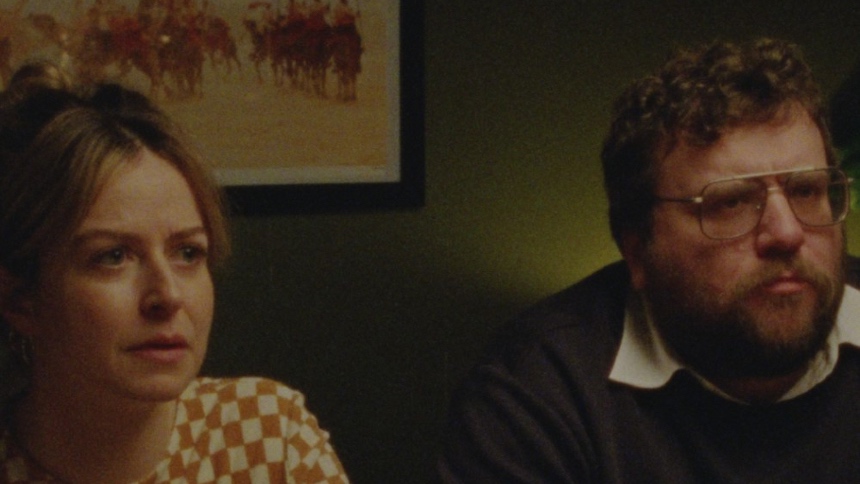
Middle-age married couple François (Eric K. Boulianne) and Julie (Catherine Chabot) find themselves in quiet sexual drift after 16 years and two children together in Canadian filmmaker’s Eric K. Boulianne's directorial feature debut Follies.
The decision to open up their relationship comes less from crisis than from curiosity. What follows is a modern rom-com shot through with deadpan humor and structured around a series of encounters, both sexual and emotional.
Originally a screenwriter (Compulsive Liar, The Dishwasher, Viking), Boulianne has gradually moved toward more introspective narratives. His short Making Babies, which won at Locarno in 2023, centered on a couple dealing with infertility, exploring similar themes of intimacy and vulnerability in domestic space. In Follies, the thematic concerns are extended, but the framing is more expansive; it’s no longer just about a couple reacting to a biological constraint, but about confronting the evolving boundaries of love and sexuality in the context of generational change.
The subject of open relationships is neither glamorized nor pathologized. Rather, it becomes a framework through which to examine the quiet erosion of desire in long-term partnerships and the subtle recalibrations required to sustain affection over time. Boulianne, with co-writer Alexandre Auger, picked a different route for the story than Michael Angelo Covino and Kyle Marvin in their (b)rom-com Splitsville, with a similar topic.
Follies is a smaller, more intimate work, driven primarily by dialogue. Boulianne nonetheless incorporates explicit scenes in which François and Julie test the boundaries of their open relationship through encounters with strangers in a hotel room.
He also casts himself as François, portrayed with a deadpan comedic tone as awkwardly curious about BDSM equipment and group sex etiquette. While Splitsville foregrounds male camaraderie, here Boulianne shifts the focus toward questions of identity and, more unexpectedly, toward Julie. Initially positioned in the backseat, she gradually begins to explore new aspects of her personality.
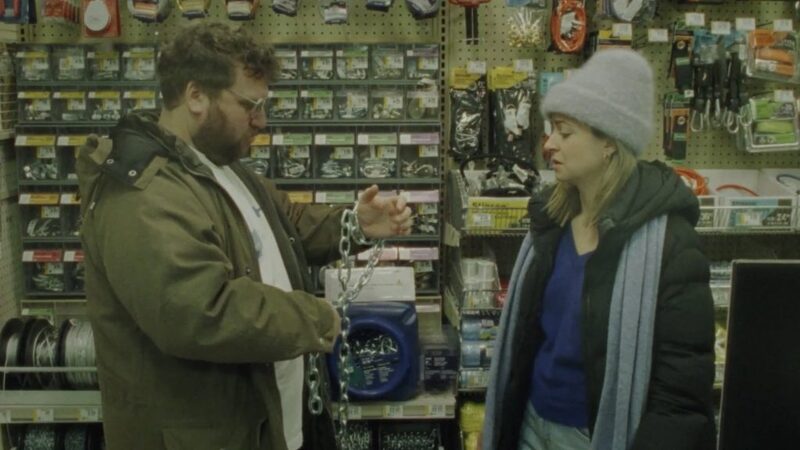
Boulianne and Auger adopt an episodic structure, comparable to Covino and Marvin’s approach in Splitsville, dividing the narrative into segments that mirror various models of non-monogamous interaction. Some are played for comic effect, while others are intentionally ordinary, such as a failed foursome or an uneasy visit to a swingers’ club. Through these episodes, François and Julie come to understand their own boundaries, vulnerabilities, and desires, rather than arriving at any clear notion of how to “succeed” within polyamory as beginners, and rectify their marriage.
Follies draws on the aesthetics and ethos of mumblecore while translating its American minimalism into a distinctly Québécois idiom. The handheld 16mm cinematography, reliance on limited takes, and use of natural light stem as much from production constraints as from stylistic intention. Even within a modest budget, however, Boulianne stages a swinger party in the vein of Eyes Wide Shut, providing the backdrop for the final act’s series of revelations, discoveries, confrontations, and resolutions.
Although framed as a comedy about a middle-aged couple worn down by marriage, Follies maintains a sense of realism in depicting the awkward logistics of family life and the challenges of expanding sexual boundaries. Boulianne avoids the more obvious clichés and resists the fantasy of non-monogamy as it is often portrayed in pornography catering to heterosexual men.
Instead, the film addresses the inherent messiness, clumsiness, and discomfort of open relationships, both physical and emotional. In doing so, it positions itself as a counterpoint to oversexualized male expectations, redirecting attention toward the psychology of female desire and offering a perspective less governed by the male gaze.
Folichonneries
Director(s)
- Eric K. Boulianne
Writer(s)
- Alexandre Auger
- Eric K. Boulianne
Cast
- Eric K. Boulianne
- Catherine Chabot
- Sophie Letourneur