
Karlovy Vary 2025 Review: SIRĀT Raves at the Edge of Apocalypse
Oliver Laxe's desert rave road movie fuses Tarkovsky with 'Mad Max,' channeling enlightenment in shockwaves.

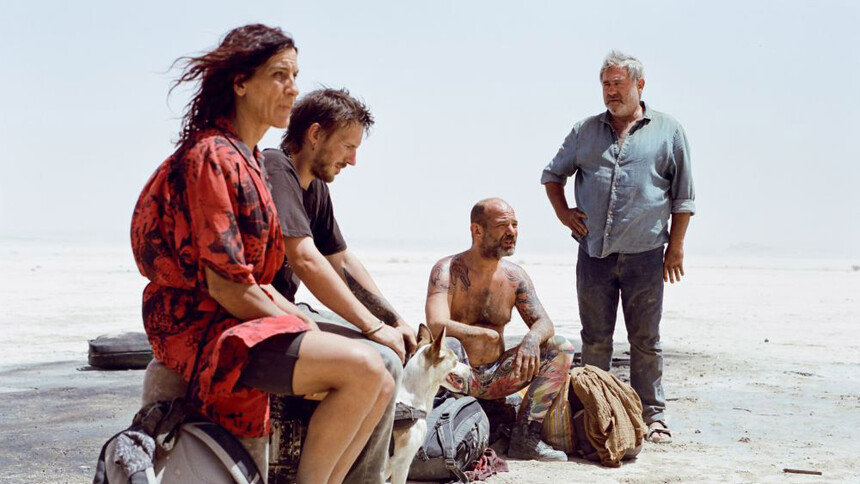
French-born Spanish filmmaker Oliver Laxe has steadily established himself as a distinct voice in contemporary arthouse cinema. His latest feature, Sirât, continues this trajectory with a meditative and loudly disorienting journey that begins with a straightforward premise and gradually shifts into more metaphysical terrain.
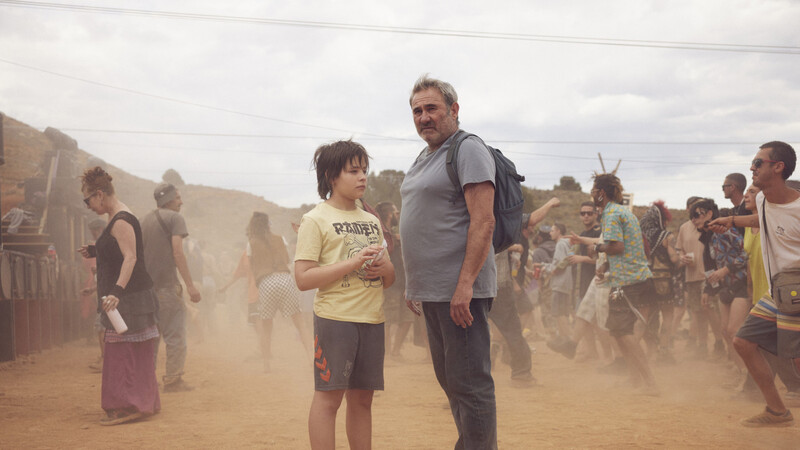
A father and son arrive at the edge of a rave in southern Morocco, clutching a fading photograph of a missing daughter and sister. What initially appears to be a simple search across an inhospitable landscape gradually gives way to something more elusive, a metaphysical encounter, a confrontation with mortality, and a quiet disintegration of family bonds and sanity.
Laxe, whose cinema has always leaned toward the elemental, returns with another work of pared-down metaphysics, this time merging the structure of a road movie with the iconography of religious allegory. The director continues to excavate the tension between internal and external geographies, the collision of tradition with dislocation, and the stark interface between man and wilderness. As in his earlier works Mimosas and Fire Will Come, the story is secondary to atmosphere.
Since his debut You All Are Captains, a self-reflexive docufiction also set in Morocco, Laxe has pursued a cinema of spiritual inquiry, frequently centered on outsiders on the fringes of cultural and existential liminality. A caravan escorts a dying man’s body across the Atlas Mountains in Mimosas, its members suspended between duty and desertion. Fire Will Come follows an arsonist returning to rural Galicia, where fire becomes both a literal and symbolic agent of purification. These films reject traditional narrative structure in favor of minimalism; dialogue is sparse, and landscapes dominate the frames.
Sirât builds on Laxe's signature aspects, deepens the symbolic register and extends into the soundscape. Named after the bridge in Islamic eschatology that separates paradise from hell, the film is structured around a passage, at first geographical, across the Moroccan desert on the cusp of a war, then also metaphysical, into an uncharted territory.
Sirât is best approached without prior knowledge, as its impact deepens when experienced without expectations. Father Luis (magnificent Sergi López) searches for his daughter Mar among ravers in the Moroccan desert, accompanied by his son Esteban (Brúno Nuñez).
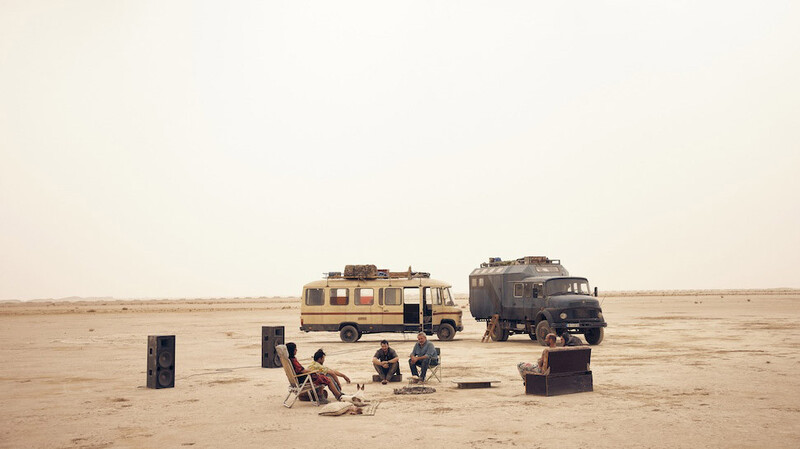
The opening sequences are scored by sub-bass vibrations that blur into the landscape itself. As the rave disperses, Luis joins a caravan of festival-goers en route to a new location. When soldiers block their passage due to mounting political unrest, a small group of hardcore ravers, Stef (Stefania Gadda), Josh (Joshua Liam Henderson), Tonin (Tonin Janvier), Jade (Jade Oukid), and Bigui (Richard Bellamy), splinters off to continue their journey in their amphibian trucks off the main road. Luis, unprepared om several levels, follows in tow.
Shot on 16mm by longtime collaborator Mauro Herce, the film relies on long takes and static desert tableaux. The presence of electronic music and the rave subculture introduces a disruptive layer into Laxe’s otherwise austere grammar.
In his earlier films, sound tends to be ambient or strictly diegetic. The collaboration with composer Kangding Ray on Sirât produces a shifting soundscape, moving from aggressive, chaotic beats to sparse, spectral tones as the music navigates a range of emotional states, disorientation, euphoria, collapse and disintegration.
Laxe has described Sirât as his most political film, although its tone remains more lyrical and metaphysical than explicitly socio-political. The enigmatic title refering to a bridge that spans the chasm of hell, connecting the world to paradise. Said to be "thinner than a strand of hair and as sharp as the sharpest sword," the bridge is associated with the Day of Judgment.
This allusion is introduced at the beginning of the film, which may initially feel dissonant, as the first act contains little that overtly evokes eschatological or religious themes. Yet as the film progresses, Laxe gradually amplifies not only the intensity of the sonic landscape but also other stakes, culminating in one of the most shocking moments in recent cinema.
Sirât offers a possible answer to what might emerge from crossing Mad Max with Andrei Tarkovsky. Yet Laxe’s latest work extends well beyond such an aesthetic exercise. It is an apocalyptic and dystopian film rendered in an implicitly lyrical register, at times verging on the trance-like.
What begins as a family drama gradually transforms into a survival expedition that transcends physical terrain. While geopolitical tensions remain embedded in the backdrop, Laxe guides the viewer across a narrow psychological and metaphysical threshold, one that takes on a literal and gut-wrenching form in the harrowing finale.
Sirât
Director(s)
- Oliver Laxe
Writer(s)
- Santiago Fillol
- Oliver Laxe
Cast
- Sergi López
- Bruno Núñez Arjona
- Stefania Gadda

More about Sirat
- Rotterdam 2026: What The Audiences Liked Best
- European Film Awards 2026 Interview: SIRAT Director Oliver Laxe on Shock Therapy Cinema and Why Films Must Risk the Abyss
- 98th Academy Awards Nominations: International Films
- European Film Awards 2026: SENTIMENTAL VALUE Dominates
- European Film Awards 2026 Preview: SIRĀT Holds the Strongest Position in This Year's Race


