
VIRGINA Review: Boys Do Cry

While not in every culture in human history has elevated male children to the point of all but killing (or even that) their female children, too many have long-held beliefs that boys bring luck and prosperity, whereas girls (despite doing at least half if not more of the work to maintain a society) are a burden. But gender is a social construct, we can't control the weather, and if you decide girls are as important as boys, you might find your society better for it.
But this was not the way in some regions of the Balkans, even as recently as the late 19th century, and a disturbing custom is the focus of Virgina, written and directed by Serbian filmmaker Srđan Karanović (Something in Between, A Film Without a Name). Though perhaps I am being harsh with the word 'disturbing', as I am not of that place or time. But Karanović is of that place, and while he presents his story with naturalistic performances, it also has a foot in folktales that quietly highlight how beliefs so far removed from reality can have terrible consequences.
The film begins by explaining the belief: that a family with only girl children will be cursed, and so deeply felt was this belief that families who kept having girls would declare one of them a boy: they would have their hair cut short, wear male-designated clothing, live and act alongside the men of their society, while literally and figuratively all that made them female. They would be 'virgina'. And so after months of poor farming, with almost no food left in their home, when Donasta (Ina Gógalóva) howls in despair after giving birth to a fourth daughter, her husband Timotije (Miodrag Krivocapić) at first takes the newborn outside to shoot her; but just as he is about to, a wind picks up, which he takes as a sign. He and Donasta say this will be virgina, and name her Stevan.
Two elements open the film that set the scene of desperation and anger: first, the wind: it brings not just the sound, but the taste of the dryness in extreme. Despite the sound of the local boys' folk song that calls for rain, it refuses to fall, and so it would seem that Timotije's heart is drying up as well. He refuses to find love for his family while he sees the dryness as a curse brought to him by the women in his life. The second is the cry of Donasta as she is in labour: a body event that brings fluid in the form of sweat and blood and fertility, but not that which will nurture the soil: again, seen as the fault of the female body and existence. Only in the moment when the parents 'change' their child do the rains fall: but is that in reponse to this 'son, or letting the child live? Time, and the film, will tell us.
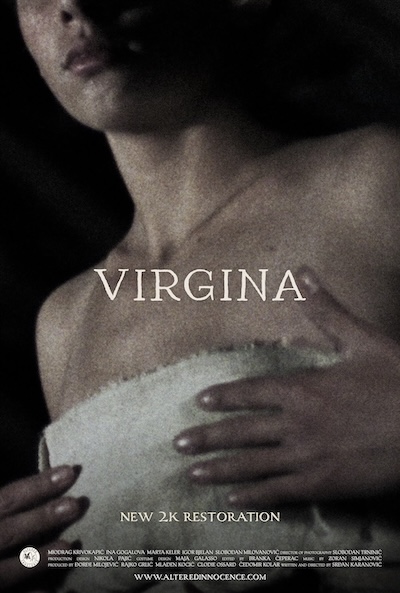
Timotije's is not the only family suffering, even though people's troubles are blamed on a variety of curses, rather than natural or social/political causes. The 2K restoration shows both the grandeur of this landscape, a wide valley nestled next to the mountains that border the Adriatic Sea. As Stevan (Marta Keler) reaches his teen years, the family sees a group of people heading to the mountain pass, for a trip on a boat that will take them the promised land of America, since there is dwindling hope for circumstances to improve. It is reminiscent of the Dust Bowl years in North America in the 1930s, and the cinematography shows that there still some beauty, but the life of the people has been so strained, the land shows their despair.
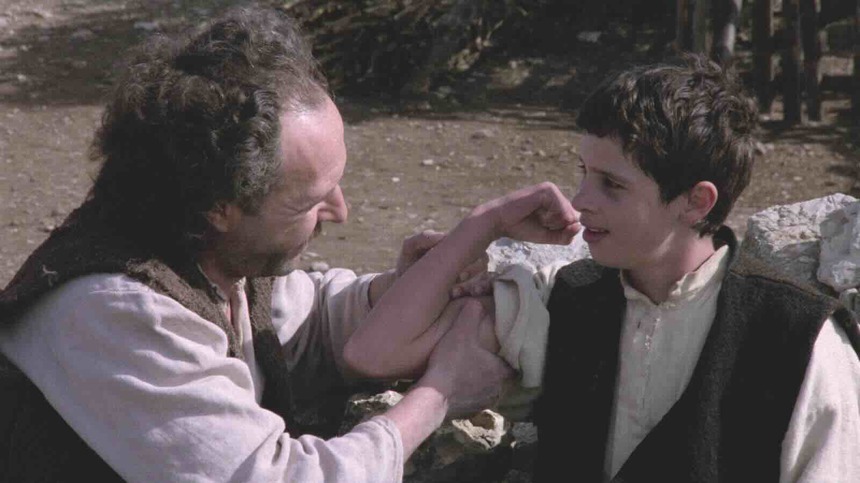
This is the small world which Stevan is navigating: he is aware that he is, according to certain characteristics, a girl. But to everyone outside his family, he is a boy, and his father constantly remindx him that he must adhere to this identity, his family's good fortune depends on it, and if the truth is revealed to anyone, it is on pain of death. And for some years, the family's luck does seem to turn. The actors navigate their characters through this pendulum swing between prosperity and despair : the adults never quite believing that their good luck will remain, with Timotije always finding a way to blame the women around him, as Donosta does as well, though she at least tries to find hope and action.
But that never lasts and of course, since Stevan is, like all children, curious about the world and how he exists in it, he finds ways to escape and watch. He is old enough that his breasts are growing, despite constantly having to bind them; he feels attraction to another village boy; he is told by his mother that to be a woman is terrible, but he listens to his sister, who tells him it is beautiful. And he begins to wonder why God would make him this way, if his parents are forcing him to be something else.
At times, Virgina feels almost like a distorted fairy tale, as we wait for some kind of witch or other being to transform Stevan into the 'real' son his parents need. Karanović is not necessarily judging his characters and the world they represent (nor does he let them off the hook, so to speak), but showing, whether consciouly or not, that gender is a social construction. While Stevan is cis, he still showcases that the differences between girls and boys is what their society forces on them, as opposed to what they naturally feel and know of themselves.
Virgina opens at Metrograph NYC for a one-week engagement, on Friday, October 23rd.


