THE FIRST FILMS OF SAMUEL FULLER Blu-ray Review: Birth of a Genre Master
Samuel Fuller's first three genre flicks, all independently produced, introduced an irascible, pungent cinematic voice.

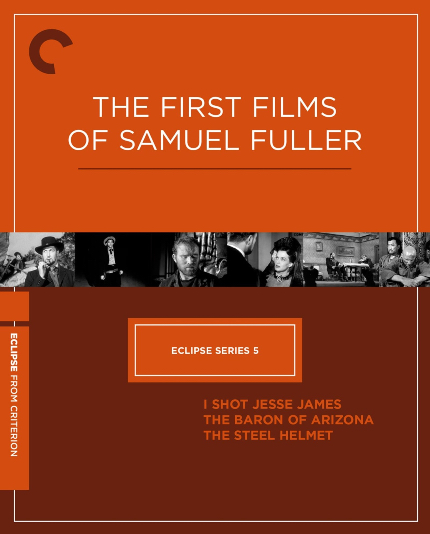
The shockwave of I Shot Jesse James, The Baron of Arizona, and The Steel Helmet continues to reverberate through the indie film scene today. (And it's not just because of Short Round.)
Eclipse Series 5: The First Films of Samuel Fuller
The three-film collection is now available in a two-disc Blu-ray edition, via The Criterion Collection.
Criterion relaunched their Eclipse line in November 2025 under the guidance of series editor Imogen Sara Smith. Their intention was to upgrade "some of the most popular titles as well as producing brand-new sets."
First released in August 2007 on DVD -- as were all the original Eclipse sets -- The First Films of Samuel Fuller collects the director's first three directorial efforts, all produced independently by Robert L. Lippert. (I first saw the film in 2017 via the late, lamented Filmstruck, about a year before it was shut down by WarnerMedia -- my elegy for the streaming service, or around the time it was released on Criterion's DVD set.)
Each is a genre film, written and directed with the precision of a sniper and the devastating impact of a machine-gun firing wildly. Fuller's dialogue always smacks me on the side of the head, and his direction ensures that the camera constantly moves -- except when it needs to stand still or zoom in for an uncomfortable closeup. And the films themselves are shockingly immediate.
The visual quality of the Blu-rays are very good, though keep in mind that these were all low-budget productions, filmed in black and white, and shot on 10-day shooting schedules (?!). They are marvels of independent film production.
I Shot Jesse James (1949) and The Steel Helmet (1951) are together on one disc, with The Baron of Arizona (1950) on the other disc, so bear that in mind if you, like myself, insist upon watching movies in the order of their production.
The only "extra" is a printed booklet containing an excellent essay by film critic Nick Pinkerton. Using Fuller's autobiography as a starting point, Pinkerton supplies context on the careers of Fuller and Lippert, as well as sterling critical analysis of some outstanding scenes in each film and the narrative themes that Fuller developed.
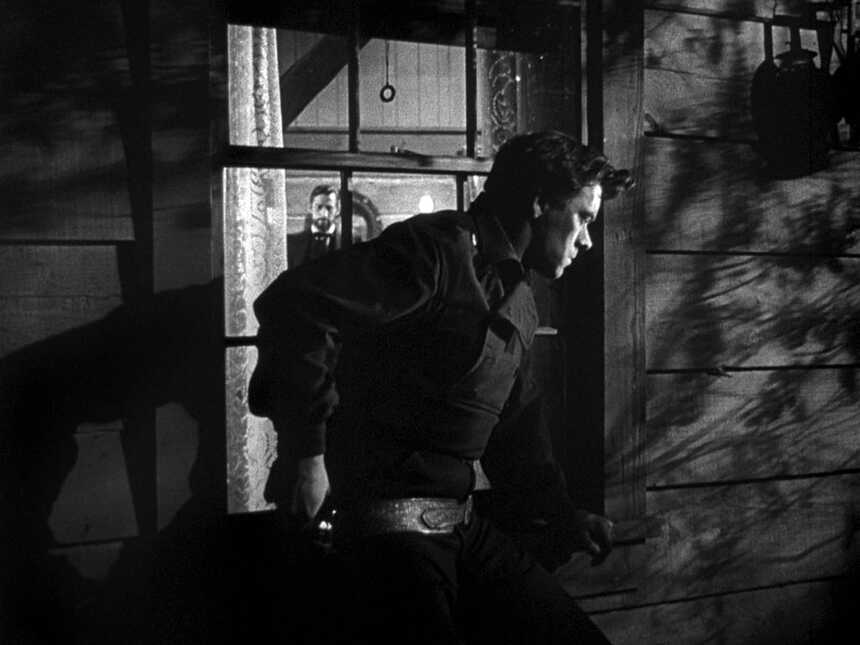
I Shot Jesse James (1949)
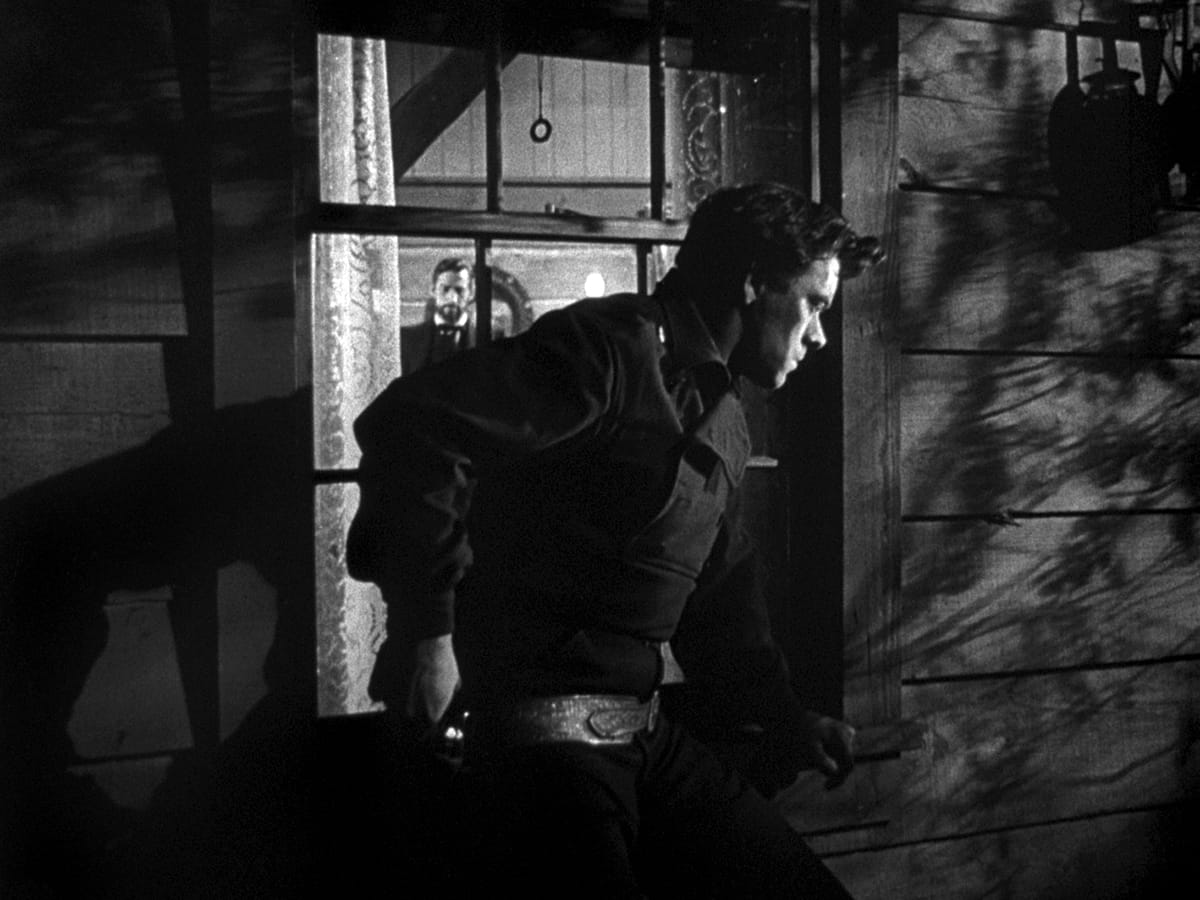
The opening scenes introduce Jesse James (Reed Hadley) as he and his gang rob a bank before heading into hiding, Jesse has a wife and child, and is content to live under an assumed name. His best friend and gangmate Bob Ford (John Ireland) yearns to marry the love of his life, Cynthy Waters (Barbara Britton), but she refuses to marry him while he's a fugitive from the law; tempted by an offer for amnesty, Bob shoots Jesse -- in the back!
It's a shocking crime, and Bob must serve a prison term before he's granted amnesty. In the meantime, everyone's hatred of him for his cowardly actions grows ever greater, and Cynthy's affections have cooled. Nonetheless, Bob heads to Colorado to seek his fortune as a gold miner, even as he's haunted by guilt and regrets; he's certain that Cynthy will come back around once he returns home as a rich man.
In Colorado, Bob again encounters John Kelley (Preston Foster), a righteous man who flirted with Cynthy before high-tailing it out of town when she warned him that Bob would kill him for flagrantly showing his affection. (He talks kindly to her, which is enough to rile up Bob.) After working the mines awhile, Bob strikes it rich and sends word for Cynthy to join him. John is an utter failure as a miner, so he takes the open position as the town's Sheriff.
In a tidy 81 minutes, Samuel Fuller grabs attention from the very first scene -- the silence while the gang robs the bank, the sudden explosion of gunfire, the race out of town -- and the picture remains riveting throughout the balance of the running time. The camera weaves back and forth, stands still to emphasize important moments, and pushes into closeups only when needed.
Fuller knows how to tell a story, and how to stage it for maximum efficiency and dynamic effect.
First published in 2002, Fuller's indispensable A Third Face: My Tale of Writing, Fighting, and Filmmaking describes his first meeting with independent producer Lippert, in which Fuller pitched him "a film about an assassin," Cassius, who had the idea to murder Caesar. Worried because "those guys" were "you know, funny" (code for "homosexuals"), Lippert said he didn't want "to make a picture about guys in bedsheets," prompting Fuller pitch him "another assassin yarn," this one about Bob Ford.
Fuller wrote: "Making just another Western wasn't going to give me a hard-on. ... The real aggression and violence in the film inside the head of a psychotic, delusional killer." The book has more details about the film's production and reception. `
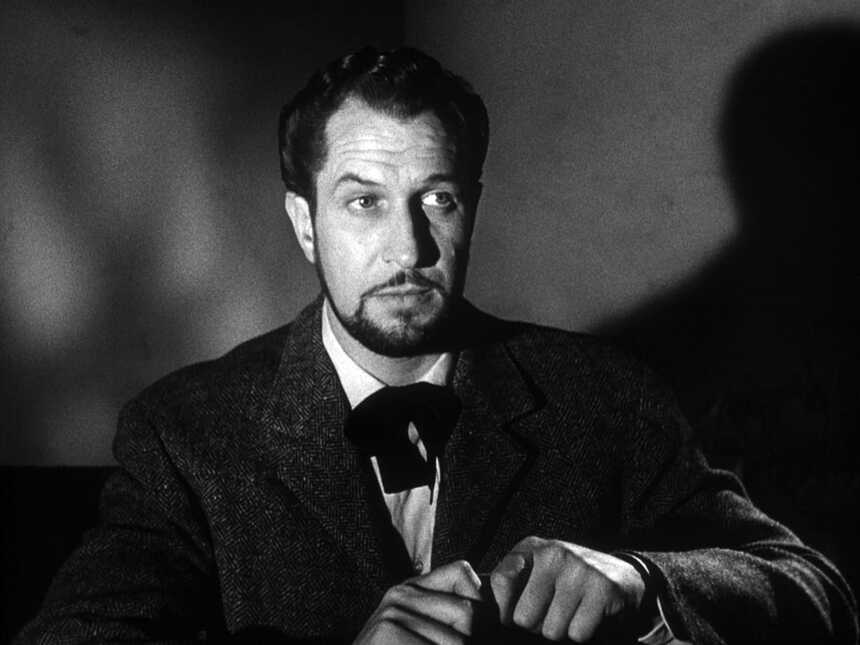
The Baron of Arizona (1950)
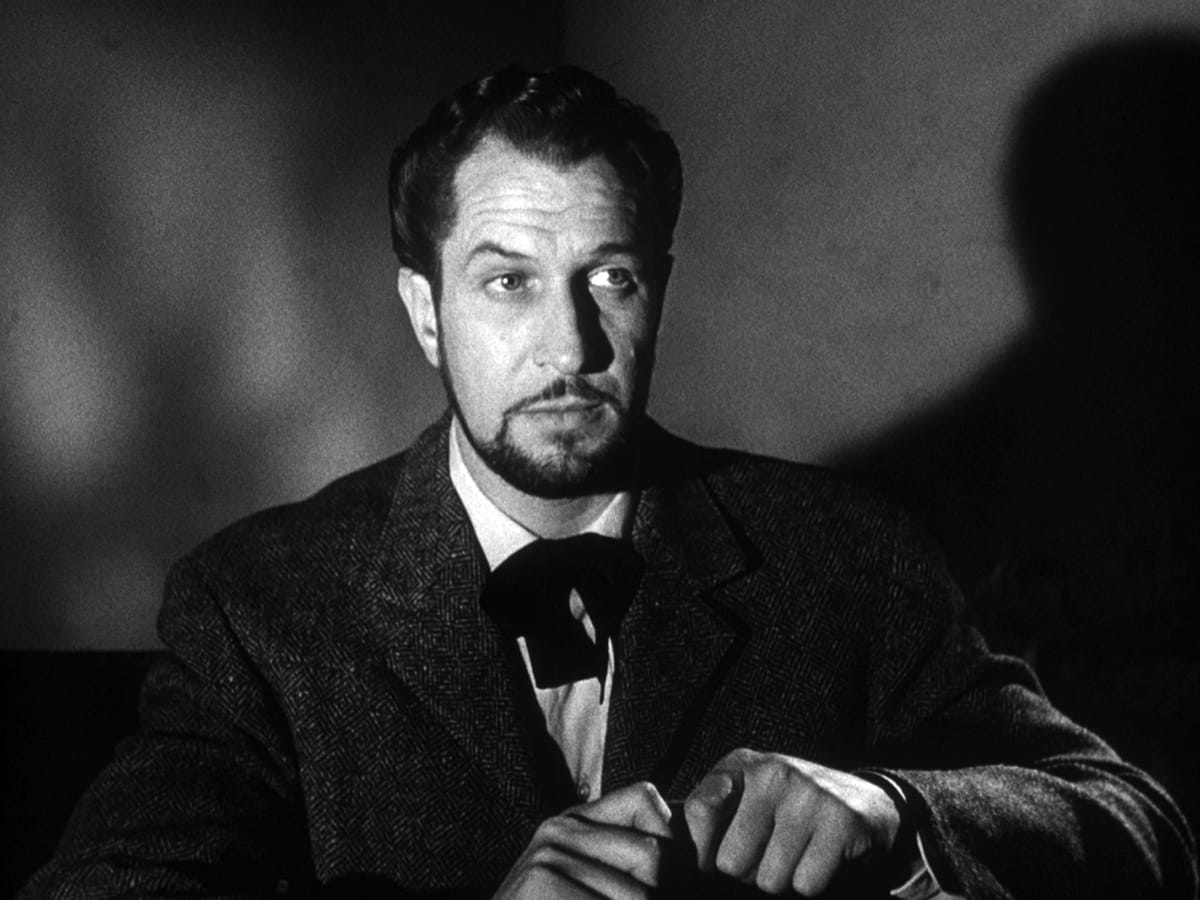
As far as I know, this was my first viewing, perhaps because the premise -- a land-claim hoax -- never sounded that enticing. How wrong I was, because The Baron of Arizona features Vincent Price in his first starring role as the clever, charming, and magnetic James Addison Reavis, who worked in a land-claims office before dreaming up an amazingly ambitious scheme to lay claim to the territory now known as the state of Arizona.
Fuller freely acknowledged how he dolled up the true story: "I wanted to use as much of his real-life personality as possible. From there, I concocted a yarn that was more interesting than Reavis' actual story."
What emerges is, like I Shot Jesse James, far more episodic and ambitious in its scope than I anticipated. It's not just about the scheme, but also Reavis, the young woman whose heart he captures, and two other workers who were captivated completely by the spell of his words and deeds.
It's also the story of Griff (Reed Hadley, who played Jesse James, briefly, in Fuller's debut). Assigned to investigate the outrageous claim, Griff comes to admire the exceedingly fine craftsmanship of Reavis' counterfeit actions, but also to admire the man's brazen actions.
It culminates in scenes of terror that are bolstered by cinematographer James Wong Howe, who shoots a great picture throughout. Fuller befriended Howe in the late 30's; when word got out that his second feature was going into production, Howe knocked on his door and told him he wanted to shoot the picture.
"You must be crazy, James!," Fuller recalled. "The whole movie costs less than your salary!" Howe replied: "I don't care about the money. There are more important things in life."
Their work together creates a steady climate of increasing shadows and sustained tension through the moody lighting and the shades of grey that creep into even the sunniest terrain.
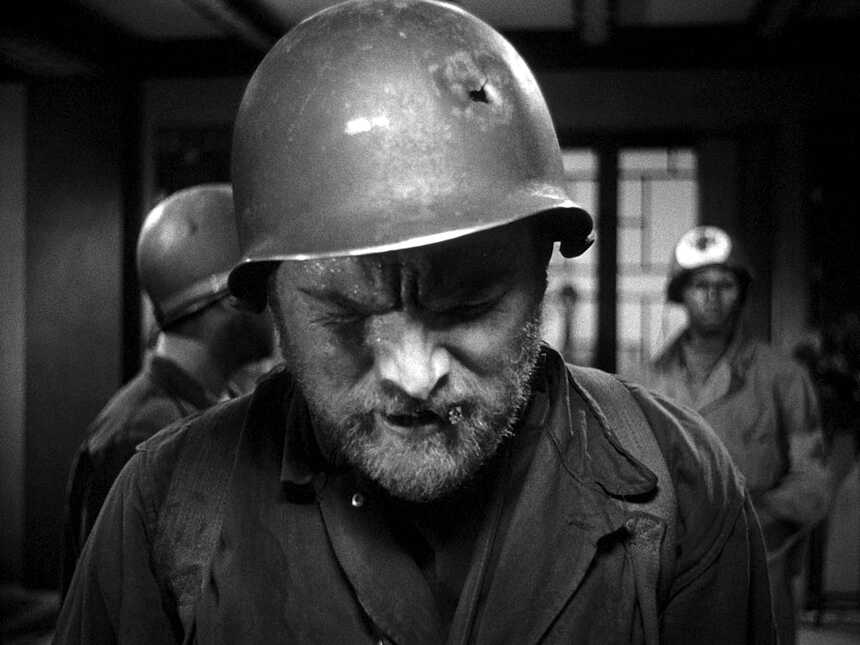
Fuller and Howe wanted to make another picture together, but that didn't happen. So Fuller decided to fuse headlines of the day about the new military conflict in Korea with his own experiences as an infantryman during World War II.
The Steel Helmet (1951)
I first saw the film on TCM in 2020. Its righteous fury burned into my soul. In the six years since, I forgot completely that a young Korean supporting actor is called Short Round. Years later, writers Willard Huyck and Gloria Katz named their dog Short Round in honor of this movie; sometime after that, they named a sidekick in Indiana Jones and the Temple of Doom in honor of their dog.
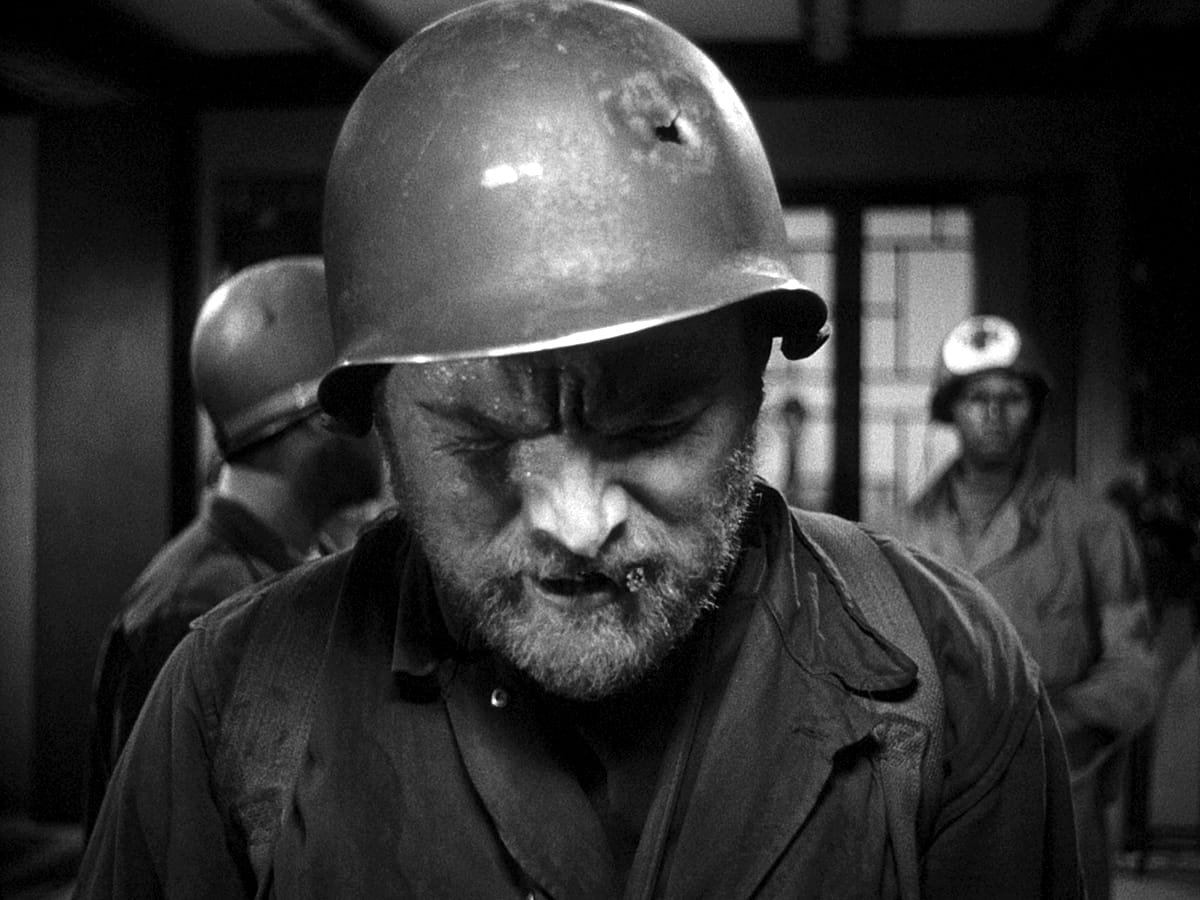
It all started with The Steel Helmet, though, which begins with a young civilian (William Chun) vigorously declaring that he is "South Korean," which is why he is eager to help Sgt. Zack (Gene Evans), the only survivor of a battle during the Korean conflict.
Fuller was a military veteran. In his autobiography, he writes vividly of his perilous, life-changing and traumatic experiences during World War II, which informed all his films, and breathes fresh air into the war-movie genre that were already old hat by 1951. Making the film from the perspective of an infantryman brought home the many, many perils, and made Zack's weary, cynical, relentless drive ruthlessly memorable.
The singular drive of the film has a cumulative impact that is crushing, brought home by the last few scenes, which are fraught with emotion and a surprising amount of action.
Summing up: Highly recommended.