
FILIPIÑANA Interview: Rafael Manuel Talks the Colonial Legacy of the Philippines

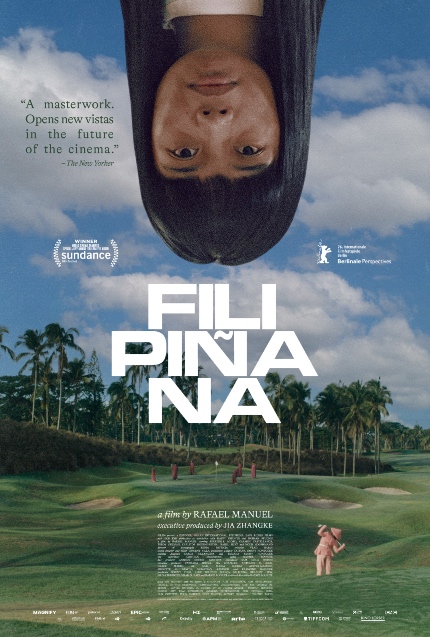
Filipiñana is a black comedy drama, written and directed by Filipino filmmaker Rafael Manuel. The film is developed from his 2020 eponymous thesis short film, which won the Silver Bear Jury Prize at the 70th Berlinale International Film Festival.
Premiered in competition at the Sundance Film Festival earlier this year, Filipiñana explores postcolonial-class disparities underpinning a golf court, a peculiar setting where young Isabel (Jorrybell Agoto) works as a caddie to serve upper-class tourists coming for leisure.
The golf court acts almost like a semi-segregated space, with Isabel traversing between different landscapes, quietly gazing upon the club members she meets while bearing the invisible violence and injustice embedded in the system. Behind its static and meticulously composed images, the film digs into a deeper historical infrastructure that relates to the Philippines’ gory colonial past and wavering national identity.
When I spoke to Rafael, he was in the middle of a shoot at the time. Yet he still offers acute and intellectual insights (owing to his philosophy and academic background) into the unresolved post-colonial heritage in the Philippines, mirrored in his creative methods in a formally exploratory framework mixed with multilingual actors and non-actors. He also shares two interesting stories about Chinese filmmaker Jia Zhangke, who becomes his mentor and imparts pragmatic wisdom while working on this project.
ScreenAnarchy: FILIPINANA is an extension developed from your earlier short film of the same name. Looking back, what was the biggest creative shift in developing the story into your debut feature?
Rafael Manuel: I’d be mindful of the word “expansion” for the short, because I feel like using that word would demote the short form into a stepping stone to a feature film. Whereas for me, I really feel that the short and feature are both standalone forms.
Maybe the short form is more akin to a poem, and the feature acts like a short story in some regards. But I guess with the short, I used it to introduce audiences to this world of the golf course in the Philippines and set up the golf course as a microcosm for my country.
In the short, audiences are already introduced to Isabel, one of the main characters of the feature film. She’s a caddie, and you get introduced as well to her job, which basically is to spend the whole day sitting on a stool serving golf balls for golfers.
With the evolution into the feature, I realised quickly that what I wanted to do was to have a more holistic perspective on the golf course and explore it through different angles, both from the top and the bottom.
So I tried to do that as well with the mirror character to Isabel, who is Clara, the expat girl who moved to New York and is thinking about moving back. Unlike her, Isabel is an outsider to the environment. But because of the differences in their social understanding and in the social strata, she’s able to explore the golf course and the environment in a very different way from Isabel. I think it was very interesting to mirror those two characters.
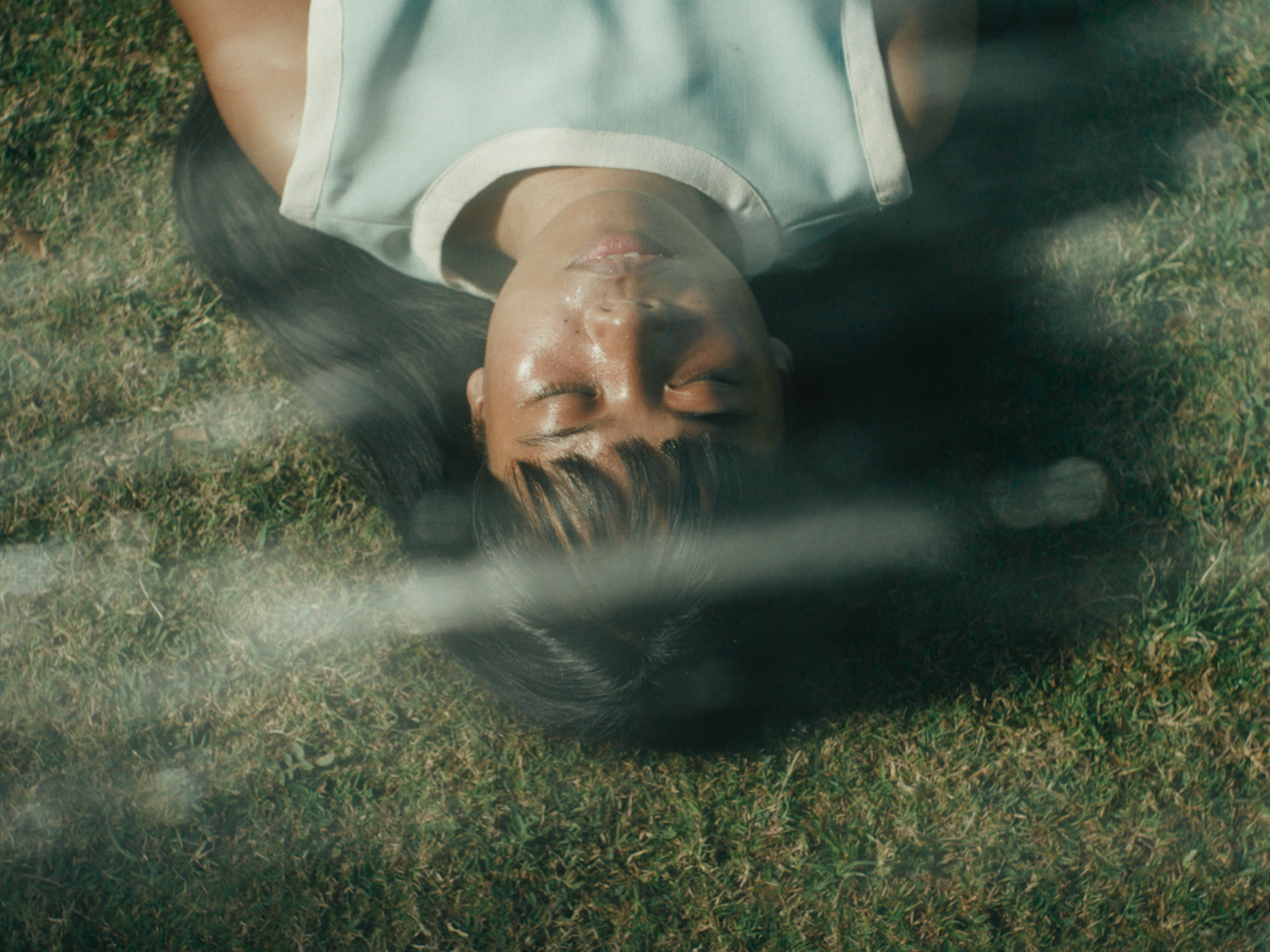
The two characters move between different languages in the film. For example, Clara speaks quite fluent English, while Isabel acquires both Filipino and an indigenous language, Ilocano. Were you consciously using language as a marker of social class or identity, and of these differences within contemporary Philippine society?
I think English is definitely a class marker, although a huge amount of the population does speak and understand English. But it’s really about the proficiency and accent of the language.
The Ilocos region is such a socio-politically and historically charged region in the Philippines, so the use of Ilocano alludes to that. Also, it is because Jorybell is from Ilocos, so I wrote the story around her background as well.
Actually, the main language in the Philippines, other than English, is Tagalog, or Filipino, as we’re such a fragmented archipelago country, with around 7000 islands. Regionalism is such a big thing for us. So every region has its own dialect, and a lot of the northerners speak Ilocano.
The different languages used in the film can be seen as an exploration of regionalism in the Philippines. As both Isabel and Dr Palanca speak Ilocano, they soon develop a very natural bond with each other.
Jorybell appeared in both your short and this feature-length film. Why did you cast her again, and how does she embody the character of Isabel from your perspective?
It was about seven years ago when Jorybell first walked into the casting room. She didn’t make a very strong first impression on me. At that time, she had more of a theatre background. She had only done one short film, and what follows is the short film version of Filipiñana.
As I spent more time with her, however, her presence grew. And I think that very much represents what I envisioned for Isabel: to start as invisible, but through time spent with her, for her presence to grow.
That’s also very important for the character of Isabel per se. The more time I spent with her, the more I saw the playfulness in her gestures and in her eyes.
I liken her a lot to Giulietta Masin, wife of Federico Fellini, who stars in a lot of his films. Jory Bell has similar playfulness in her. For me, playfulness is resistance, one of the most important things that I look for not just in acting but in art.
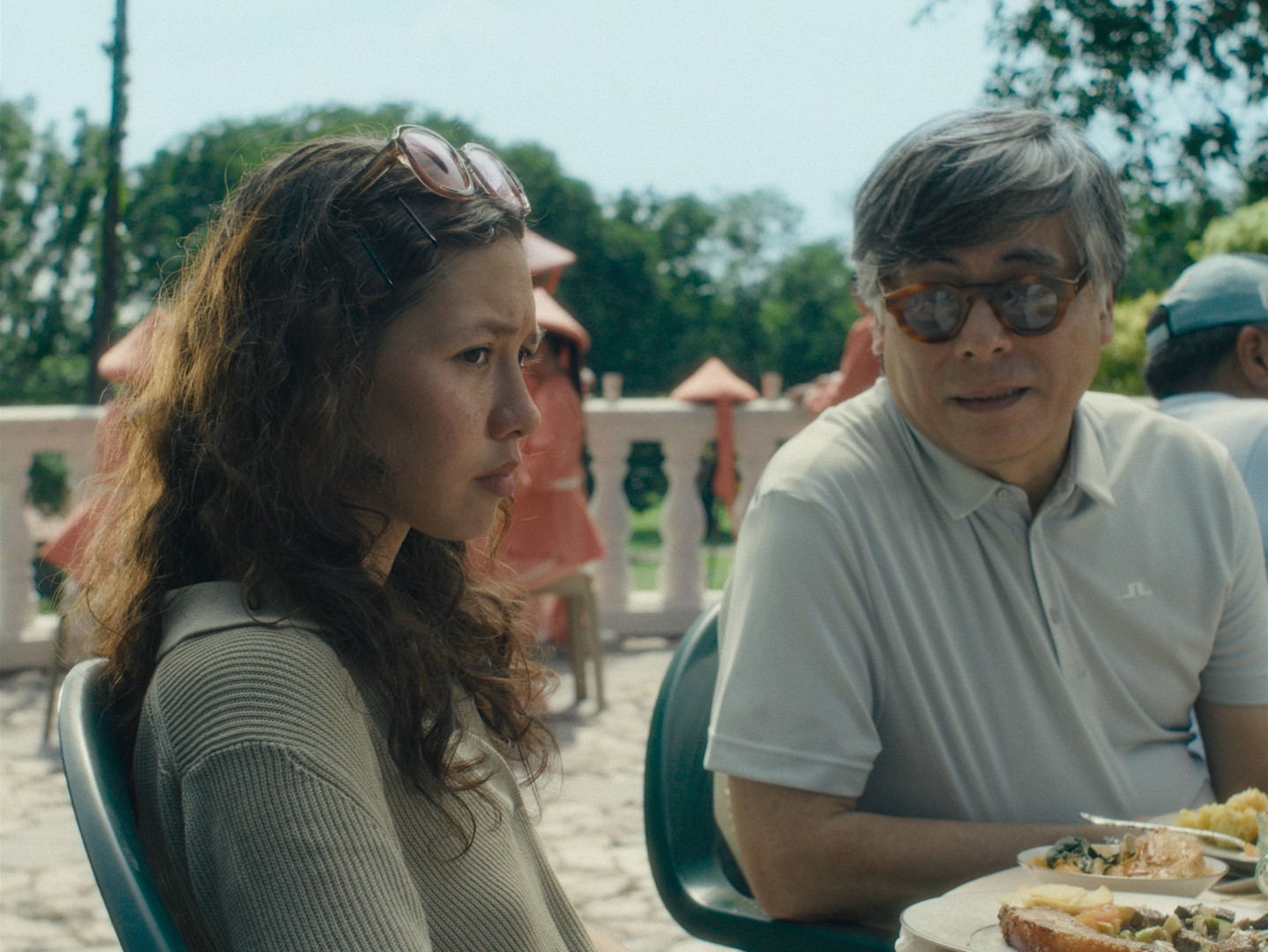
What is your creative approach in working between professional actors and non-professional actors in this film?
That’s a very good question. I really like to mix the two.
For example, Clara and her caddie, Ina, are both non-actors, while Carlos, who plays Renato, and Angeli, who plays his caddie, are both very established in the industry. Carlos is actually a famous director in the Philippines.
So there’s kind of a dynamic between them, which I see as a meta-mirror on how their own characters in the film are very much entrenched in the world already.
As for the non-actors, being on set is much like how their characters are, because Clara and her caddie are new to the golf course. This kind of freshness and the exploration of the world and the land are manifested in their gestures.
It’s always amazing to bring together non-professionals and professionals on the same set and just to observe what sort of dynamics or chemistry they can bring together that contributes to the film.
Yeah, 100%. I think the most important thing for me, regardless of whether I’m casting a professional actor or a non-actor, is that I always cast the person. I cast the person before I cast the actor. My approach to directing is to try and direct as little as possible, to put myself out of the way as much as possible.
It doesn’t matter if they’re a professional or not. If they’re a non-actor, you just really have to spend a lot more time with them to gain their trust and make them feel comfortable with your and the camera’s presence.
Also, the main difference between actors and non-actors is the repeatability of performance. An actor can repeat a take 20 times and still find the freshness in it, whereas with a non-actor it’s a bit harder.
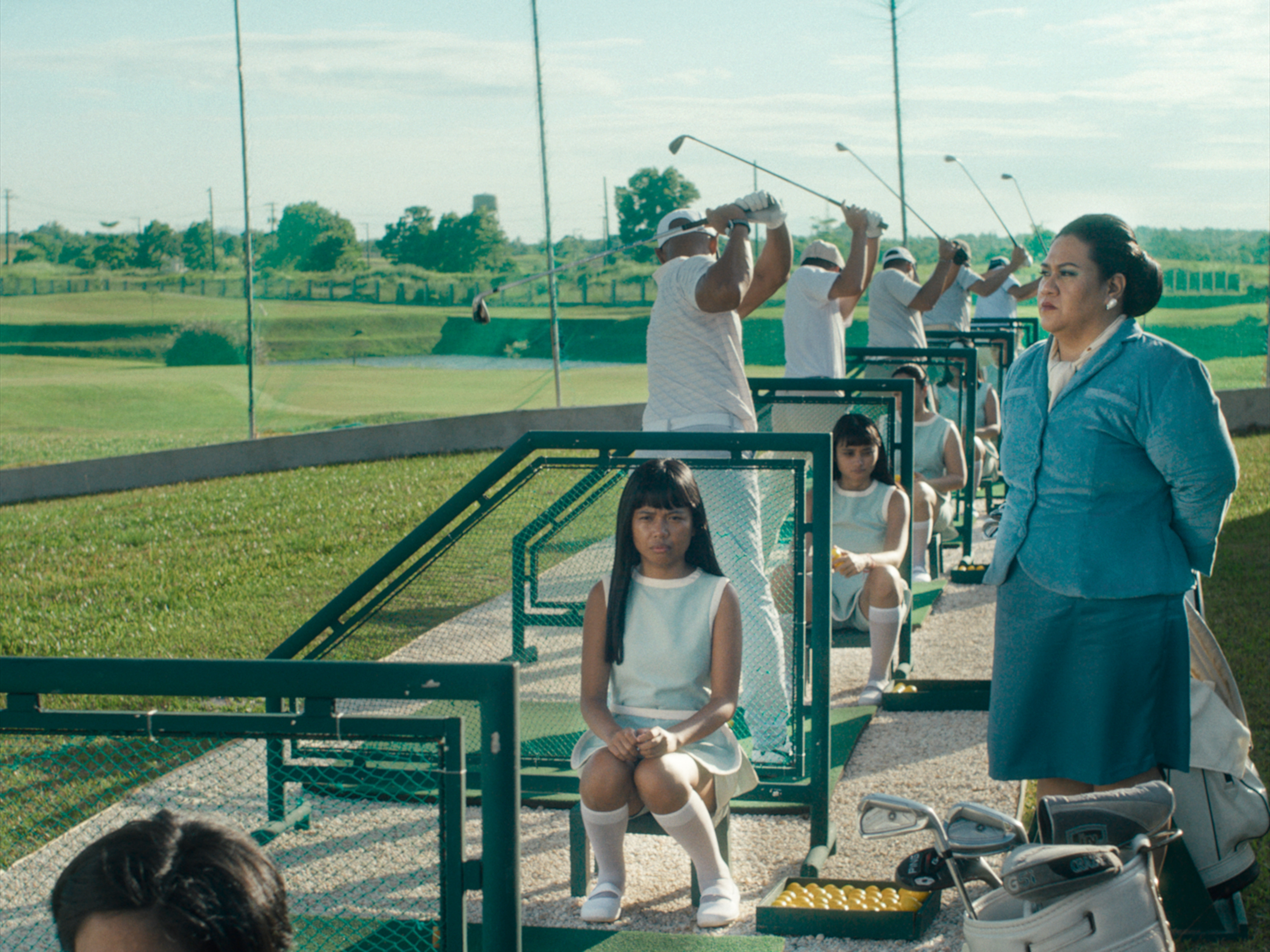
To what extent do you see Isabel as representing people living on the margins or in the underprivileged classes of Philippine society, if that’s the case?
It makes up a huge percentage of our society — I think that’s about 70% to 80%. So Isabel is very much representative of the Filipino and of Filipiñana.
I think a lot of this film deals with national identity and how it is so fragmented because of our colonial past — 300 years of Spanish colonial rule and then 30 years of American colonial rule, with a sprinkling, peppering of Japanese colonial rule in between.
You can’t talk about Filipino identity without talking about colonial identity. And I feel like we’re still trying to find our own identity as people living in this country.
The golf course acts as a very special setting in the film, and it feels like more than just a setting. I think it somehow evokes the Philippines’ colonial legacy, like you said, while also becoming a sort of sharp satire of wealthy and privileged people in the film.
So I wonder, when you were writing and directing this film, did you conceive of the golf course as a single symbolic space, or did its different locations serve distinct narrative functions?
Gilles Deleuze, in his book Cinema 2: The Time-Image, talks a lot about the "any-place-whatever". For me, the golf course is very much representative of that.
What is a golf course but a gentrification of land? — The film takes place on a golf course in the Philippines, but it could be a shopping mall in Dubai or a high street in London.
Gentrification is something that the whole world can relate to outside of colonialism. And what happens when the world is made to look the same? That is something a golf course aims to do. It’s like you’re taking something wild and making it manicured for human consumption.
I want to relate that as well to the structure in Filipiñana on how it may be somewhat resistant to conventional dramaturgy. For me, conventional narrative structuring is also a form of gentrification — when there are so many ways to tell a story, dramaturgy asks you to make all stories the same.
With the image, the sound, the pacing, and the minimal dialogue, Filipiñana itself becomes a resistance to colonialism and gentrification, and that’s something I really want to experiment with here.
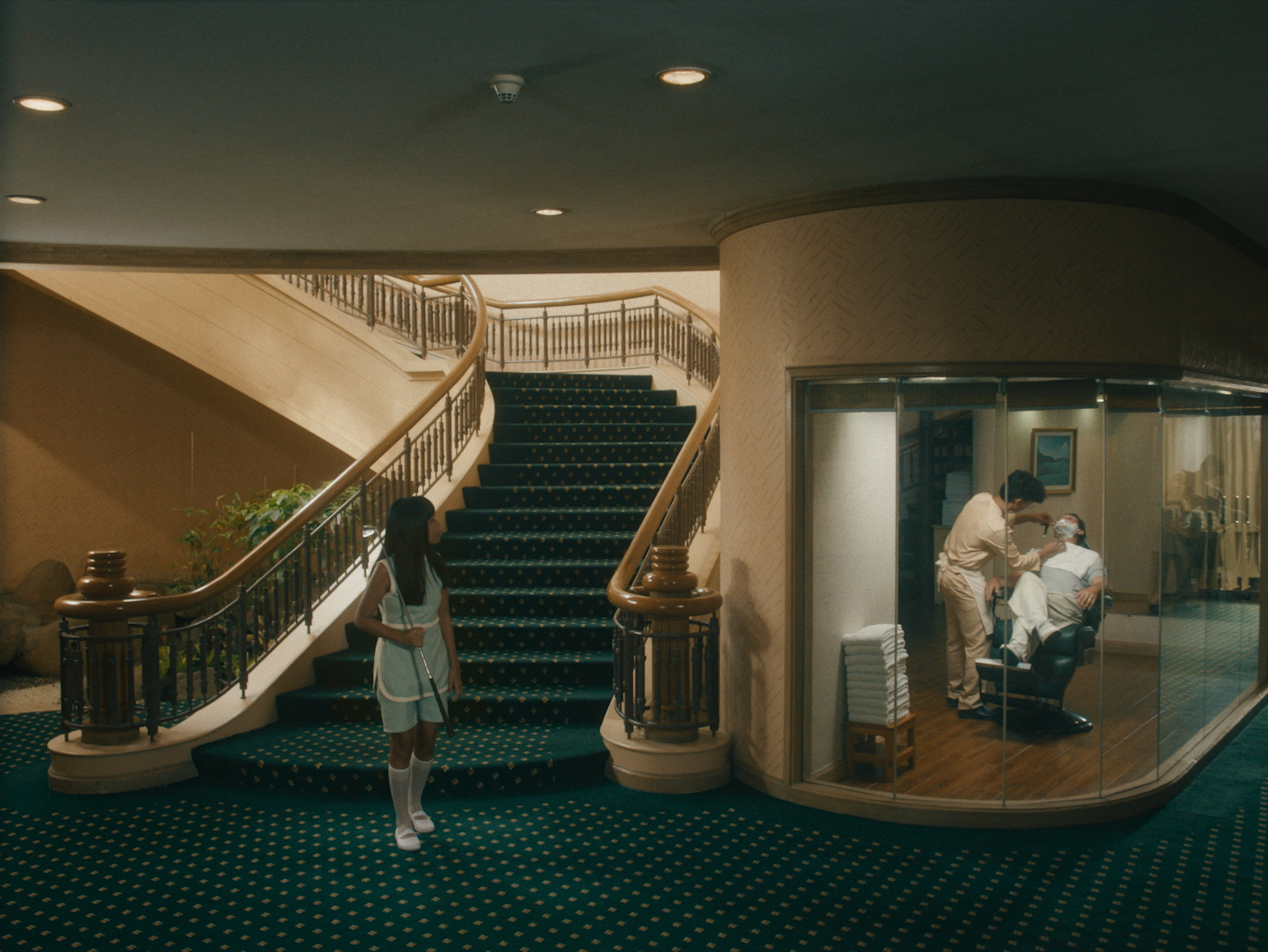
Talking of audio-visual language in this film, such as the immaculate compositions of the images, as well as the carefully choreographed movements, I am curious about how you came up with that, and if you see it becoming a defining part of your cinematic style going forward, perhaps?
I don’t know about style, because I’m very wary of the use of the word "style". I feel that each film should have its own form.
And this form — you used the word “immaculate” — for me, that’s very indicative and descriptive of a golf course. It’s a form that uses beauty as artifice that can hide the structural invisibility of a violence that lies beneath it.
But for me, it makes sense for it to be the film’s visual form. I was inspired a lot by the landscape, whether it’s through painting or photography. I went through lots of historical archives of the Philippines at the turn of the 20th century and the early 1900s.
What I saw as a common motif in a lot of photographs, including landscape photographs of Filipino rice fields or Filipino tobacco fields, was faceless Filipino workers. When you take into consideration that the only people with access to cameras at the time were Americans, it just sparked something in me, especially when you think about how a landscape is culture before its nature.
A landscape, whether it’s a painting or a photograph, is a projection of human imagination: rock on the grass, on the water. And that’s the question that arises: whose imagination is being projected onto the land? Because at the turn of the century, it wasn’t the Filipinos’ imagination that was being projected onto their own land. They were in the landscape.
So the workers in the landscape had a very different relationship to a landscape image than the person taking the image. Considering that the Americans were the ones taking these landscape photographs, it becomes quite apparent that landscape is used as something like the dreamwork of imperialism, of colonialism.
Susan Sontag, in her book On Photography, talks about how the American West was colonised by photography. And so was the Philippines.
Jia Zhangke is the executive producer of this film. Could you share a bit about how you collaborated and what was the most valuable lesson, or perhaps the most inspiring quality, that you took away from working alongside him?
Jia Zhangke’s films, particularly his early work, have been so influential in my formation as a filmmaker. I think Still Life in particular is a masterpiece. I love how it shows the region’s present, its past and its future, all in every single frame.
I felt like this was something I really tried to do with the golf course, because if you think about the colonial themes of a golf course and playing with the time setting of it — how it could be happening now, 50 years ago, or 50 years in the future — this is something that I took inspiration from Jia’s work.
I met him because he mentored me in the Rolex Arts Initiative. So I spent two years under his mentorship. I was lucky enough to be on set with him as an assistant director, to be in the editing room with him, and to be with him through the process of making his latest film, Caught by the Tides.
He was also on set for Filipiñana for the first couple of days, helping me to get over my nerves for my first feature.
Talking of the most important lesson I learned from Jia Zhangke, I have two anecdotes to share.
The first one was the night before the first day of my shoot. I was driving in the car with him back to his hotel. He likes to ride with me because in my car he can smoke, and we both like to smoke a lot.
And I asked him, “Director Jia, tomorrow is the first day of my shoot. Can you give me any words of advice?” And then he said, “The first day of the shoot, it’s not about getting everything perfect. It’s about bridging the gap between your imagination and the reality of what the shoot is going to be.”
This made so much sense because he’s obviously a great artist and has many artistic virtues, but for me, the virtue that I admire most is his pragmatism. To make the kind of films that he makes and the kind of system that he makes the films in, you need to be a pragmatist to do that, I think.
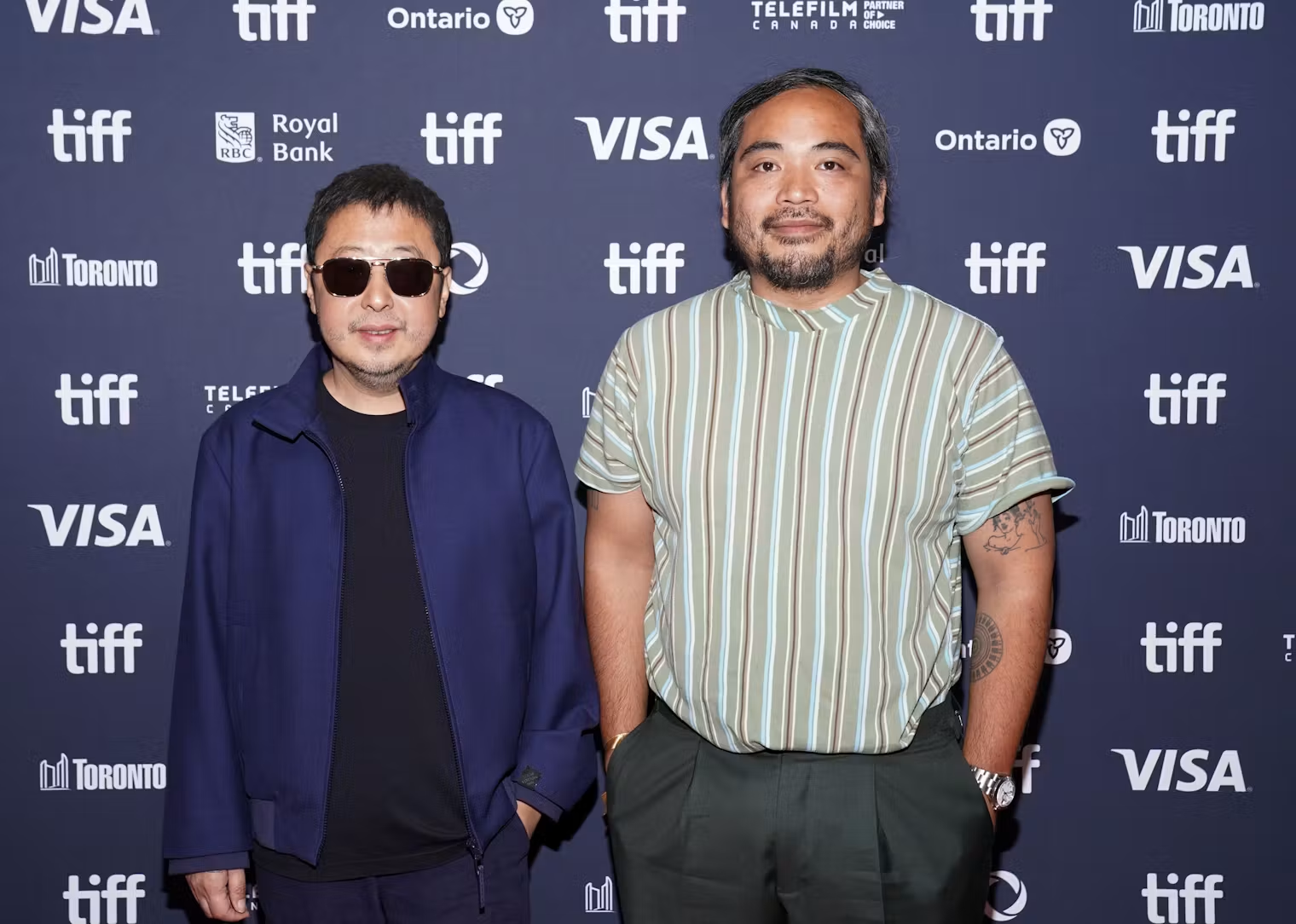
The second anecdote I’d like to share is when we were doing a talk together at TIFF. When Cameron Bailey asked him what mentorship means to him, he shared the story about how mentoring me was allowing me to see him fully, with all his flaws.
That brought a tear to my eye, because that was such a vulnerable thing for him to say. I think mentorship is him showing me his vulnerability. Despite being such a master, iconic filmmaker, he is still able to reveal himself with pure generosity.

Do you feel this content is inappropriate or infringes upon your rights? Click here to report it, or see our DMCA policy.


