
Fantasia 2026 Review: RECLUSE, Screenwriter Henry Chaisson Conquers Visual And Sonic Terror in Neo-Gothic Horror

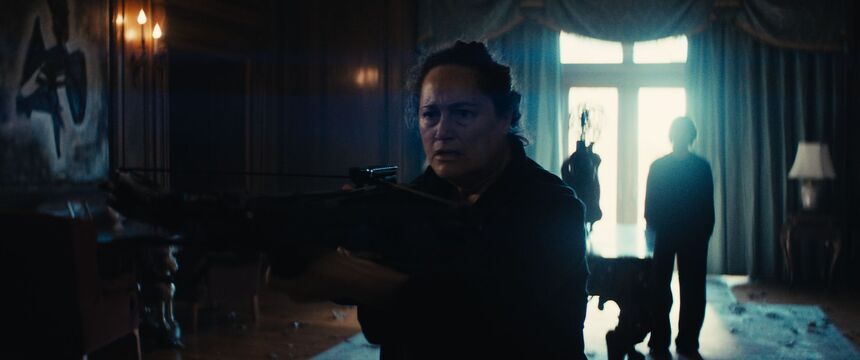
Joan is dragged back to her childhood home. There has been an accident and she has received an ominous call from her ailing, disfigured father. She is a sound engineer by trade, he is a famous artist and long rumored to have dabbled in the occult. His art, from paintings to metallic structures, lines the walls, the hallways, and the landscape of their family home, making it easier for things to hide among the shadows they cast-shadows made by candlelight or what comes through the windows.
Amidst the dishevelled estate inhabited by a caretaker and her son, Joan must face her traumatic past and the sins of her father. She wanders the hallways and the estate grounds, a portable digital recording device in her hands, listening. Listening to the home-the home she left so long ago. Listening to what it has to say. There is always someone, or something, in the house with something to say.
Henry Chaisson built a reputation as a psychological horror writer, with films like Guillermo del Toro's Antlers and series like M. Night Shyamalan's Servant. He has effortlessly transitioned into feature-length directing with his 2026 Tribeca debut feature, Recluse. Drawing on his childhood ghost-hunting habits, he pulled triple duty as writer, director, and composer to craft a deeply atmospheric cinematic nightmare.
For a writer lauded for their screenwriting work, the story in Recluse is very straightforward and simple. It is as if Chaisson stated up front: "I've been praised for my writing, now it is time to show that I know how to create atmosphere and incredible visuals." By heavily favoring the technological achievement that it is over a literary one, the film proves that you don't need a complex script to grip an audience with fear.
Recluse proudly wears its genre on its sleeve, operating as a distinct neo-Gothic nightmare. It checks off every classic trope in the book-from the crumbling, dilapidated estate and the inescapable sins of the father, to the modern uncanny and a relentless creeping dread. Chaisson breathes new life into archaic ghost stories by dropping a 21st-century tech professional dead center into what seems to be a traditional haunting in a decaying home.
Visually, the movie operates like a horror-themed art book come to life. Frankly, we do not need a book called The Art of Recluse when we could just put this on repeat and wear out the pause button on our remote. Chaisson presents single frames that would take others a lifetime to master. He proves he is equally adept at creating mood through strong visual creations and choices like he is with wordcraft. Oh, you thought he was just good with his words? Bam! Setting, stagecraft, lighting! This world is visually rich, and hours and days will be lost to freeze-framing and looking at the details everywhere in the picture.
The other terror is auditory. In films that are striving to create mood and tone with sound, Recluse sets the bar for 2026. Creaks, groans, whispers, screams-Chaisson had all of this hidden away in his creative crypts, waiting to be unleashed through the pair of headphones Joan wears, making her question her own reality.
Make no mistake, though: this is not just mood lighting and scary noises. Chaisson knows that apart from all the features that make up neo-Gothicism, the one you do not ignore is having solid, strong scary moments as well. He knows how to capitalize on the fear and uneasiness with some strong scares weaved into the narrative.
Ultimately, Recluse establishes Henry Chaisson as a double-threat auteur in the modern horror landscape. It is scary to think of what he will accomplish when he combines his powers of elite dialogue writing with this newfound, staggering visual dominance in his next project. This isn't an exercise in setting the tone visually and sonically-this is a masterclass in it.

Do you feel this content is inappropriate or infringes upon your rights? Click here to report it, or see our DMCA policy.
More about Recluse (2026)

Around the Internet
Recent Posts


