THE PYTHON HUNT Review: Gorgeous, Moving, and Incisive Documentary

It's almost hard to pin down exactly why Xander Robin's The Python Hunt feels so special.
The ensemble documentary with stunning cinematography that draws the audience in with one thing and delivers an unexpected lesson by the end follows in the footsteps of the many great docs that have done these things before, but it feels revelatory.
The film centers around the government-funded 2023 Florida Python Challenge, which called on python hunters from around the globe to help the state rid the Everglades of a staggering non-native Burmese Python population that's purportedly decimated the local wildlife. The Python Hunt invites audiences to tag along with several groups of hunters in this exciting and novel attempt at ecological preservation before complicating its own narrative.
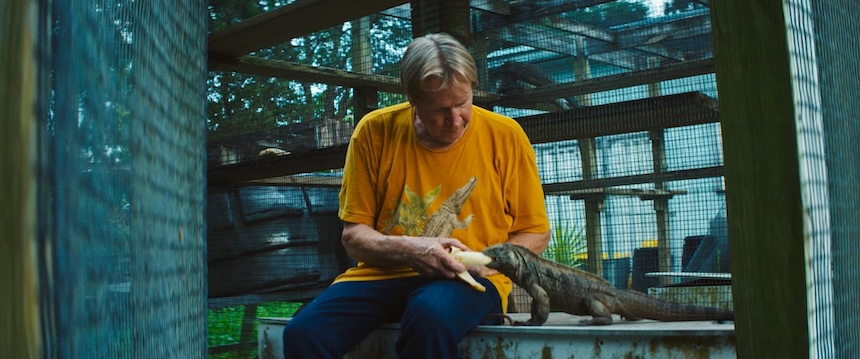
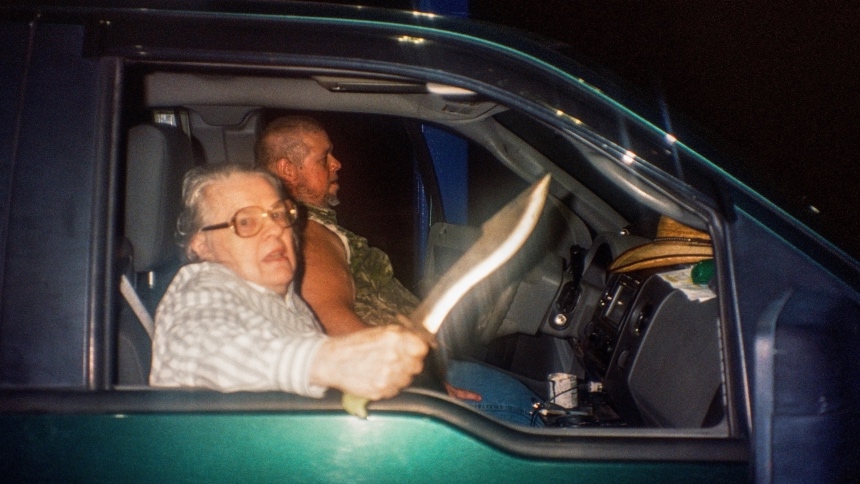
The large cast of characters may, in 21st century post-modern reference-to-a-reference fashion, make viewers think of a Christopher Guest mockumentary. When we're first introduced to Anne Stratton, an elderly woman who recently moved to Florida and wants to kill a python because she's a nature lover, and her guide Toby Benoit, a native Floridian and writer for Woods 'n Water Magazine, they characterize each other: Stratton calls Benoit "Larry the Cable Guy" and he refers to her as "a pistol" and says "for her age, she's something else."
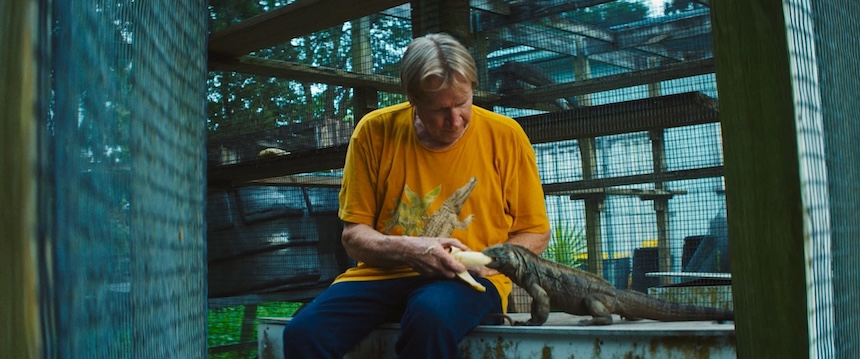
San Francsiscan Richard Perenyi arrives with a full beard that he shaves when Anne makes a comment. A much younger recent Florida transplant, Madison Oliveira, a former U.S. Marine, tells the filmmakers "every boy is trainable" when discussing the flirtatious men she's teamed up with. And Jimbo McCartney, a former professional python hunter who was banned from all state-sanctioned python hunting activities after submitting someone else's catch as his own, learns that maybe pythons aren't the real threat to the Everglades.
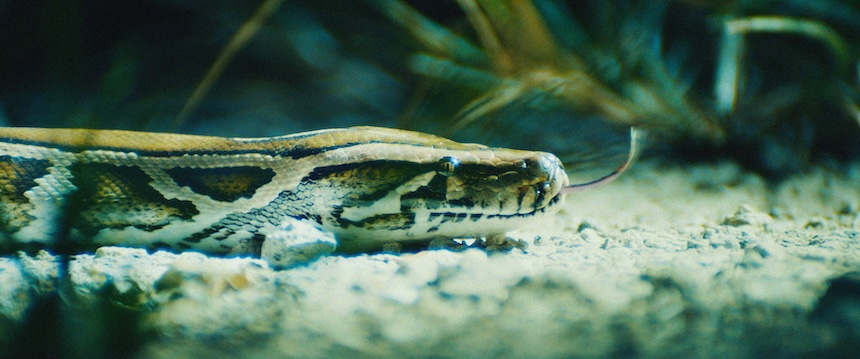
Estimates put the python population in the area between 50,000 and 500,000. Theories vary on how the numbers got so high; reptile expert and python hunter Joe Wasilewski cites the Hurricane Andrew theory as a solid option. In 1992, one of the breeders at the National Reptile Breeders' Expo in Miami had 900 imported Burmese Pythons, and after the hurricane struck, none of them could be accounted for. Decades later, 900 has turned into tens or hundreds of thousands.
There's no doubt that the snakes have contributed to the ecological crisis in the Everglades -- Wasilewski says 90% of the mammals native to the area have disappeared -- but they are far from the most significant cause. McCartney's friend Marshall Jones argues "It boils down to dollars and cents. Which is south Florida's urban sprawl and how do we maintain it? High water levels, water quality, extended droughts."
His curiosity piqued, McCartney attends a Florida Fish & Wildlife Conservation Commission meeting, where he meets Jim Watt, who says he's pleaded with the Commission over a dozen times to stop their use of pesticides that kill off wildlife. Both Jones and Watt argue that the Python Challenge is a big show that allows the real harm to go on unabated, with the added bonus that it brings tourists to the state.
A documentary with a colorful cast of characters and an insightful social critique would already be worthwhile, but The Python Hunt goes further. Its filmmaking transforms its subjects from capital C Characters participating in an arguably ridiculous endeavor, into fully formed, beautiful, and flawed human beings.
On screen text takes multiple forms throughout: introductory notes in a stylized script for some characters, stats boxes indicating hometown and number of snakes caught for others, and a heavy bold sans serif font that marks out the time of the ten-day challenge. More than the quick biographical information afforded characters by the text that attends their first appearances, it's how they are presented in relation to the elapsed time, which the thick hardlined text almost communicates as a threat, that shows us who they are. And who they are isn't perfect.
Perenyi takes "a little nibble of ecstasy" and the camera wobbles and the picture begins to blur to deliver a fairly standard drug trip sequence for a narrative movie in a doc. As the challenge goes on, Stratton grows frustrated with Benoit; when he exchanges pleasantries with other hunters, she complains "the nerve of you saying we're doing great." When Benoit struggles to sleep, extreme close-ups of his face, along with timelapses and densely layered images of their time on the road finding nothing, are soundtracked by Anne's cutting comments, all communicating a nightmarish anxiety.
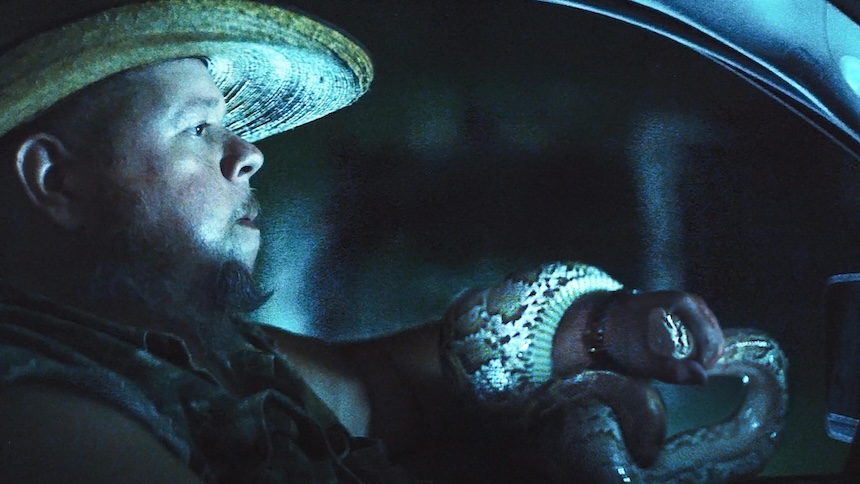
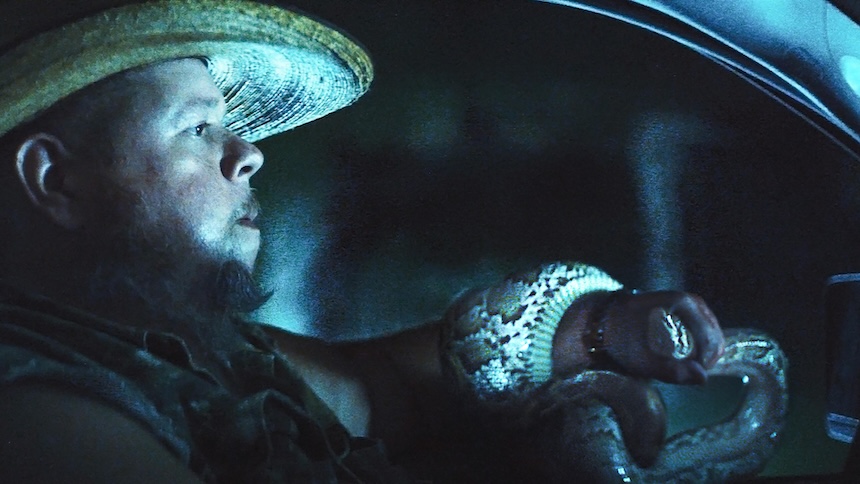
It's an anxiety that leads him to venture out alone and capture a snake that bites him several times, wrapping itself so tightly around his arm as he holds it out the window to transport it that it cuts off bloodflow. If The Python Hunt has a hero, it's Toby Benoit.
Early on he says "Miss Anne said 'I just wanna go on one more adventure' and I promised her that she will," and he later calls back to this as he sets out alone, "I made a promise that I was gonna catch her one and I'm gonna keep it." And he does so with joy; he says the bites are a "tiny tiny tiny price to pay to bring Miss Anne a snake." Having been granted her wish, Stratton apologizes for growing frustrated and wholeheartedly thanks Benoit. It's lovely.
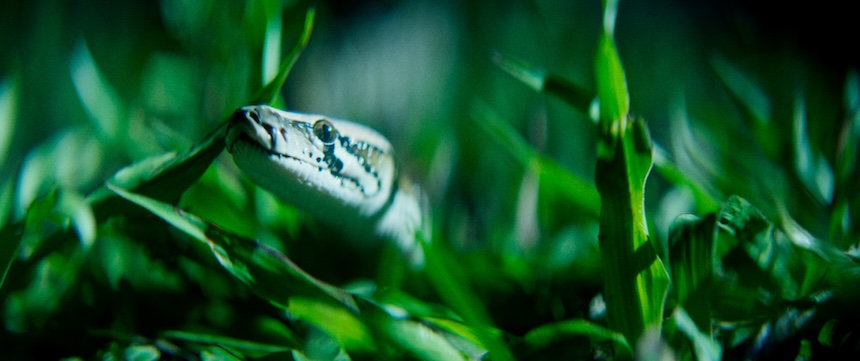
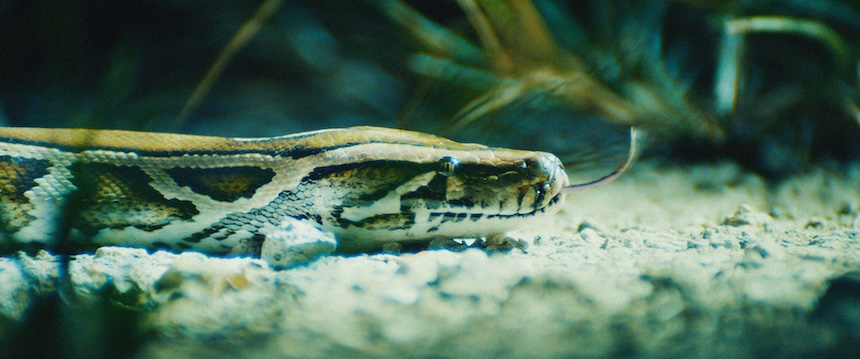
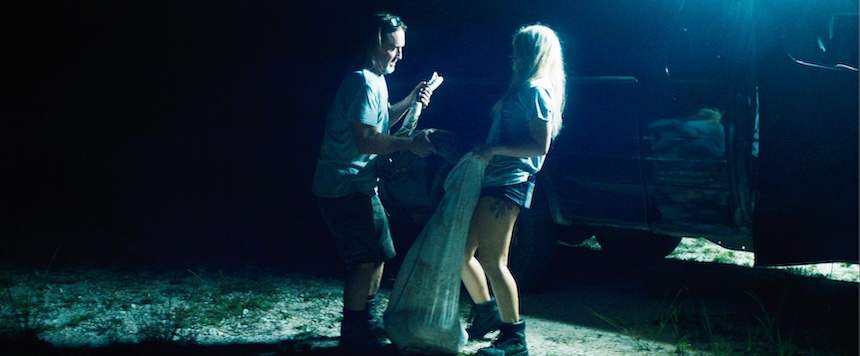
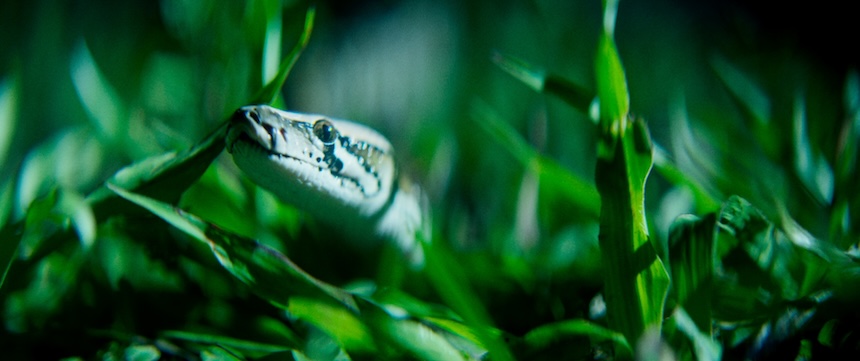
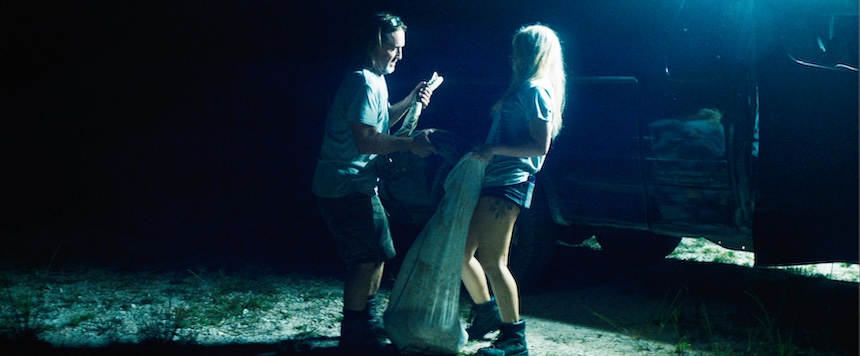
The filmmaking isn't only focused on the human subjects, of course; David Bolen and Matt Clegg make nearly every second breathtaking. The nighttime hunt sequences show the Everglades lit by headlights and flashlights of varying blue, white, and yellow hues. These lights cut through the darkness to illuminate patches of brush so dense the light almost doesn't make a difference to the hunter's quest to find snakes. Snakes are repeatedly shot in extreme closeup, with harsh electric lights sparkling off their scales.
The naturally-lit dawn and dusk moments captured are even more astounding as the Everglades shine in golden hour. As the film closes, these images are accompanied by Benoit reading out some of his writing about the place as his own personal heaven. It's a perfect end to The Python Hunt: equal parts eulogy, poetry, and rallying cry for the Everglades.
The film opens Friday, May 8, 2026, in select theaters via Oscilloscope. Visit the official site for locations and showtimes.
The Python Hunt
Director(s)
- Xander Robin
Cast
- Toby Benoit
- Jimbo McCartney
- Shannon McCartney